Ankara, Türkiye
Project Type
Administrative
Location
Ankara, Türkiye
Year
2025
Project Service
Concept Project
Project Status
Concept Project
Employer
Government
Urban Context and Strategic Location
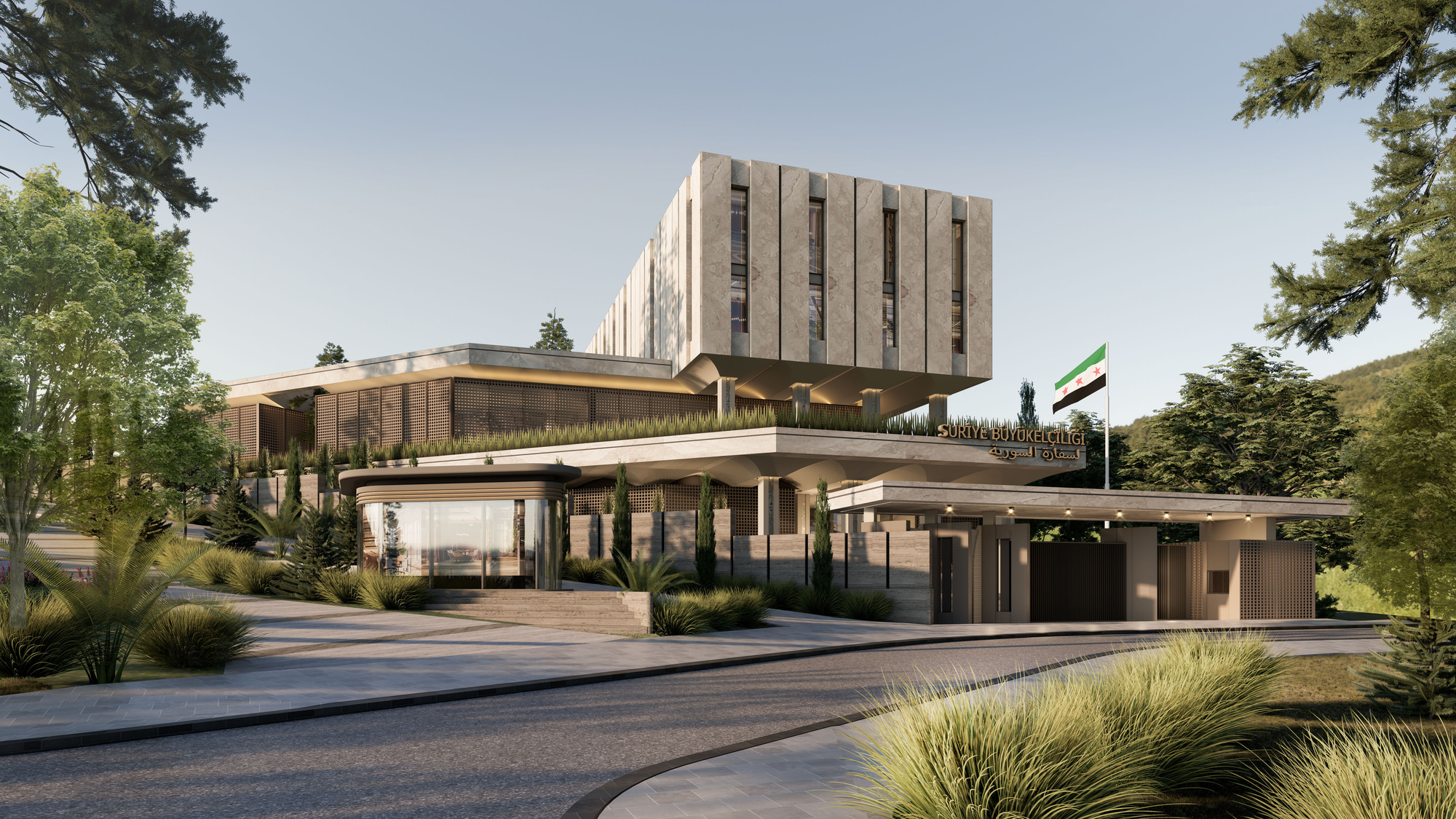
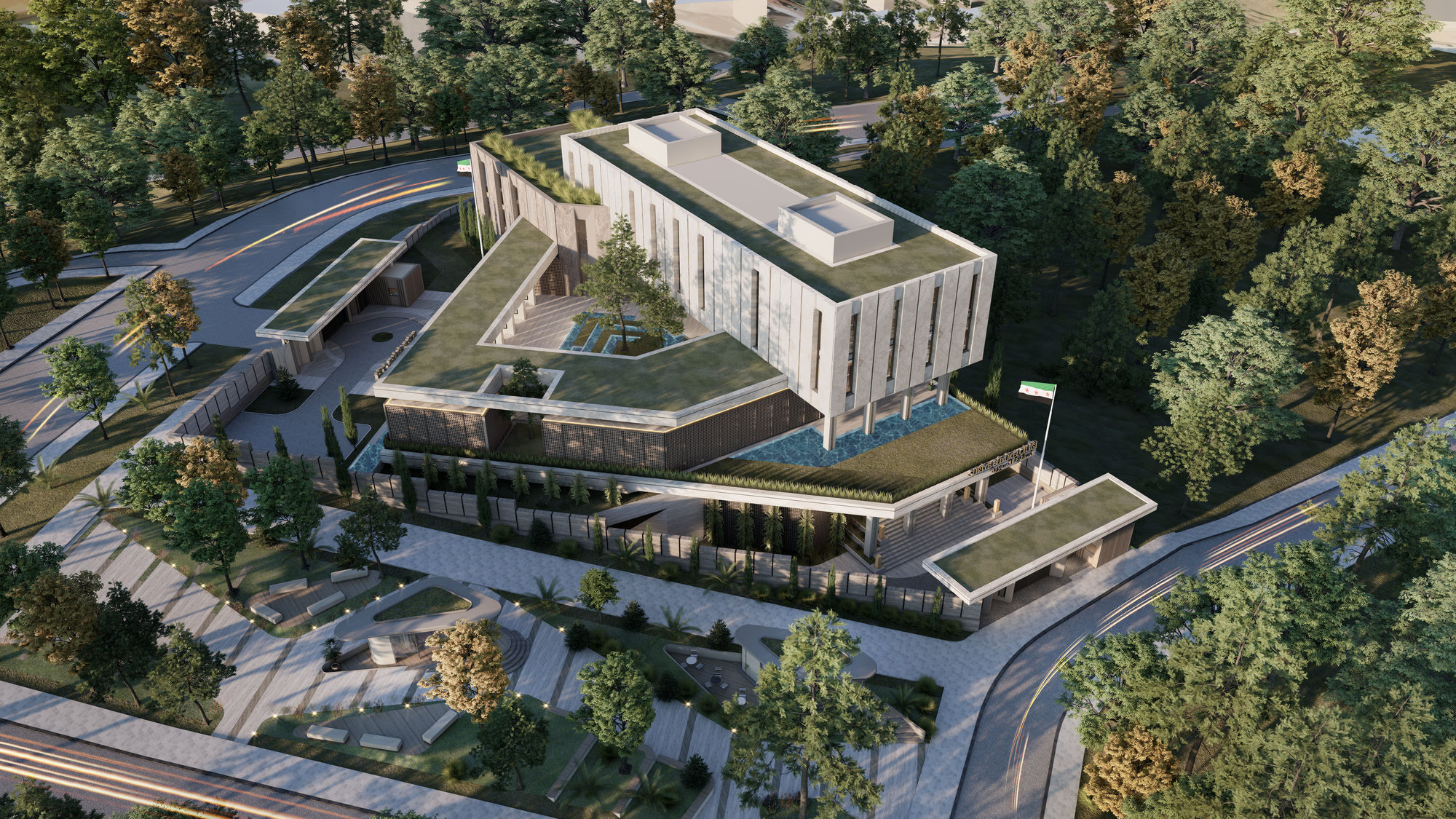
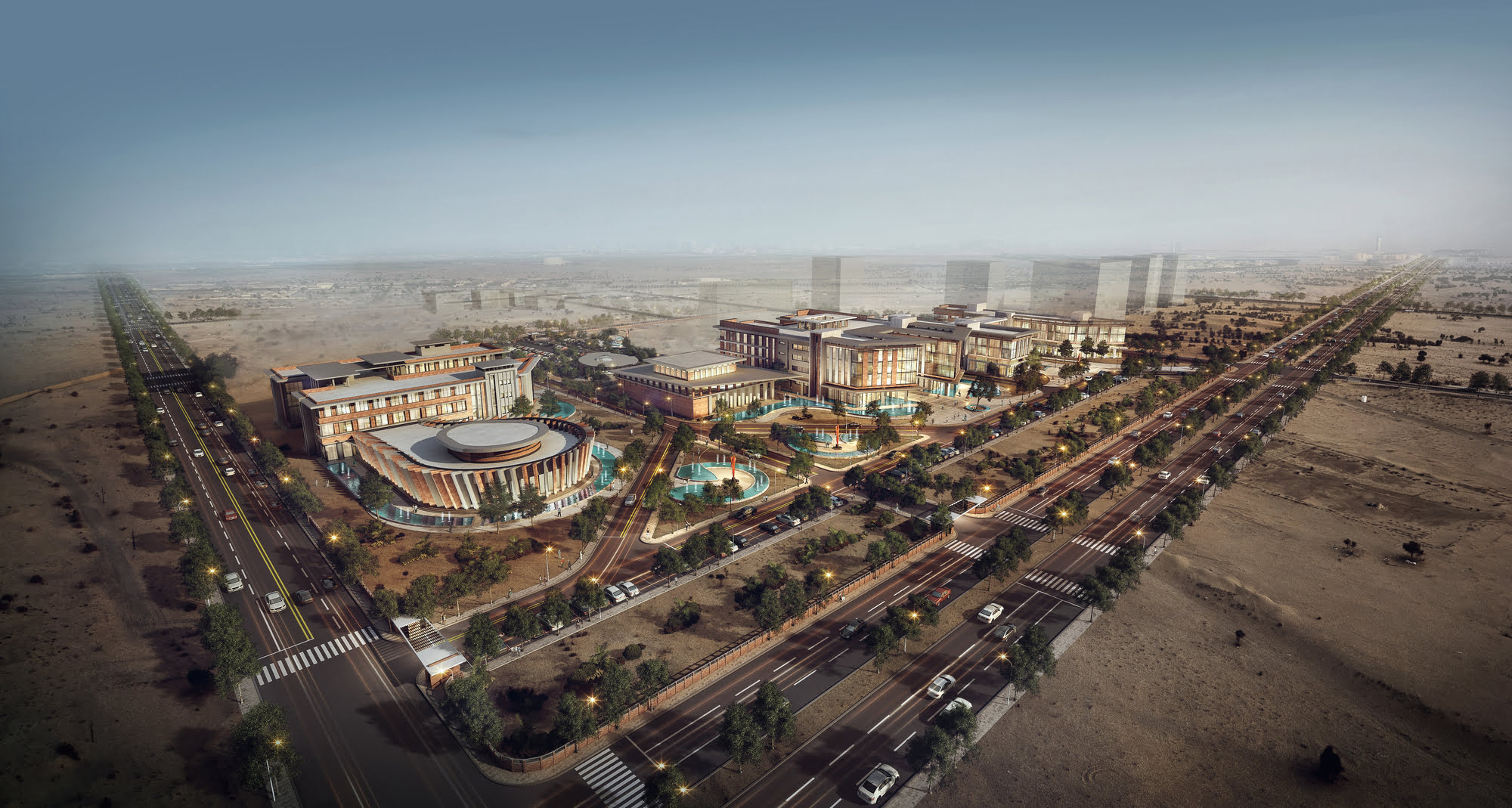
The project site is located in the embassy district of Ankara’s Çankaya district, surrounded by significant institutions such as TRT Headquarters, METU Forest, and Panorama Shopping Mall. Positioned within a zone predominantly occupied by embassies of Middle Eastern countries alongside a few European missions and the Azerbaijani Embassy, the site was designated for the construction of the Syrian Embassy. Its proximity to diplomatic representations and major transport routes shapes both the positioning and design parameters of the project.
Jasmine Courtyard – A Cultural Heart
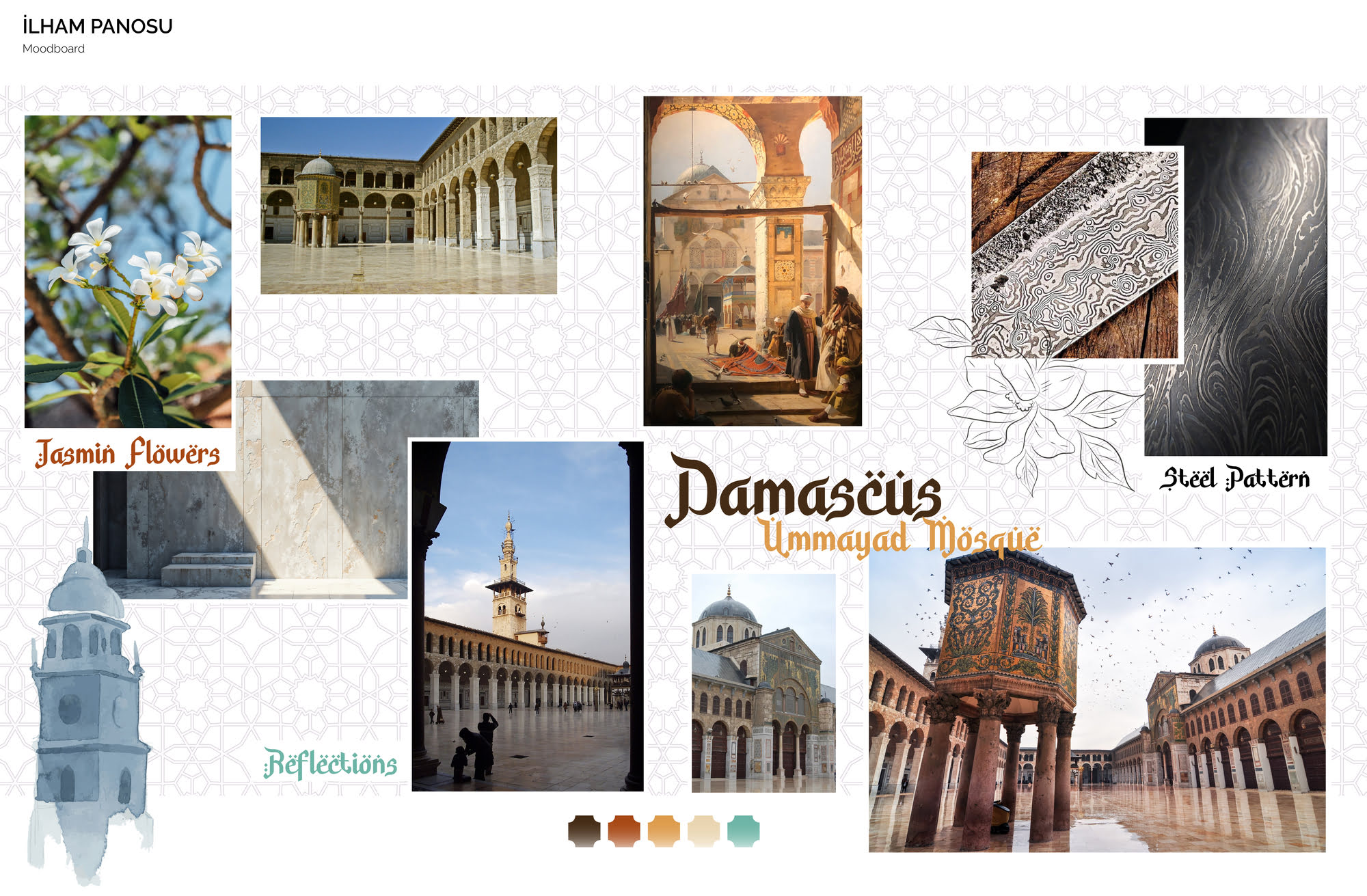
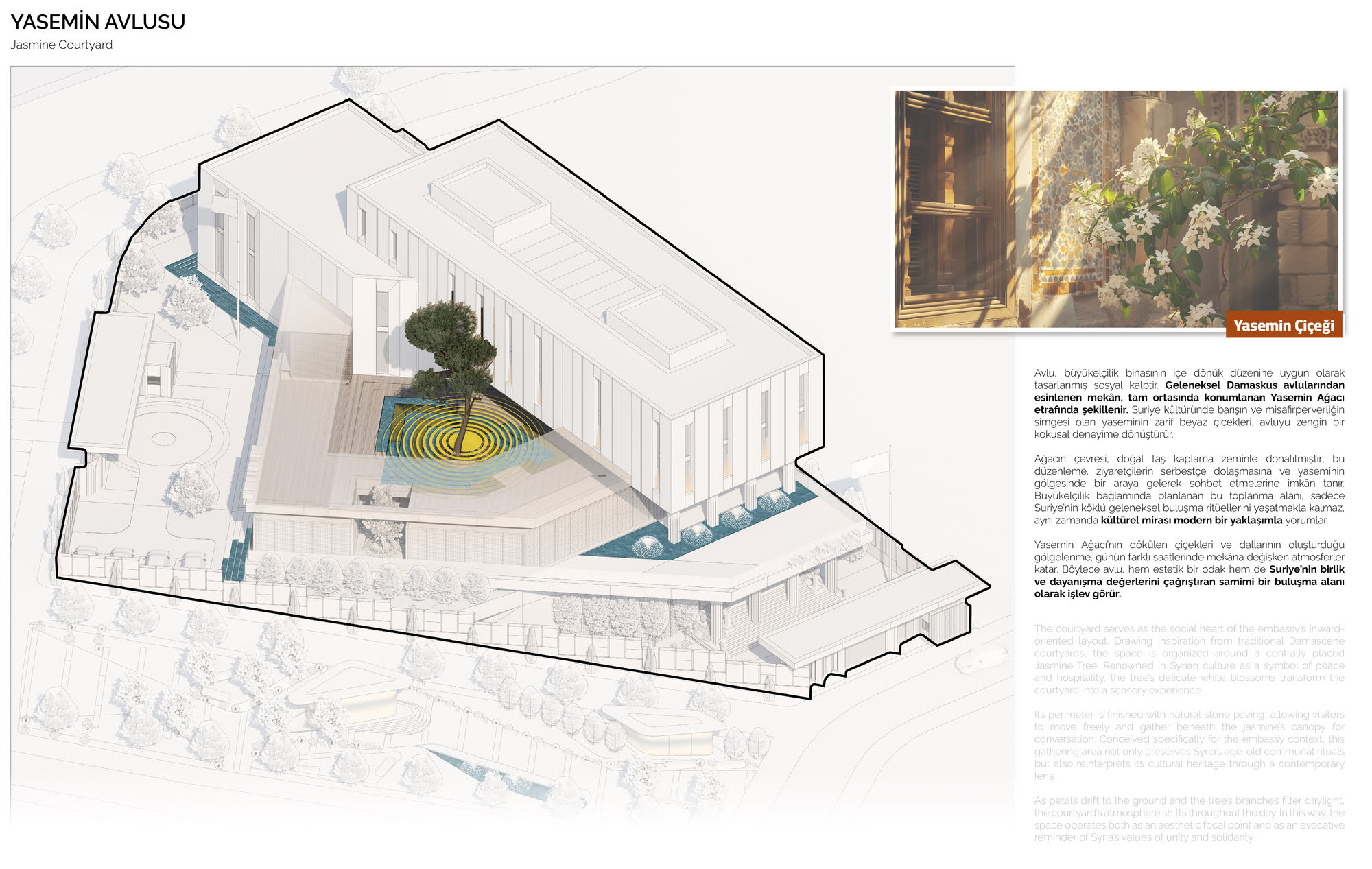
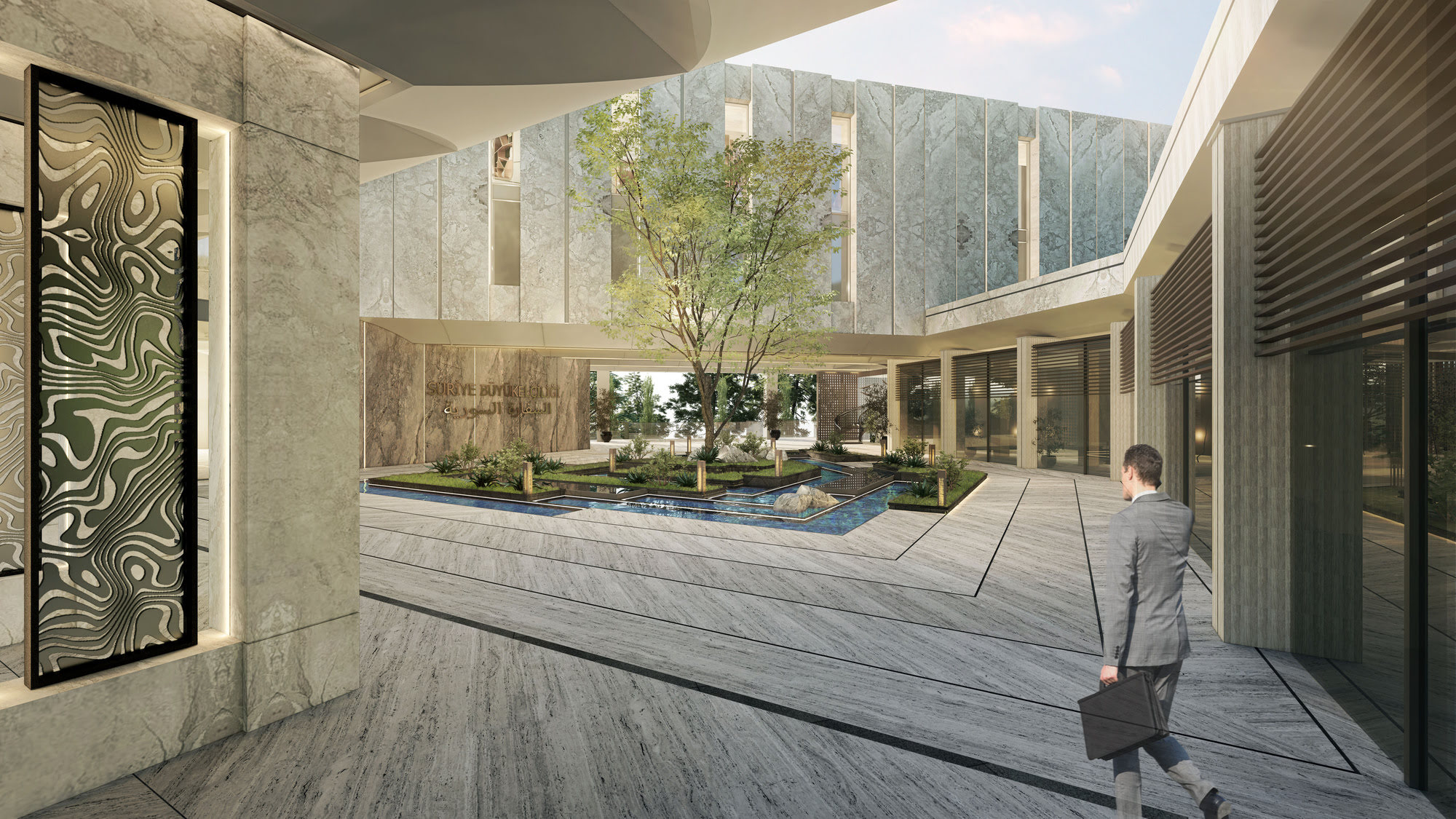
At the center of the embassy stands the Jasmine Courtyard, conceived as the social heart of the building. Inspired by the traditional courtyards of Damascus, the design centers around a Jasmine Tree, a symbol of peace and hospitality in Syrian culture. The fragrant blossoms transform the courtyard into a sensory experience, while the natural stone flooring invites visitors to gather under its shade. This courtyard not only revives Syria’s traditional gathering rituals but also reinterprets them with a contemporary architectural language, embodying values of unity and cultural continuity.
Damascus Steel – Craftsmanship Translated into Architecture
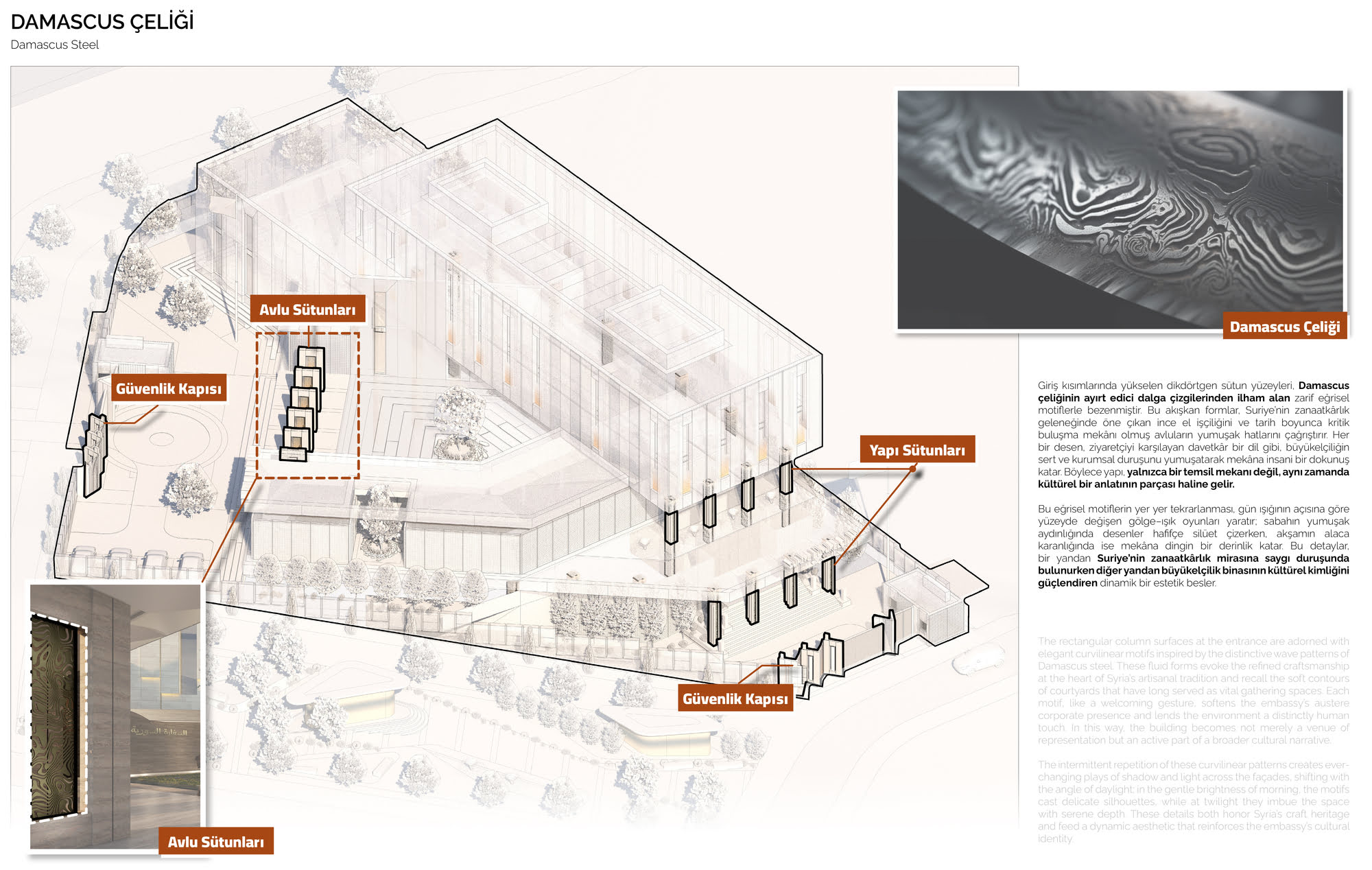
The embassy entrance features tall rectangular columns adorned with curvilinear motifs inspired by the distinctive wave patterns of Damascus steel. These elegant forms recall Syria’s tradition of fine craftsmanship while softening the institutional expression of the building. The motifs respond dynamically to daylight, casting shifting shadows from morning light to evening dusk. In doing so, they enrich the embassy’s façade with a sense of depth and cultural identity, transforming the structure into both a representational and narrative space.
Umayyad Arches and Reflective Surfaces
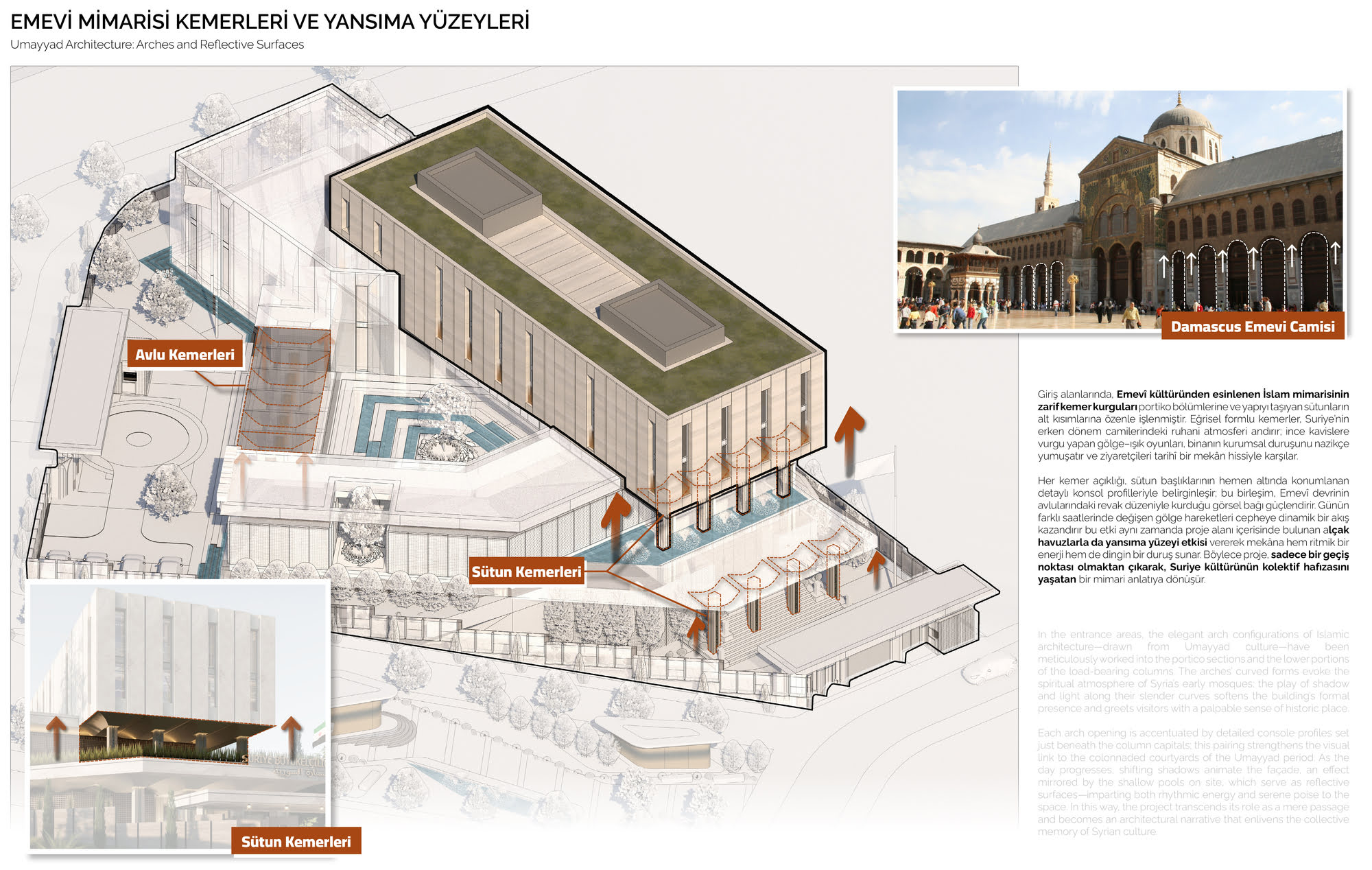
Drawing inspiration from Umayyad architecture, refined arch compositions define the portico and column bases at the entrance. These arches evoke the spiritual atmosphere of early Syrian mosques, where light and shadow played upon delicate curves. Each arch opening is emphasized with detailed profiles beneath the capitals, recalling the rhythm of arcades in Umayyad courtyards. Water surfaces integrated into the site reflect the arches and façades, creating a layered interplay of rhythm, serenity, and memory. Thus, the design becomes more than an entryway; it emerges as an architectural narrative that embodies Syria’s collective heritage.
Spatial Organization and Access Strategy
The embassy is organized across four levels, including a basement, responding to the sloping topography with dual access points.
• Basement Entrance Accessible to the public, this entry leads directly into the main building and connects to an underground parking facility. It accommodates storage, archival spaces, technical units, and logistic support areas.
• Ground Floor Entrance Reserved for diplomatic staff and office workers, this entrance leads into the reception hall and the central Jasmine Courtyard. To the north, a multi purpose hall supports receptions, conferences, and cultural events.
• Upper Floors The first and second floors house the ambassador’s office, reception halls, consular functions, and protocol spaces. Offices are designed with ample natural light, while smaller breakout areas create moments of respite within the workplace.
Conclusion
The Syrian Embassy project in Ankara is envisioned not only as a diplomatic structure but also as an architectural embodiment of cultural continuity. Through its courtyards, Damascus steel inspired motifs, Umayyad arches, and layered spatial organization, the project reflects Syria’s historical richness while addressing contemporary diplomatic functions.
Gallery