Rebuilding a city is never only about replacing what has been lost. It is about restoring the conditions for life to continue — safely, socially, economically and with a sense of belonging.
Across regions facing earthquakes, floods, rapid urbanisation, displacement and conflict, reconstruction is increasingly an urban question rather than a building-by-building response. Drawing on SP Architects’ experience in post-disaster reconstruction, master planning and large-scale urban development, one principle has become clear: successful urban recovery must rebuild cities as living systems — not simply deliver new structures.
Rebuilding Cities Means Rebuilding Everyday Life
A reconstruction programme can deliver buildings on time, meet every regulation and still fail the people who return to live there. The true test of urban recovery comes years later: when a parent can walk a child to school, a neighbour can meet another in a shared street, local businesses can return, and an elderly resident can move through the neighbourhood independently.
This is why SP Architects approaches resilient urban development not as a technical checklist, but as the coordinated recovery of everyday life, infrastructure, public space, community and long-term value.
What Resilience Means in Reconstruction
Resilience is often reduced to one meaning: surviving disasters. Our experience across Türkiye — from the earthquake-affected districts of Kahramanmaraş to the historic walled city of Diyarbakır and the flood-hit town of Bozkurt — has shown that this definition is necessary, but not sufficient. Post-disaster reconstruction must also address how communities recover, how economies restart and how urban identity is carried forward.
We define resilience through four dimensions:
- Environmental
- Social
- Economic
- Emotional
The fourth dimension is the one most often forgotten. A city may recover its infrastructure and its economy, but if residents no longer recognise it as their own, something essential has been lost. Reconstruction should not produce anonymous “recovery housing”; it should create neighbourhoods in which people can rebuild a life.
“Resilience is the ability of a city to adapt without losing its soul.”



The Hidden Risk: Reconstruction Without Urban Recovery
In periods of rapid rebuilding, cities can easily be shaped around:
- Speed of delivery — resulting in rigid master plans
- Unit targets and investor metrics — resulting in density without urban quality
- Short-term visibility — resulting in the loss of local identity and memory
Instead of:

The result is a recurring paradox: reconstruction can be extensive in scale and still fall short of genuine urban recovery.
Rebuilding Without Erasing Belonging
Reconstruction inevitably changes a city. Streets are redrawn, buildings are replaced and new infrastructure is introduced. The challenge is to ensure that physical transformation does not disconnect people from the places they recognise as home.
This becomes especially critical in post-disaster and post-conflict urban reconstruction. When familiar routes disappear, public life retreats, local patterns are ignored or neighbourhoods are rebuilt as generic developments, residents can become strangers in their own cities. Urban memory, local identity and continuity therefore need to be treated as planning inputs — not as decorative references added later.
Our guiding principle is simple: rebuilding should allow a city to change without making its people feel displaced within it.
Human-Centered Reconstruction: Masterplans Should Work at Eye Level
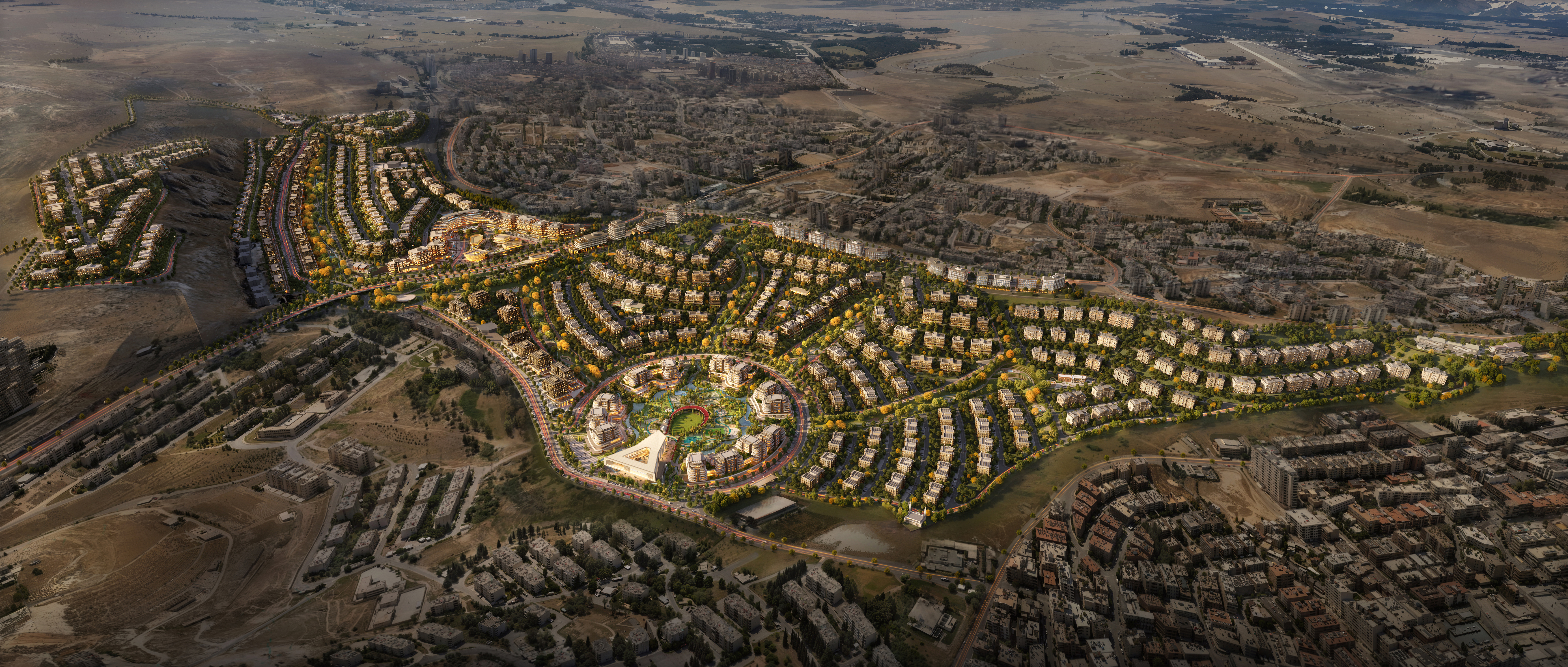
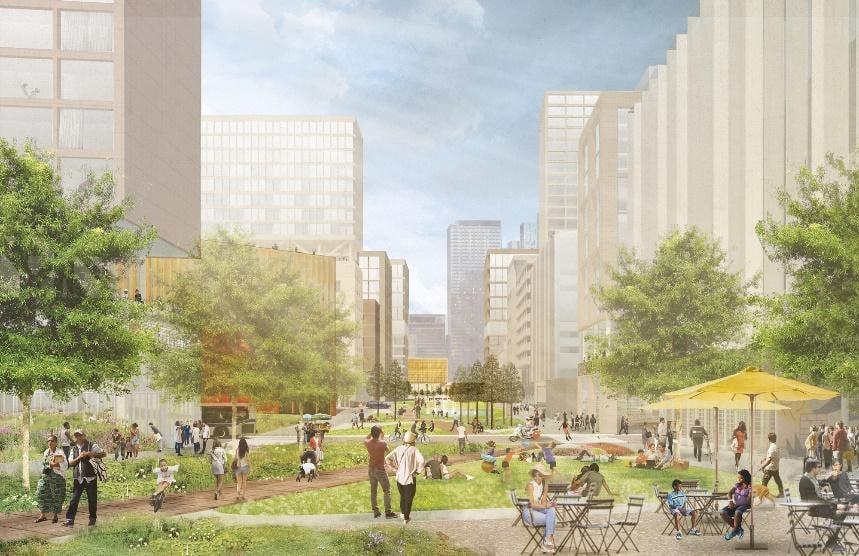
Reconstruction masterplans are often communicated from above — through zoning diagrams, phasing plans and aerial renders. But recovery is experienced at eye level. A resilient masterplan must coordinate infrastructure and development capacity while also shaping the daily conditions of streets, neighbourhoods and public life.
The real measure of a rebuilt city is found in three words: walkability, shade and safety. And in two outcomes that are harder to render but easy to recognise:
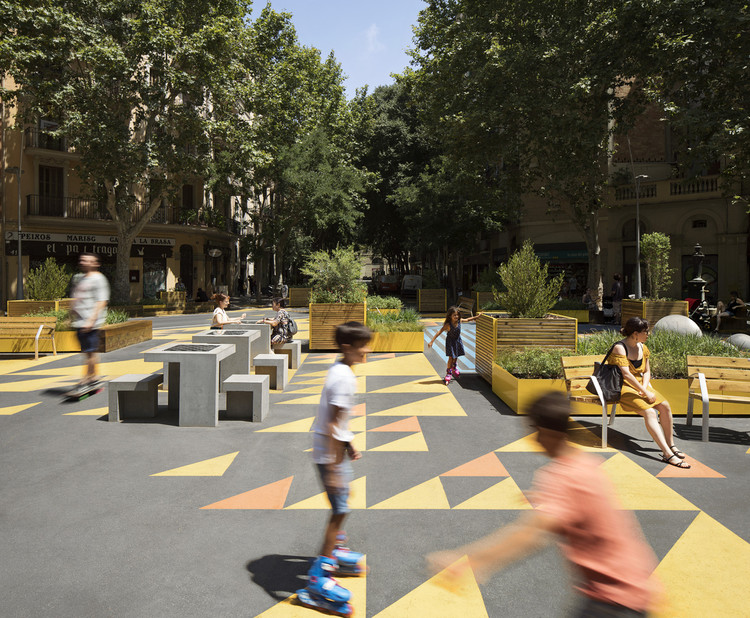
- Streets children can play on
- Spaces where people slow down
Large-scale reconstruction does not require rejecting density or ambition; it requires balancing them with human experience on the ground. In the Istanbul Financial Center, for example, while the towers carried a corporate expression, the podium structures were designed around human scale and public interaction. In the 65 schools reconstructed under ISMEP, campuses were conceived as social anchors for their neighbourhoods.

Predictions for 2026 from the 1927 film Metropolis
Sustainable Reconstruction: Intelligence, Not Complexity
The most sustainable reconstruction solution is rarely the most complicated one. It is the one that understands where it is — its climate, resources, existing systems and future pressures.

- Passive design — Shade, orientation and natural ventilation, before any technology.
- Local materials — What the land already offers is always the most intelligent answer.
- Climate response — Design that knows where it is, not imported solutions.
- Water sensitivity — In arid climates, water is not a detail. It is the design.
Technology remains essential — but as a tool that supports life, not as a substitute for understanding place. This logic also shapes post-disaster recovery: in Kahramanmaraş, reopening previously enclosed stream corridors became a planning priority, reconnecting reconstruction with natural systems that had been ignored in the past.
Density vs. Value: Rebuilding More Is Not Always Building Better
In reconstruction, pressure for speed, capacity and financial feasibility can quickly translate into maximum density. Yet the neighbourhoods that hold their value over time are often those where space has been deliberately protected for streets, landscape, views, services and public life.
The short-term logic:
More units → faster numerical recovery
The long-term urban logic:
- Less density → better views for everyone
- Better streets → higher land value per m²
- Quality over quantity → always
In rebuilding cities, long-term value is created not only by how much is built, but by the quality of the urban framework around it.
The Adaptive City: Planning Beyond Recovery
A rebuilt city should not be treated as finished. It should be ready for what comes next.
Cities change faster than plans. Populations grow, economies shift, climates intensify and ways of living evolve. This is especially important in urban recovery, where needs and investment conditions can change rapidly. A resilient masterplan does not freeze a single moment; it creates a framework that can absorb change. Our approach rests on four principles:
- Flexible master planning
- Mixed-use integration
- Phased growth
- Designed to evolve
In the Hadrut and Tuğ masterplans, phased development strategies were aligned with infrastructure capacity and resettlement timelines, allowing each phase to move forward independently without compromising the overall vision. The same principle is fundamental to reconstruction masterplanning: implementation must be possible in stages while the city continues to function and evolve.Hadrut and Tuğ masterplans
We do not design reconstruction for the opening ceremony. We design for the decades that follow.

From Reconstruction to Long-Term Urban Recovery
Across the Middle East and other rapidly transforming regions, rebuilding is becoming a long-term urban agenda. The challenge is larger than replacing damaged buildings: it includes infrastructure-led planning, housing, public space, mobility, landscape, economic recovery and the restoration of social continuity.
For cities entering a new cycle of development, three priorities are increasingly inseparable: resilience, implementation and belonging.

The role of the architect and masterplanner is therefore not to import a finished vision. It is to understand what already exists, identify what must change, protect what should remain and create a framework that can move from masterplan to implementation over time.
Rebuilding Cities as Living Systems
The next generation of resilient cities must be climate-responsive, human-led, implementable, adaptable and rooted in place.
None of these qualities works in isolation. Reconstruction requires them to operate as one system: infrastructure must support growth, phasing must support implementation, public space must support community, and new development must strengthen rather than erase local identity.
If reconstruction focuses only on what is built, recovery remains incomplete. If it rebuilds the systems that allow urban life to continue, cities can become stronger than before.
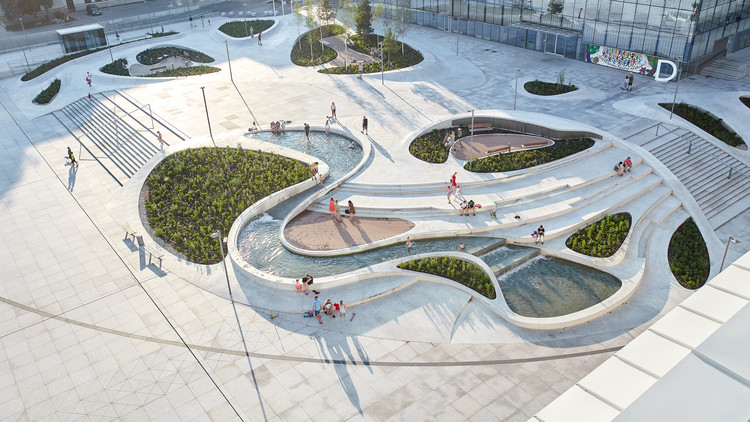
What Should a Rebuilt City Actually Enable?
The language of reconstruction often centres on scale, speed, investment and delivery. These are necessary — but they are not sufficient measures of success.
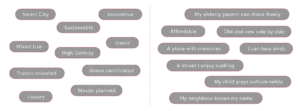
The words of reconstruction:
Reconstruction · Master Planning · Urban Regeneration · Infrastructure · Mixed Use · Density · Investment · Phased Development · Resilience · Implementation
The outcomes of recovery:
Safe streets · Homes connected to daily life · Old and new side by side · A place with memories · Climate comfort · Walkable neighbourhoods · Children playing outside safely · Local economies returning · Communities staying connected
The first list describes the mechanisms used to rebuild cities. The second describes what successful urban recovery should make possible. At SP Architects, we believe the two must be planned together.
Rebuild the systems. Restore the life of the city.