Baku, Azerbaijan
Project Type
Mixed Use
Location
Baku, Azerbaijan
Year
2020
Project Service
Concept Project
Project Status
Concept Project
Total Area (m²)
207529.00
Total Construction Area (m²)
315458.00
Employer
Kristal Absheron CJSC
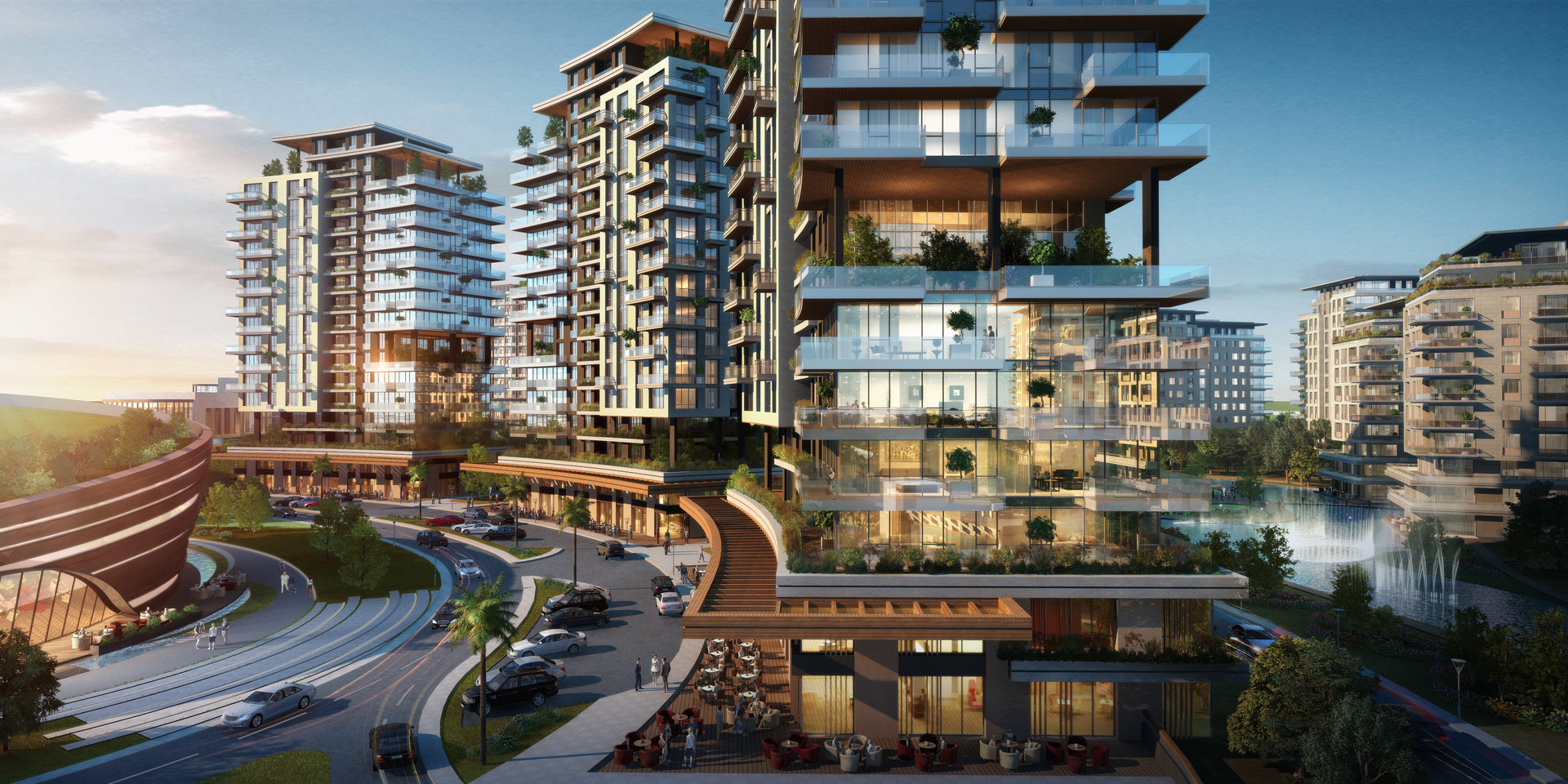
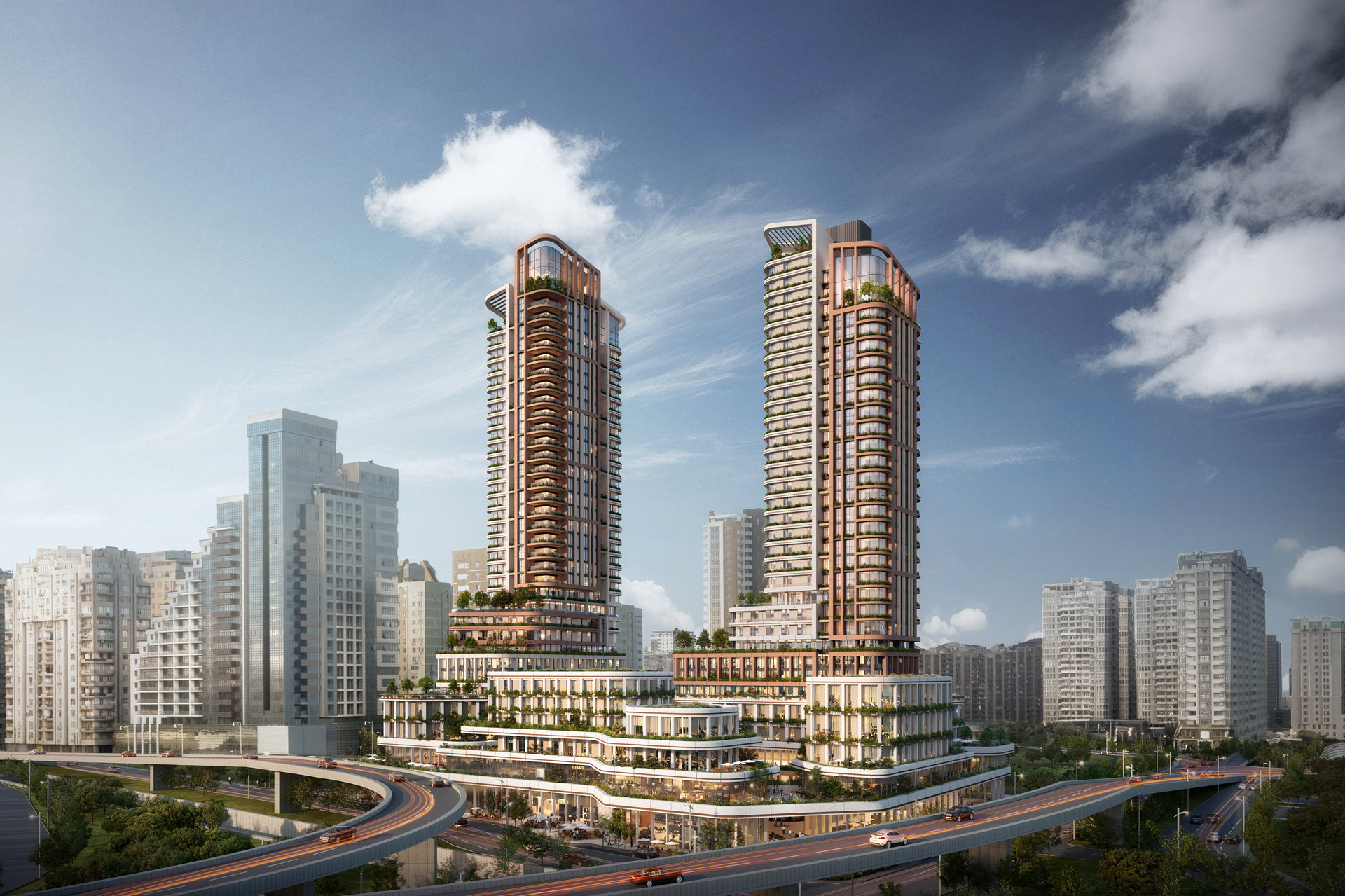
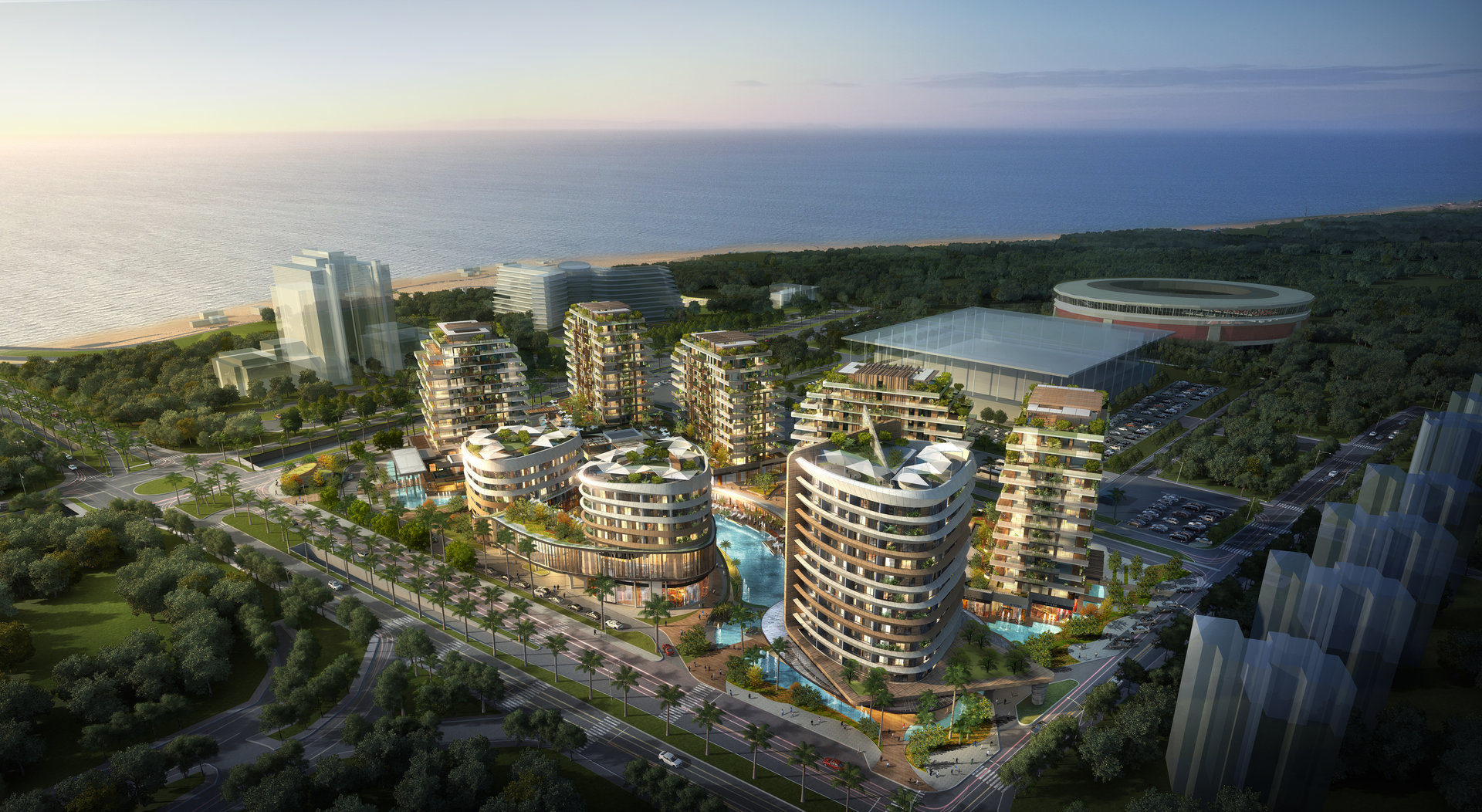
Situated at the intersection of residential and transport based urban zones, this mixed-use project reimagines a former train maintenance site into a dynamic living environment. While a limited number of train rails were preserved for heritage continuity, the majority of the former infrastructure was removed and replaced with accessible vehicle roads and pedestrian connections. These interventions establish a fluid transition from the station to the heart of the development.
A new pedestrian bridge emerging from the adjacent train station and conceived as an urban landmark forms the project’s central spine, providing direct access to the sports complex and enabling secondary connections to the educational, health, and tech facilities within the site.
To manage acoustic challenges presented by nearby high traffic roads and railway lines, a multifunctional buffer zone has been introduced. This linear green corridor not only mitigates sound and noise pollution but also acts as a recreational spine, hosting a variety of open-air programs such as running tracks, reflection pools, and rehabilitation areas.
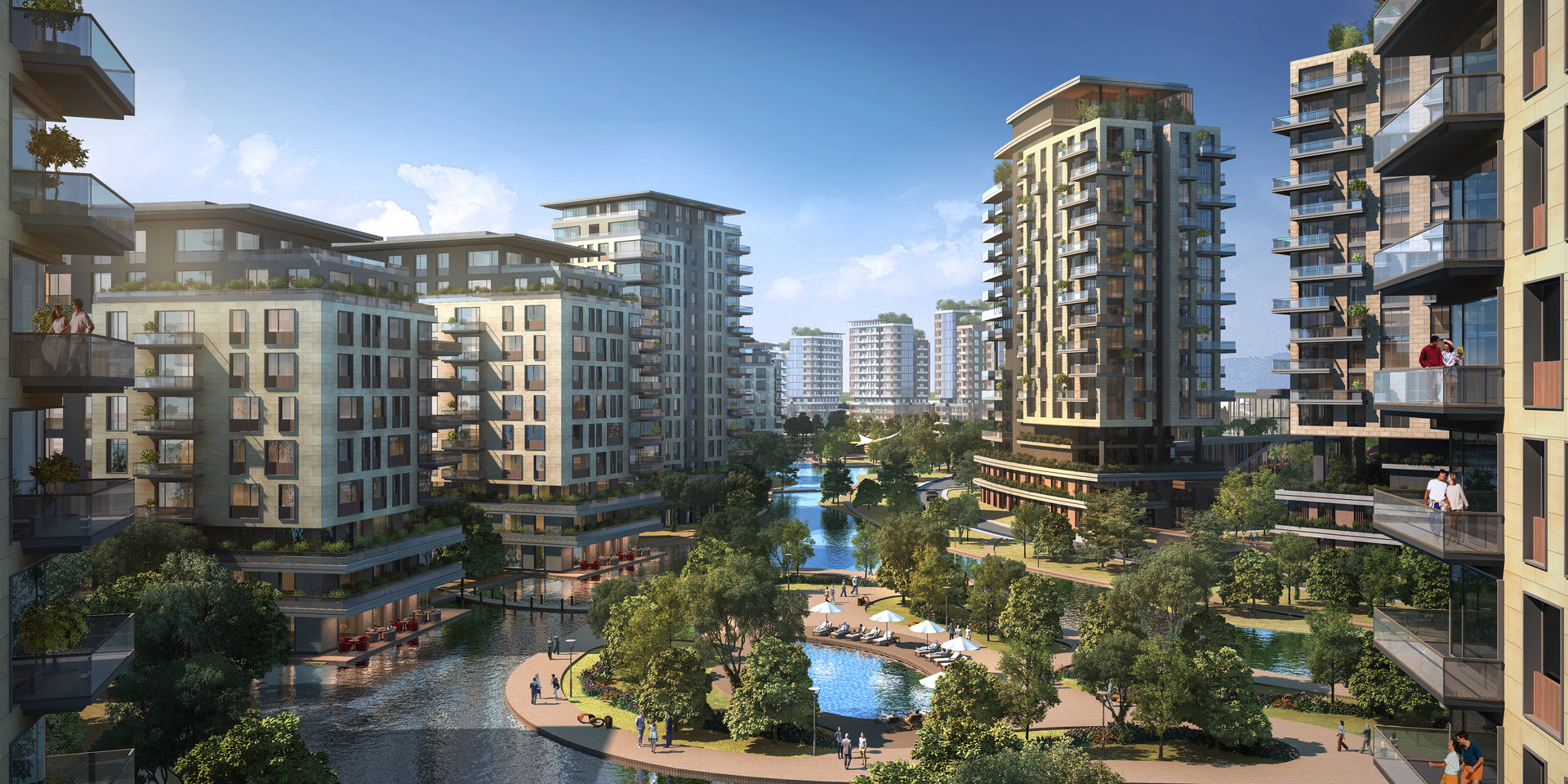
The site’s functional zoning strategy prioritizes spatial quality and user experience. After traversing the railway and buffer landscape, users encounter the commercial and office zones, which activate the public interface. The residential blocks are located further inward, shielded from external noise and oriented towards landscape courtyards and the distant Caspian Sea horizon.
By repurposing railway land, integrating green acoustical buffers, and layering commercial, educational, and housing functions into a cohesive plan, the project stands as a case study in adaptive urban transformation balancing infrastructural pragmatism with ecological sensitivity and community centered design.
Gallery