Project Type
City Planning and Master Plan
Location
Baku, Azerbaijan
Year
2019
Project Service
Master Plan
Project Status
Concept Project
Total Area (m²)
223441.00
Total Construction Area (m²)
606209.00
Employer
ARXKOM
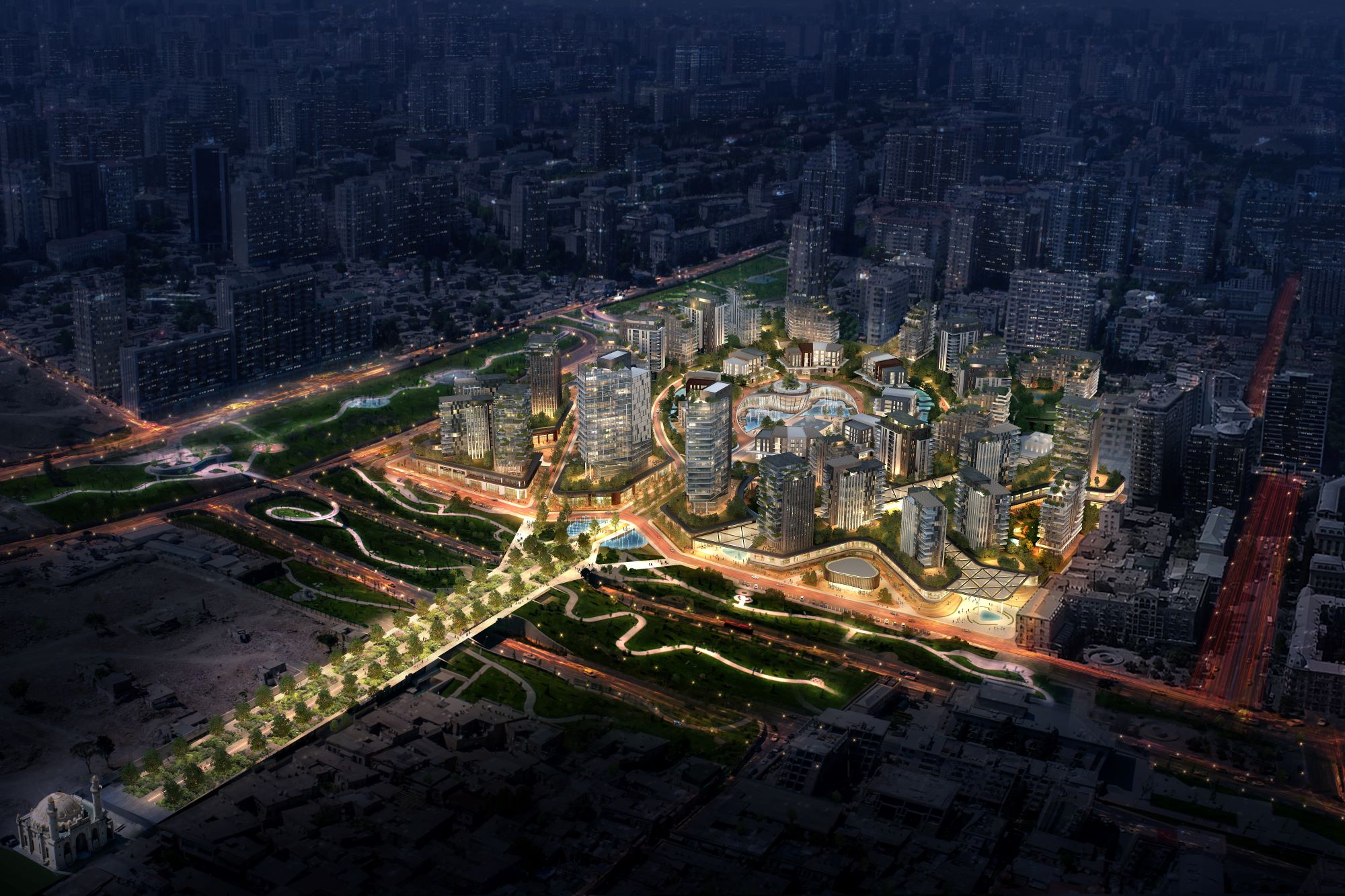
Located in the central district of Baku the capital and most populous city of Azerbaijan the second phase of this extensive five stage masterplan sits to the west of the city center, adjacent to Fuzuli Avenue and in close proximity to the Kış Bahçesi and Central Park. Surrounded by major transportation corridors such as Abdulla Shaig Avenue to the west, Fuzuli Avenue to the south, and Cafer Cabbarlı Street to the east, the site is positioned at the intersection of green infrastructure and urban mobility.
As a continuation of the first phase an urban park that consolidated fragmented green pockets along Fuzuli Avenue the design embraces a strategy of openness and connectivity. The park’s natural extensions wrap around the second and third phases, shaping a coherent landscape framework across the site. The architectural language is defined by a porous urban fabric, anticipating future linkages to adjacent stages.
The project area was delineated with careful consideration of its historical and cultural context. Significant heritage structures within the site have been preserved and conceptually interlinked through linear pedestrian corridors, which also define the primary design axes. These axes not only guide internal circulation but also establish seamless transitions to the surrounding urban park and major streets.
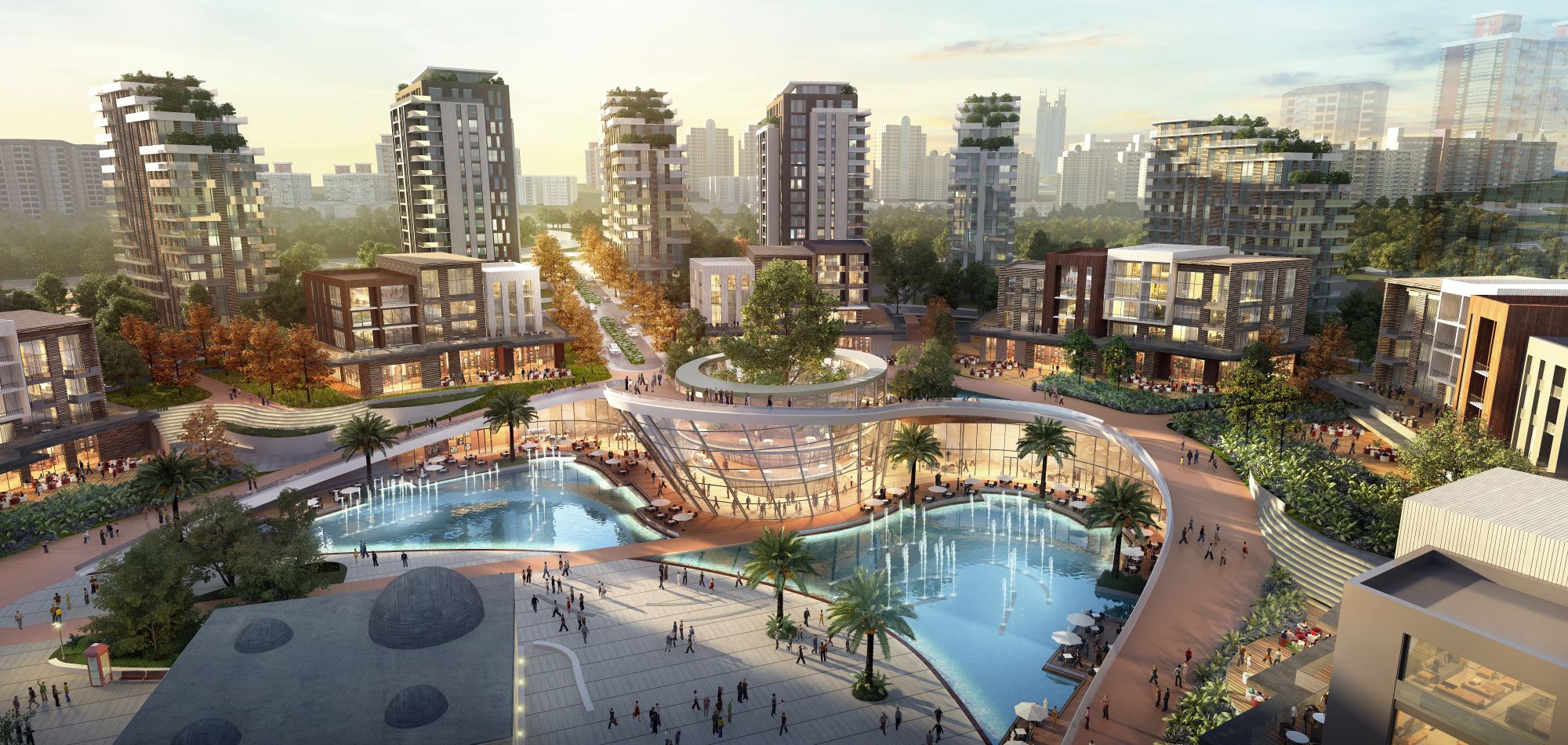
Commercial masses were articulated by elevating parcels between these axes, while a low-rise, centralized retail island encompassing a historic hammam was framed by a surrounding water band. At its core, a sculptural structure leverages topographical elevation and houses public functions, reinforcing the civic identity of the complex.
Residential blocks were organized concentrically around this core, ensuring that visual corridors toward the Caspian Sea remained uninterrupted. Two landmark residential towers are placed atop a shared podium, framing the main axis and marking the project’s principal gateway. Additional office and residential-office towers are similarly podium-based and placed to define the northeast boundary of the site.
One of the project’s signature elements is the “Green Ramp,” an elevated landscape feature that visually and physically connects the Taza Pir Mosque axis to the center of the site. This ramp culminates in a structure populated with endemic vegetation and functions as a vertical circulation spine, linking upper level buildings with lower public spaces. Internal mezzanine floors offer immersive experiences of light, water, and preserved heritage elements including views of the historic hammam.
Together, these elements form an integrated, multi scalar urban system that balances memory, landscape, and contemporary living.
Gallery