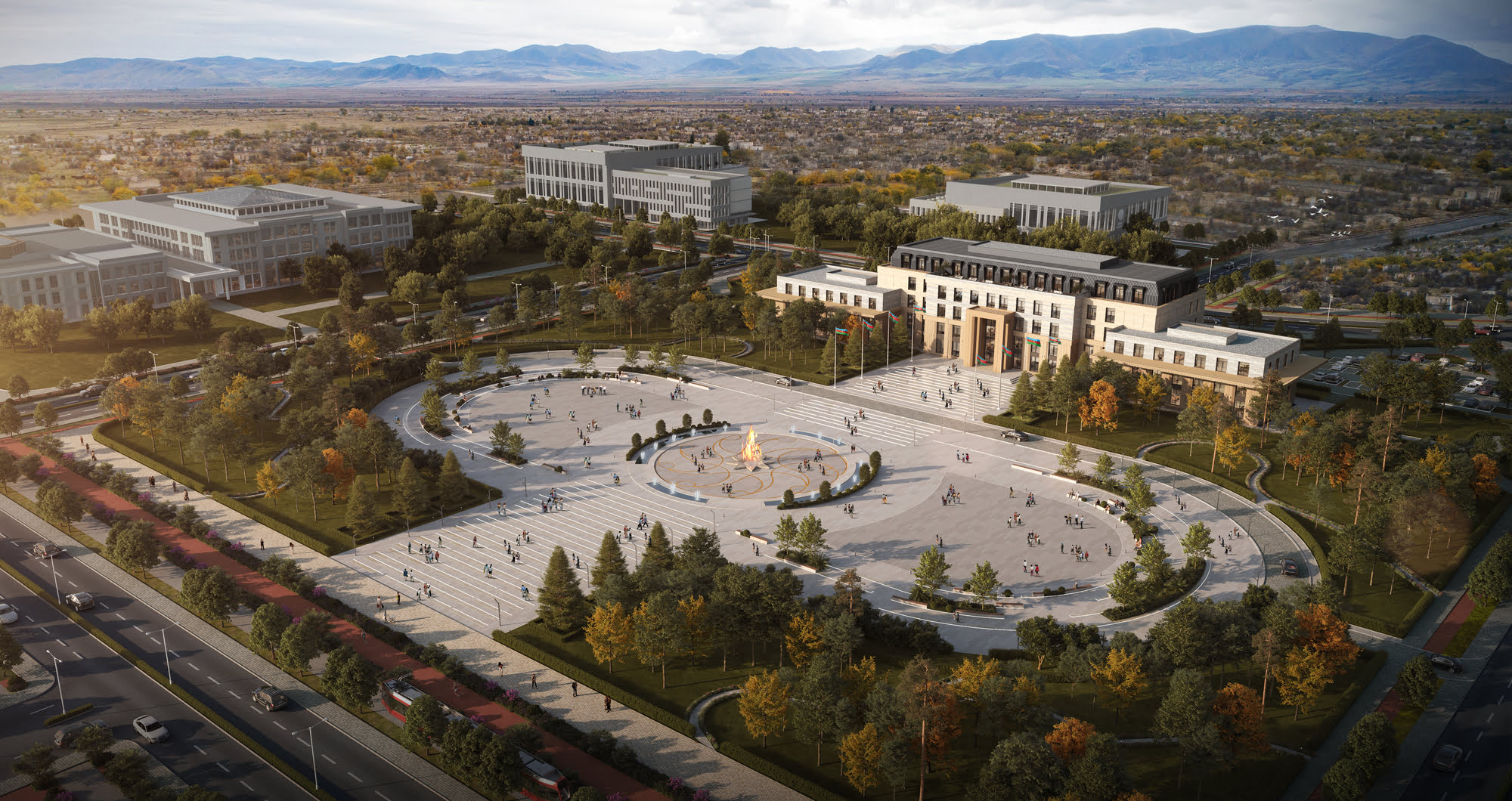
Ouagadougou, Burkina Faso
Project Type
Administrative
Location
Ouagadougou, Burkina Faso
Year
2018
Project Service
Concept Project
Project Status
Concept Project
Total Construction Area (m²)
36400.00
Employer
Government
Project Overview
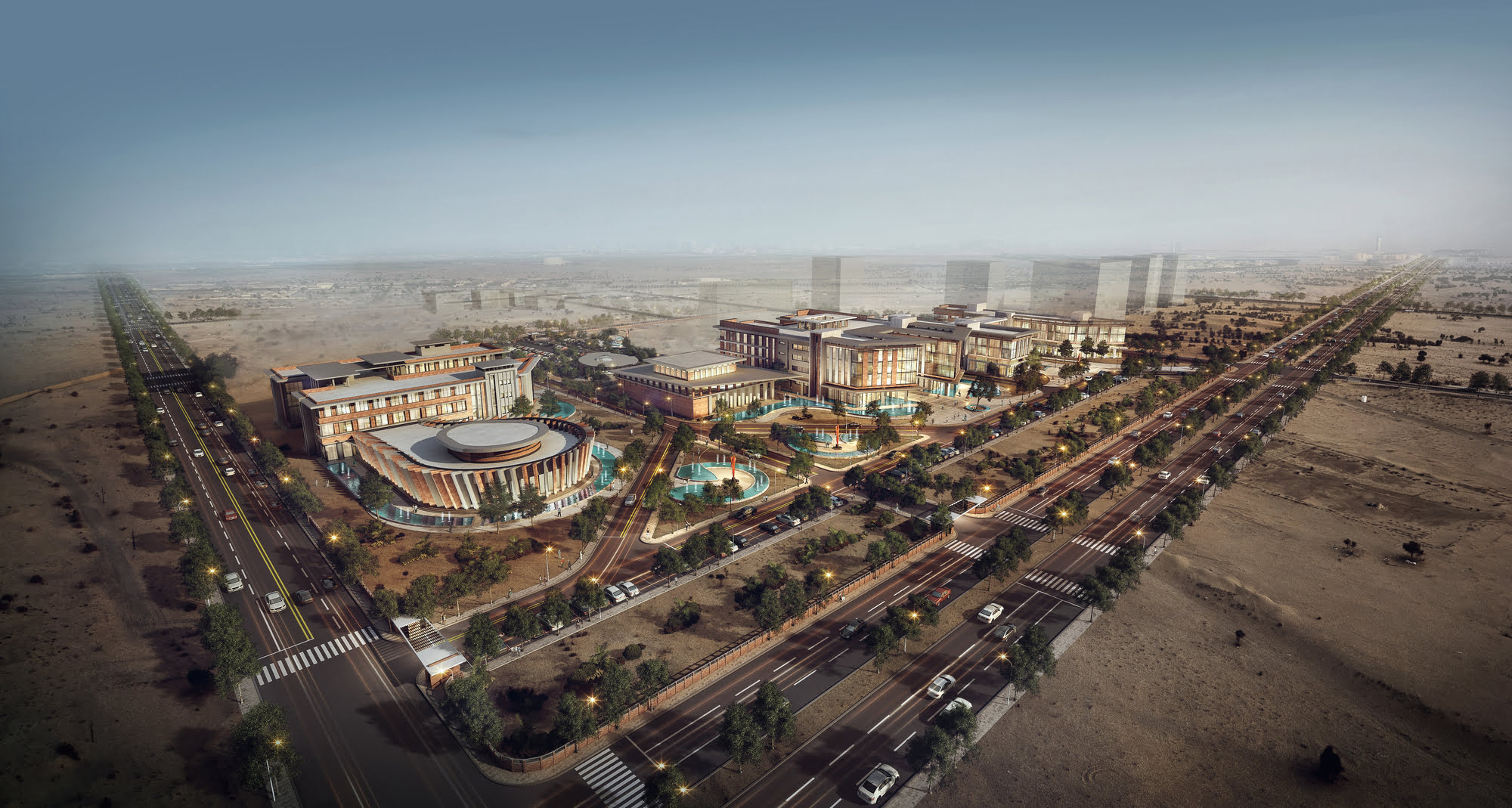
Situated on the Public Service Axis of Ouagadougou—the administrative capital of Burkina Faso—the Constitutional Court project occupies a strategic site that links key governmental buildings including the Ministry of Agriculture, National Statistics Institute, the Appeal Court, and ultimately, the Presidential Palace. This central positioning enables the court to act not just as a legal entity, but also as a symbolic cornerstone within the urban and civic hierarchy of the city.
Urban Integration and Accessibility
The masterplan emphasizes accessibility through an extended road system, providing direct connections to the main highway and adjacent public institutions. At a larger urban scale, the site also maintains continuity with the Ministry of Justice and the Court of Grand Instance, located in the northern sector of the city.
Architectural Strategy and Spatial Organization
The design is guided by the interplay between function, climate, and symbolism:
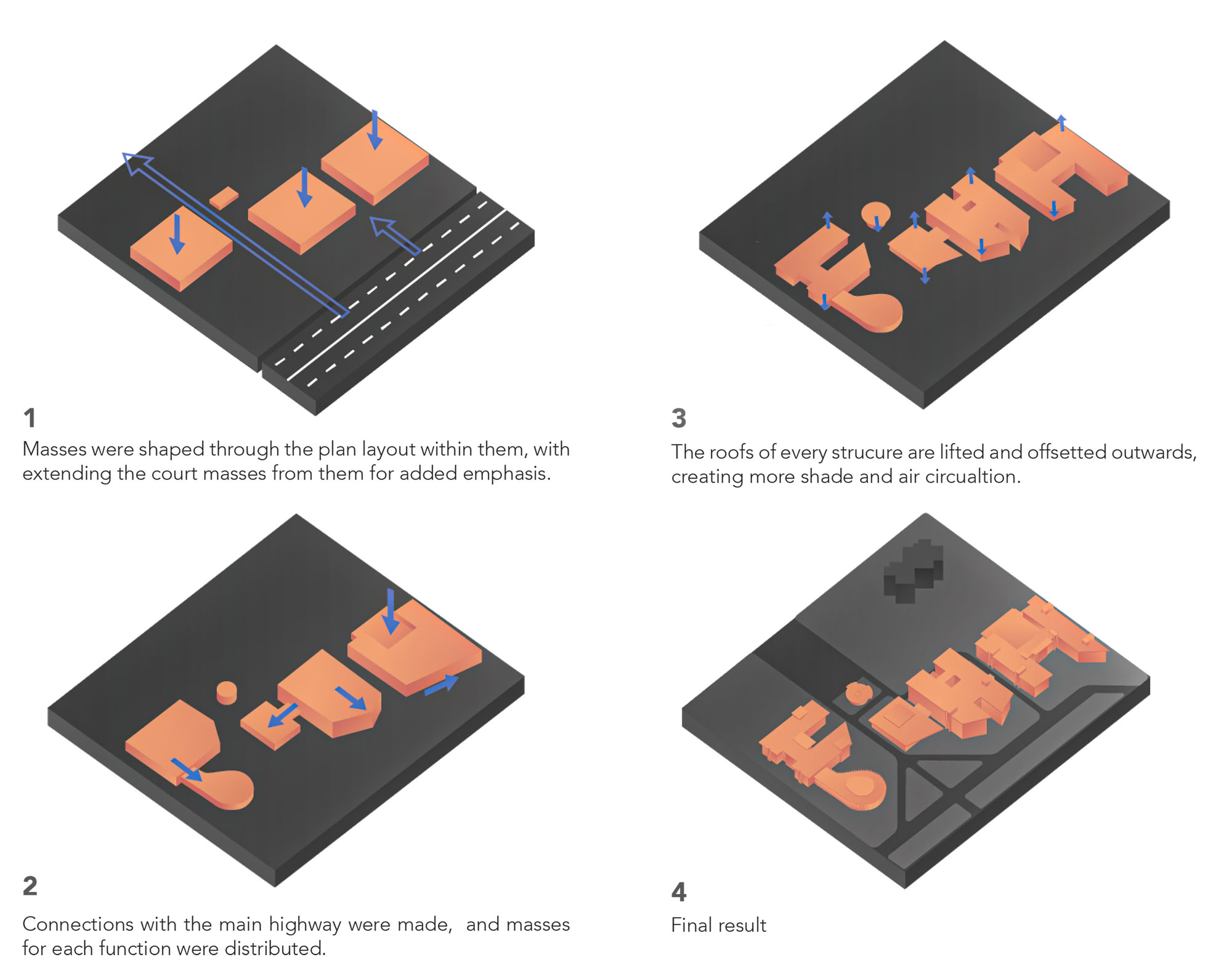
• Functional masses are shaped based on internal circulation patterns, with court volumes deliberately pulled outward to articulate prominence.
• Courtyards are introduced to ensure passive cooling and shaded open-air movement zones, enhancing both environmental comfort and spatial fluidity.
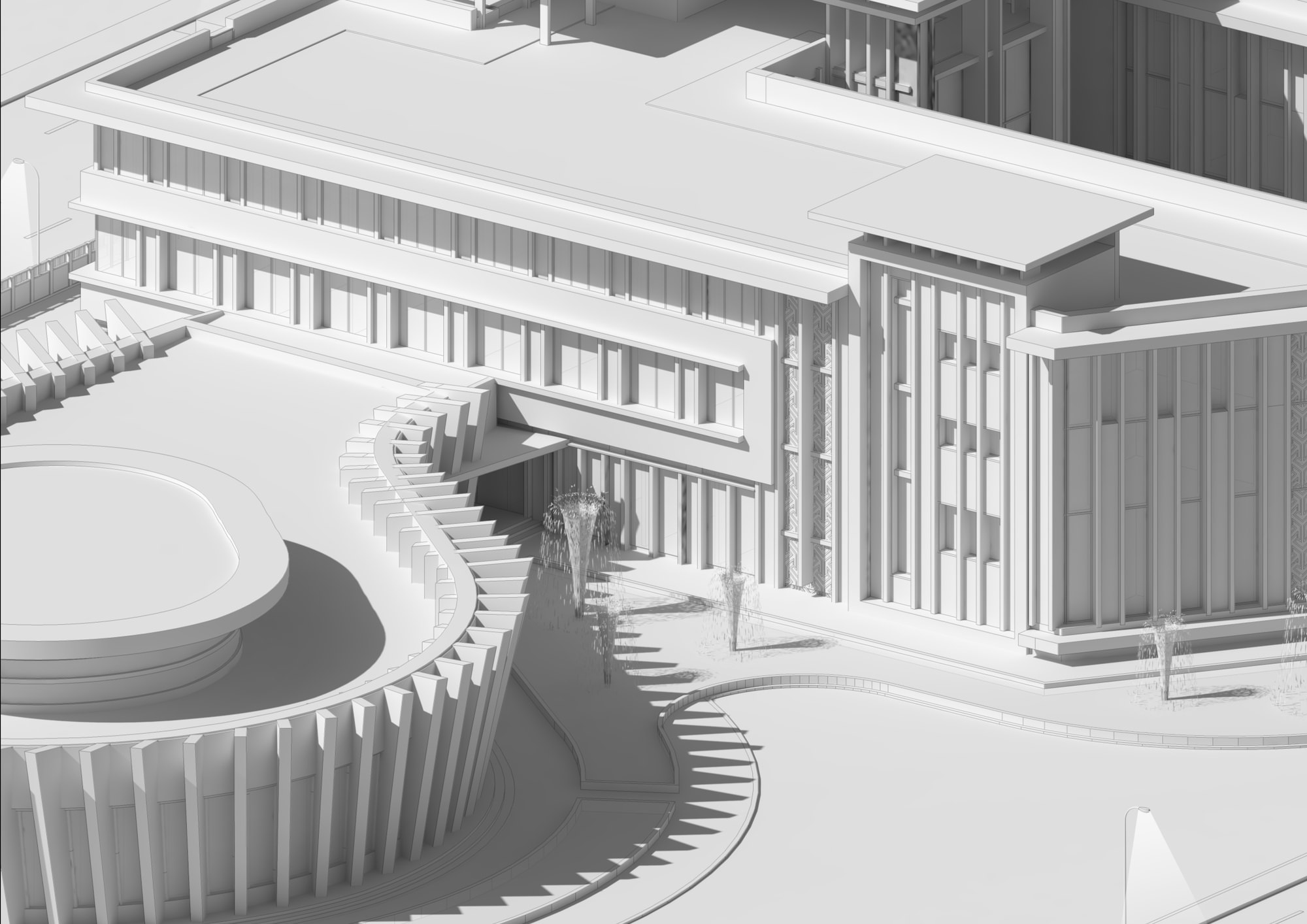
• Roof structures are lifted and cantilevered outward to further promote ventilation and create visual lightness.
Material and Cultural Expression
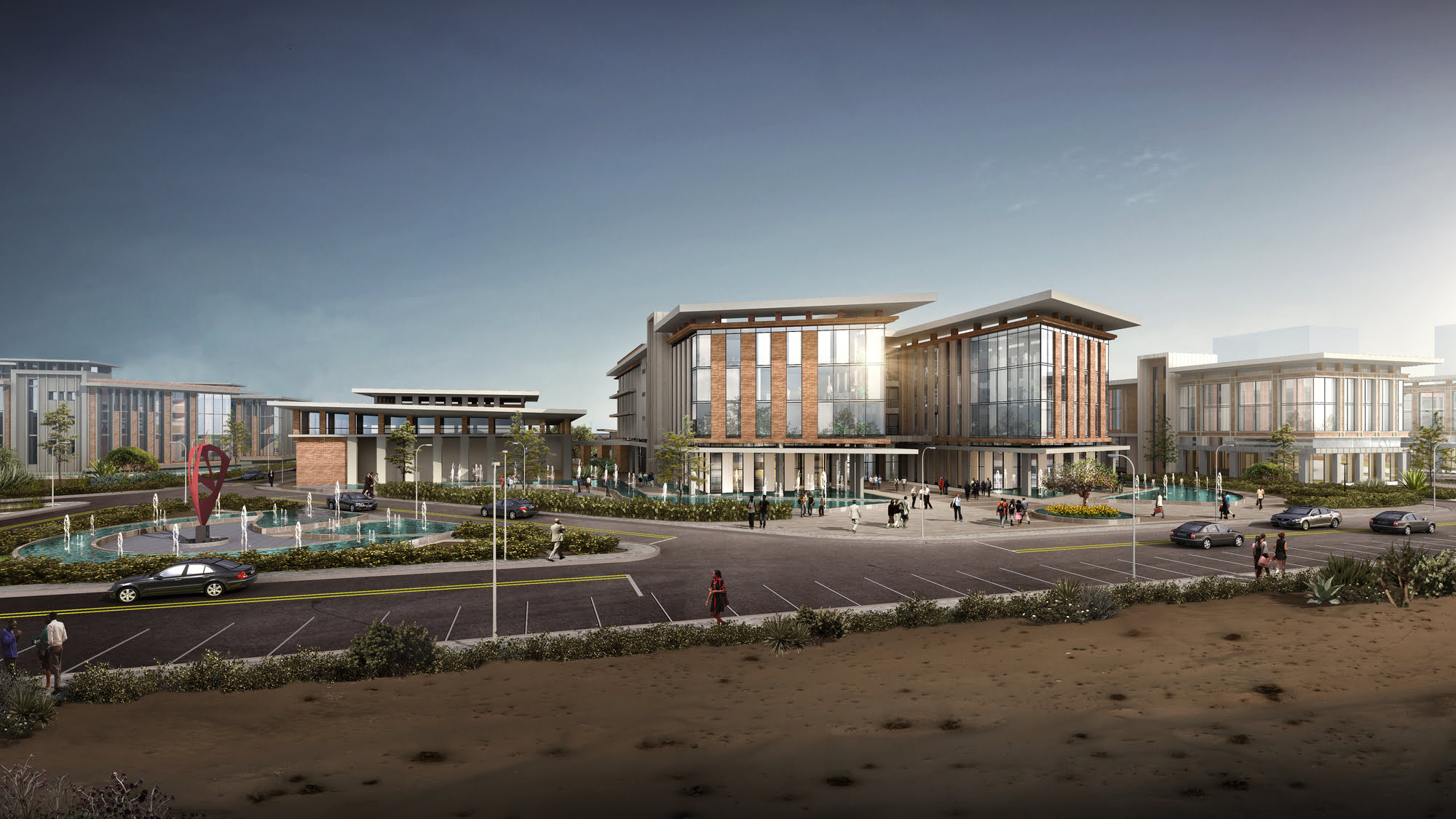
The architectural language employs local materials and draws on ethnic textures reflective of Burkina Faso’s identity. Façades and surfaces showcase artisanal techniques that celebrate cultural heritage while addressing the climatic needs of the region. Water features and planted open spaces are integrated as cooling devices, enhancing both ecological performance and the experiential quality of the civic environment.
More than a courthouse, the Burkina Faso Constitutional Court embodies a civic landmark rooted in locality. Through strategic siting, bioclimatic responsiveness, and cultural expression, the project offers a contemporary response to the needs of justice, accessibility, and national identity.
Gallery