Kayseri, Türkiye
Project Type
City Planning and Master Plan
Location
Kayseri, Türkiye
Year
2024
Project Service
Master Plan to Construction
Project Status
Ongoing
Employer
Ministry of Environment, Urbanisation and Climate Change
Tags
Public Space, Square Design
Project Area & Scope
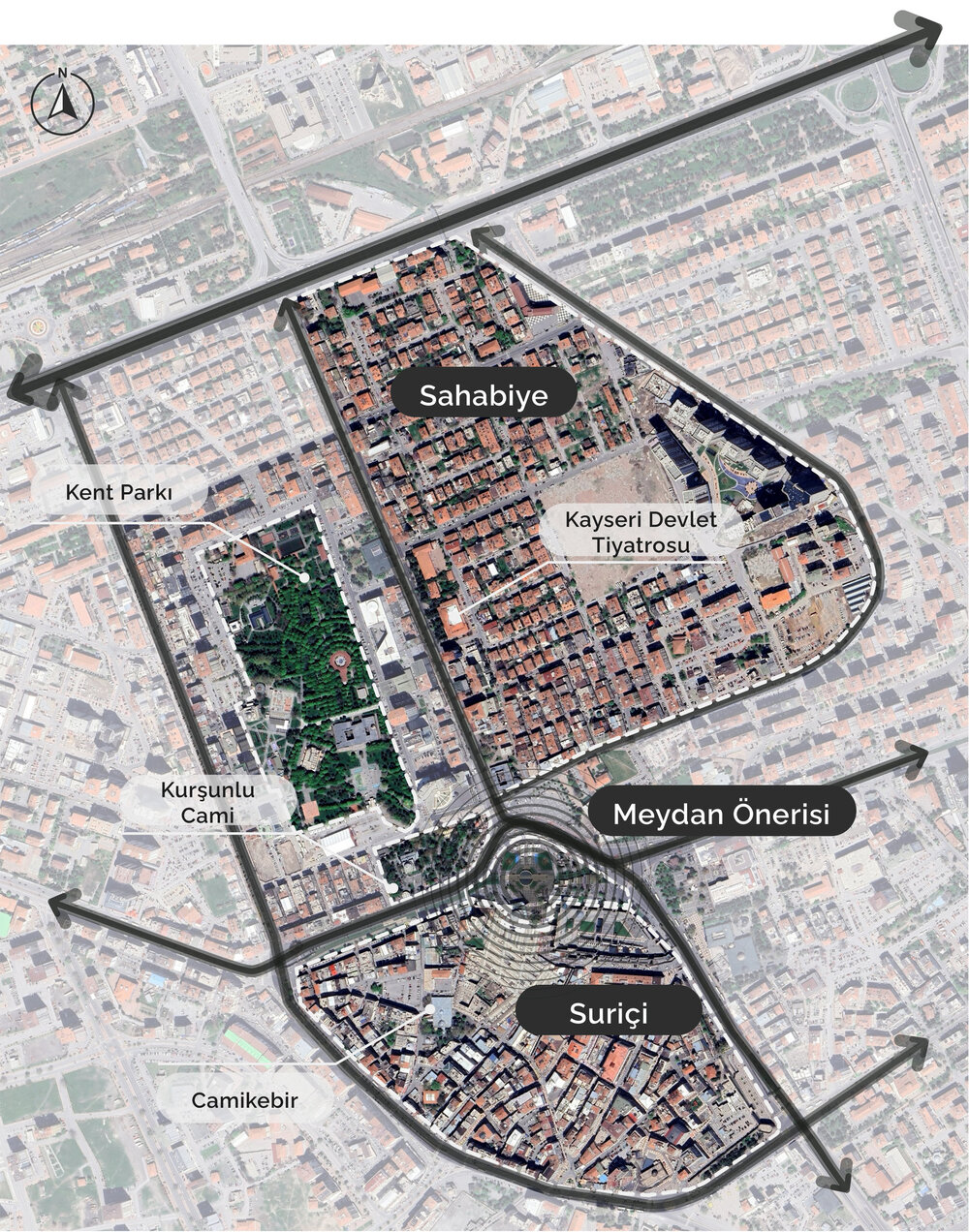
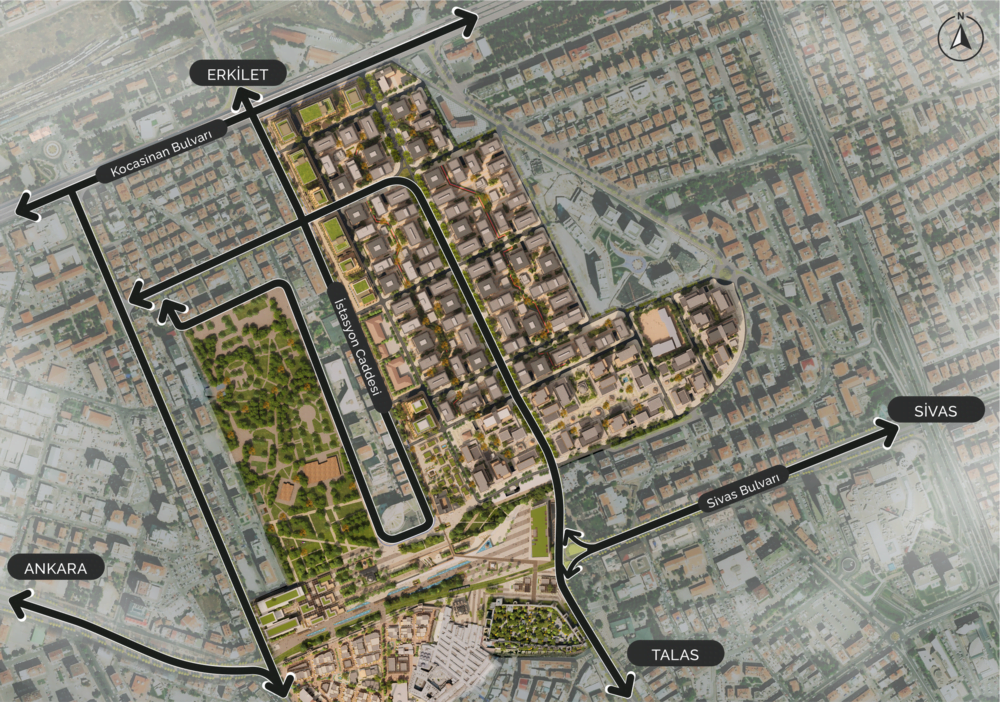
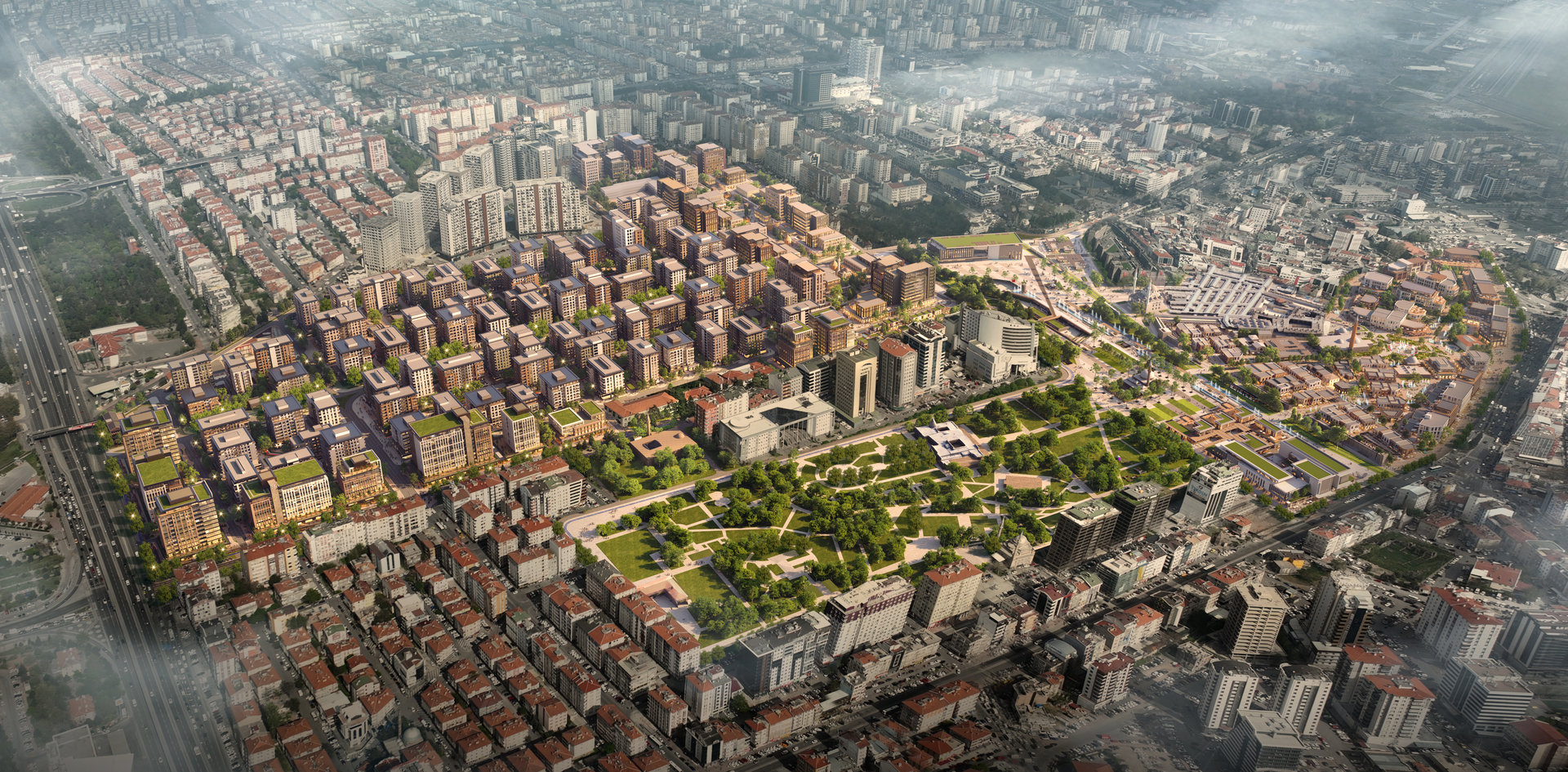
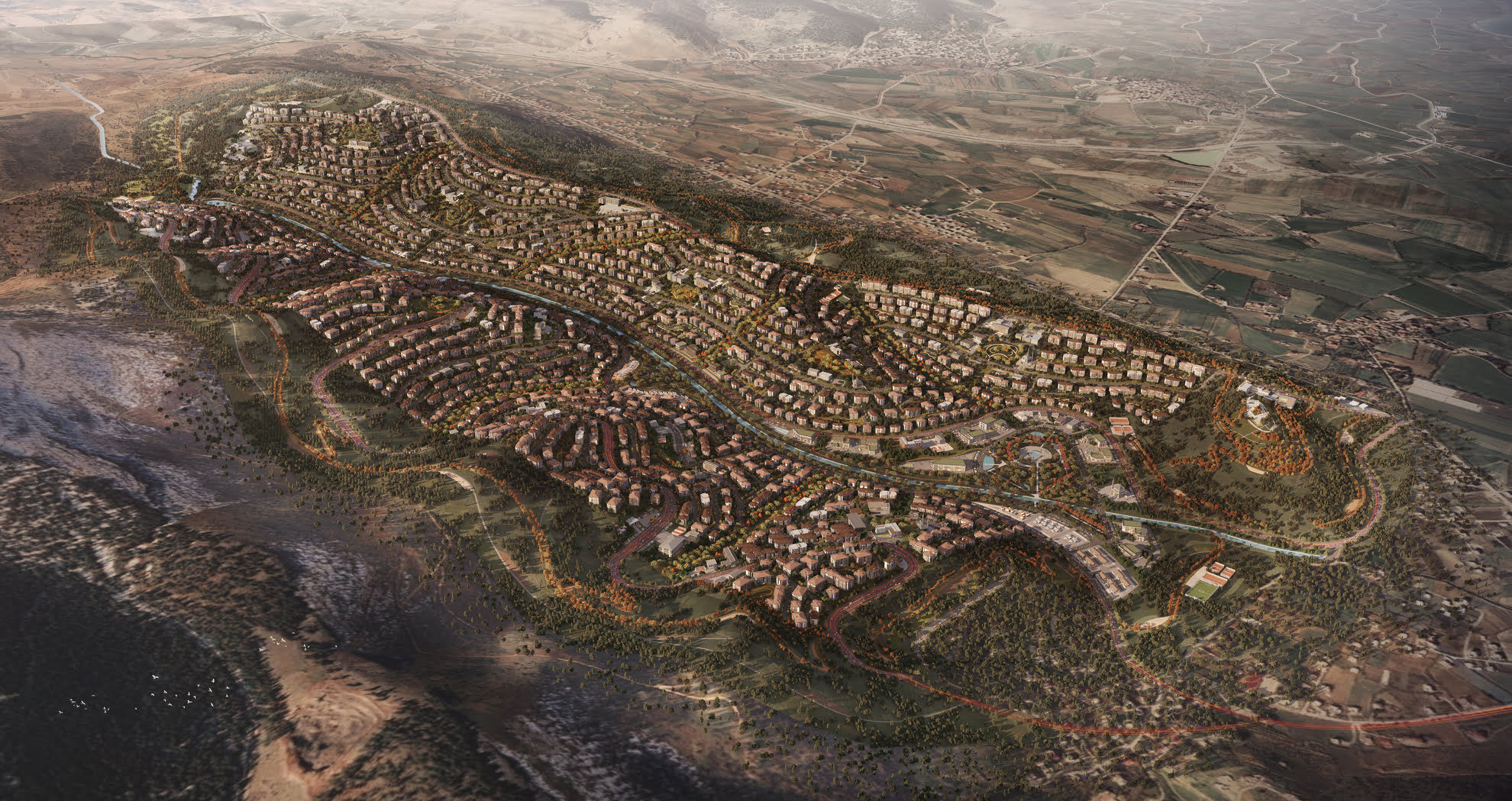
Located at the heart of Kayseri, the Sahabiye and Suriçi districts represent a convergence point between historical continuity and contemporary urban life. Directly connected to primary city arteries such as Sivas Boulevard and Kocasinan Boulevard, the project site is strategically positioned just 6 kilometers from Kayseri Erkilet Airport, ensuring both local and regional accessibility.
Methodological Approach & Urban Reading
The project’s methodological framework is grounded in the simultaneous analysis of layered historical textures and present-day urban dynamics. While Sahabiye reveals a pressing need for regeneration due to its aging housing stock and increasing traffic density, Suriçi stands as a cultural landscape requiring preservation, with architectural traces from the Seljuk and Ottoman periods.
Comprehensive urban readings—including orthophotos, historical maps, and archival imagery—have been utilized to reconstruct the area’s invisible historical layers. These traces form the conceptual basis of a design strategy that reconciles past and present needs within a cohesive urban model.
Architectural & Urban Design Principles
1.Contextual Interpretation of Historical Layers
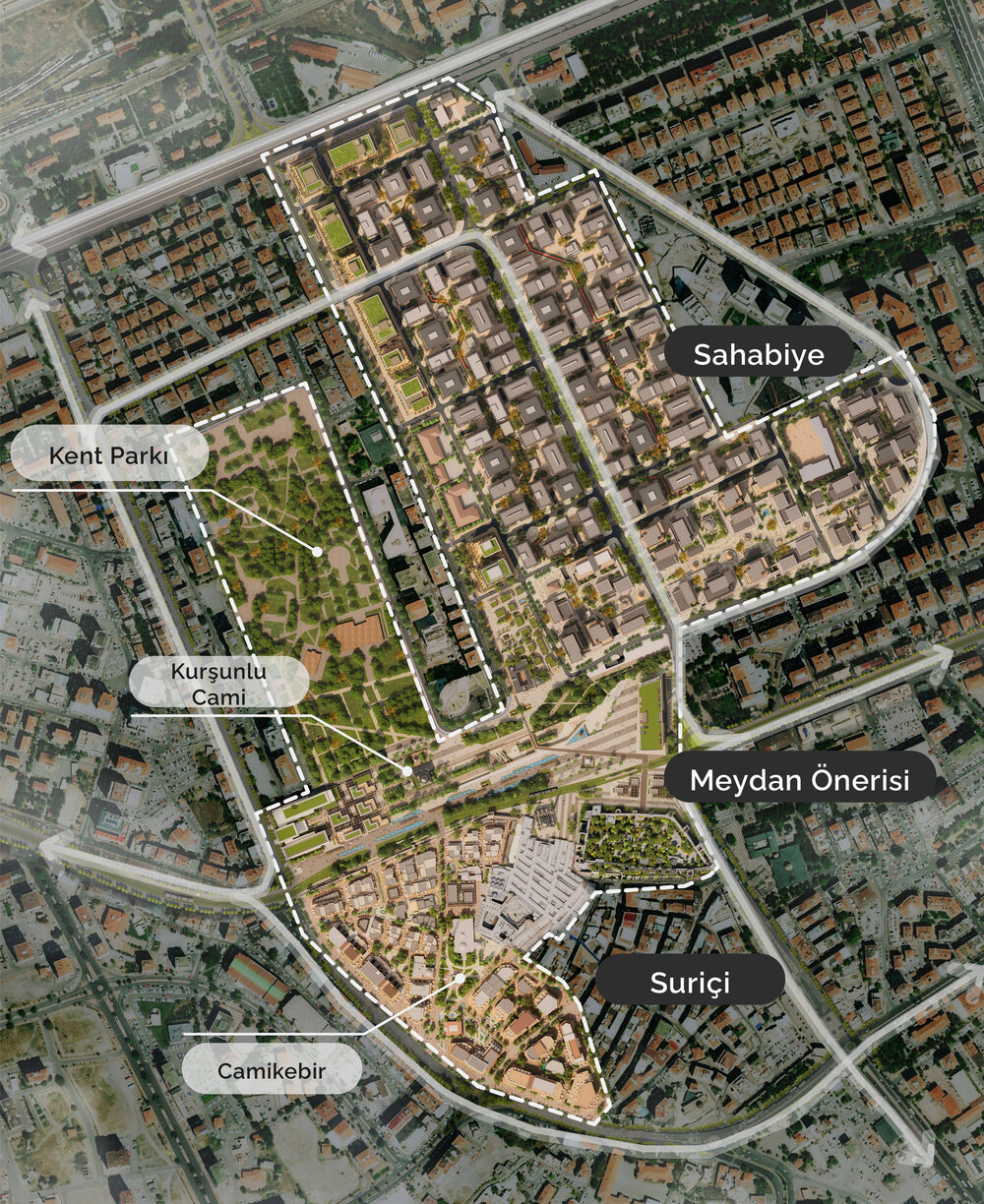
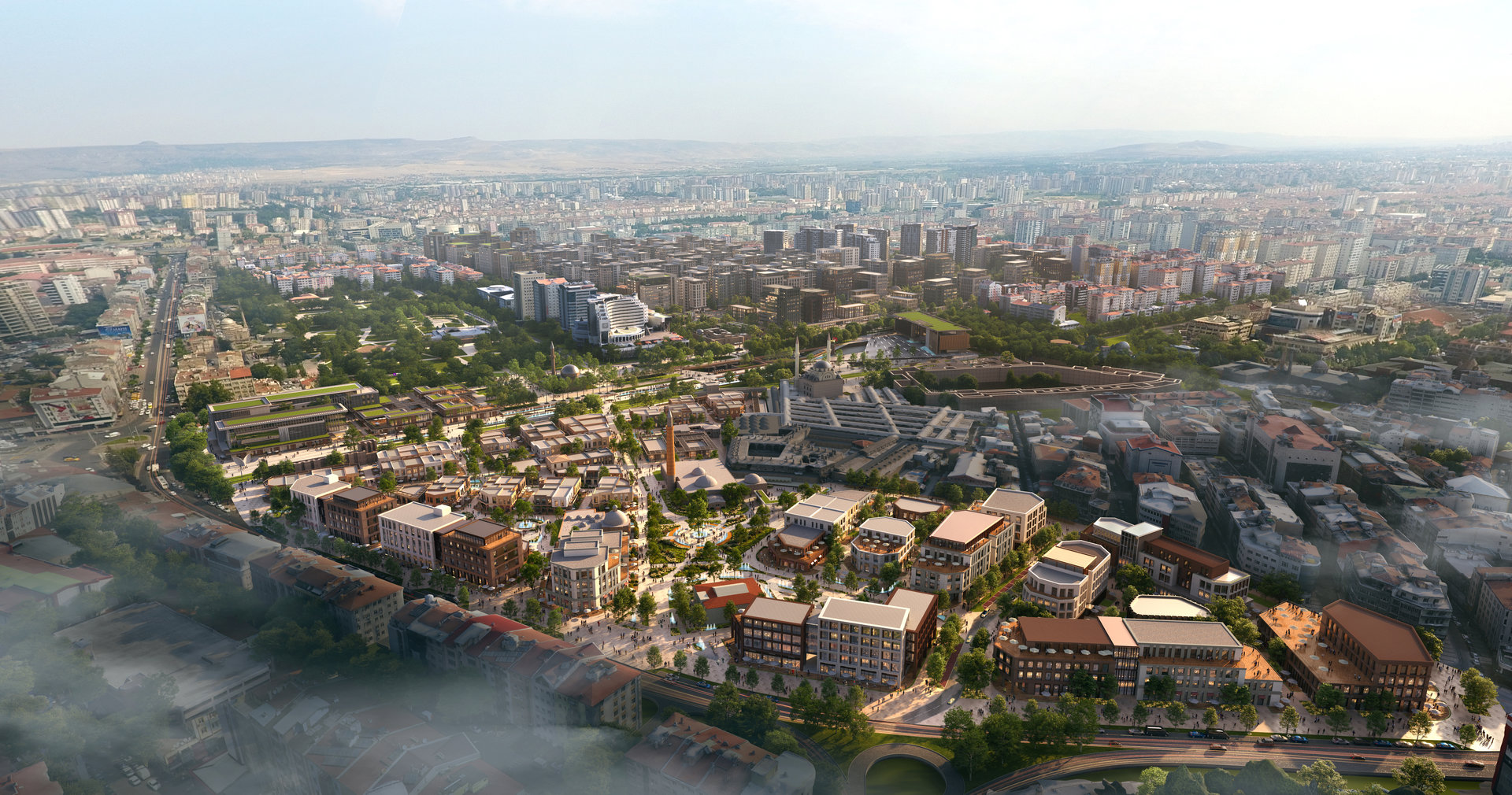
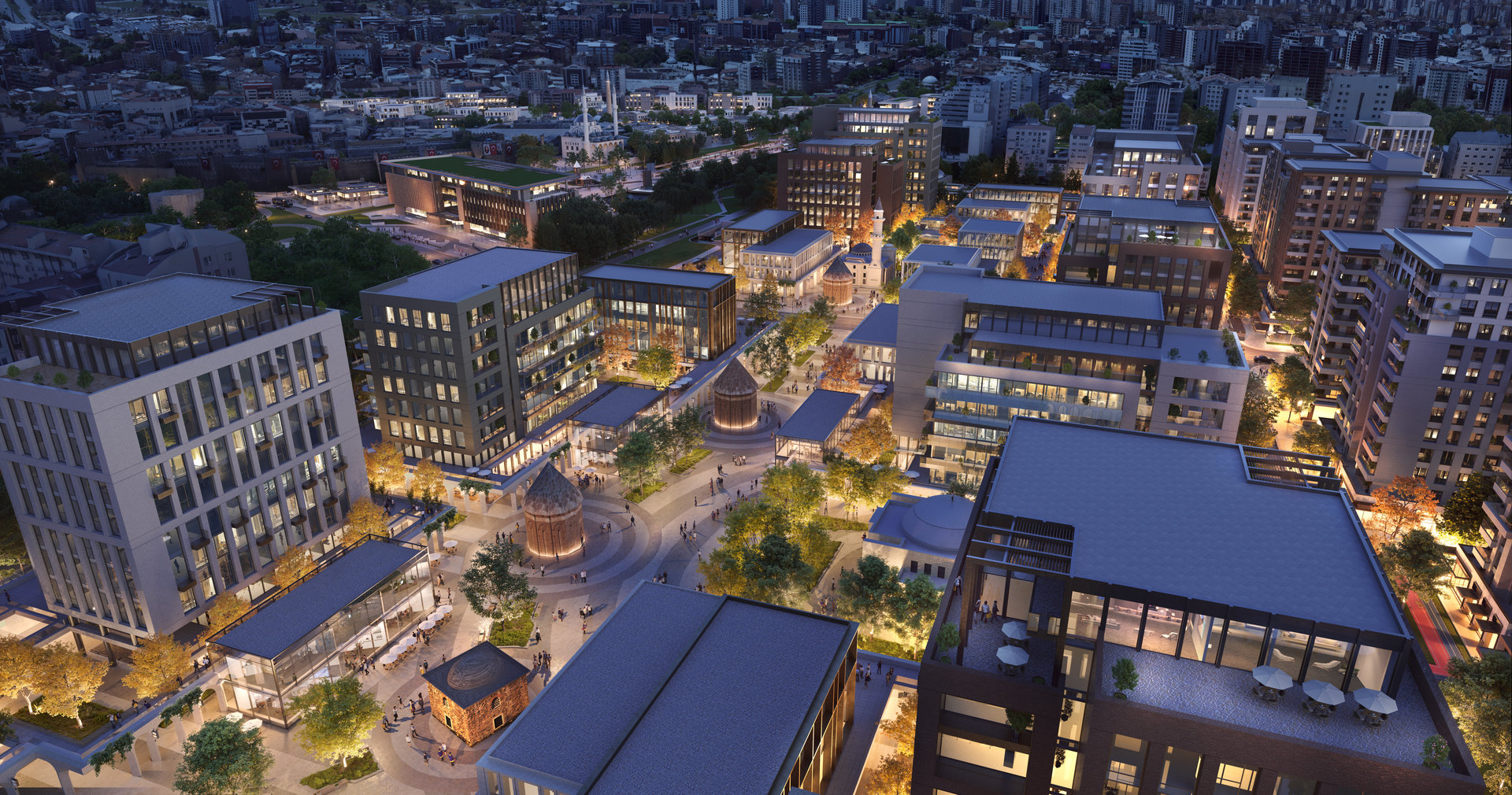
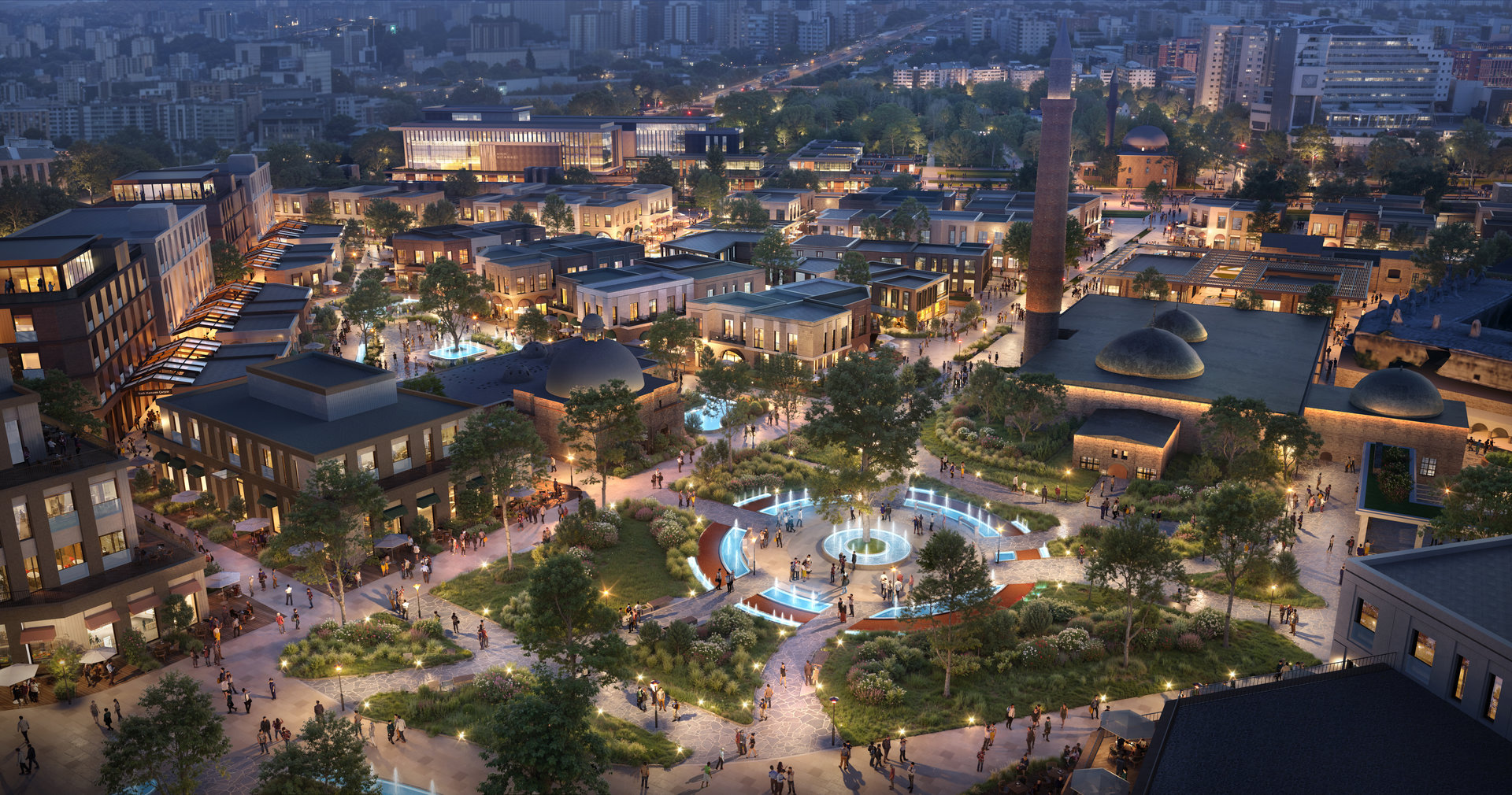
Iconic landmarks such as Kurşunlu Mosque, Camikebir, Gevher Nesibe Madrasa, and Kayseri Castle are reconnected visually and spatially through a network of pedestrian routes. In this context:
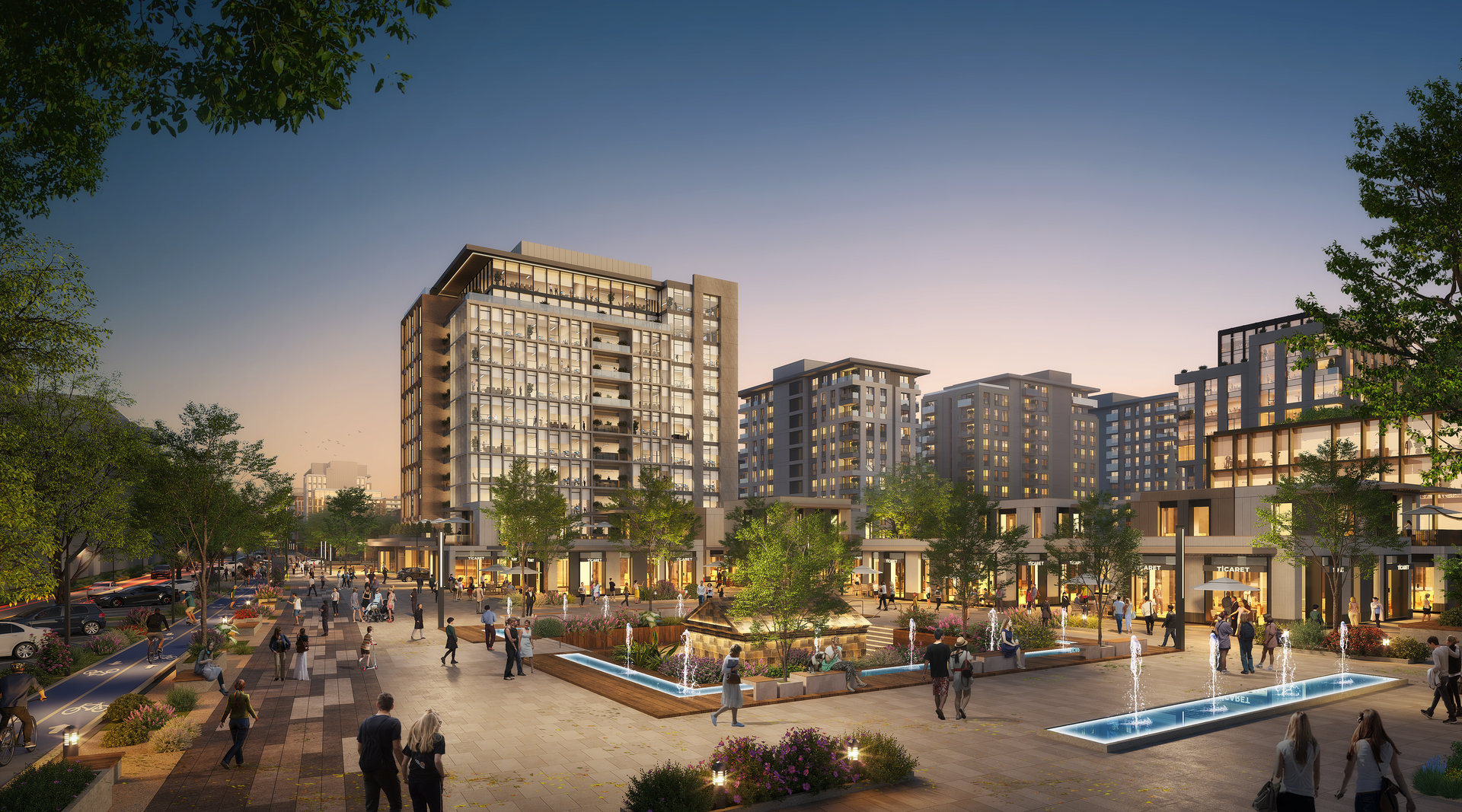
- Vacant plots are redefined with low-rise, courtyard-based commercial structures,
- The historic typology of caravanserais is reimagined with contemporary materials and functions.
2.Rationalization of Traffic Flow & Pedestrian-Centric Networks
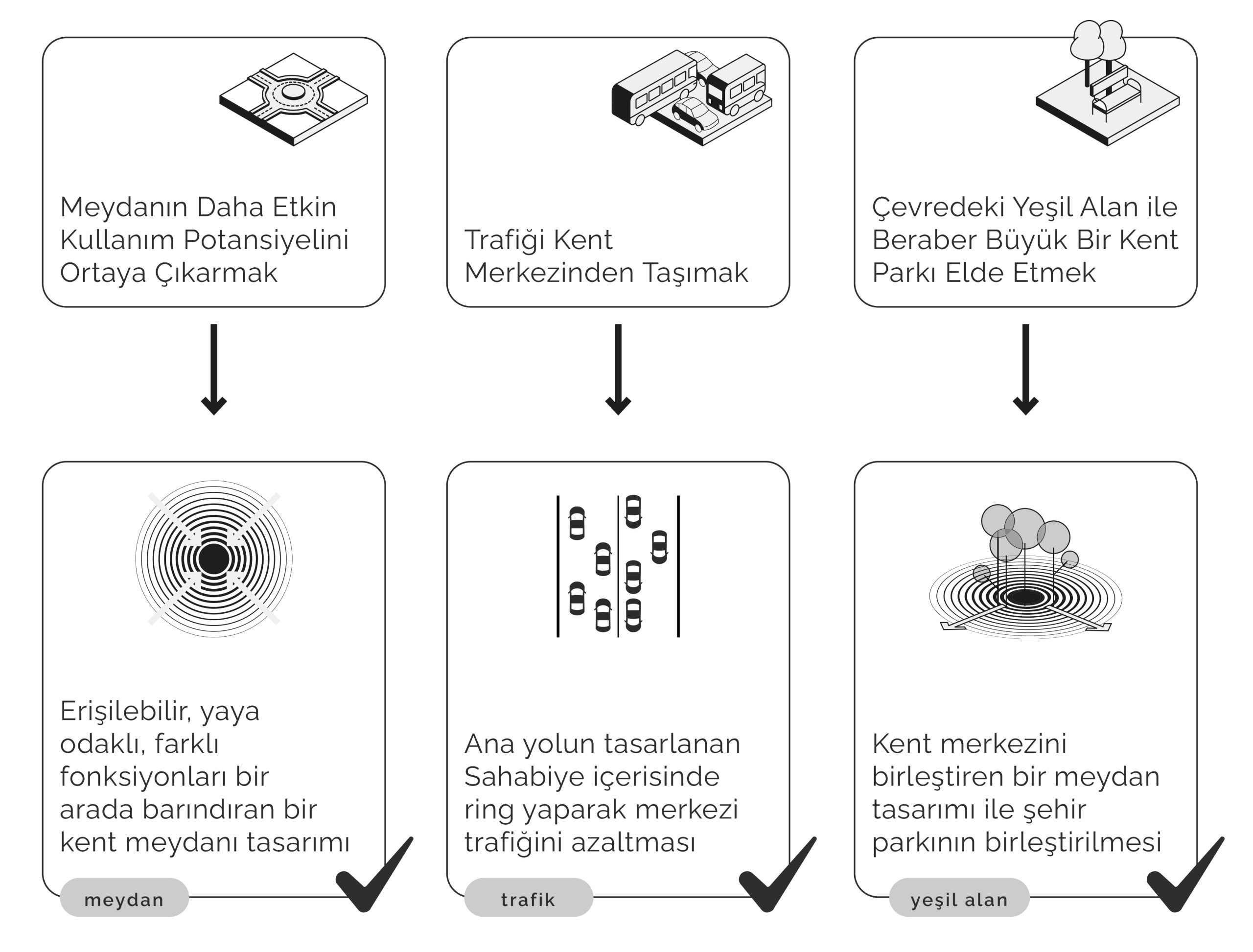
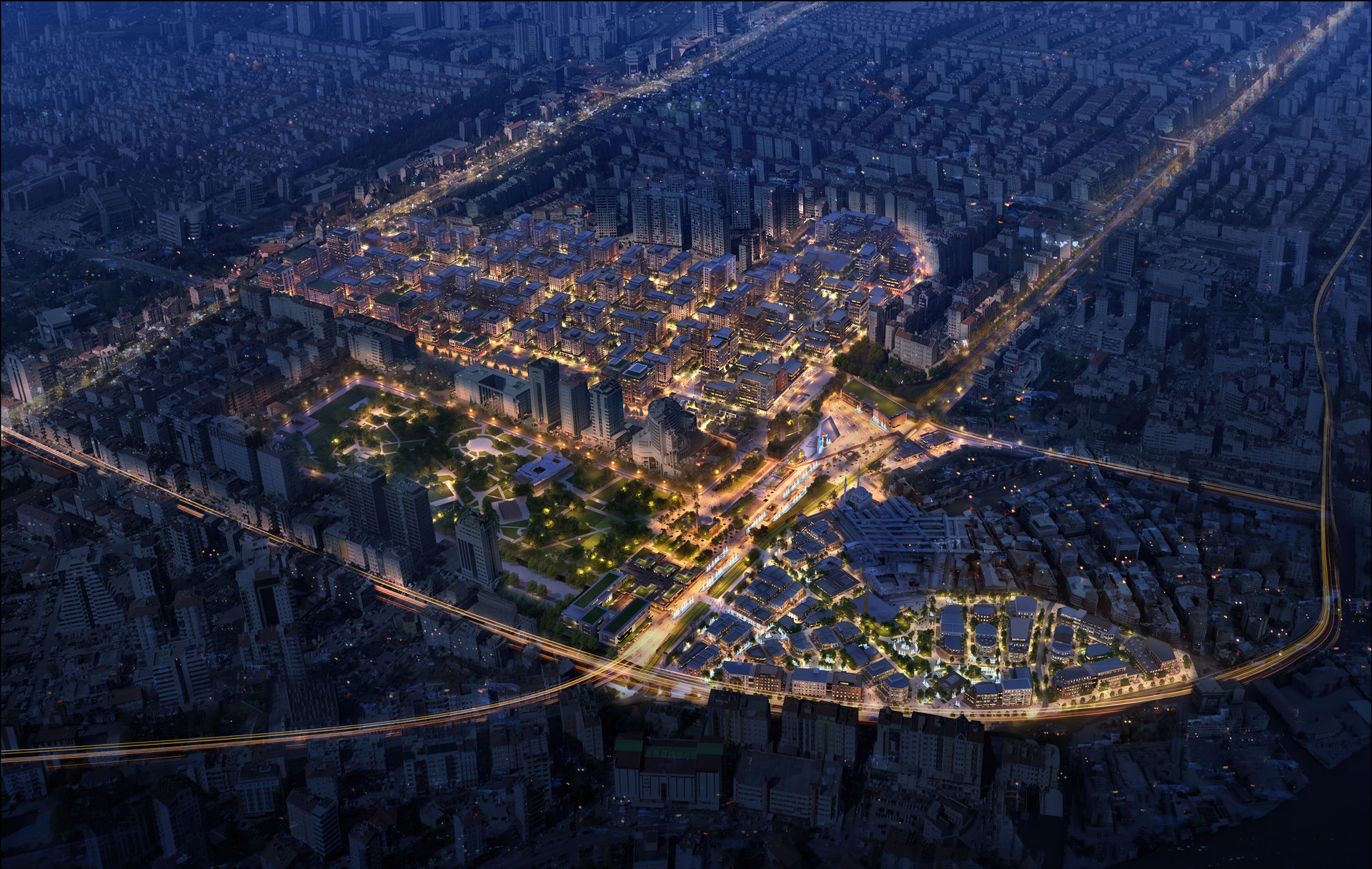
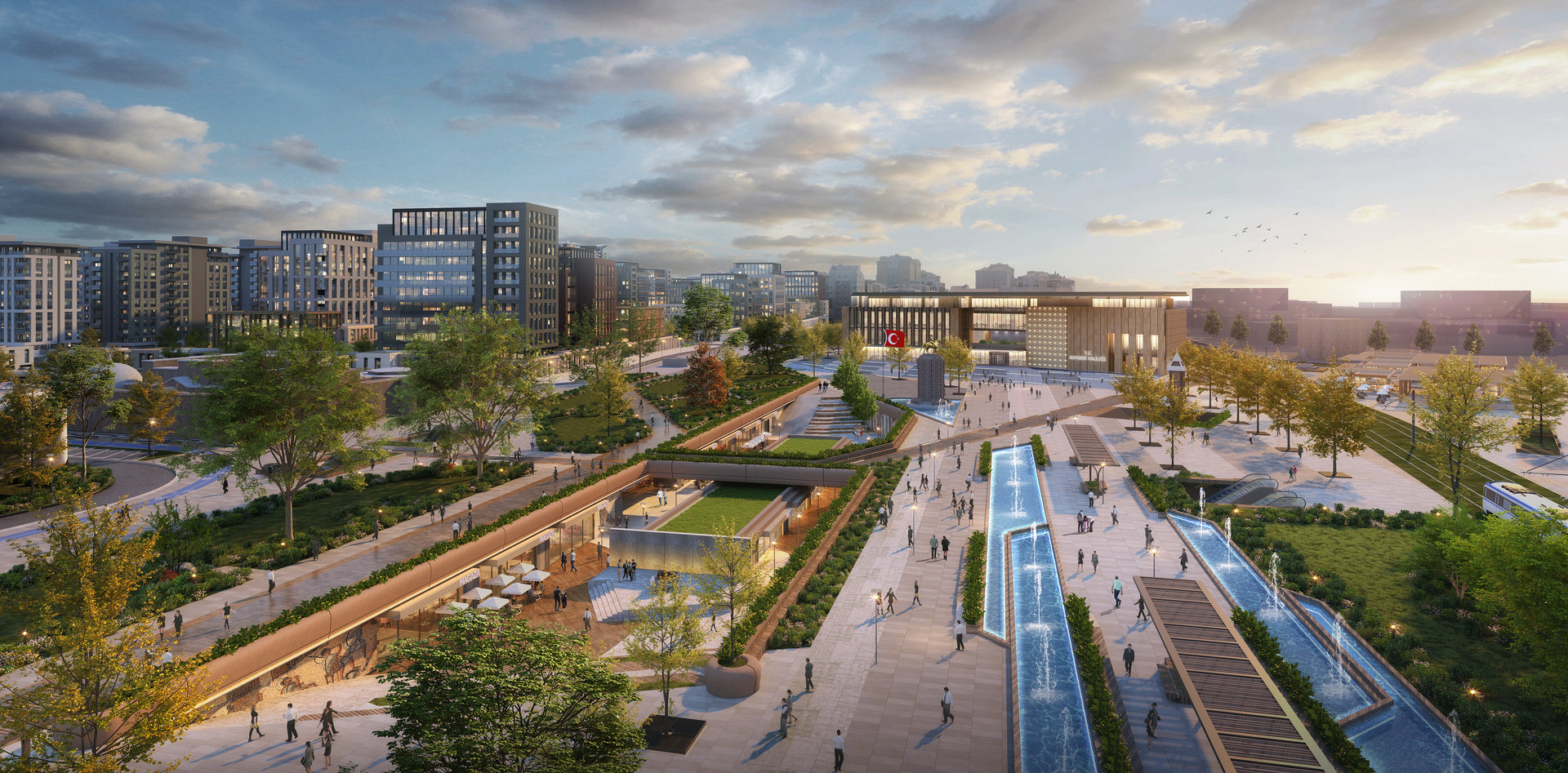
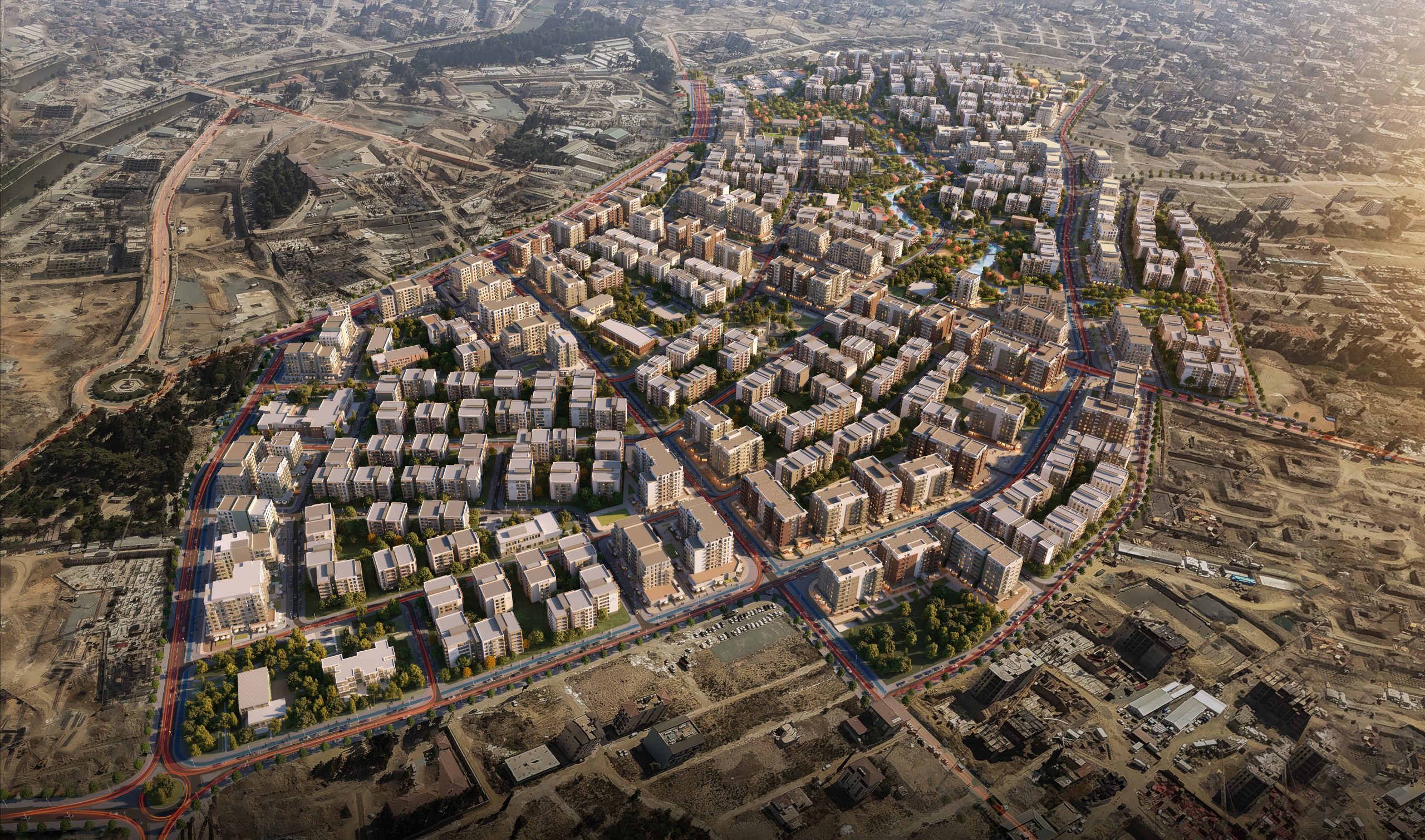
The pressure of intercity traffic running through the project site is alleviated by an inner ring road strategy. By relocating vehicular circulation underground, the upper level is transformed into a continuous pedestrian realm. Wide sidewalks, bike lanes, and accessible crossings promote a slower, human-scaled city center experience.
3.A New Civic Plaza with Flexible Public Programs
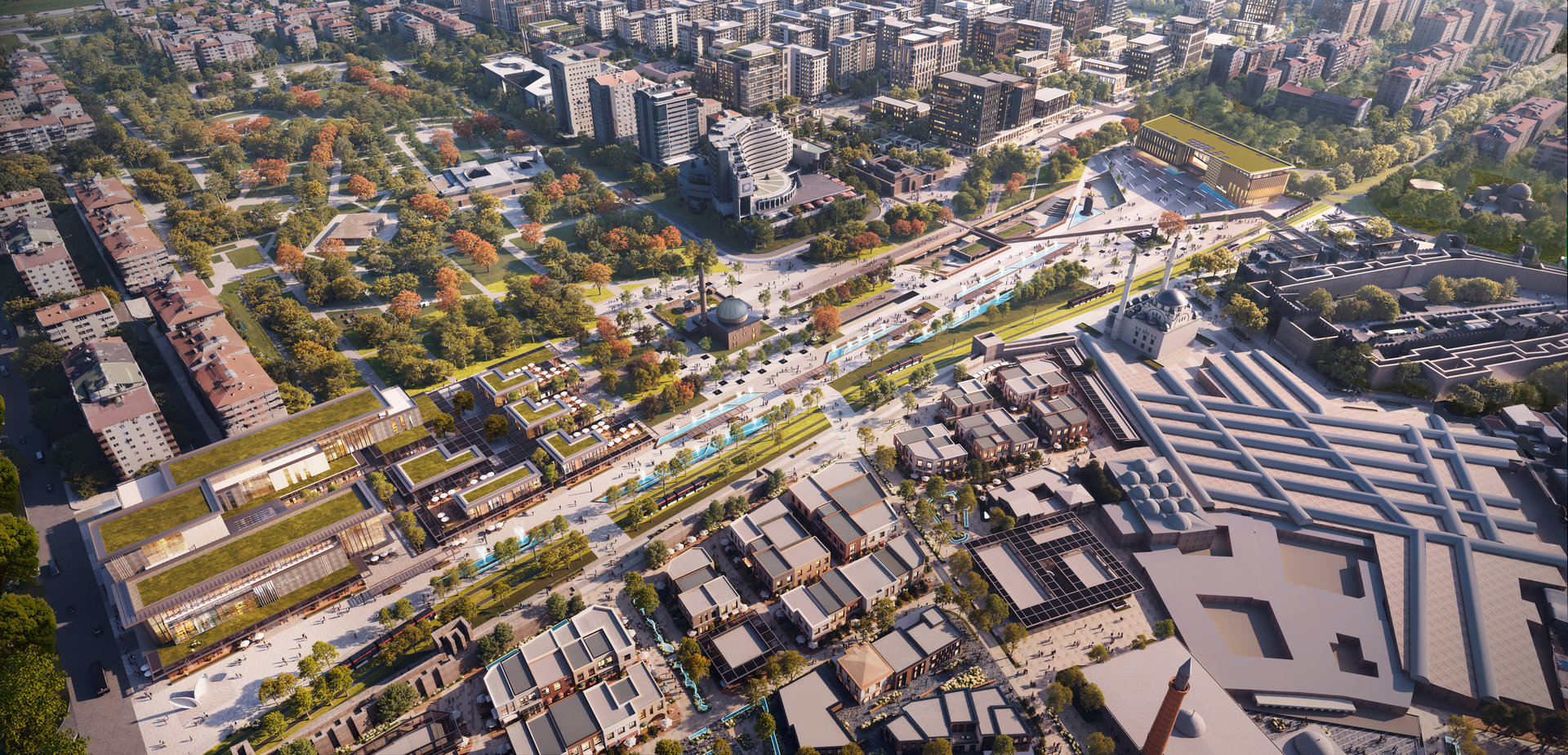
A multifunctional civic plaza is introduced at the intersection of the historic and modern centers—designed as a flexible open space for social interaction, cultural events, and daily recreation. The proposal includes:
- A 250,000 m² plaza design,
- Integration of 116,000 m² of new green areas,
- Programmatic versatility through outdoor stages, playgrounds, and temporary markets.
4.Integrated Restoration & Contemporary Additions
Registered heritage structures within the site are restored with fidelity to their architectural integrity. In areas with missing or untraceable buildings, contemporary yet context-sensitive infill is proposed to maintain spatial continuity. New structures are carefully scaled to remain within the height limits of the existing local silhouette.
Conclusion
The Sahabiye & Suriçi Urban Design Project is not merely a physical transformation—it is a strategic redefinition of Kayseri’s identity. By harmonizing historical heritage with contemporary urban needs, the project preserves the collective memory of the place while establishing the foundations for a renewed public life culture.
Gallery