Edirne, Tuürkiye
Project Type
Historical & Renovation
Location
Edirne, Türkiye
Year
2023
Project Service
Concept to Construction
Project Status
Ongoing
Employer
The Emlak Konut REIC
Urban Memory as a Framework
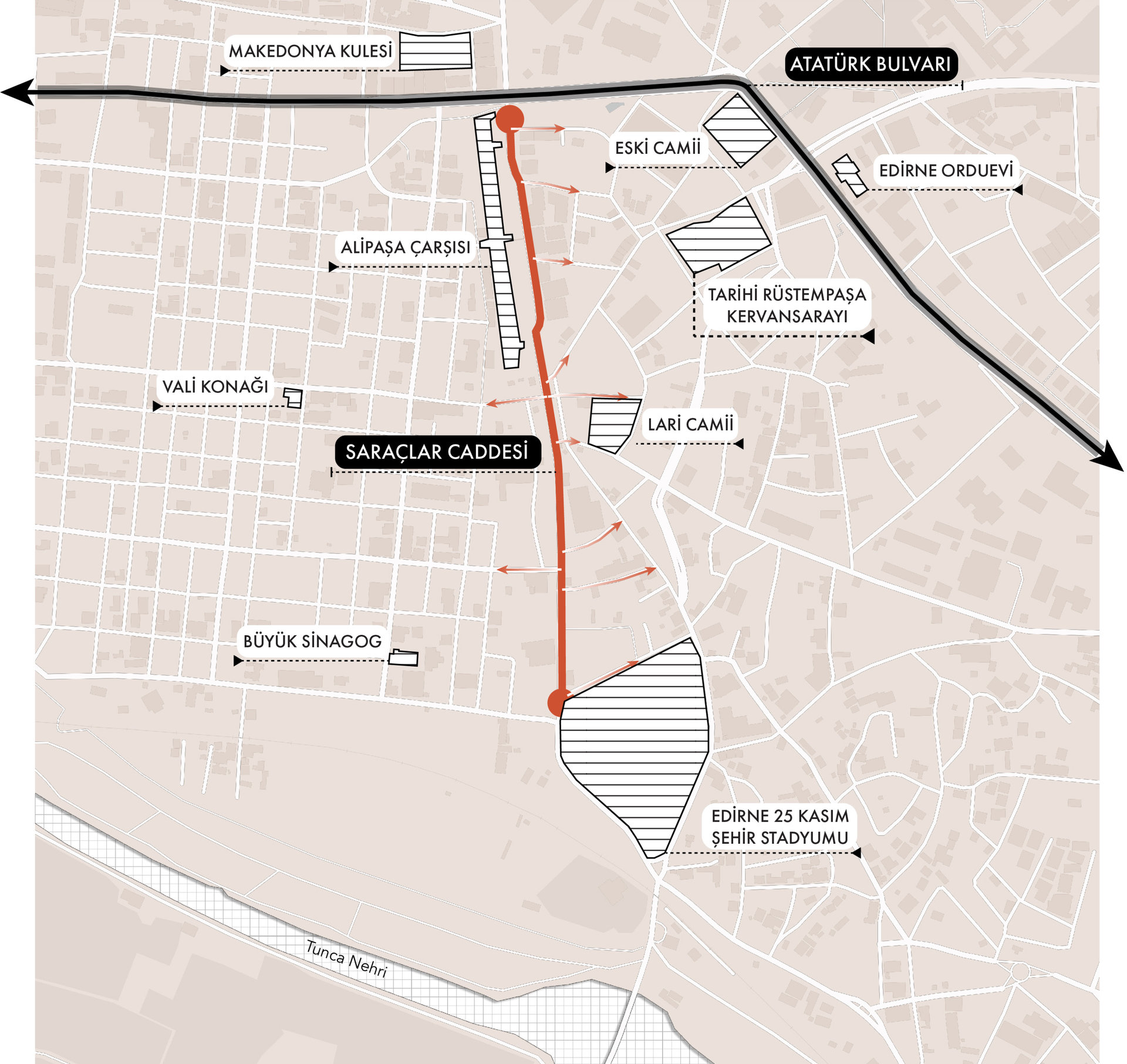
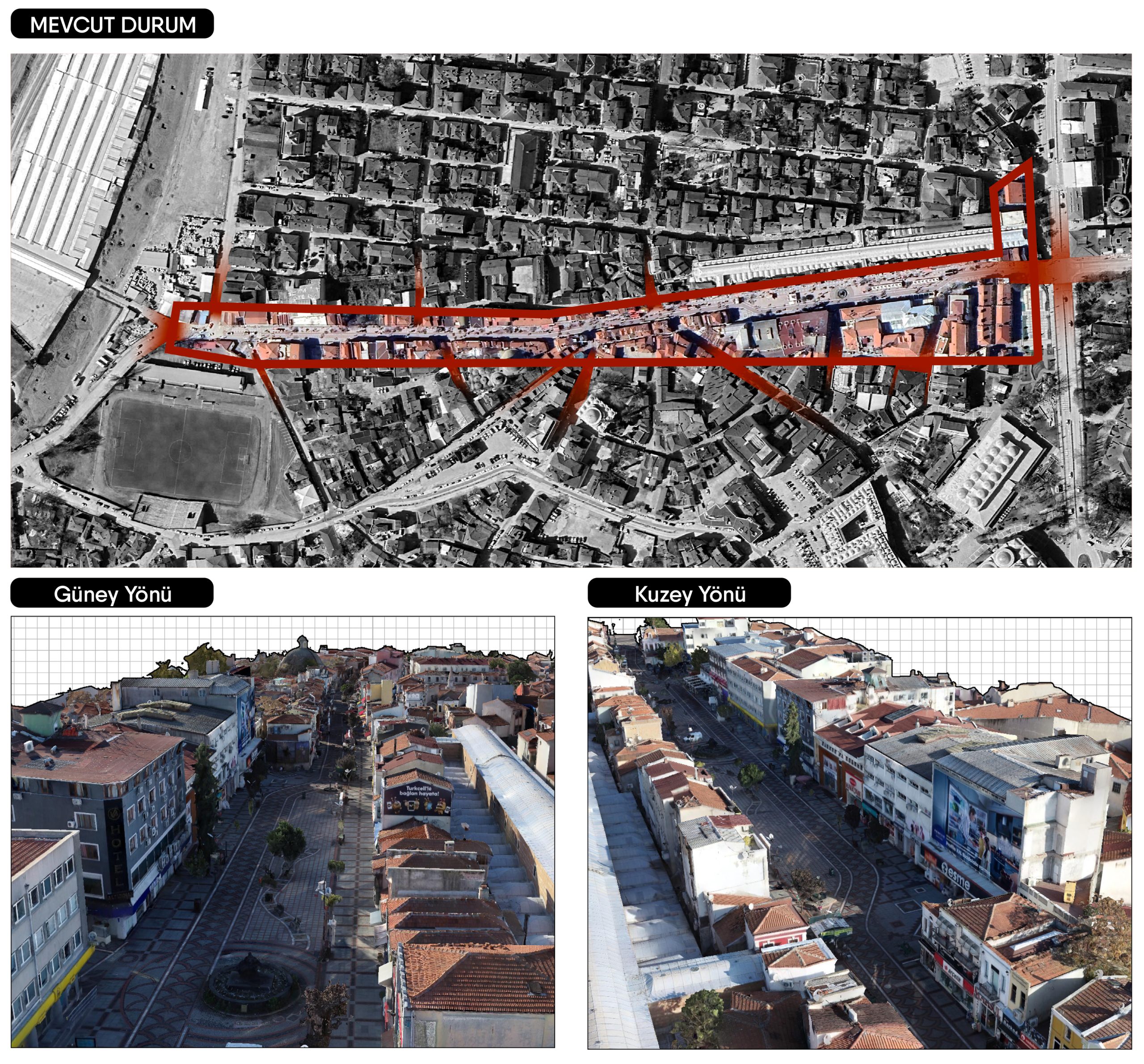
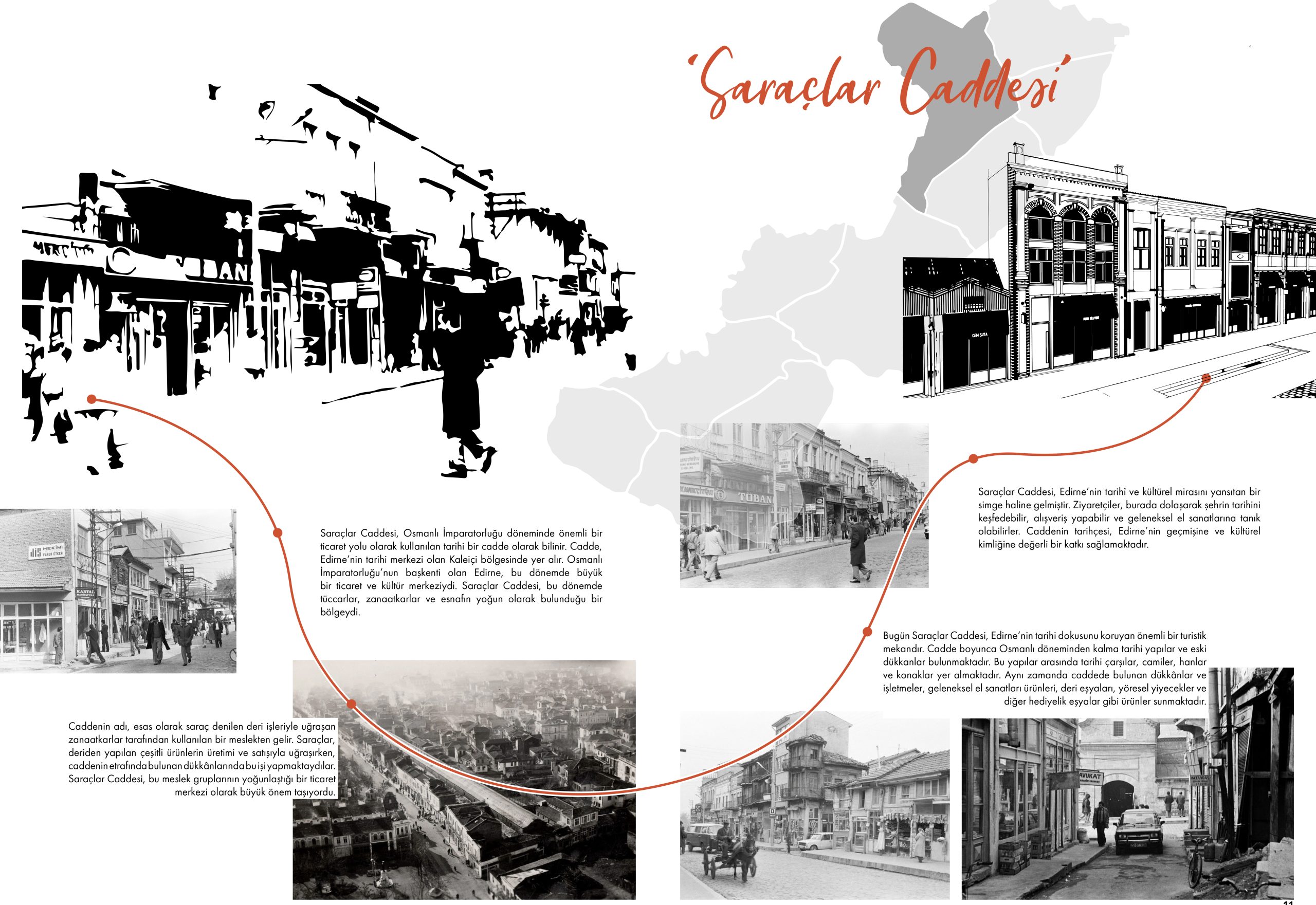
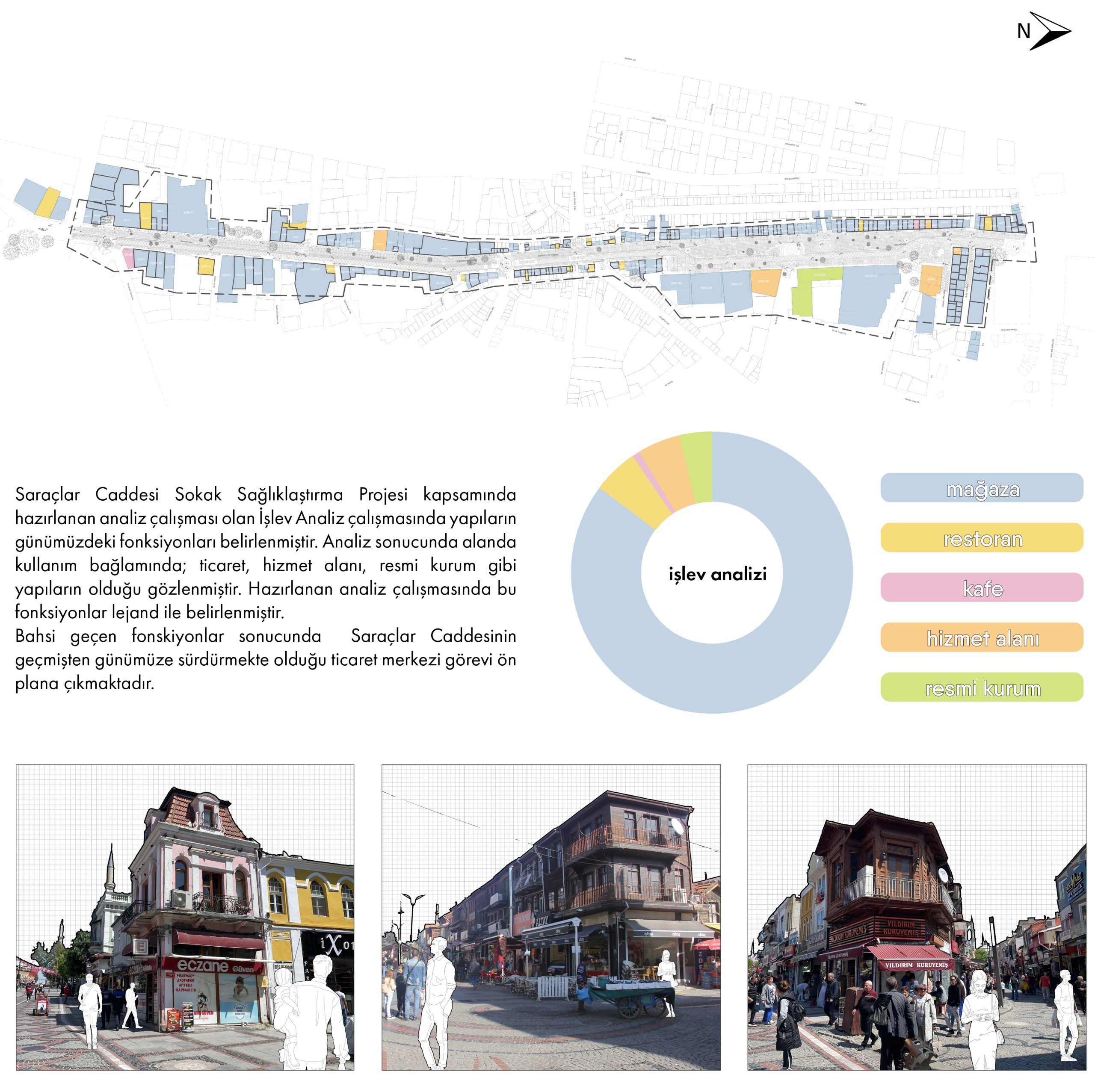
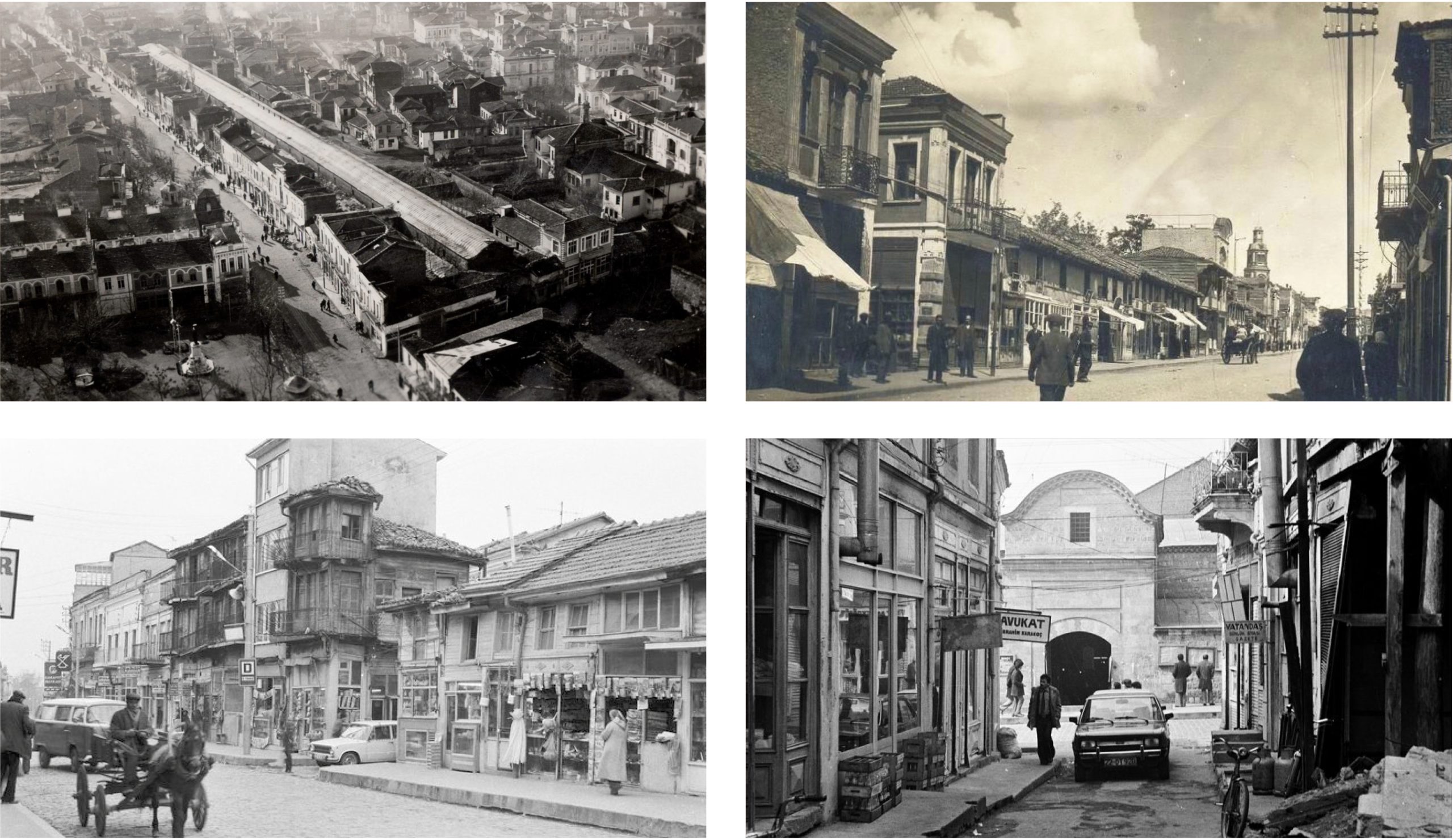
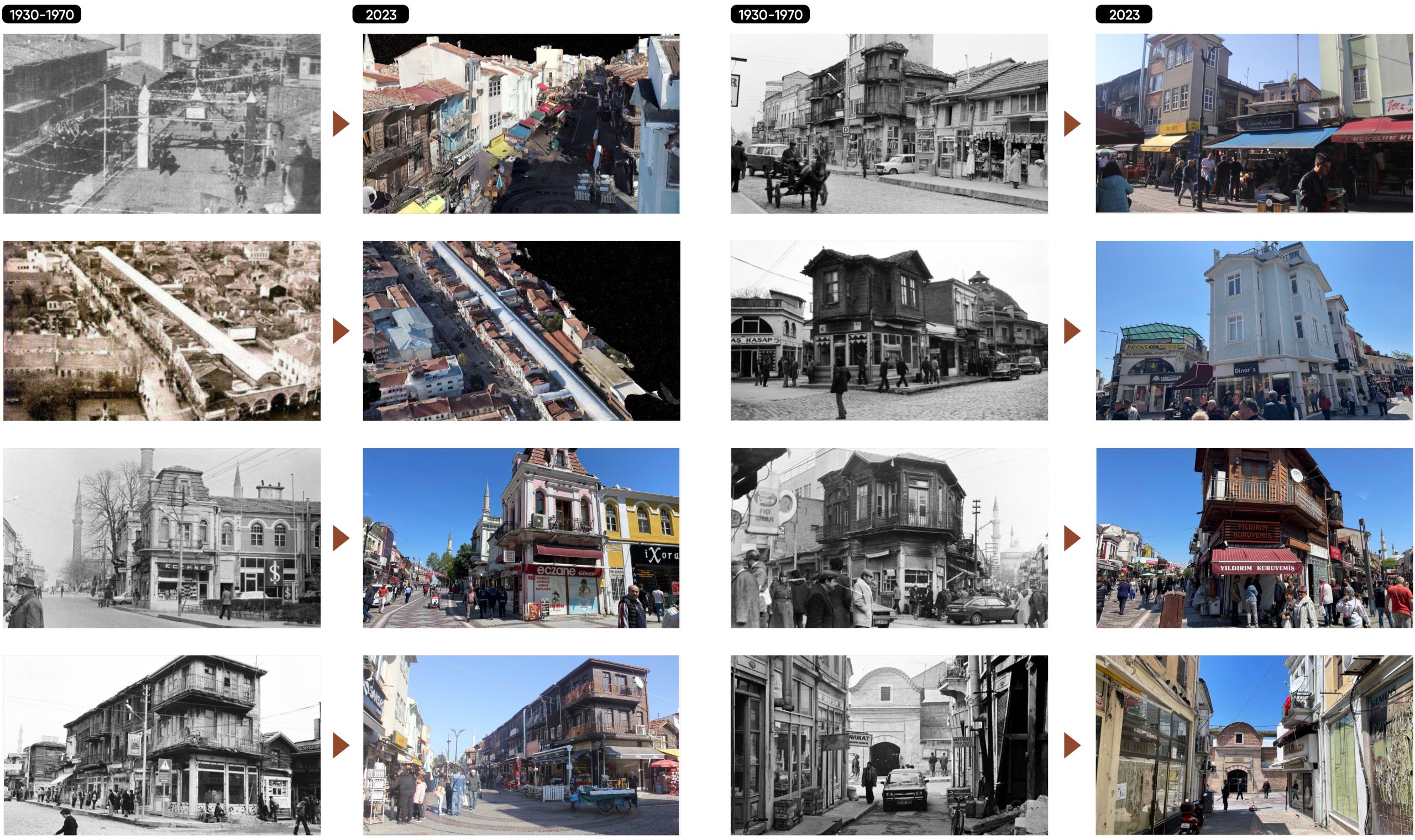
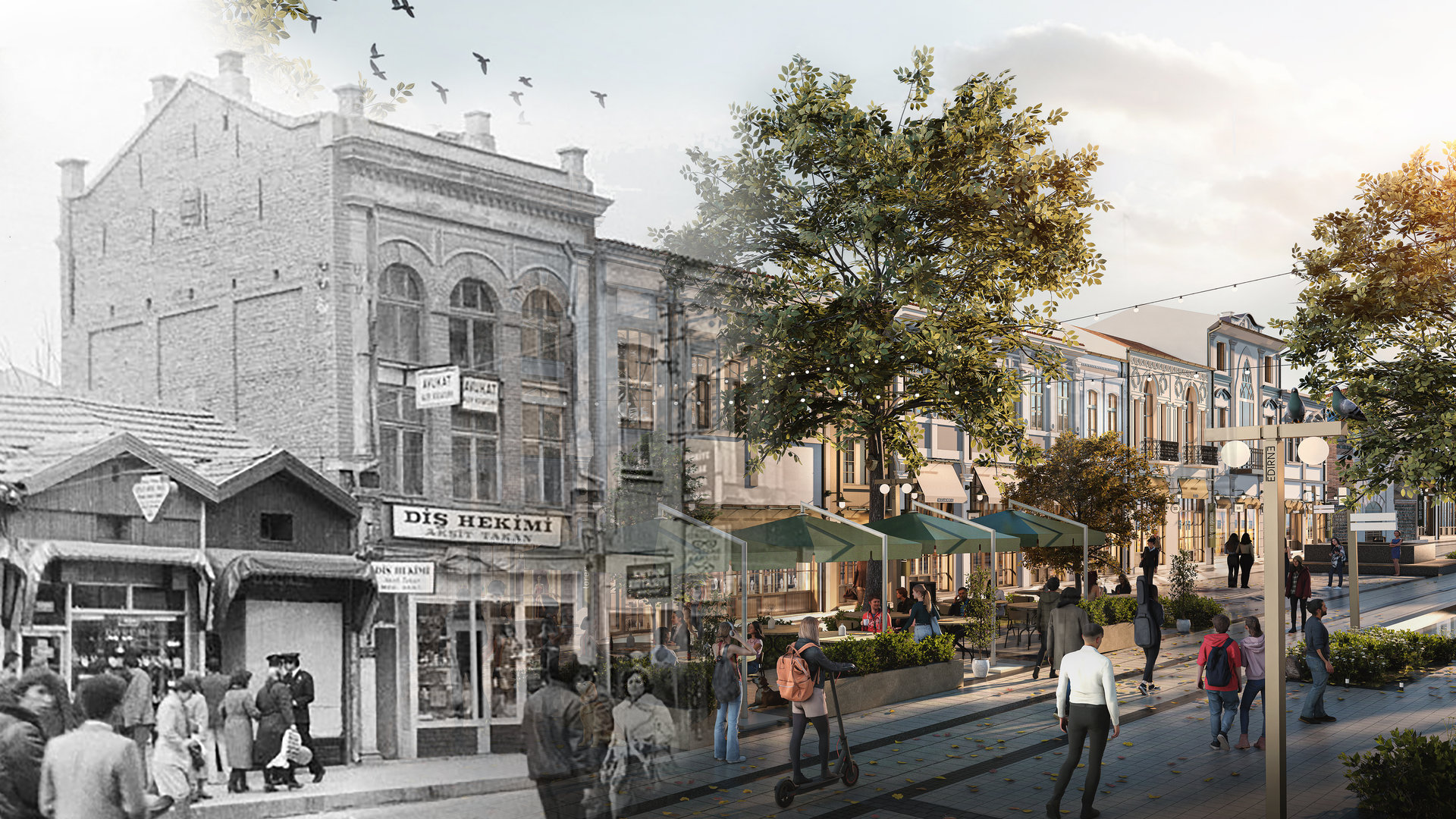
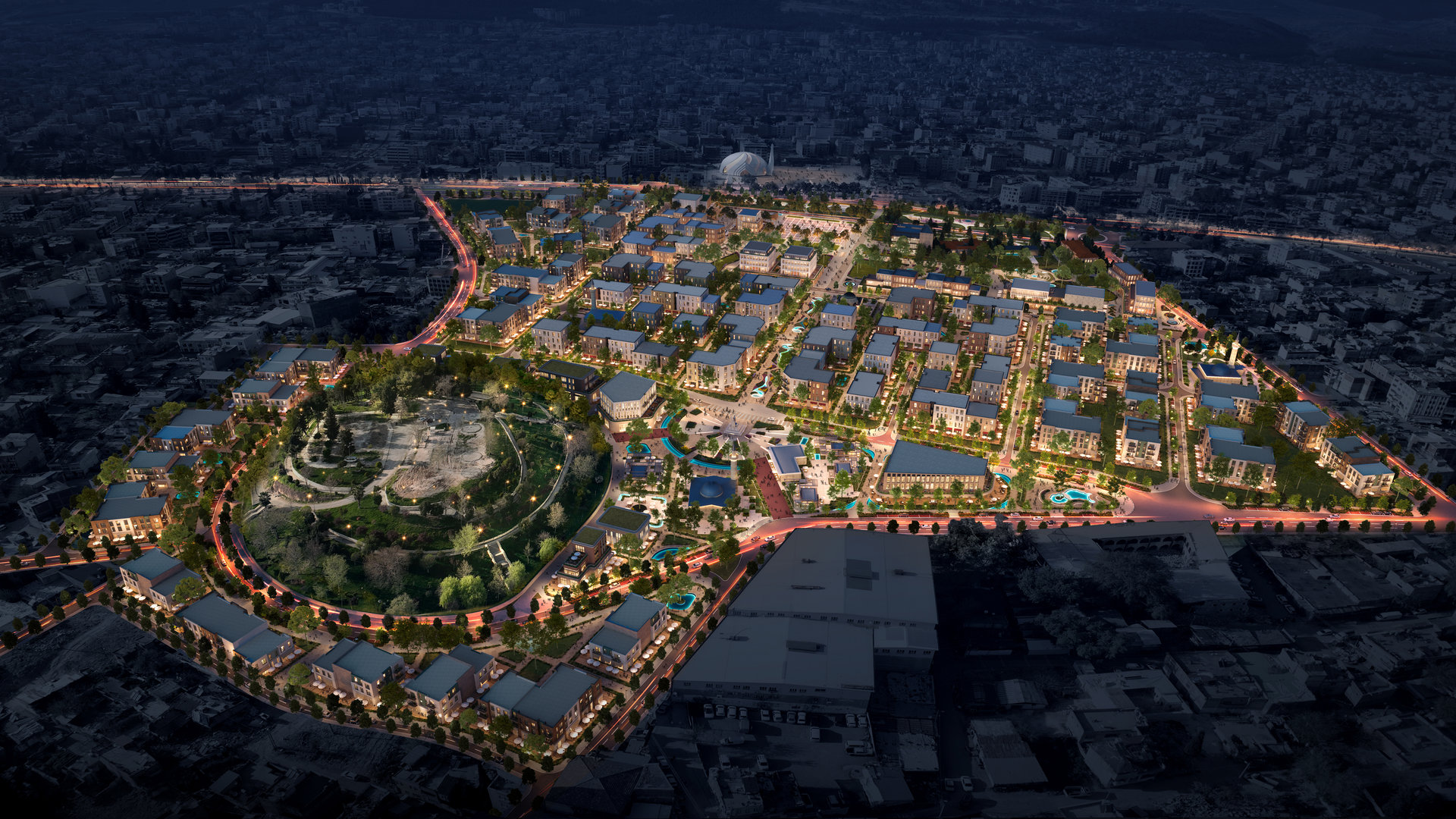
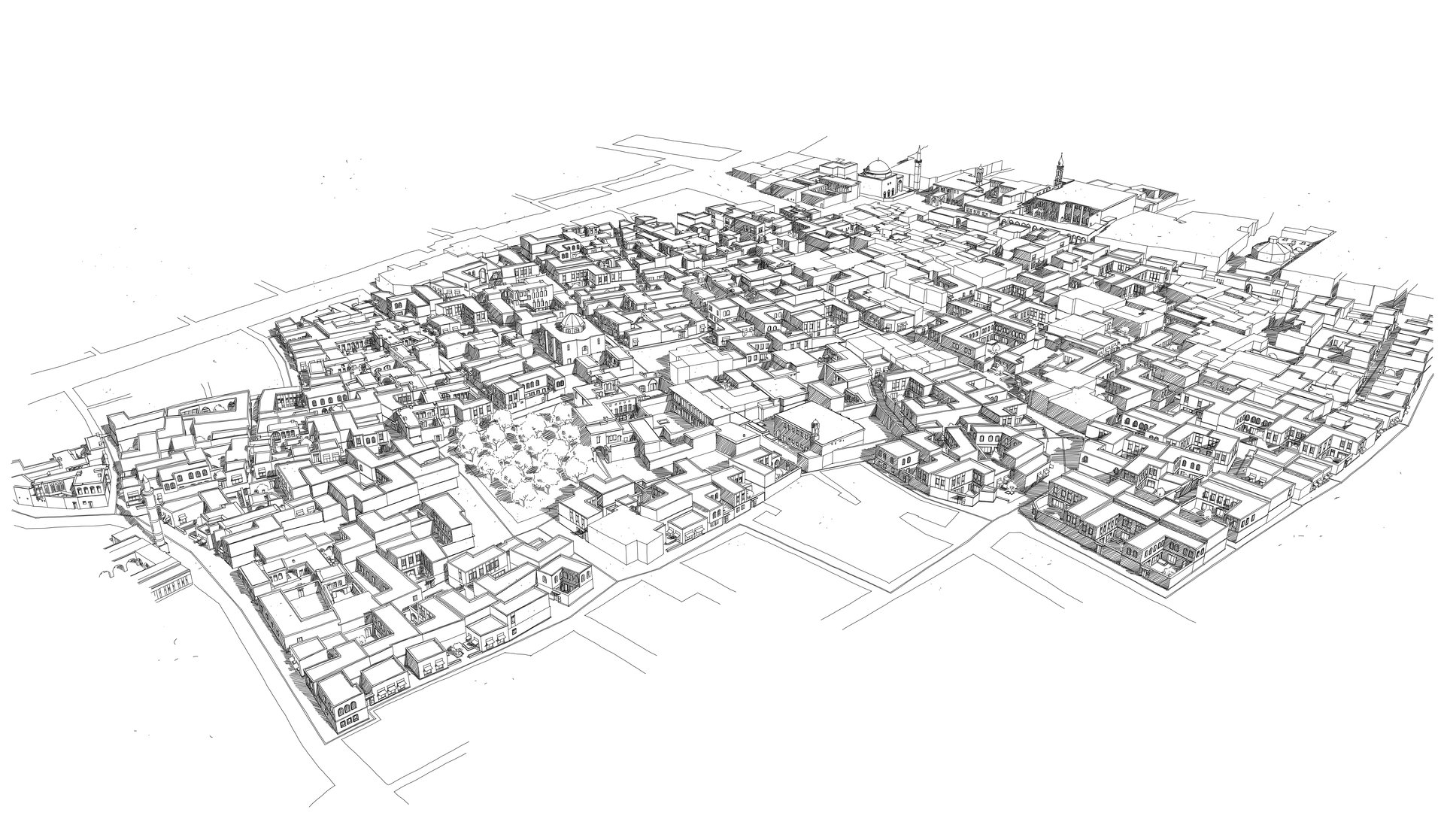
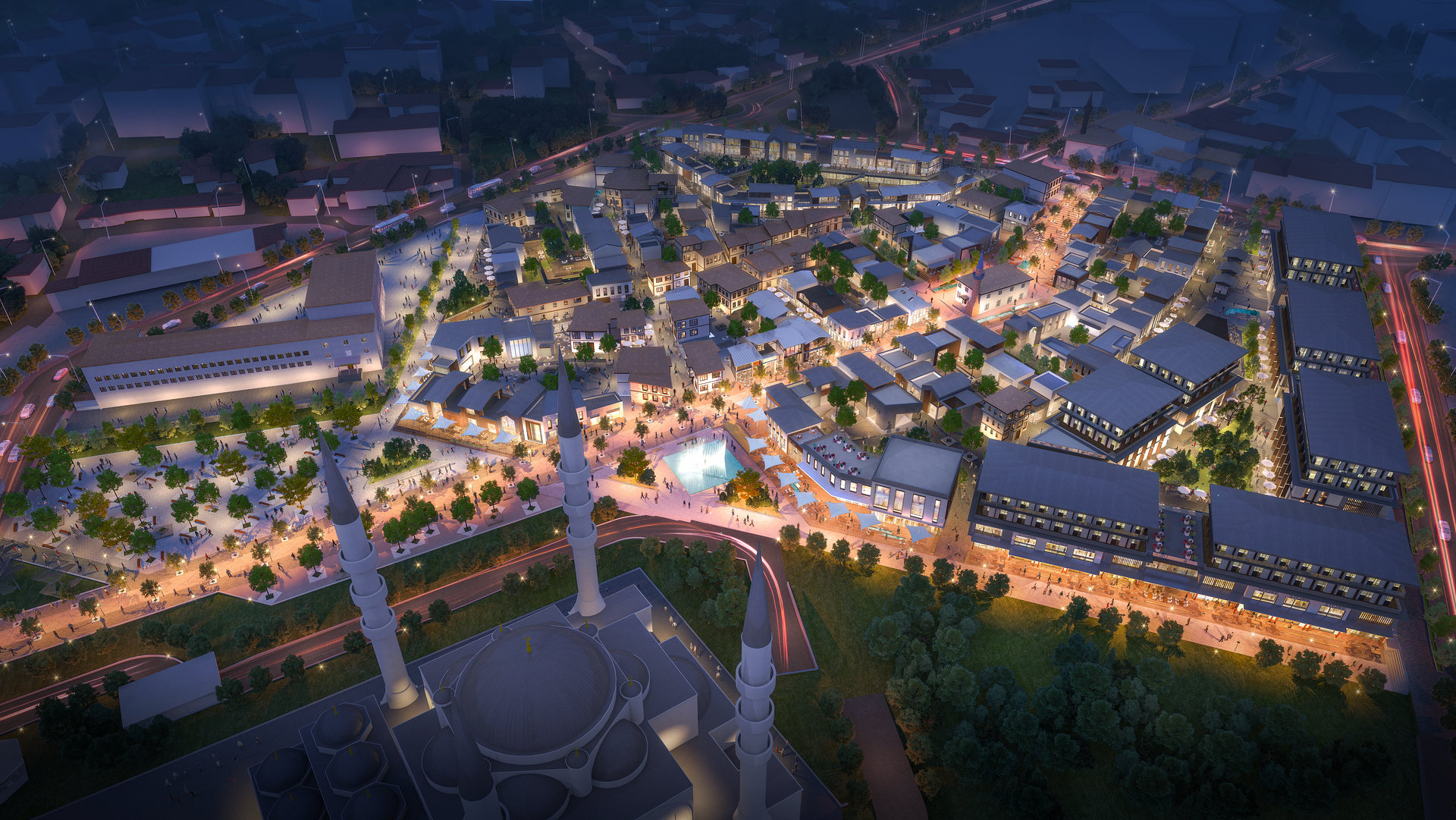
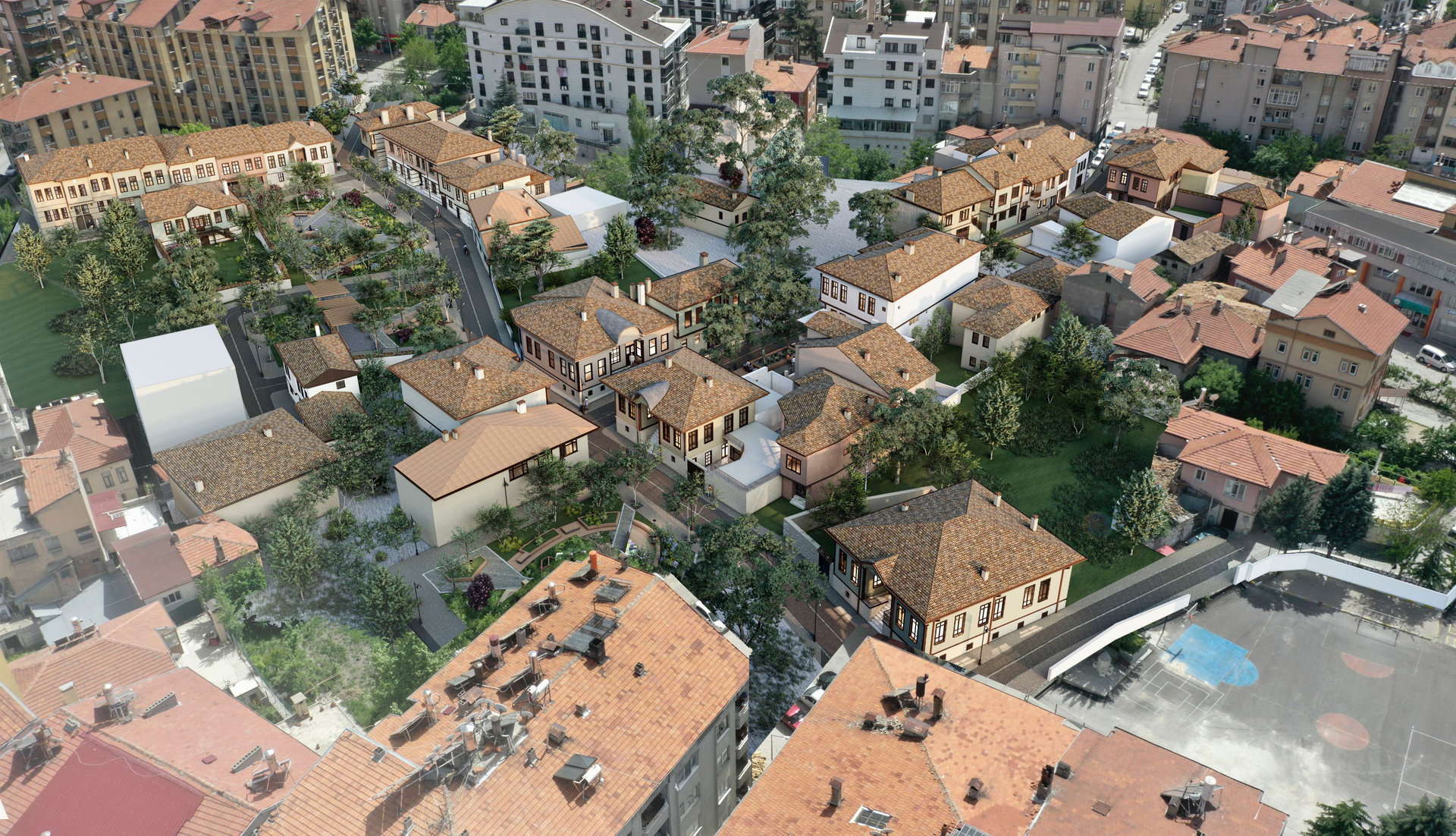
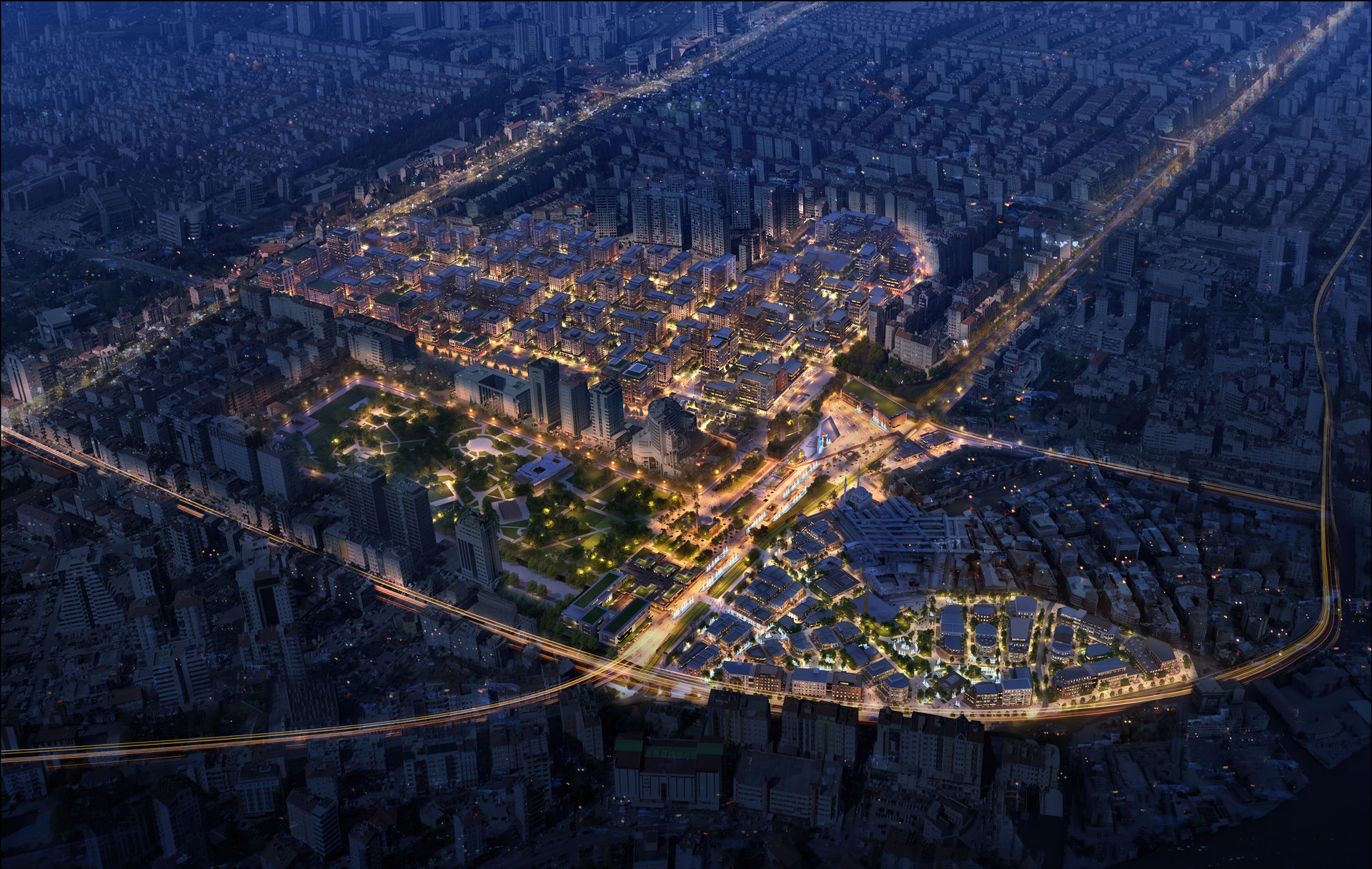
Located within the historic Kaleiçi district of Edirne, Saraçlar Caddesi has been a pivotal axis of commercial and social life since the 16th century. Once aligned with the now lost eastern wall of the Edirne Fortress built by Emperor Hadrian, the street’s 700 meter length contains a layered urban narrative shaped by trade, crafts, and civic activity. The rehabilitation project repositions the street as a contemporary urban corridor, while preserving its identity as a place of collective memory.
Heritage Preservation Strategy: Protecting the Registered Fabric
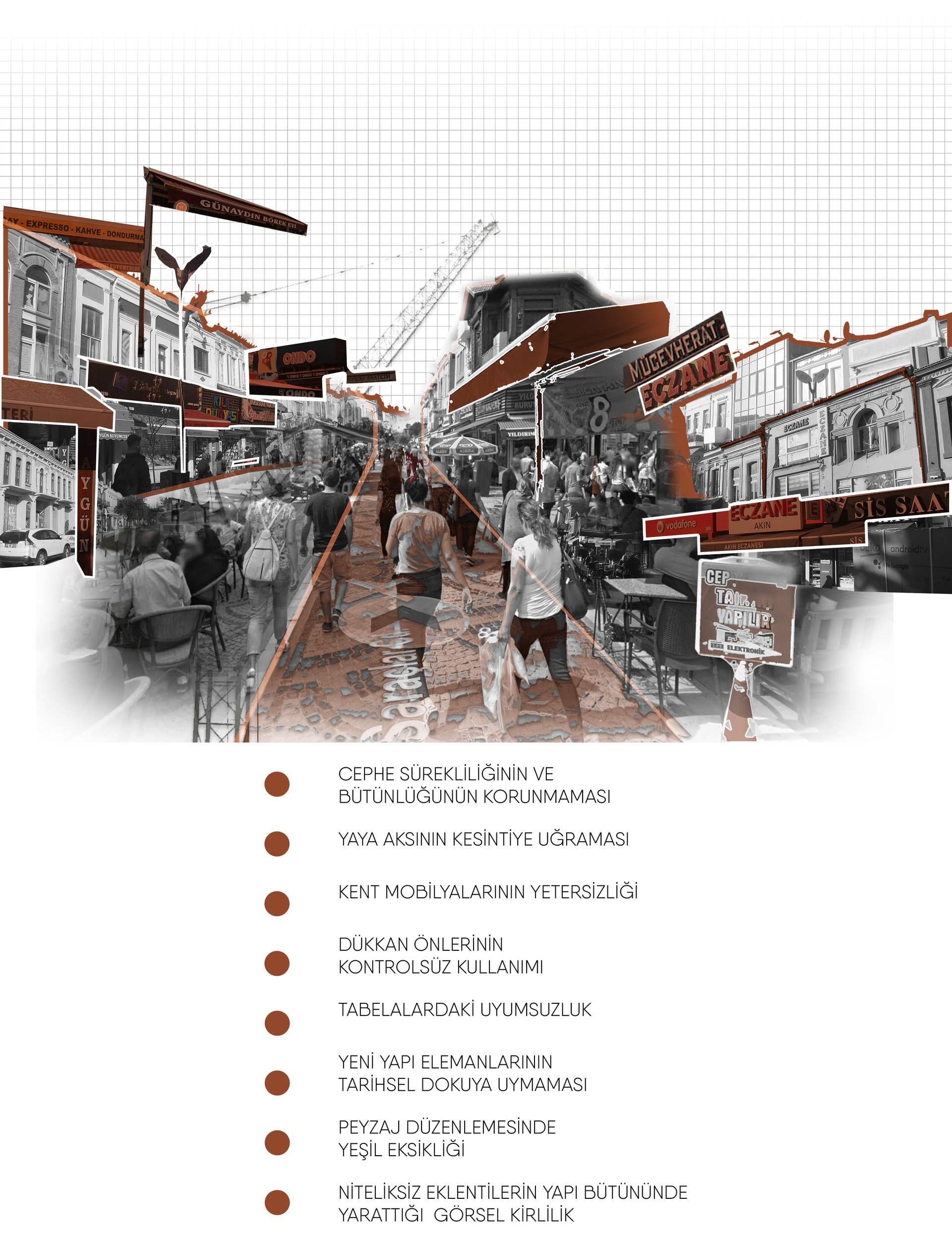
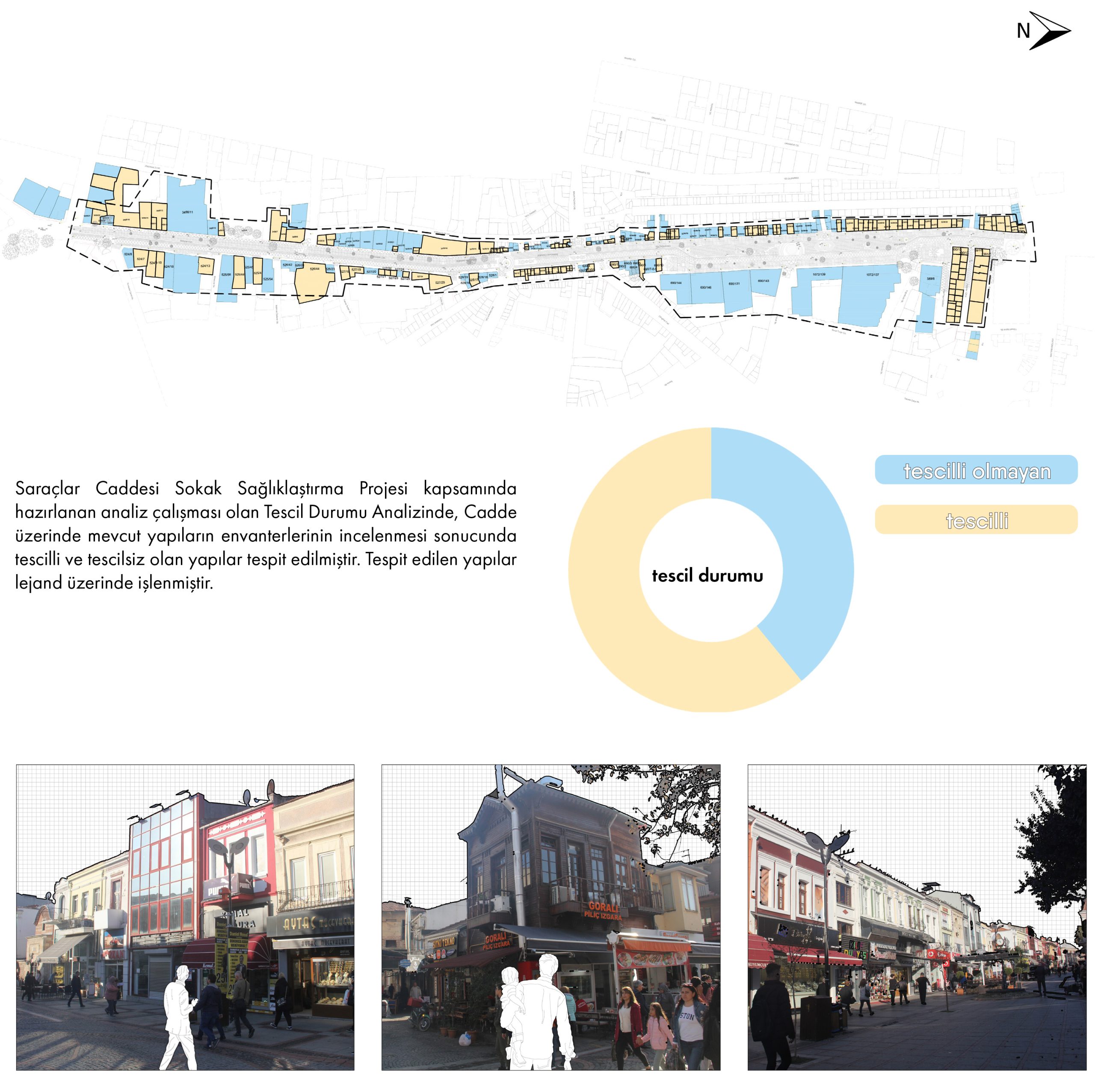
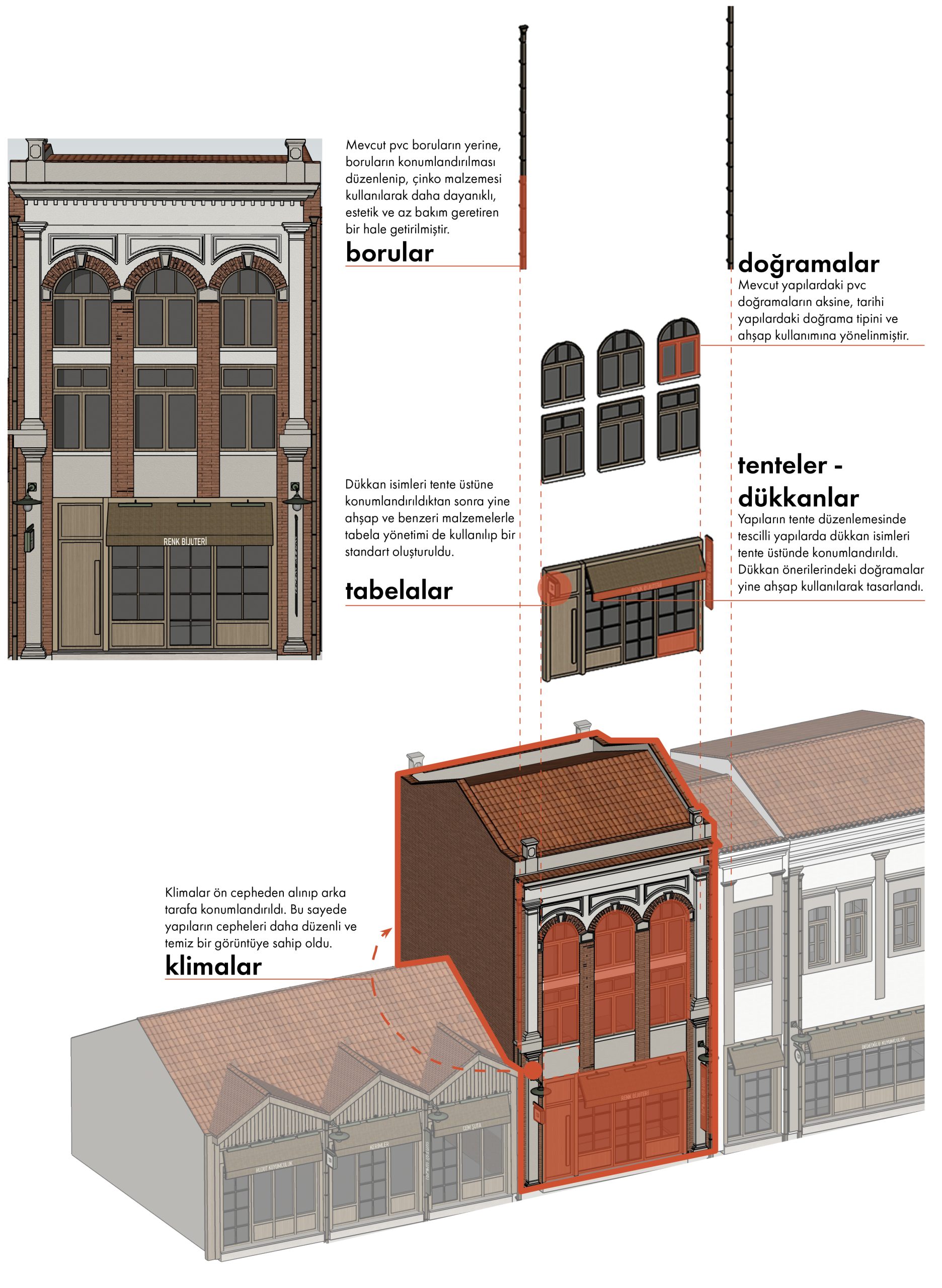
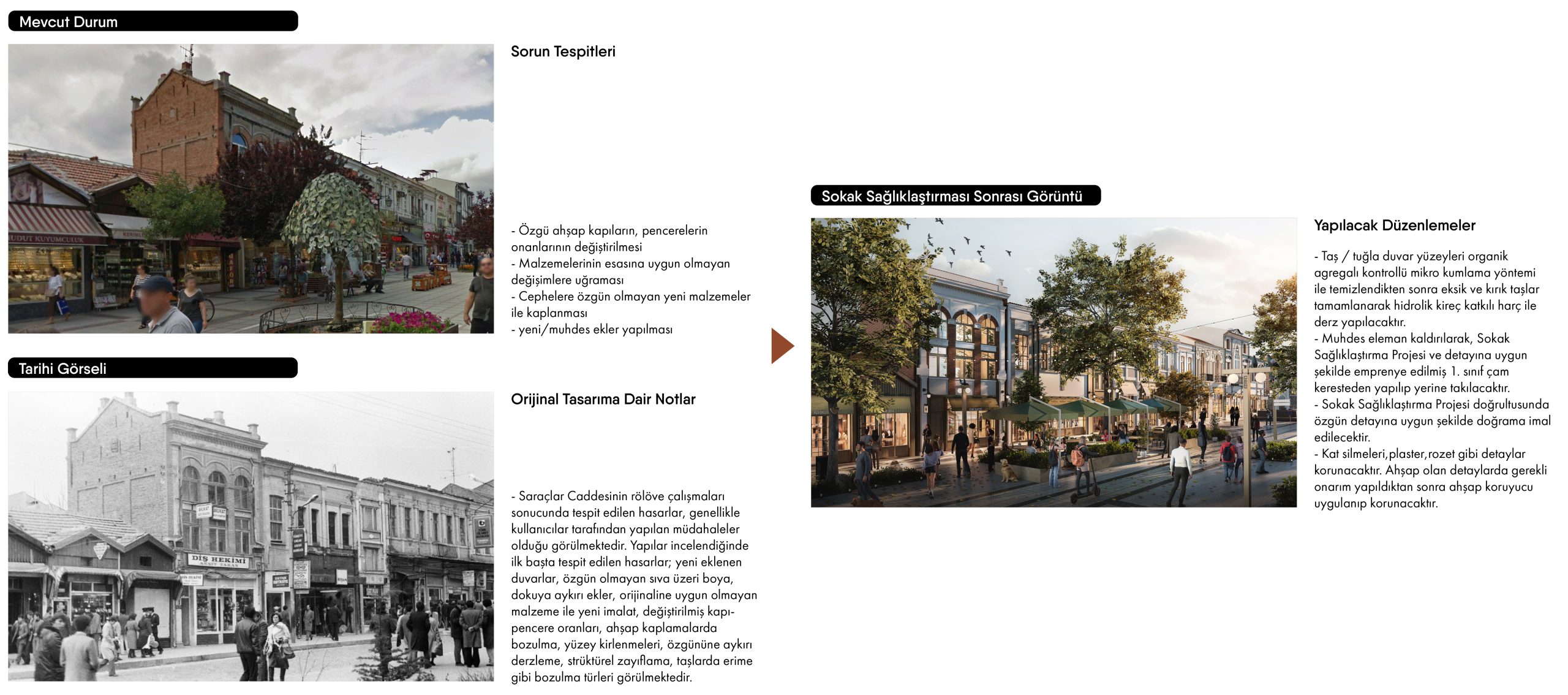
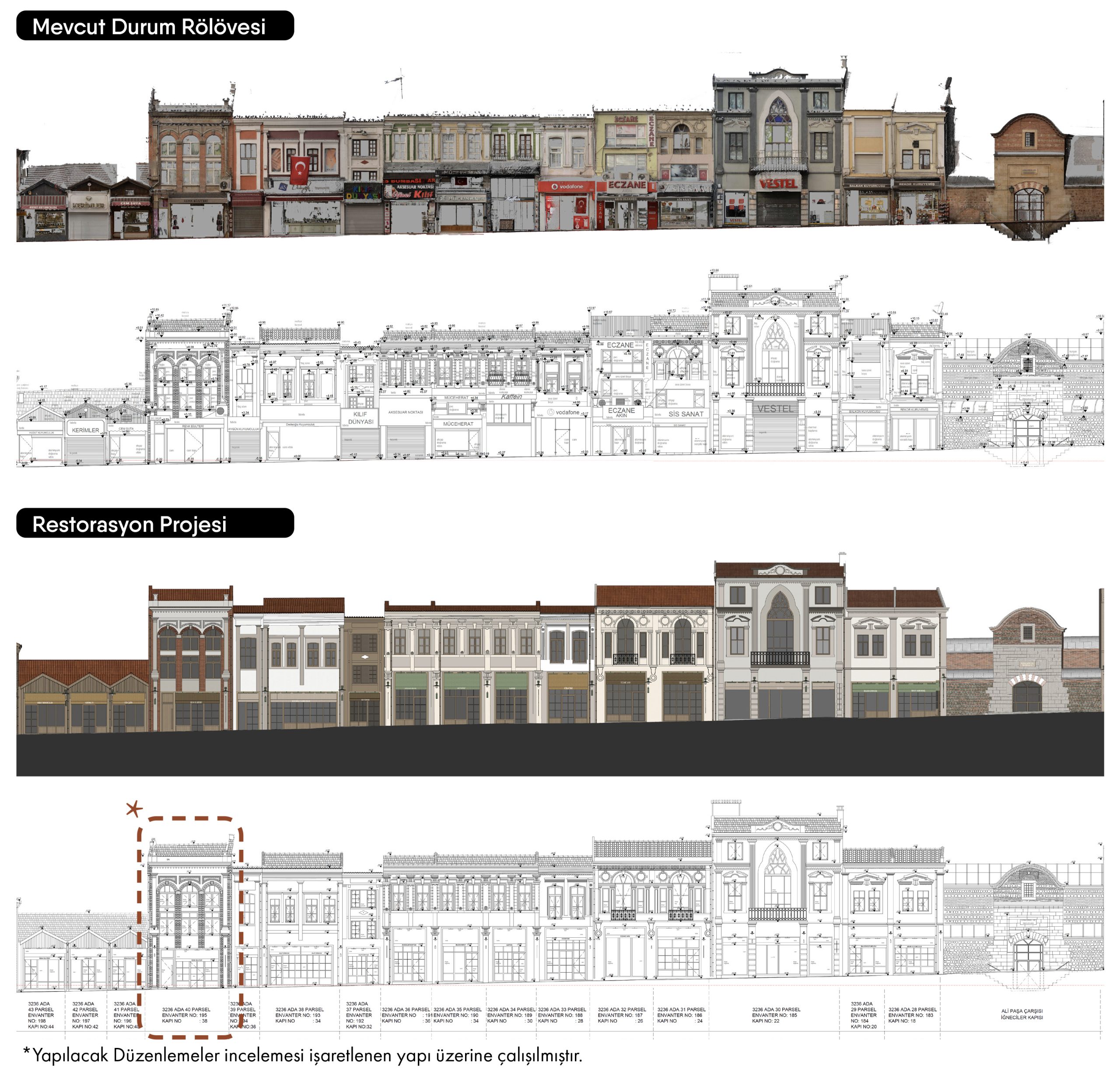
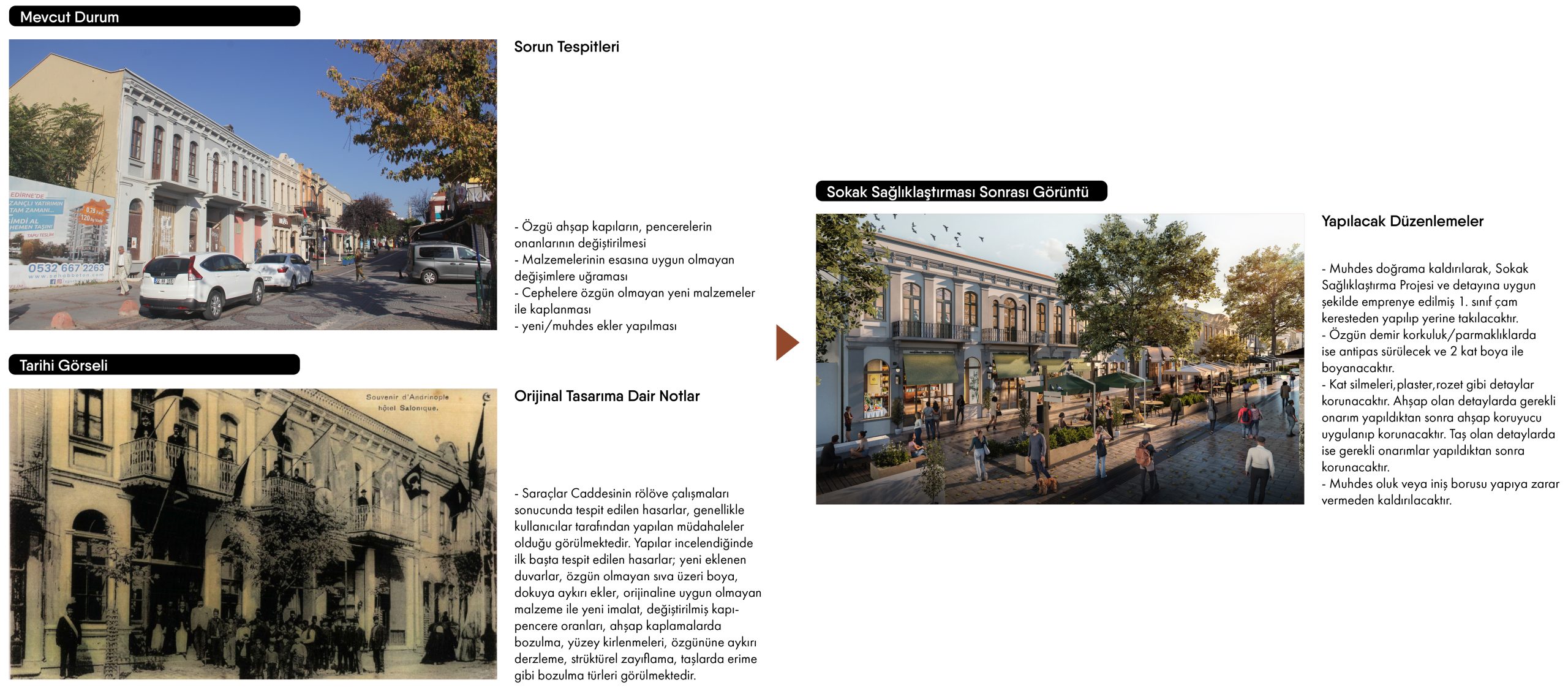
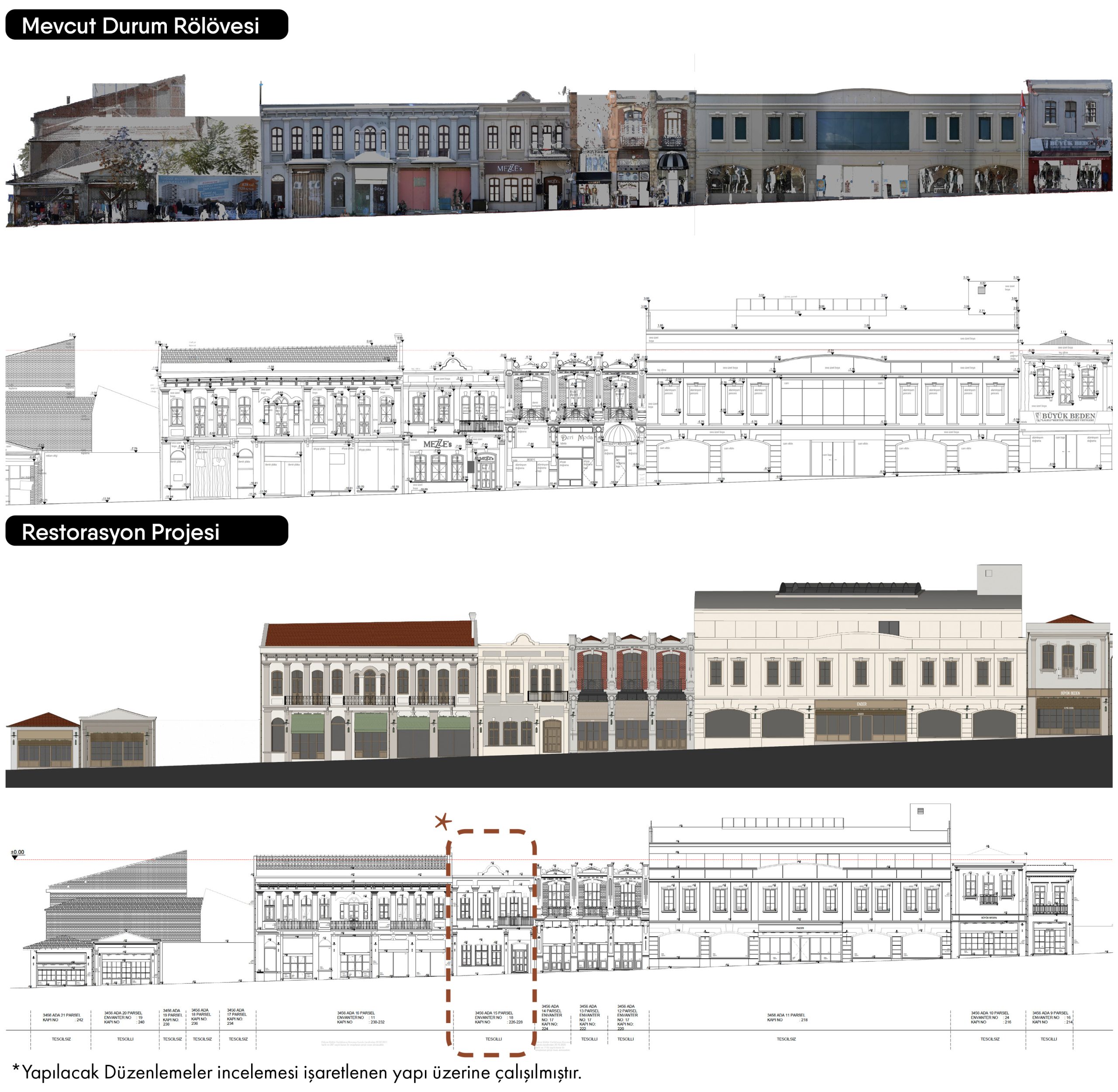
Saraçlar Caddesi hosts 129 registered heritage buildings, ranging from commercial structures to civic pavilions. These buildings have suffered over time due to unsupervised interventions ill-fitted signage, PVC joinery, protruding AC units, and unsympathetic additions. Our preservation approach includes the removal of incompatible elements, reinstatement of original materials (such as timber joinery and lime-based renders), and redirection of mechanical elements to secondary façades. These measures aim to reinforce the original architectural language and ensure regulatory continuity with conservation guidelines.
Design Integration Strategy: Enhancing the Non-Registered Stock
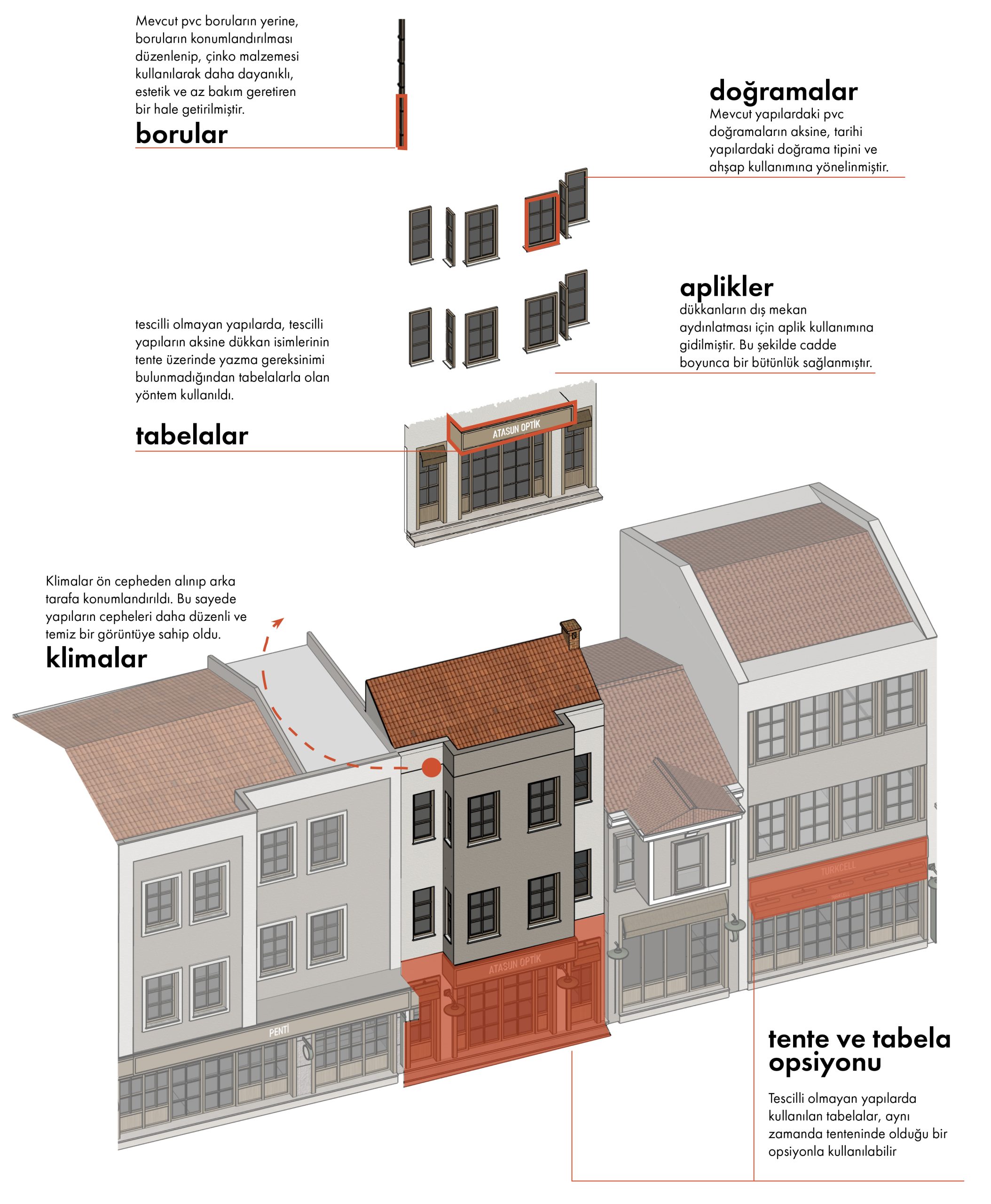
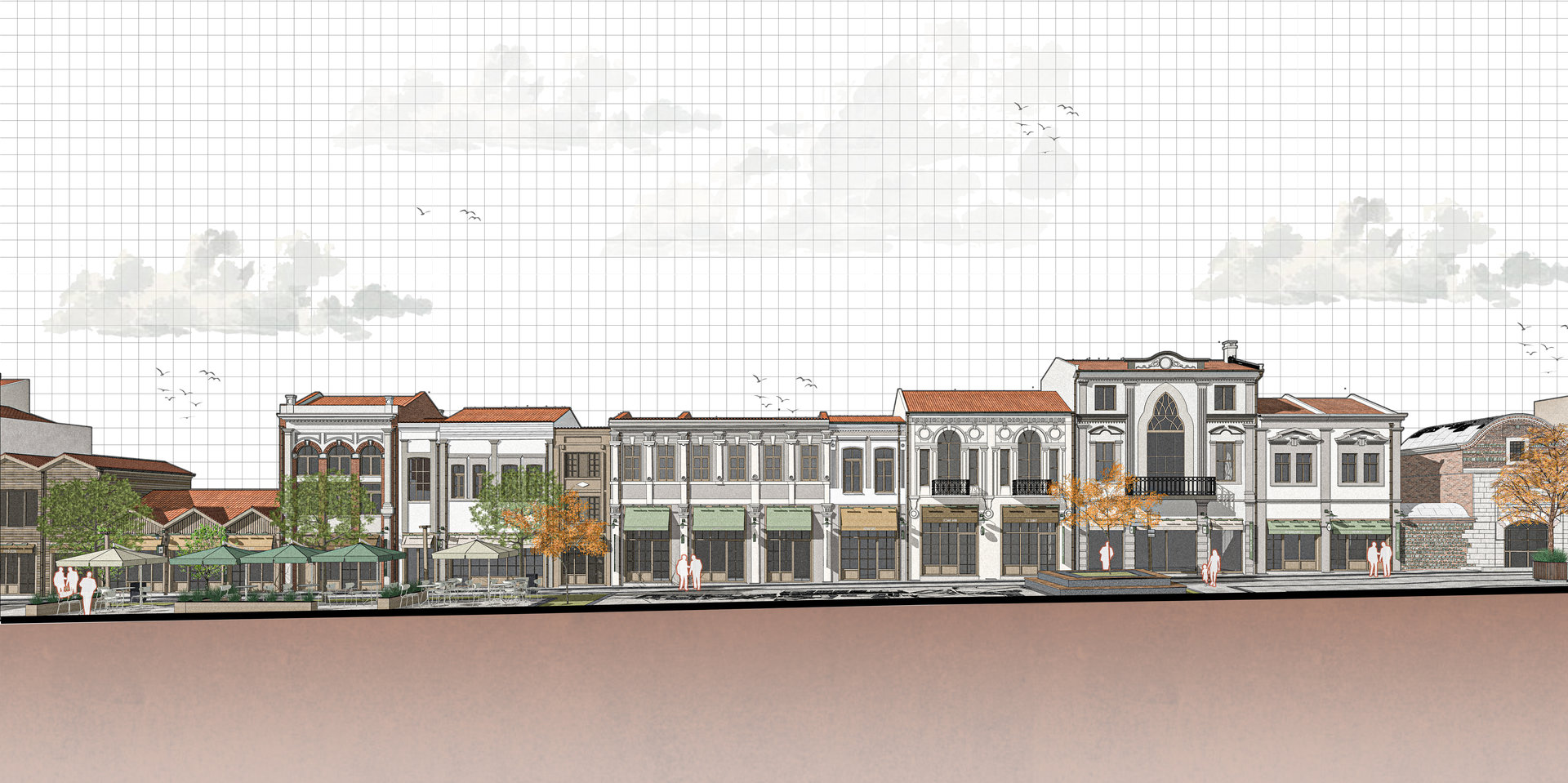
The street also contains 94 non-listed buildings, often built with no consideration for contextual harmony. A refined intervention strategy was developed to reduce visual disruption and support the rhythm of the heritage fabric. This includes unified signage placements, timber framed storefront upgrades, concealed HVAC units, and a lighting scheme based on wall mounted fixtures. The intention is not to mimic history, but to create a coherent urban backdrop that sustains visual legibility.
Façade Management and Detail Rationalisation
Across both heritage and contemporary structures, façade interventions focus on eliminating ornamental disorder. Shopfront designs have been re-standardised, combining wooden canopies and modular signboards to reflect a calm and unified expression. All visible piping was repositioned and rebuilt using durable zinc materials, and the palette of surface treatments was curated for material compatibility with historical textures.
Public Realm Design: A More Walkable and Accessible Spine
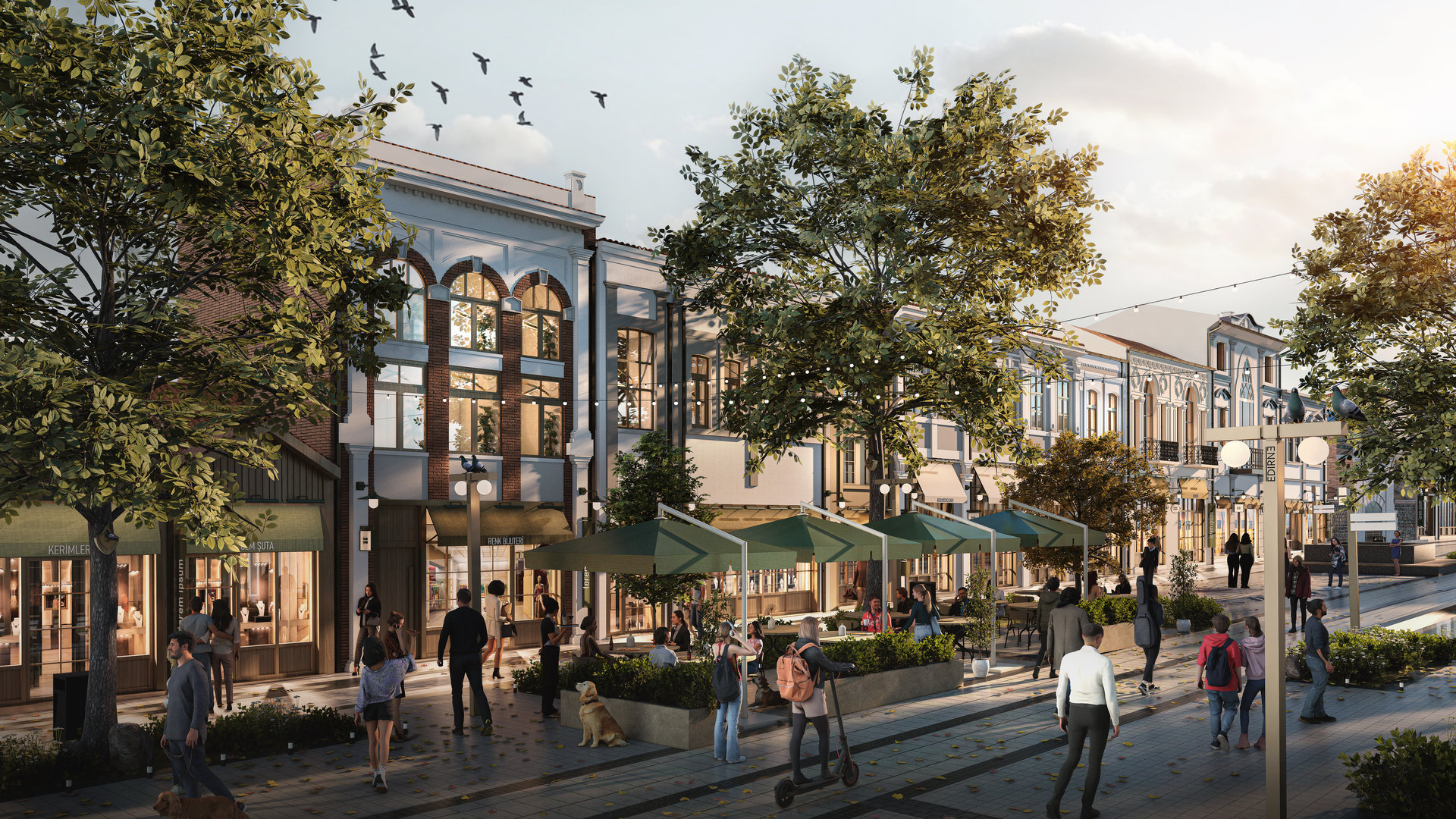
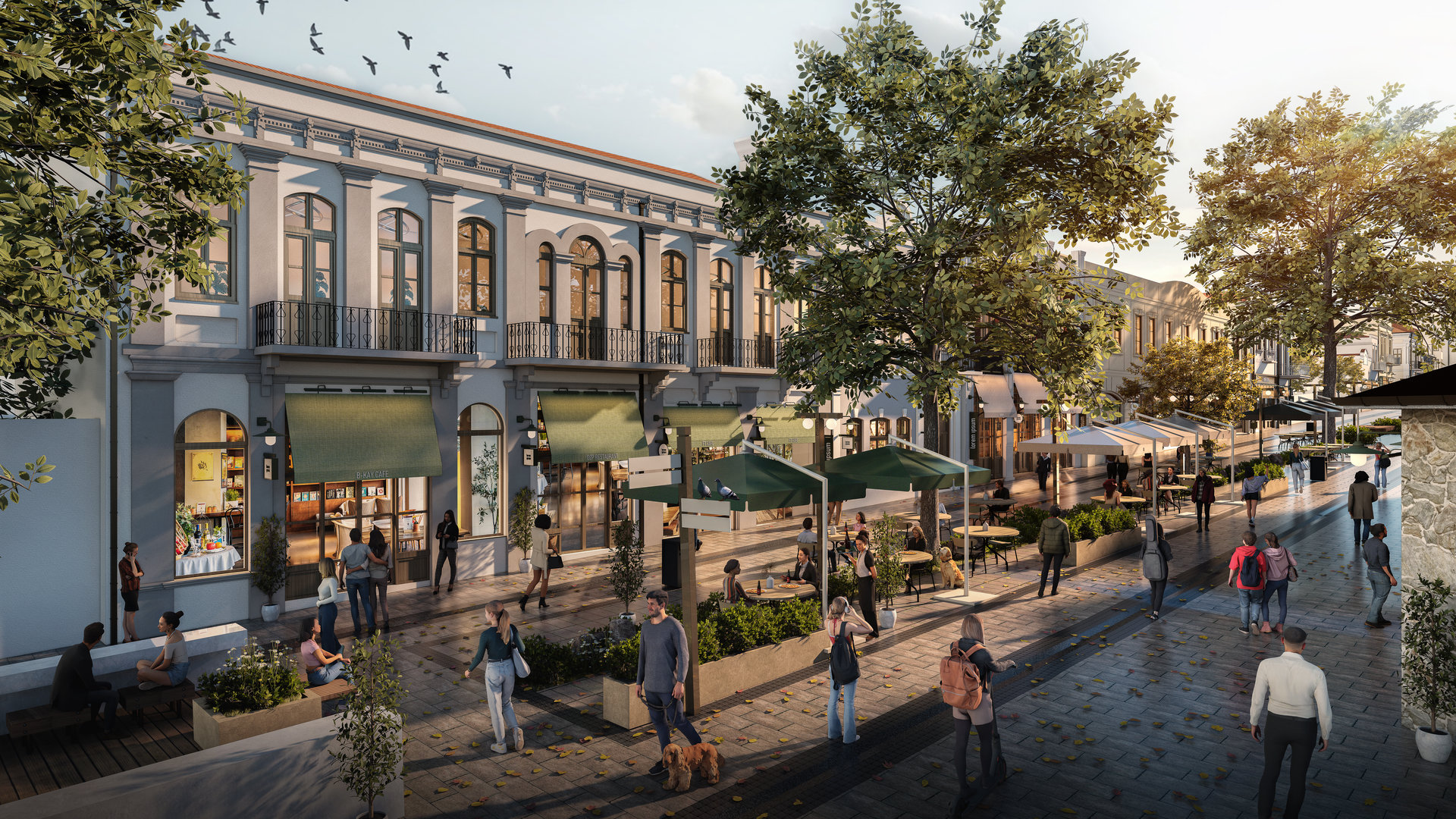
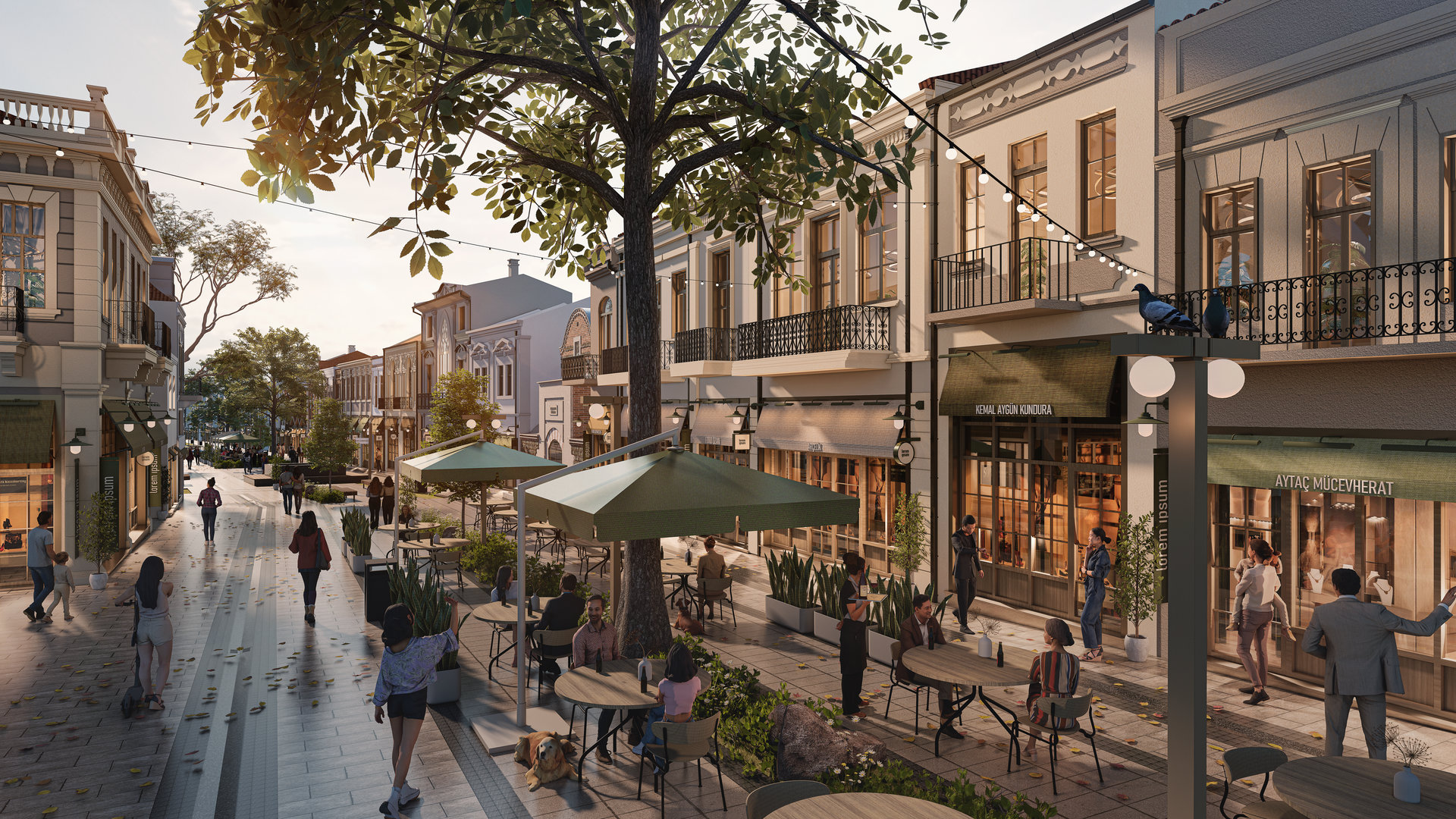
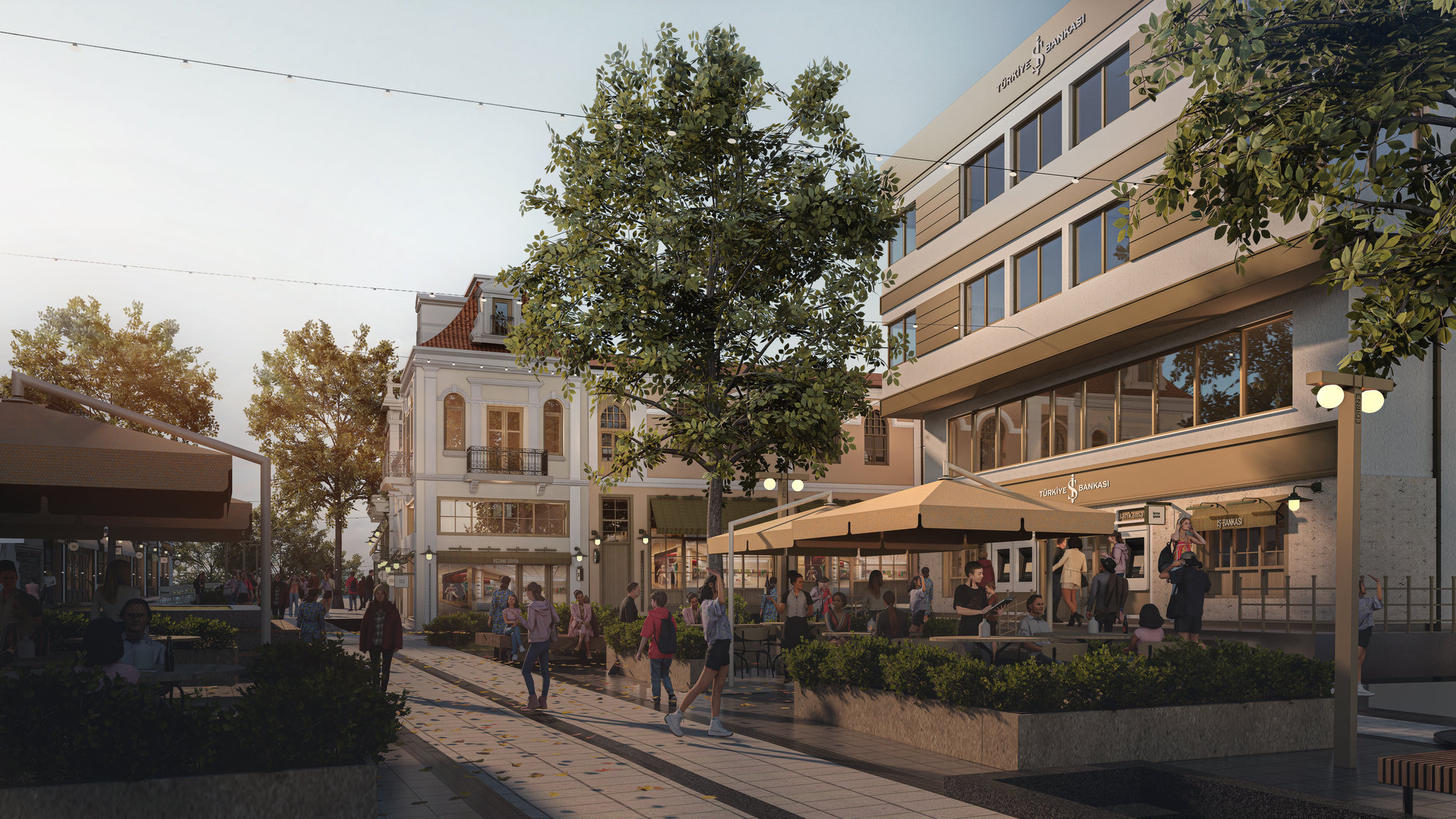
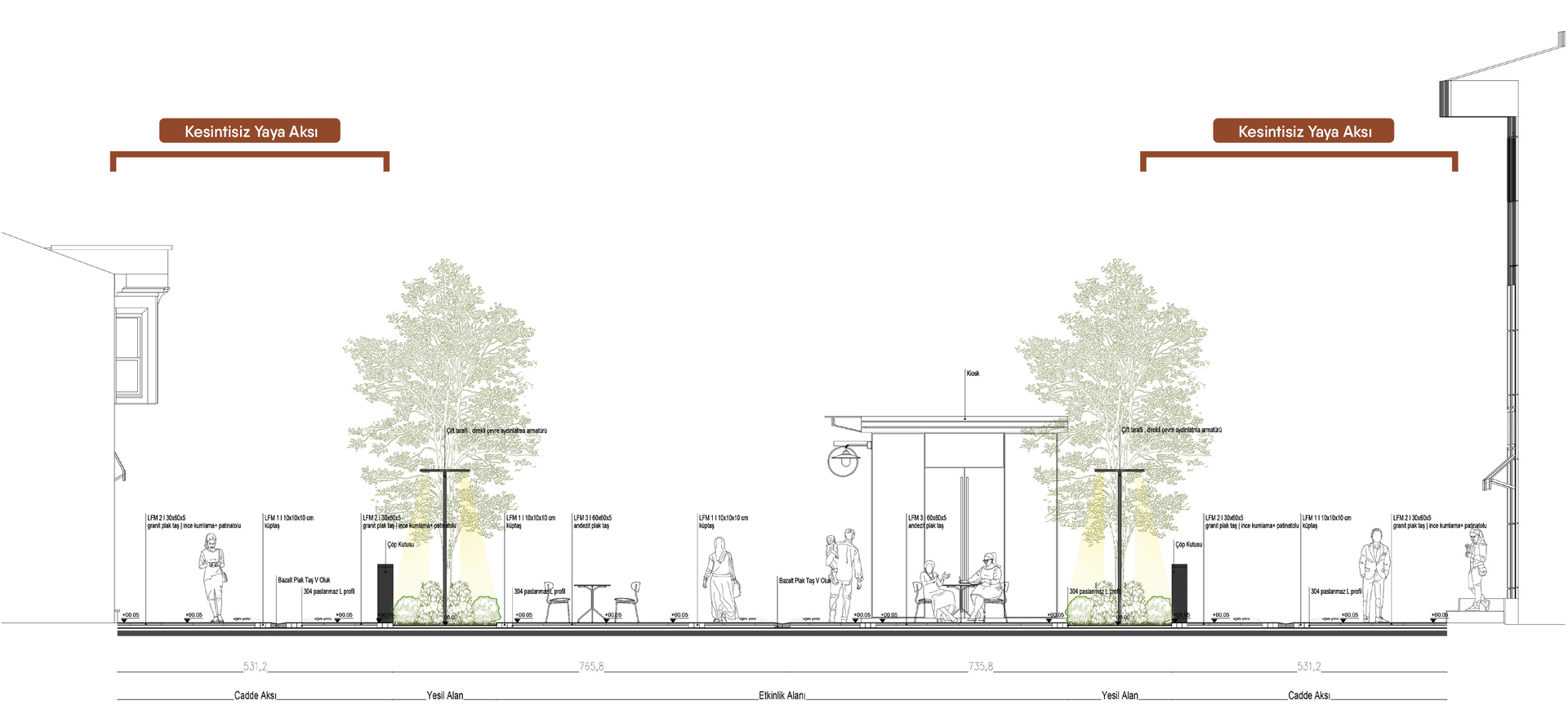
As a pedestrian only commercial street, Saraçlar Caddesi is defined as much by its ground plane as by its buildings. Existing surface finishes lacked consistency, and commercial spill outs frequently disrupted pedestrian flow. A new paving layout reorganises street usage: outdoor seating has been moved to the central spine, flanked by uninterrupted walking zones. Sunken infrastructure panels free up the surface for clear navigation.
Landscape and Urban Furniture Strategy
The planting scheme reinterprets the traditional linearity of Ottoman urbanity. Native trees and shrubs have been selected for low maintenance longevity and placed strategically to highlight commercial thresholds and public resting areas. Custom designed urban furniture articulates the pedestrian axis, offering rhythm and utility while preserving permeability and sightlines.
Gallery