İstanbul, Türkiye
Project Type
Public Realm & Landscape
Location
İstanbul, Türkiye
Year
2021
Project Service
Concept Project
Project Status
Concept Project
Employer
Private
Project Overview
Located on the southern coast of Istanbul’s Anatolian side, within the Kartal district, the Kartal Nation’s Garden Project transforms a former 35-hectare stone quarry—once a vital material supplier to the historic Yunus Cement Factory—into a dynamic ecological and cultural public space. At a depth of -60 meters, the quarry now contains a 130 m² artificial lake formed by accumulated rain and groundwater, with potential to become an urban ecosystem.
Historical Context and Transformation
Kartal evolved from a small fishing village into an industrial hub following the establishment of the Yunus Cement Factory in 1926. Stones extracted from the quarry were transported to the coastal plant via a cable system. With the decline of inner-city heavy industry in the 1990s and subsequent urban planning initiatives, Kartal was designated a transformation zone. The 1995 and 2009 Metropolitan Master Plans reclassified the site as a “2nd Degree Urban Center” aimed at transitioning from industry to service and recreation.
Architectural Approach
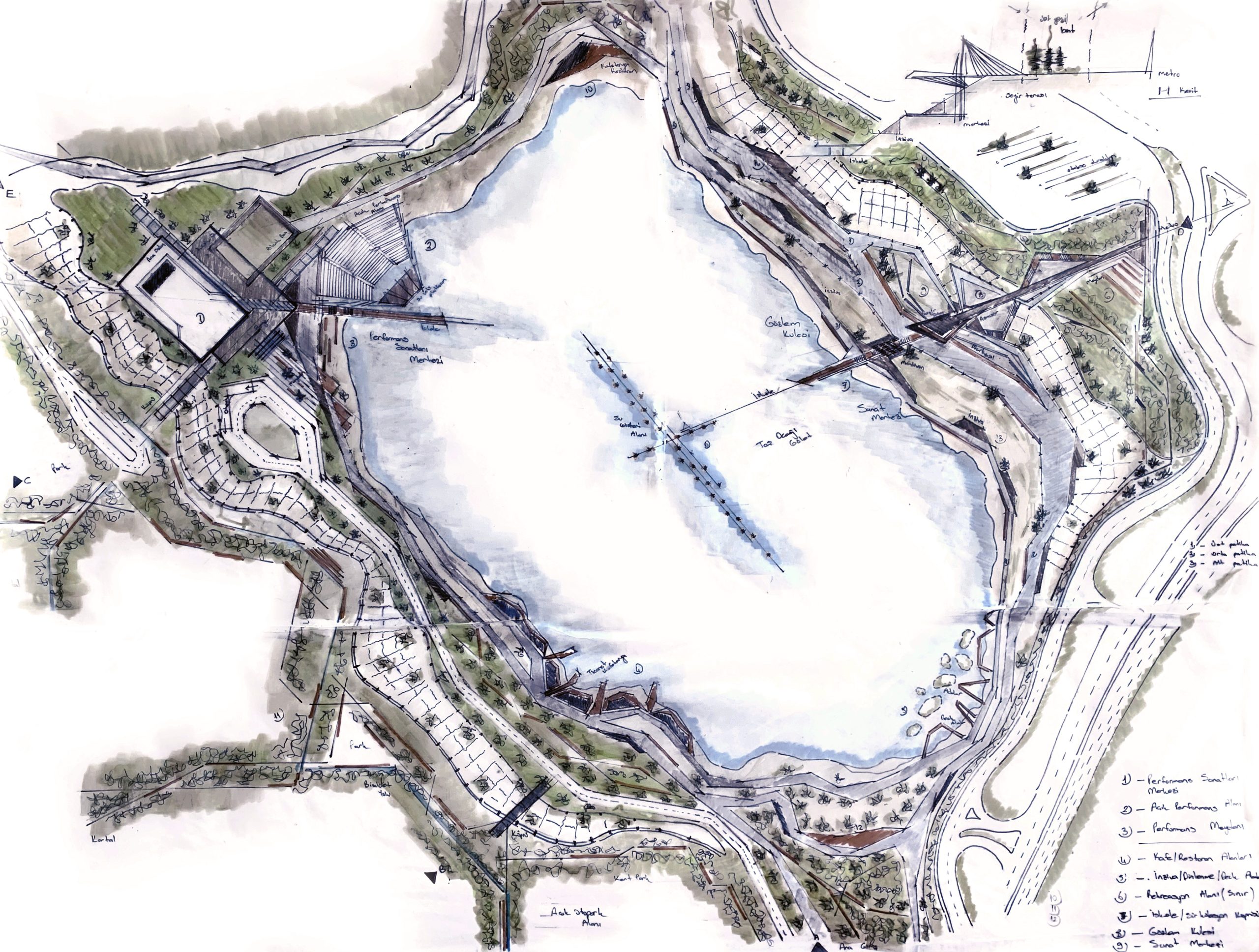
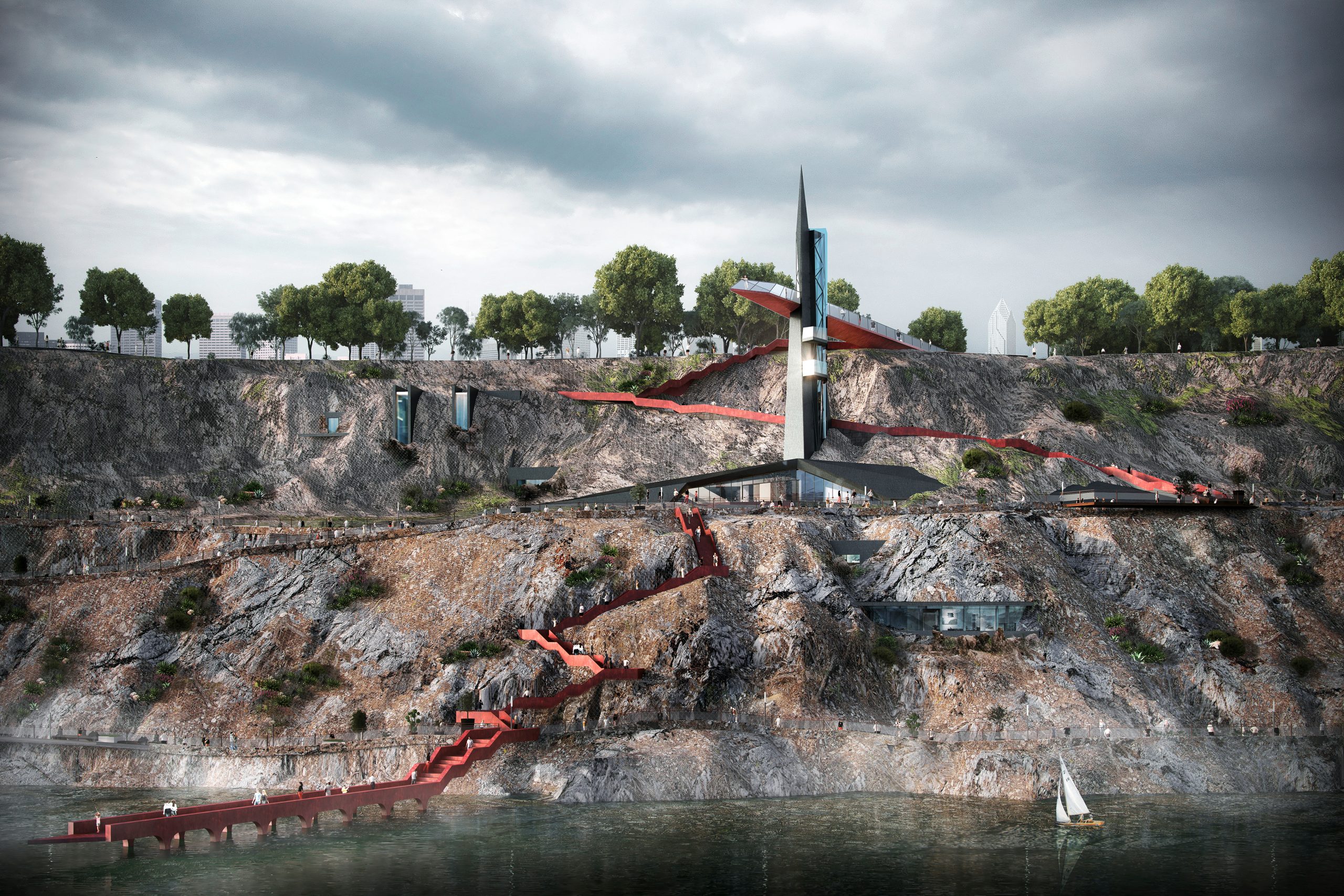
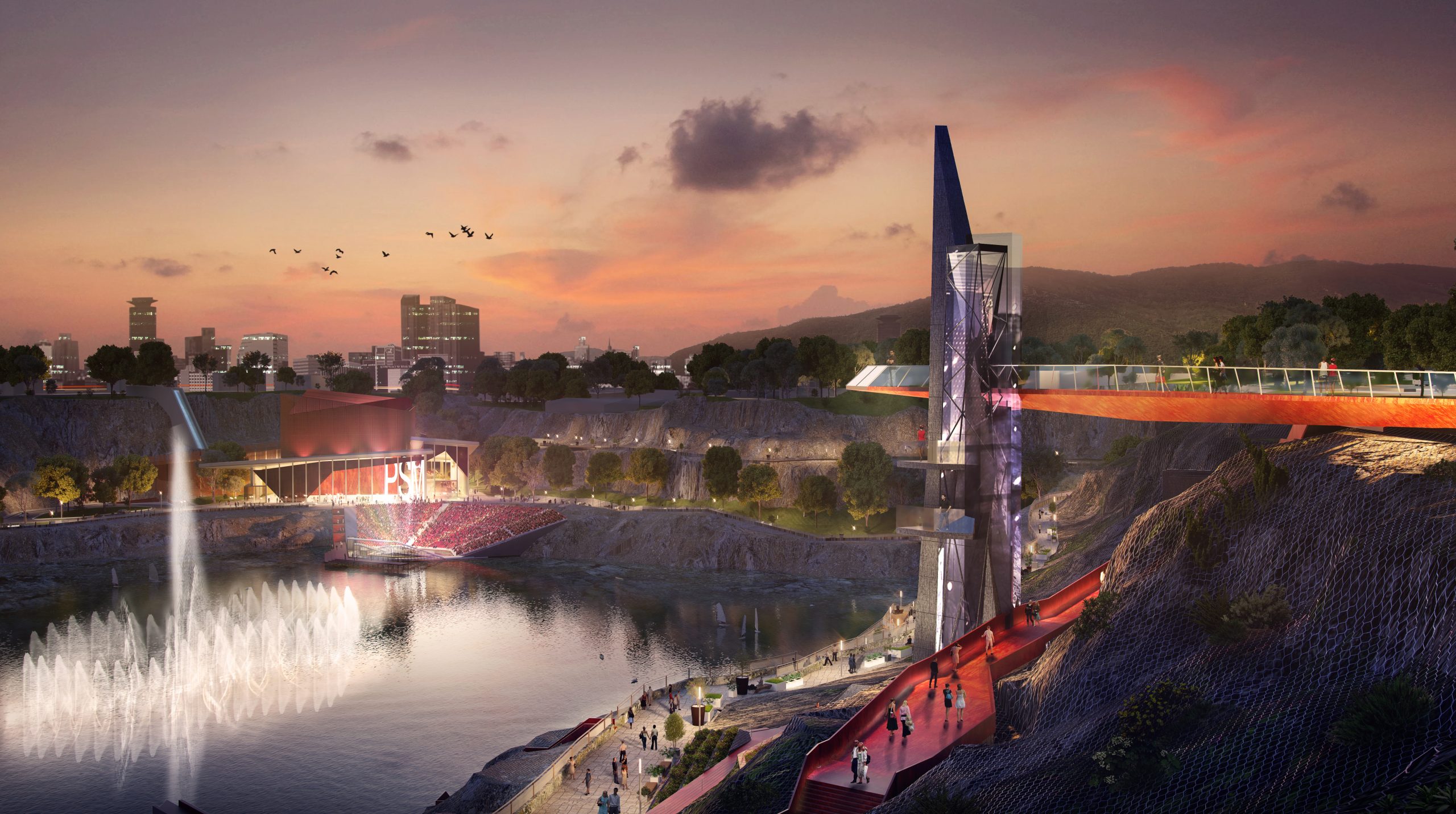
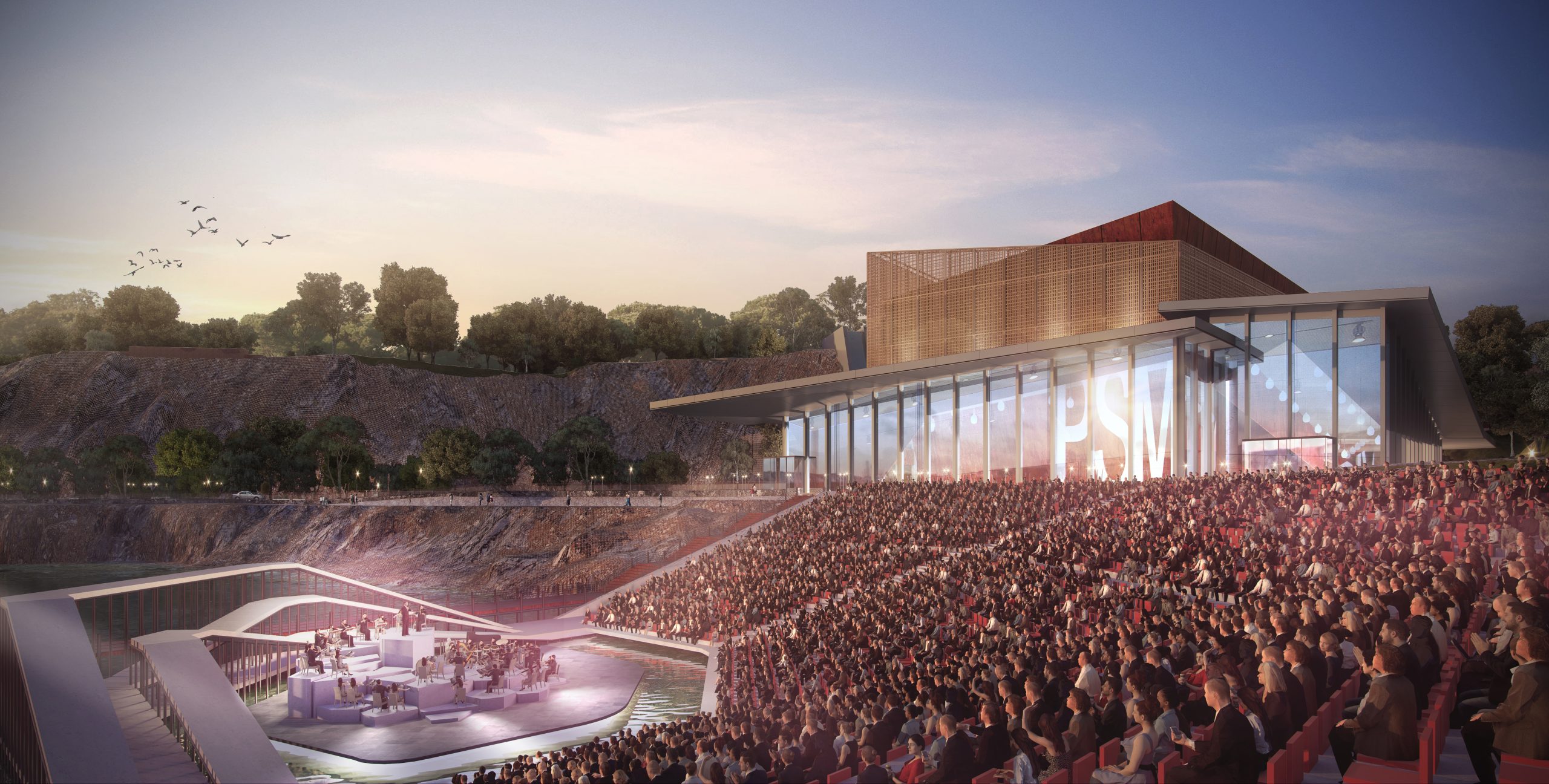
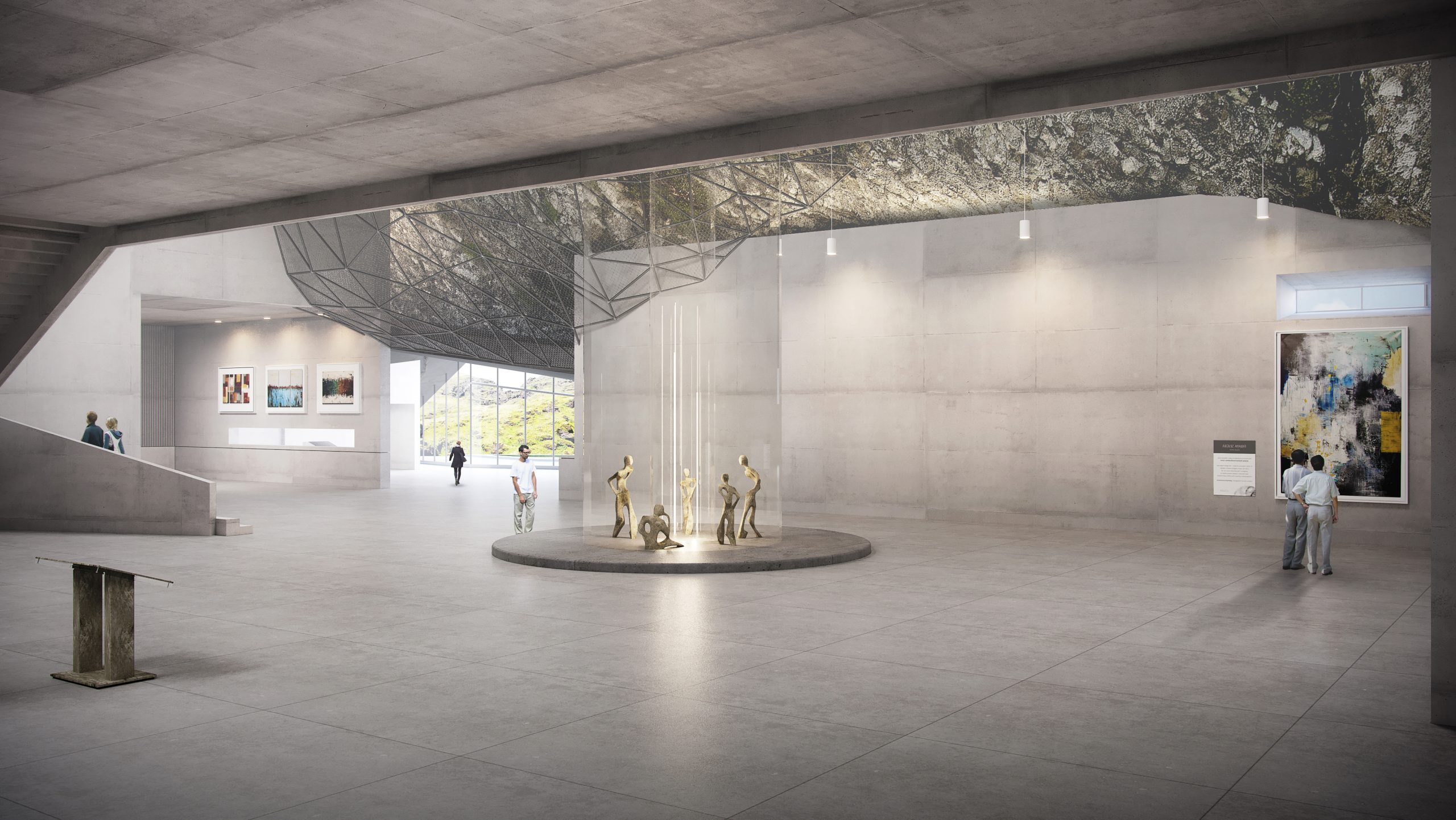
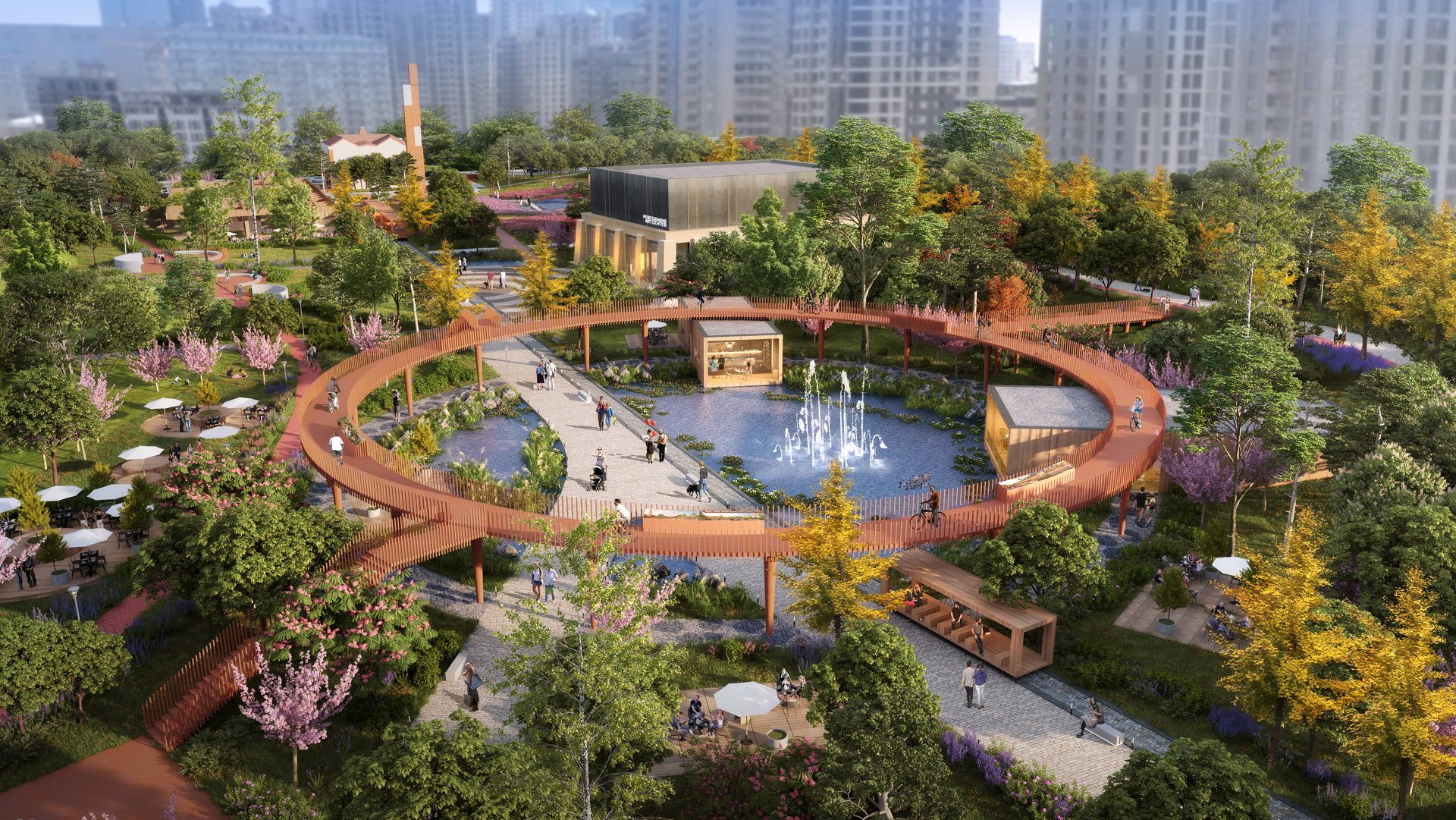
The architectural design adopts a radial spatial strategy that follows the natural topography of the quarry pit. The project introduces multiple pedestrian access points from higher elevations down to the lake, promoting fluid circulation. Around this central basin, public spaces are distributed in layers, integrating event platforms, commercial units, observation towers, performance venues, restaurants, and a contemporary arts museum.
Ecological Regeneration and Urban Integration
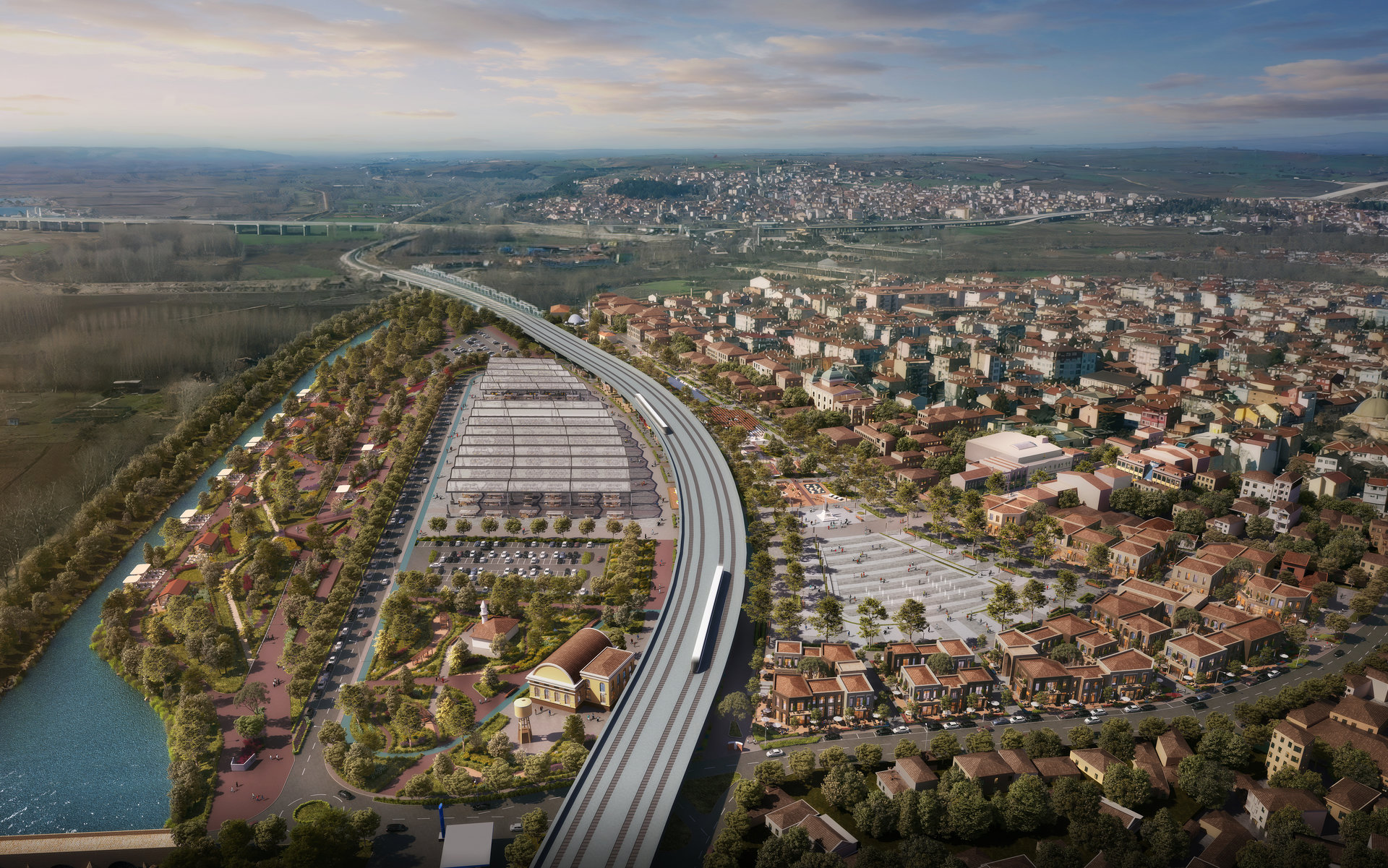
The artificial lake not only provides scenic value but also has the capacity to support biodiversity, serving as a habitat for birds and fish. By integrating green infrastructure with cultural programming, the Kartal Nation’s Garden offers a blueprint for transforming industrial wastelands into resilient, multifunctional urban commons. Its proximity to metro and bus stations ensures accessibility and connectivity to the wider city.
Gallery