Adıyaman, Türkiye
Project Type
Public Realm & Landscape
Location
Adıyaman, Türkiye
Year
2024
Project Service
Concept Project
Total Construction Area (m²)
23087.30
Employer
Private
Tags
Square Design
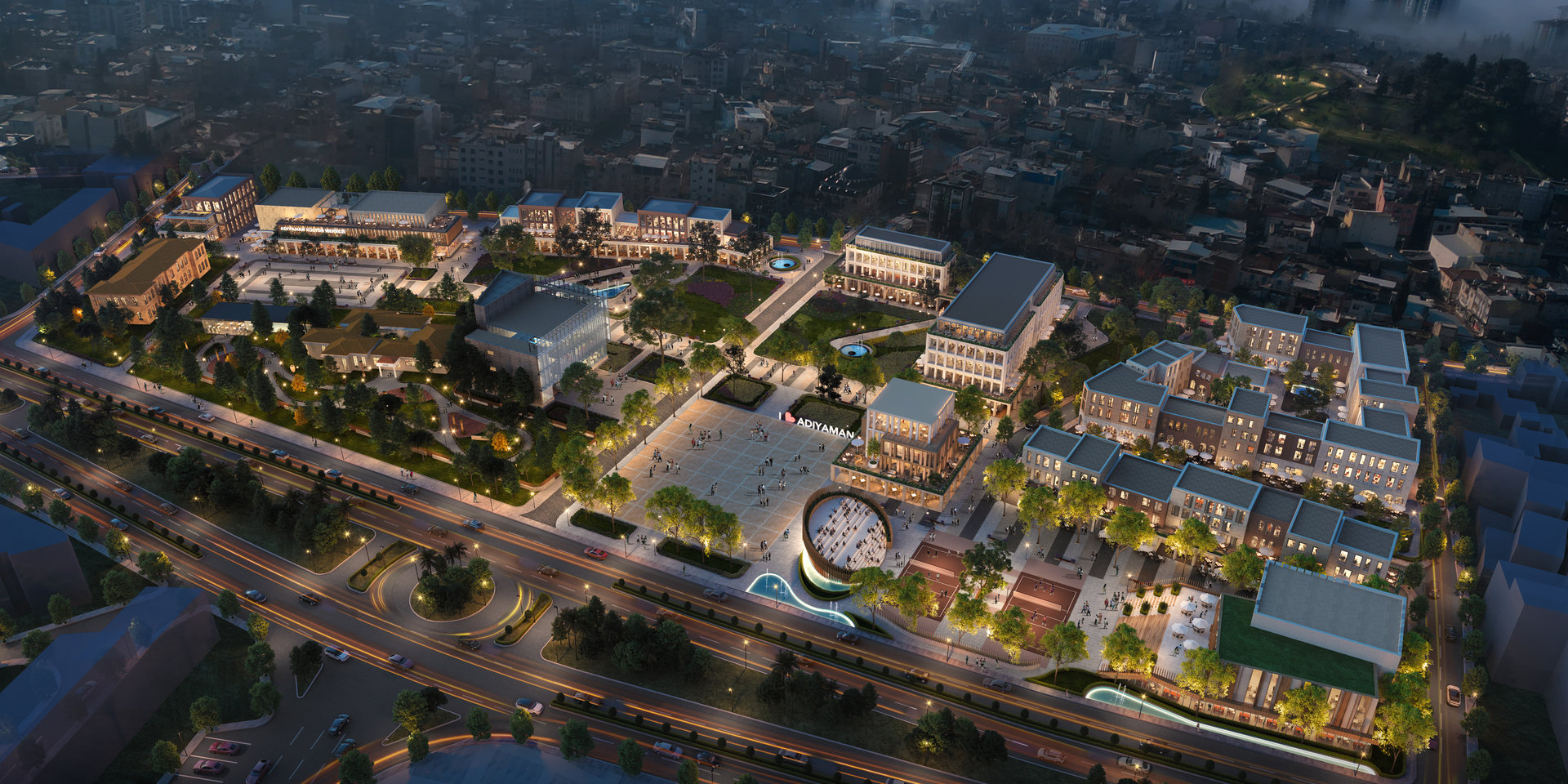
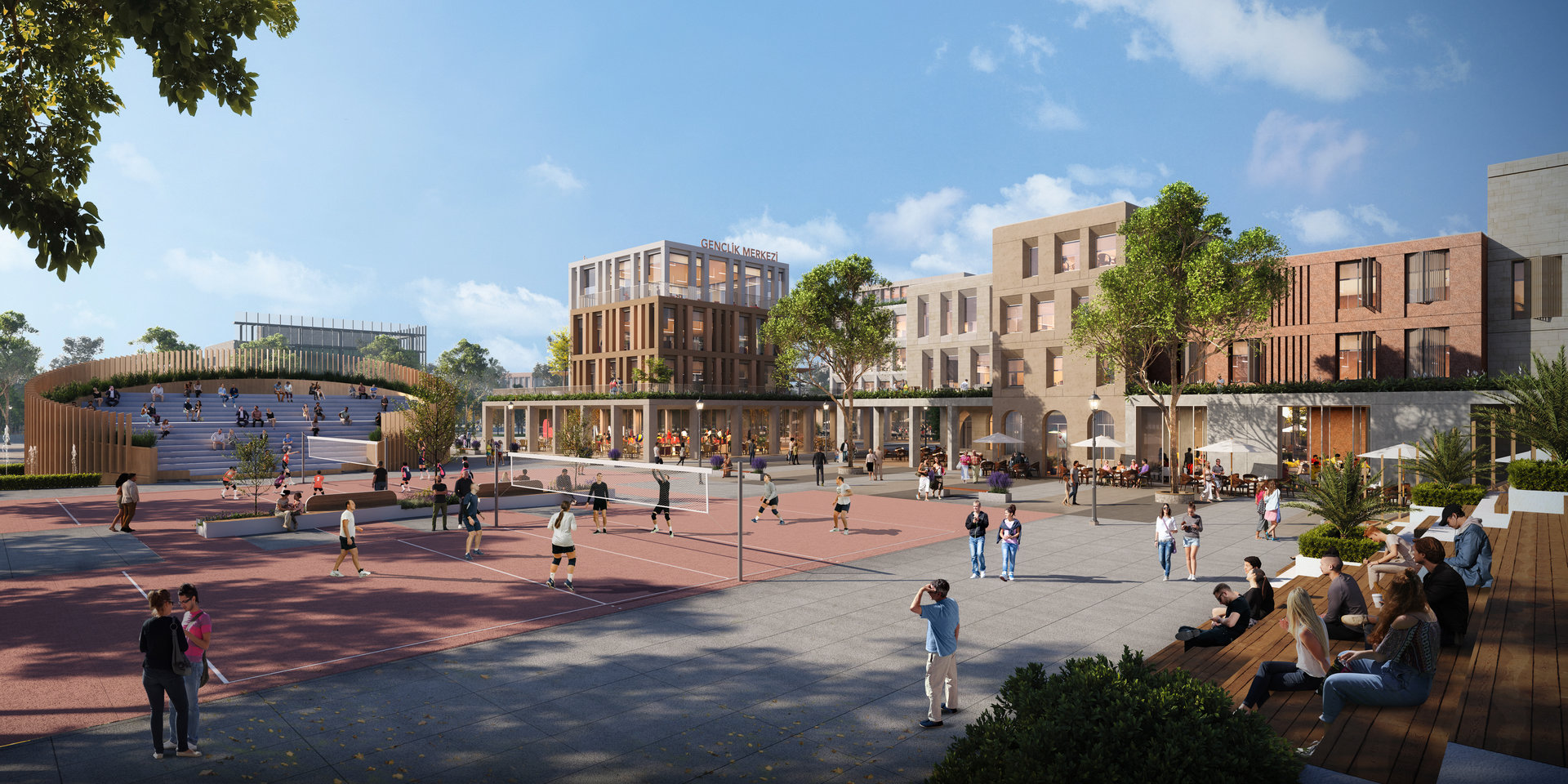
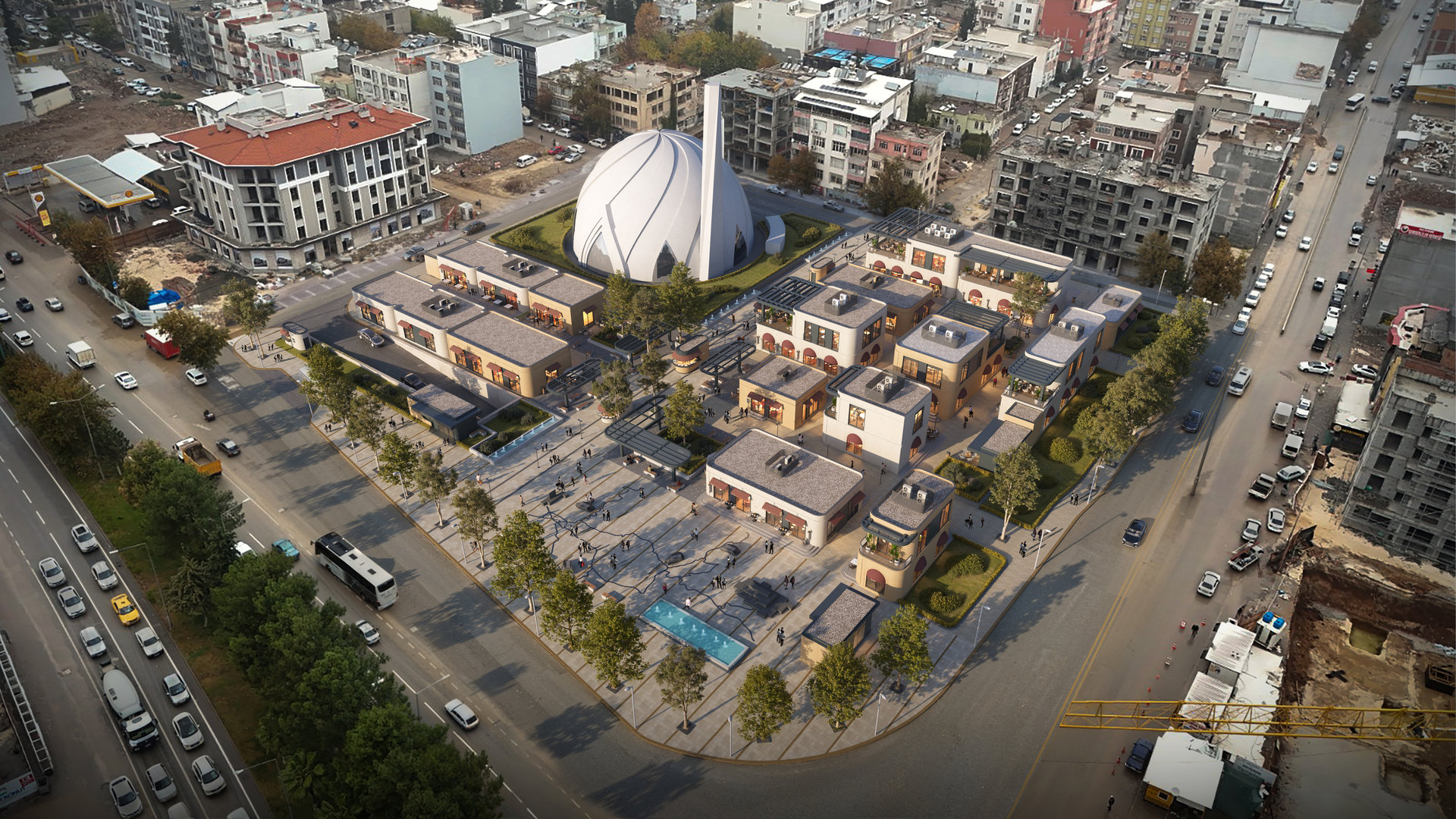
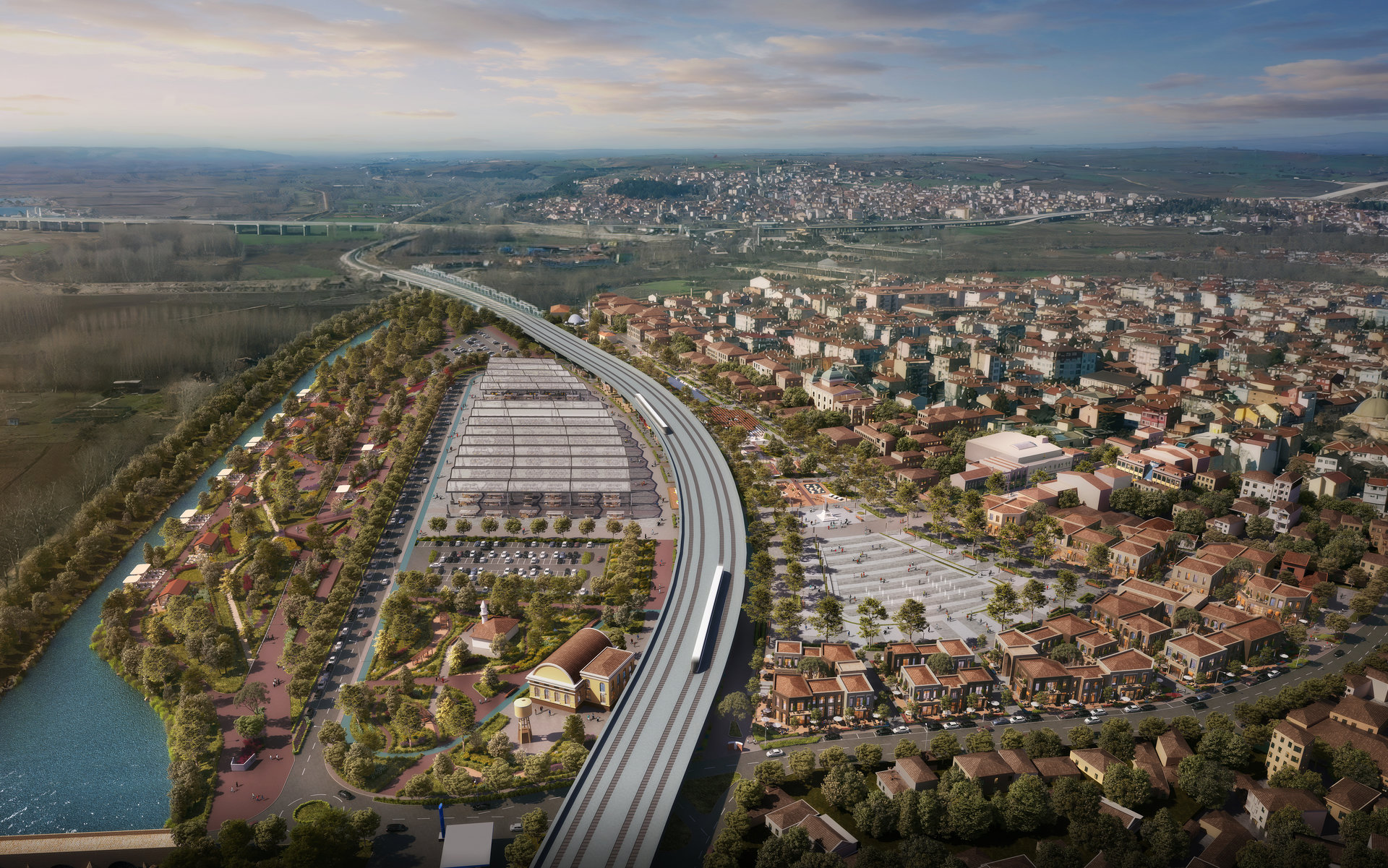
Located in the central part of Adıyaman—one of the cities heavily affected by the February 6 Kahramanmaraş earthquake—this project responds to the urgent need for urban renewal with a sensitive, spatial, and landscape driven design strategy. The site includes both buildings that were destroyed and those that endured the disaster, offering a dual narrative of loss and survival.
Pedestrianization and Connectivity
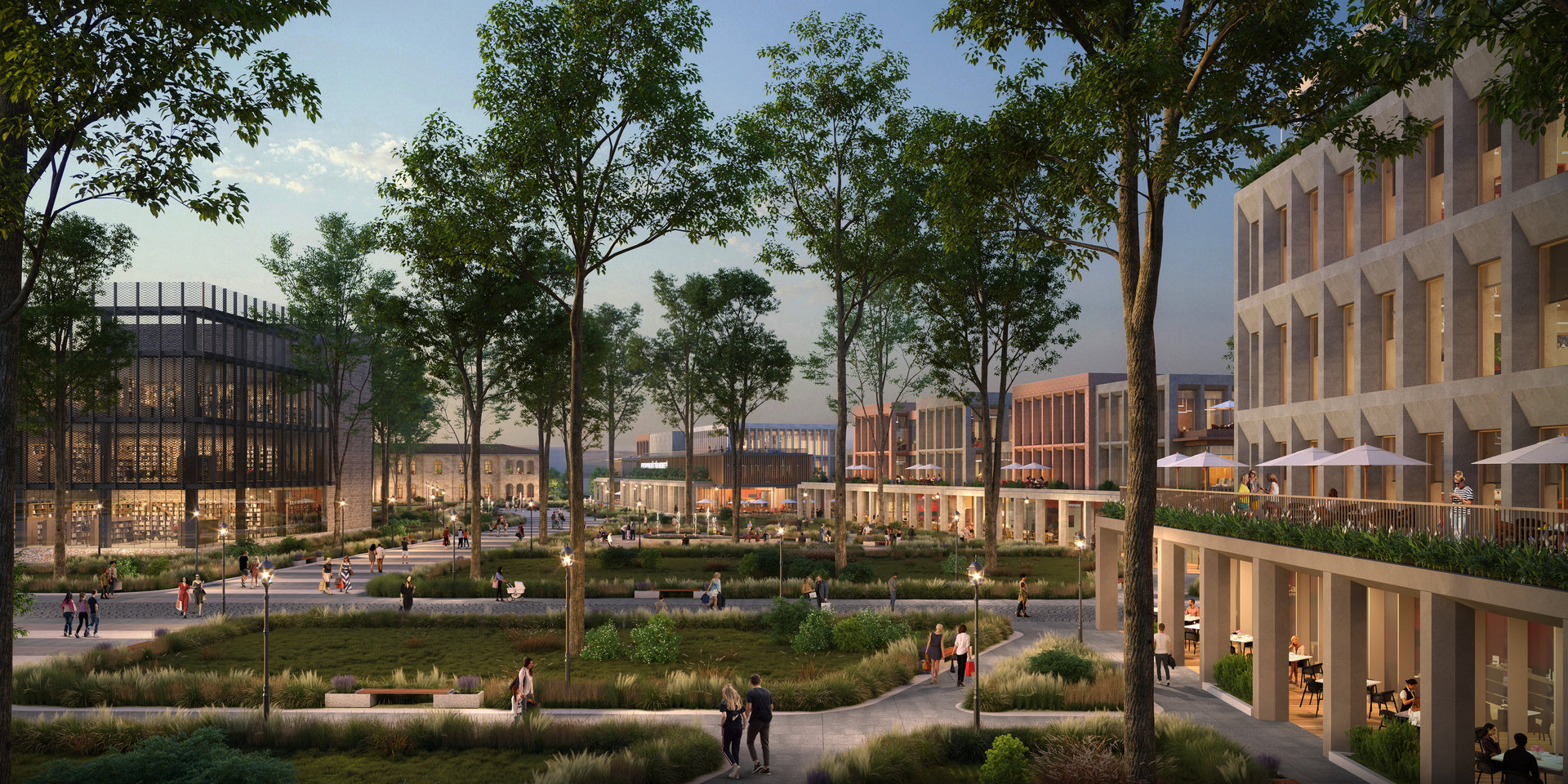
One of the central interventions was the closure of a vehicular road that once bisected the site. This decision allowed for the formation of a continuous pedestrian axis, connecting various zones through a unified circulation spine. The reorganization enhances walkability, fosters community interaction, and reclaims the area as a civic domain.
Programmatic Zoning and Memorial Spaces
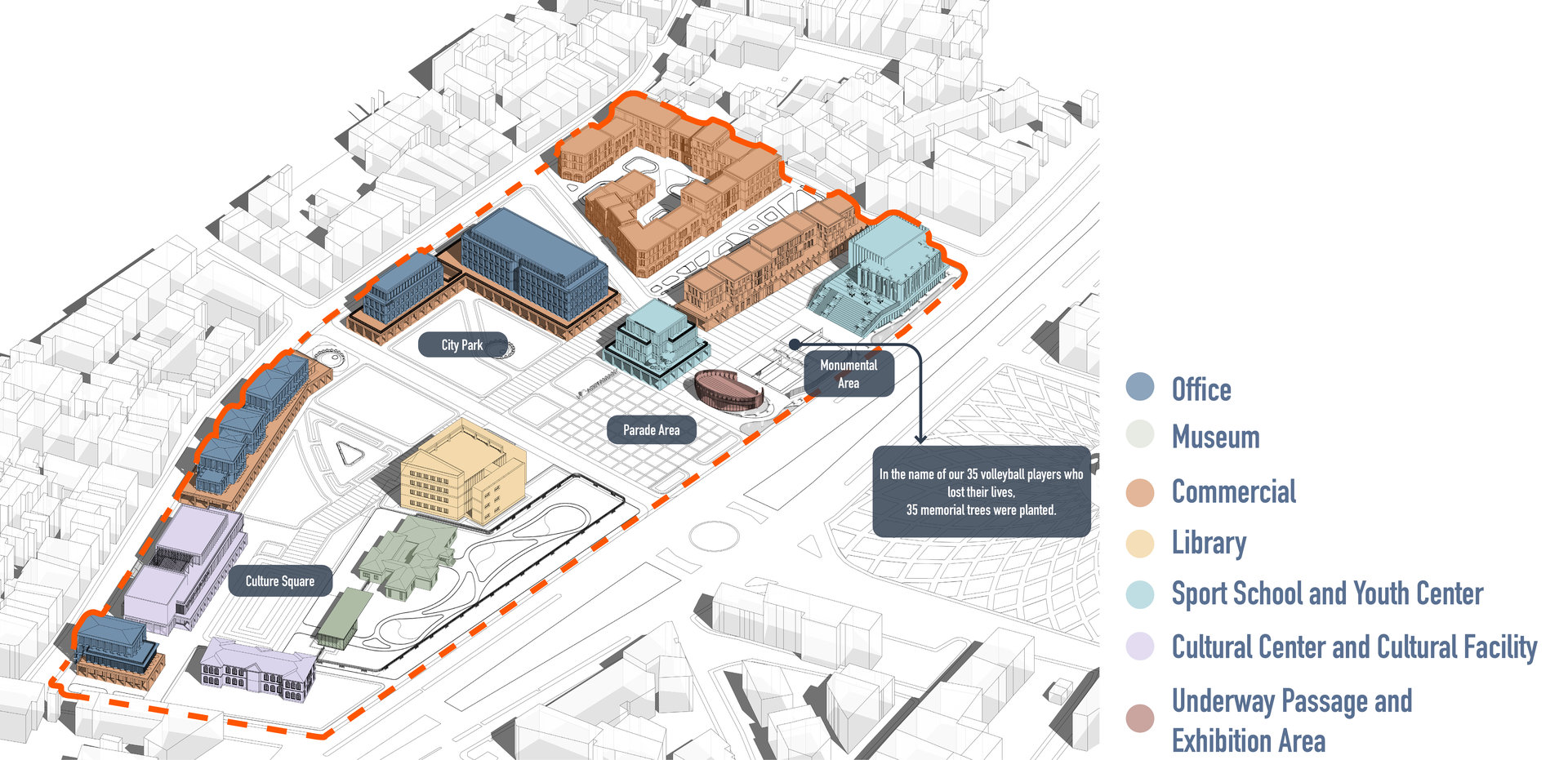
The design introduces three distinct plazas, each shaped by context and memory:
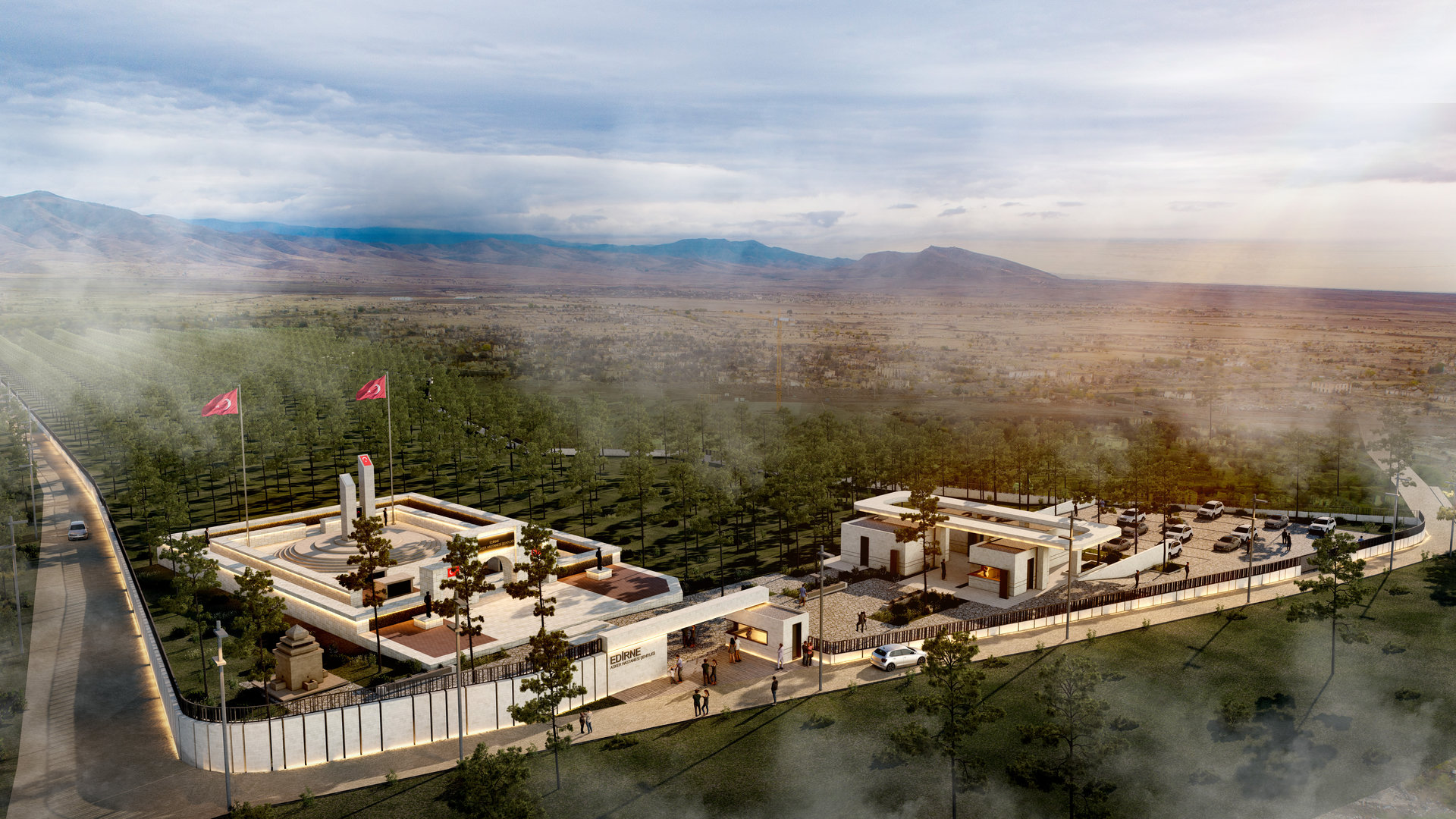
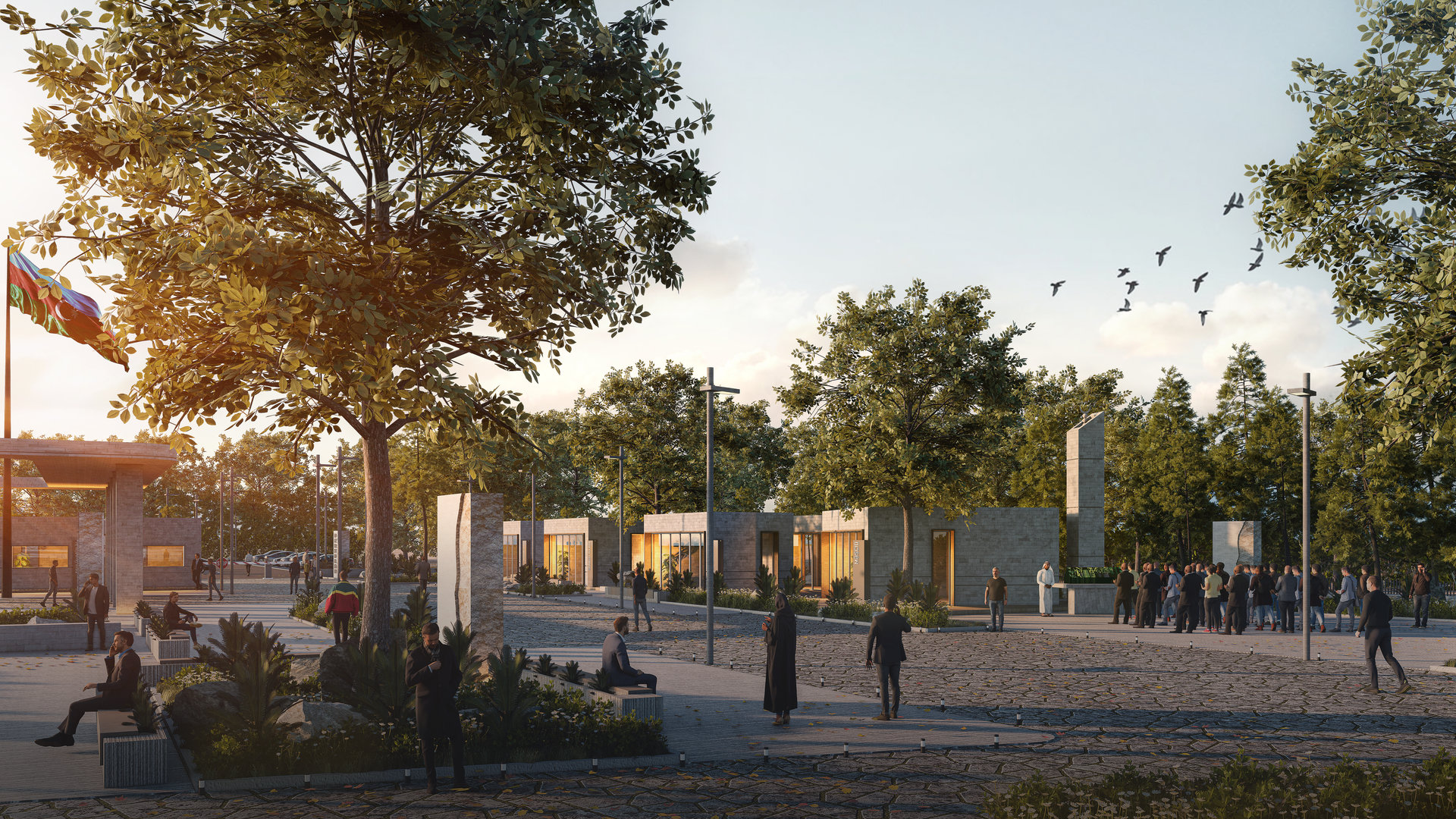
• Memorial Plaza: Situated on the former site of a collapsed hotel where both Turkish and Cypriot citizens tragically lost their lives, this space is reimagined as a public memorial plaza, honoring collective remembrance through spatial dignity.
• Ceremonial Plaza: Located between the memorial area and the adjacent urban park, this open space serves for public ceremonies, commemorations, and community gatherings.
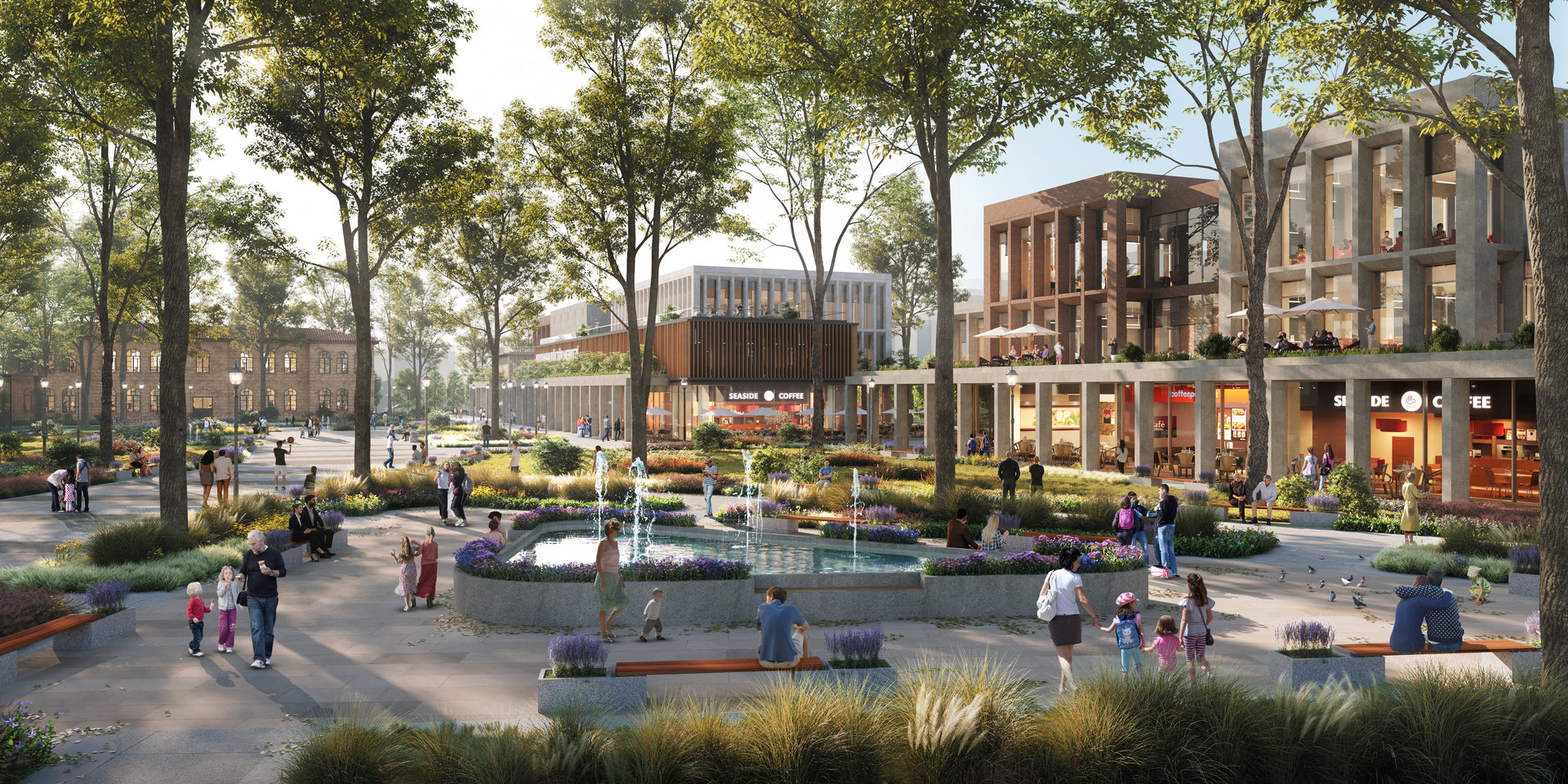
• Cultural Plaza: Enclosed by cultural institutions including a museum and cultural center, this plaza is designed as a lively urban platform for social and artistic interaction.
Landscape Integration and Urban Renewal
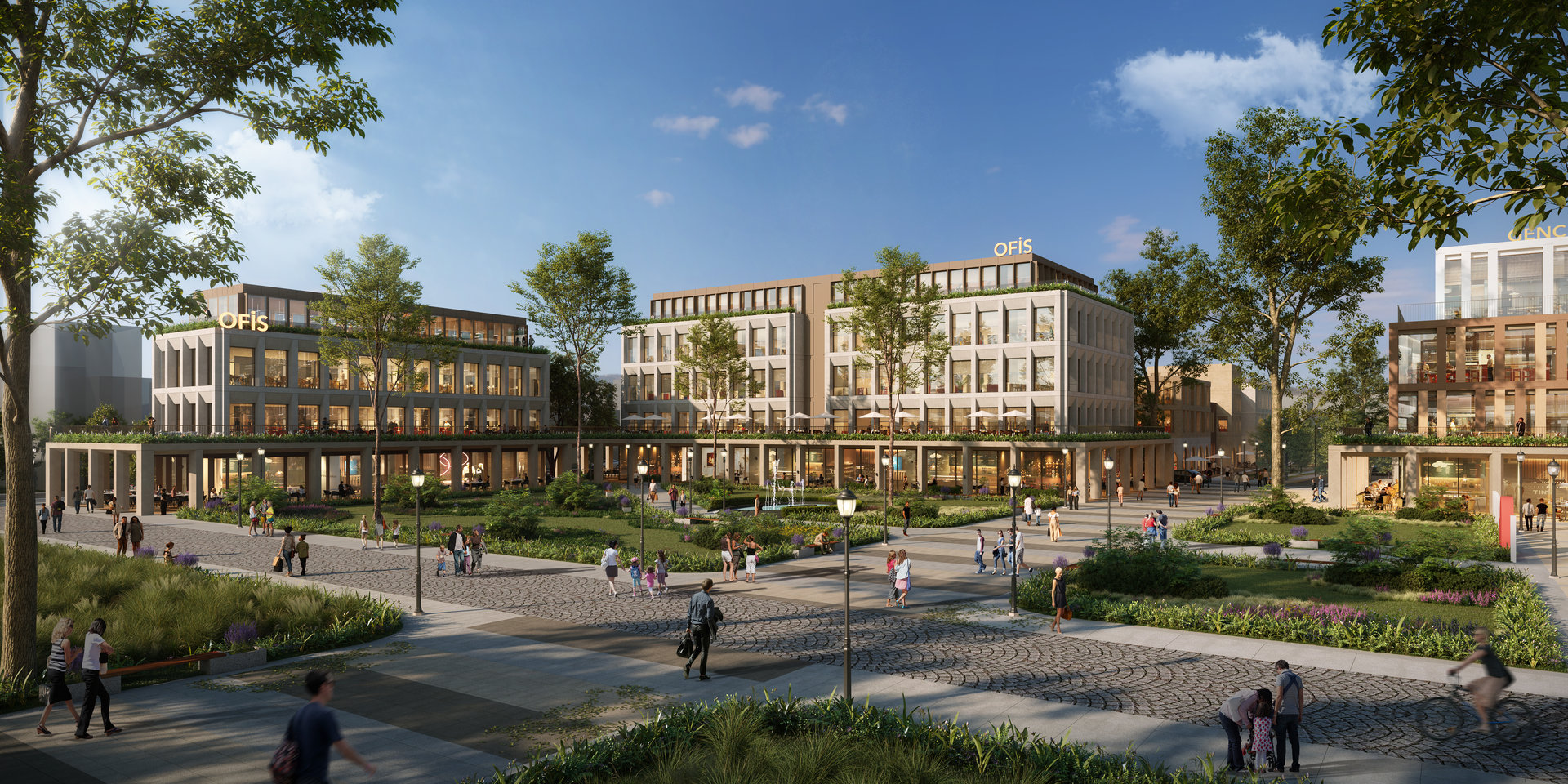
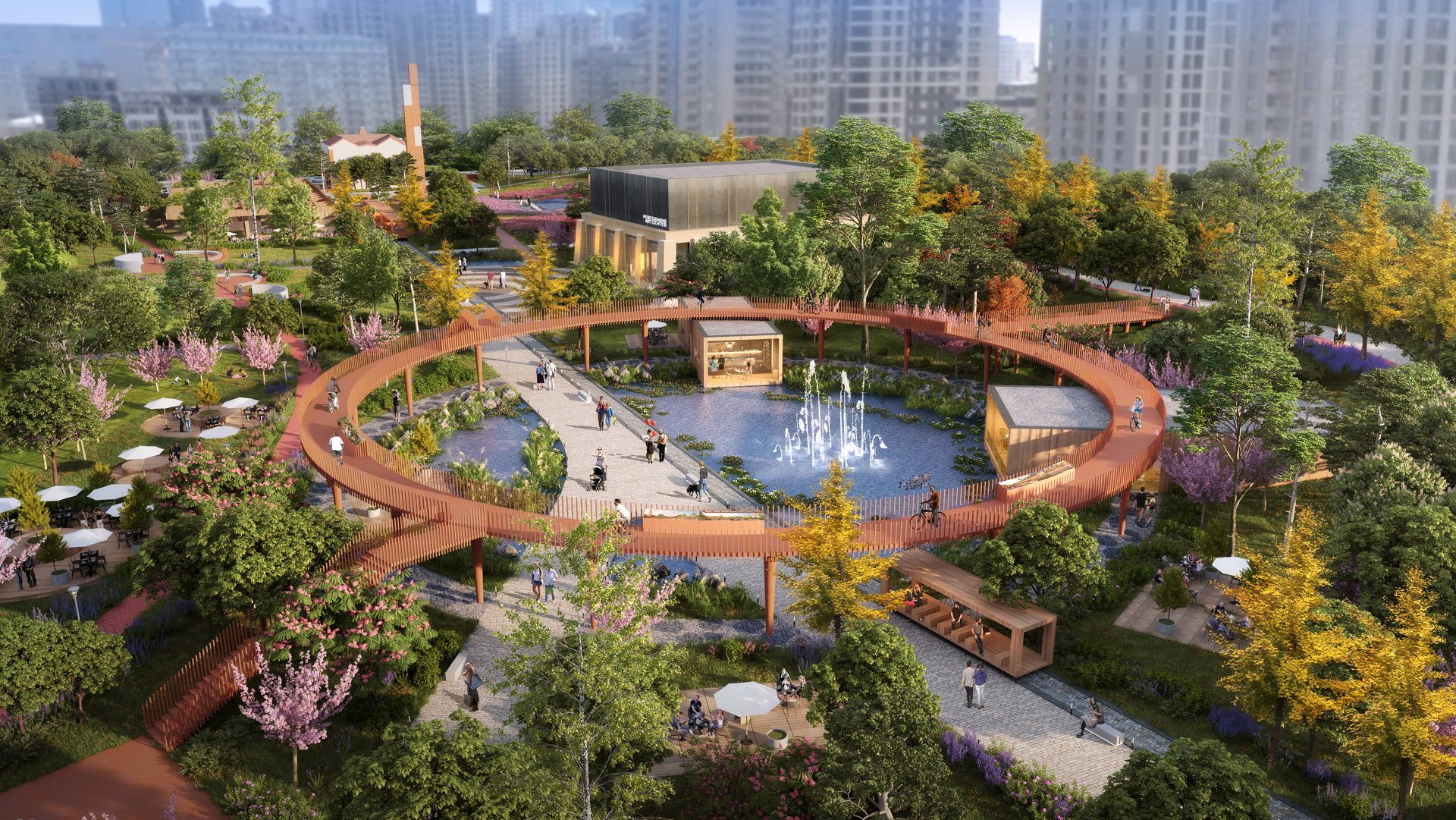
The integration of new pedestrian routes, green areas, and civic programs allows the project to merge existing urban fabric with renewed architectural and social functions. This design approach not only revitalizes a damaged city center but also cultivates resilience, healing, and collective memory.
Gallery