Fuzuli, Azerbaijan
Project Type
Education
Location
Fuzuli, Azerbaijan
Year
2021
Project Service
Concept Project
Project Status
Concept Project
Total Area (m²)
35000.00
Employer
PMD
Geographical Context and Climate Characteristics
Located in the upper section of the Fuzuli Rayonu a key administrative district in Azerbaijan’s Karabakh region the project site spans part of a 1,386 km² territory historically known as Karabulak. Surrounded by important regional hubs, the area is 158 km from Ganja Airport, 172 km from Nakhchivan Airport, and 245 km from Heydar Aliyev International Airport. Defined by a semi arid steppe climate (BSk – Köppen-Geiger), the region experiences low annual precipitation and wide seasonal temperature variation. This climatic context shaped the orientation, shading, and material decisions in the project.
Functional Program and Educational Strategy
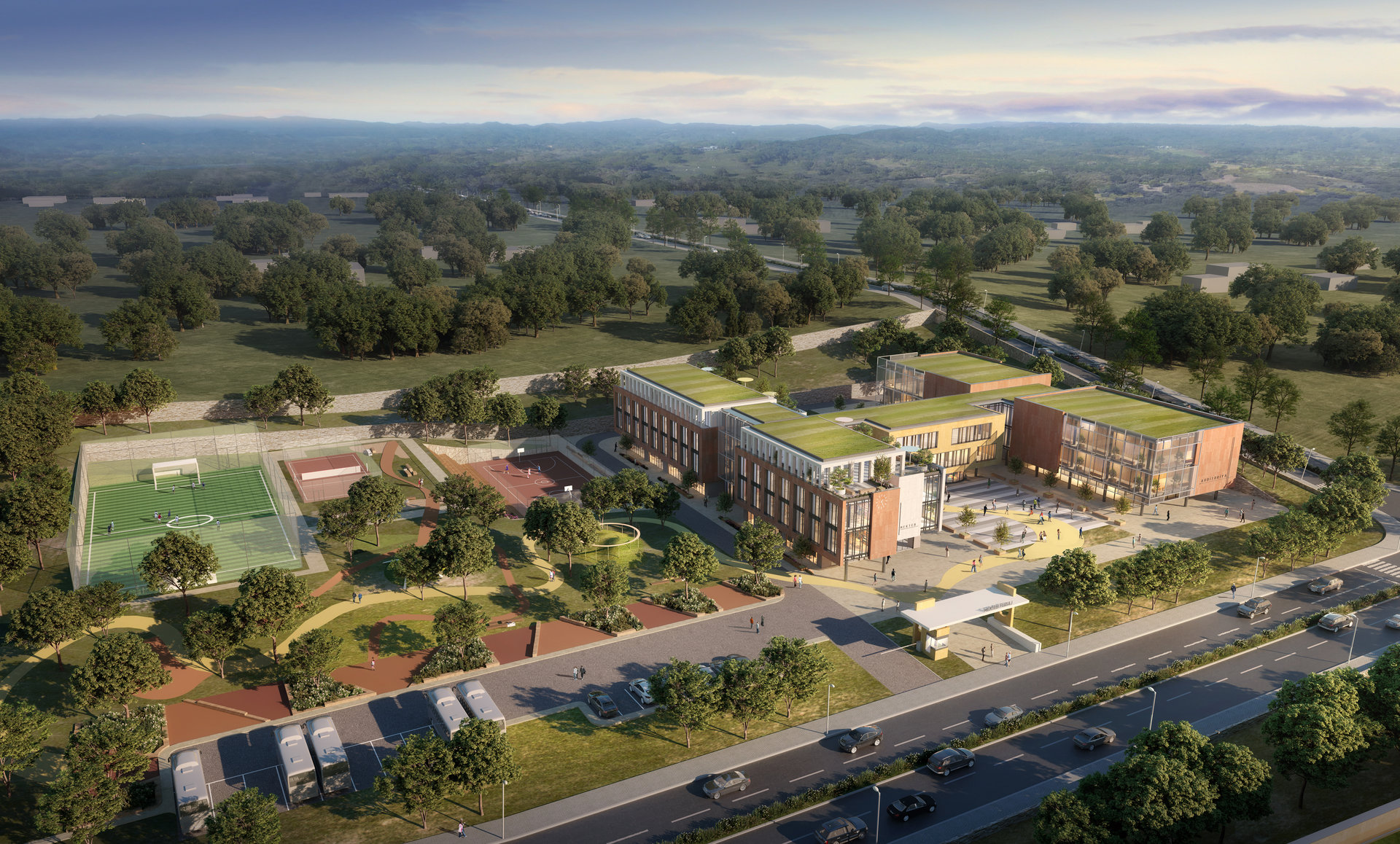
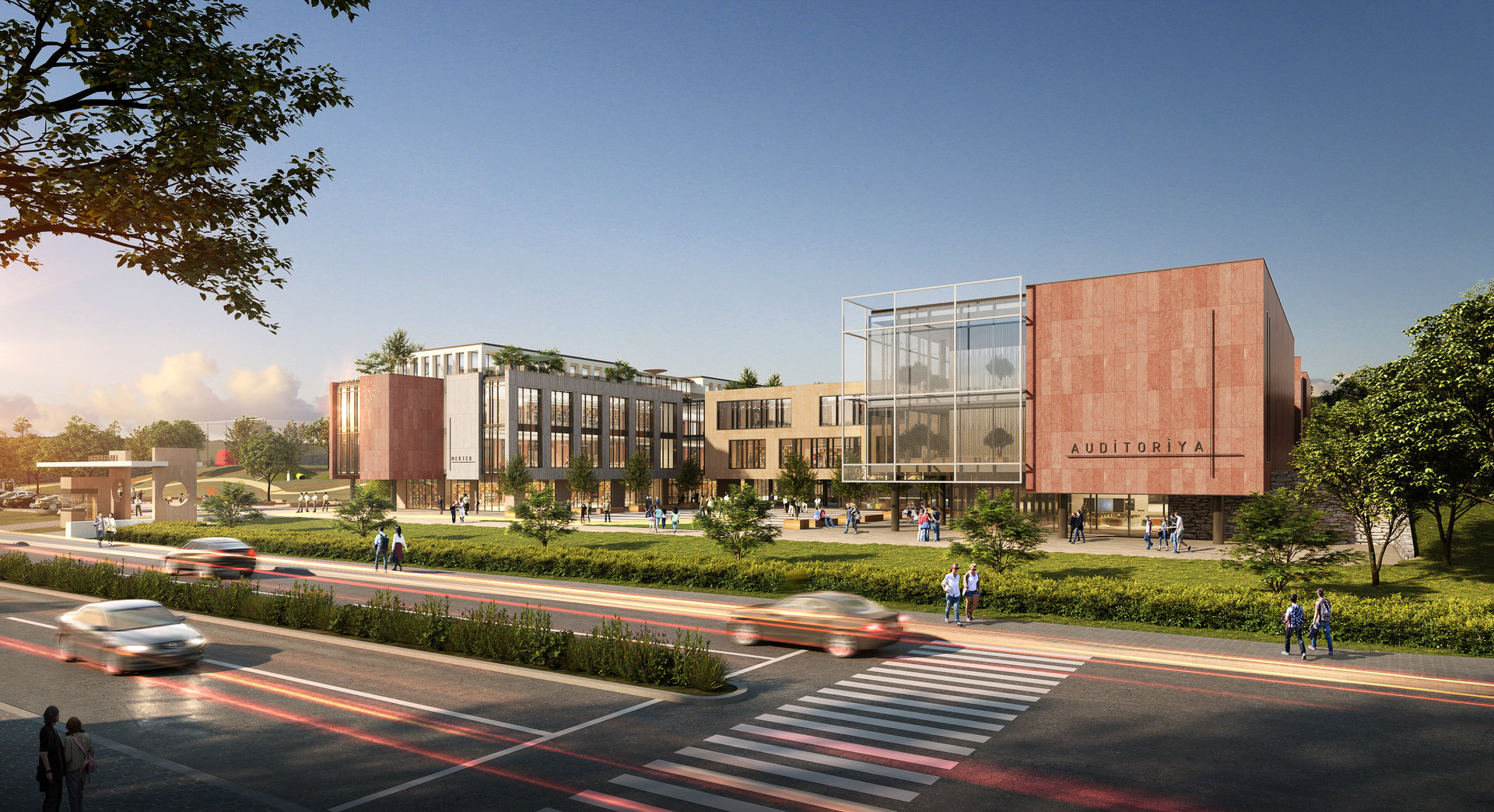
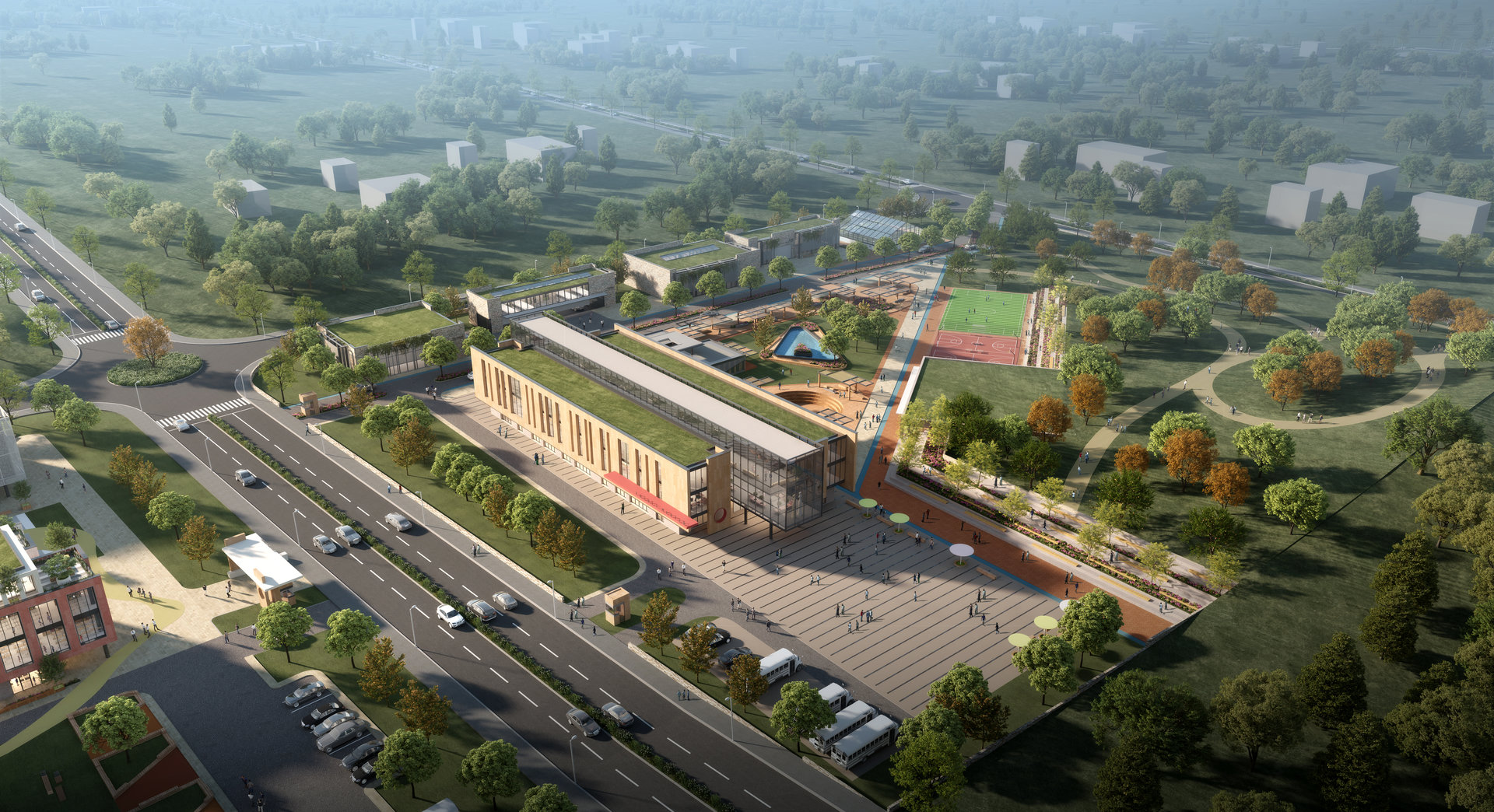
The Fuzuli Education Complex is structured around three main programmatic zones: education, administration, and recreation. Educational blocks include flexible classrooms, laboratories, and conference halls, all arranged along a central circulation spine to promote intuitive movement and collaborative learning. Administrative units are placed strategically at nodal points to oversee operations, while the layout emphasizes daylight access, cross-ventilation, and modular expansion capacity.
Recreation and Sports Integration
A holistic development vision defines the project’s approach to learning: formal education is complemented by diverse recreational opportunities. The master plan integrates outdoor sports fields (football, tennis, basketball), children’s play areas, and a dedicated sports center to encourage physical well-being and social interaction. These spaces are embedded within a landscaped green belt, ensuring accessibility and shade under Fuzuli’s arid conditions.
Landscape Design and Climatic Responsiveness
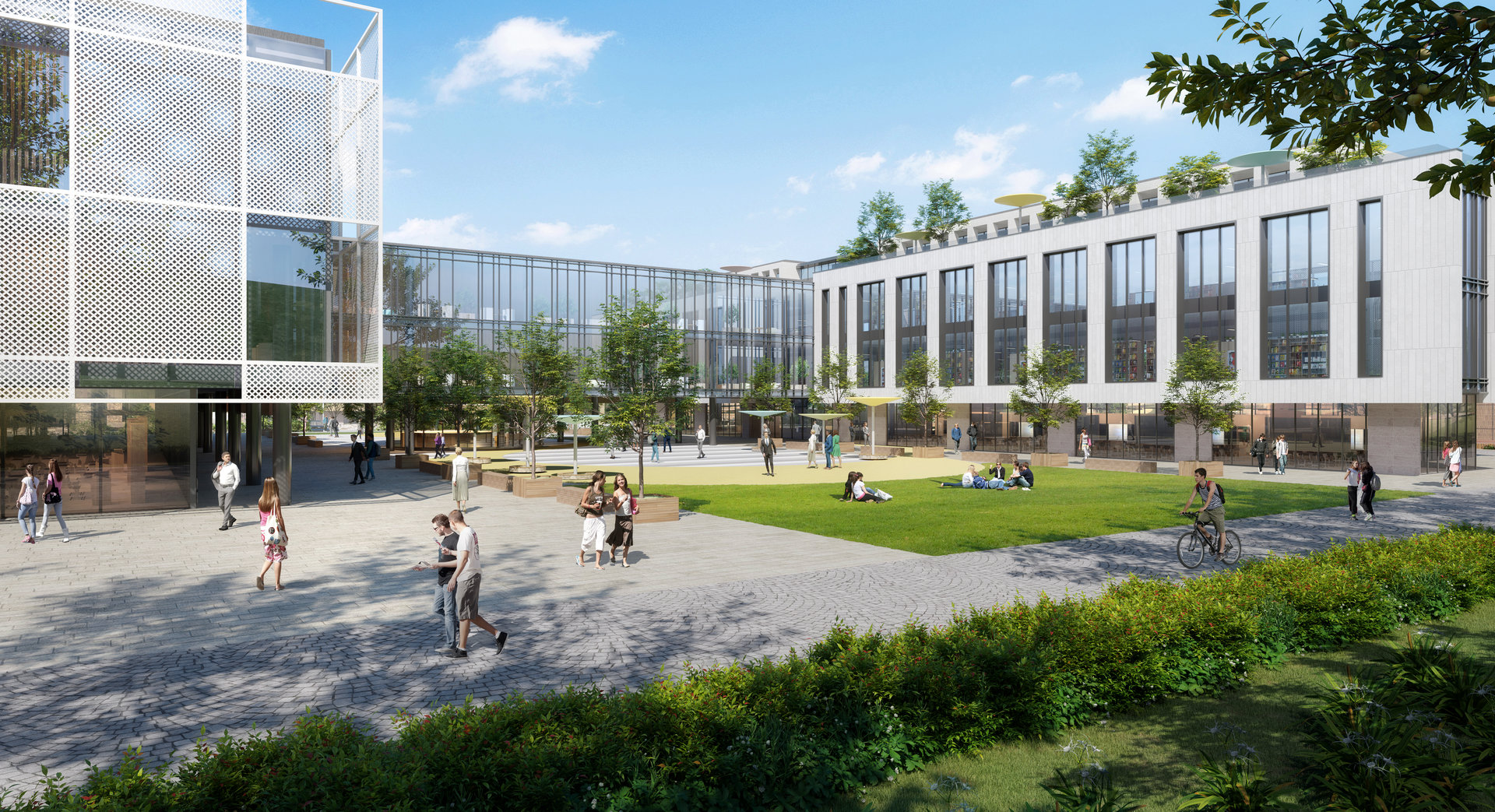
The landscape strategy includes native vegetation zones and shaded gathering spaces to respond to the site’s dry climate and limited rainfall. The inclusion of recreational pockets and tree lined pedestrian paths not only enhances thermal comfort but also fosters a strong community identity. The open spaces transition fluidly from educational interiors, forming an interconnected and accessible learning environment.
Mobility, Parking, and Circulation Planning
Vehicular access and parking are designed with operational efficiency and safety in mind. A separated parking lot serves both staff and visitors, while internal circulation routes minimize conflict between pedestrian and vehicle flows. All programmatic functions are connected through a clearly defined spine that supports inclusive access and seamless daily operation.
Gallery