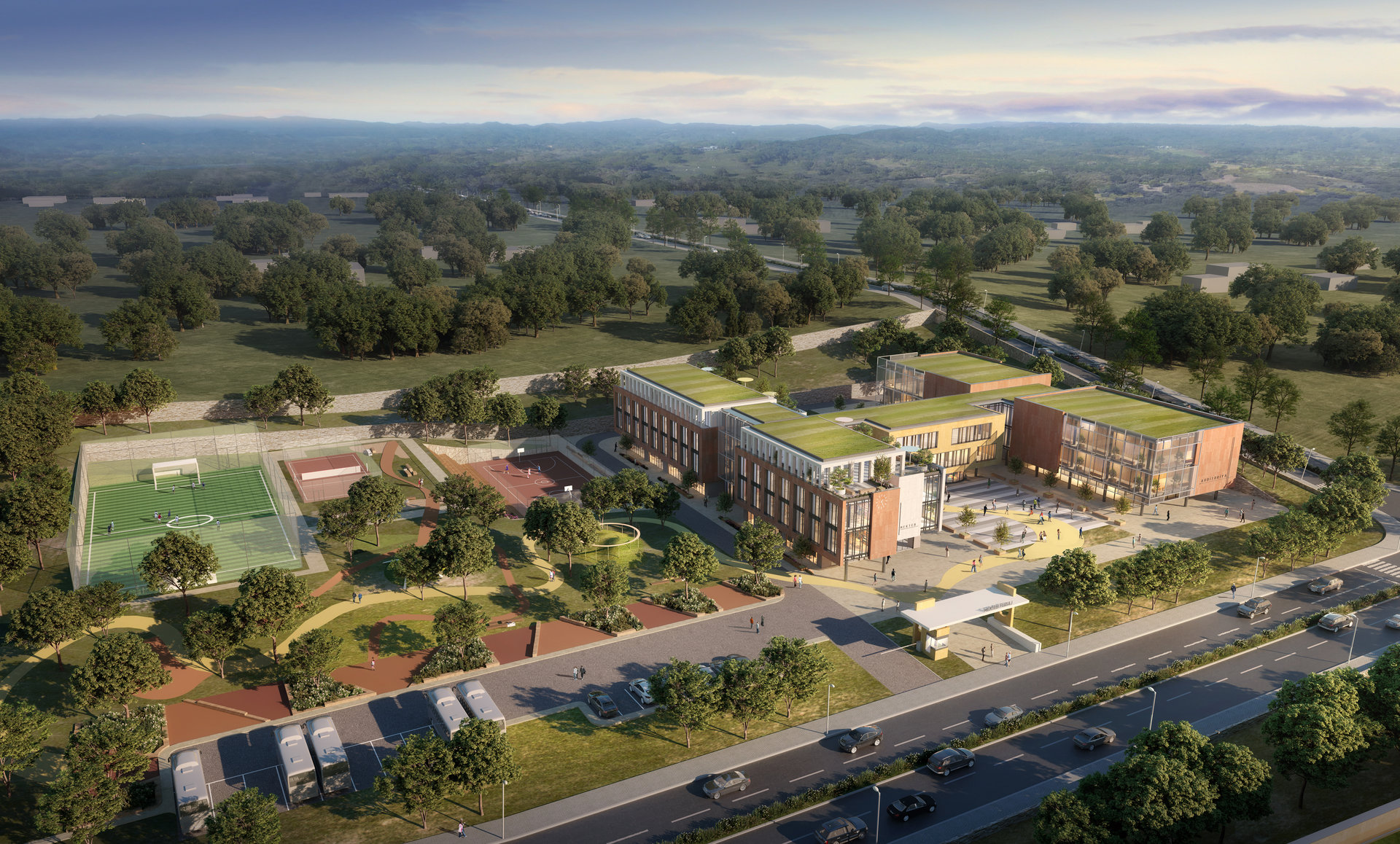
Fuzuli, Azerbaijan
Proje Type
Education
Location
Fuzuli, Azerbaijan
Year
2021
Project Service
Concept Project
Project Status
Concept Project
Total Area (m²)
40000.00
Employer
PMD
Context and Climatic Character
Located in the upper section of Azerbaijan’s Fuzuli Region, the project area is situated within a strategic administrative division historically known as Karabulak. Covering an area of 1,386 km², Fuzuli stands out with its continental steppe climate (classified as BSk in the Köppen-Geiger system), where average annual temperatures reach 14.9°C and annual precipitation averages 428 mm. The site’s accessibility is reinforced by its proximity to Ganja Airport (158 km), Nakhchivan Airport (172 km), and Heydar Aliyev International Airport (245 km).
Programmatic Layout and Functional Distribution
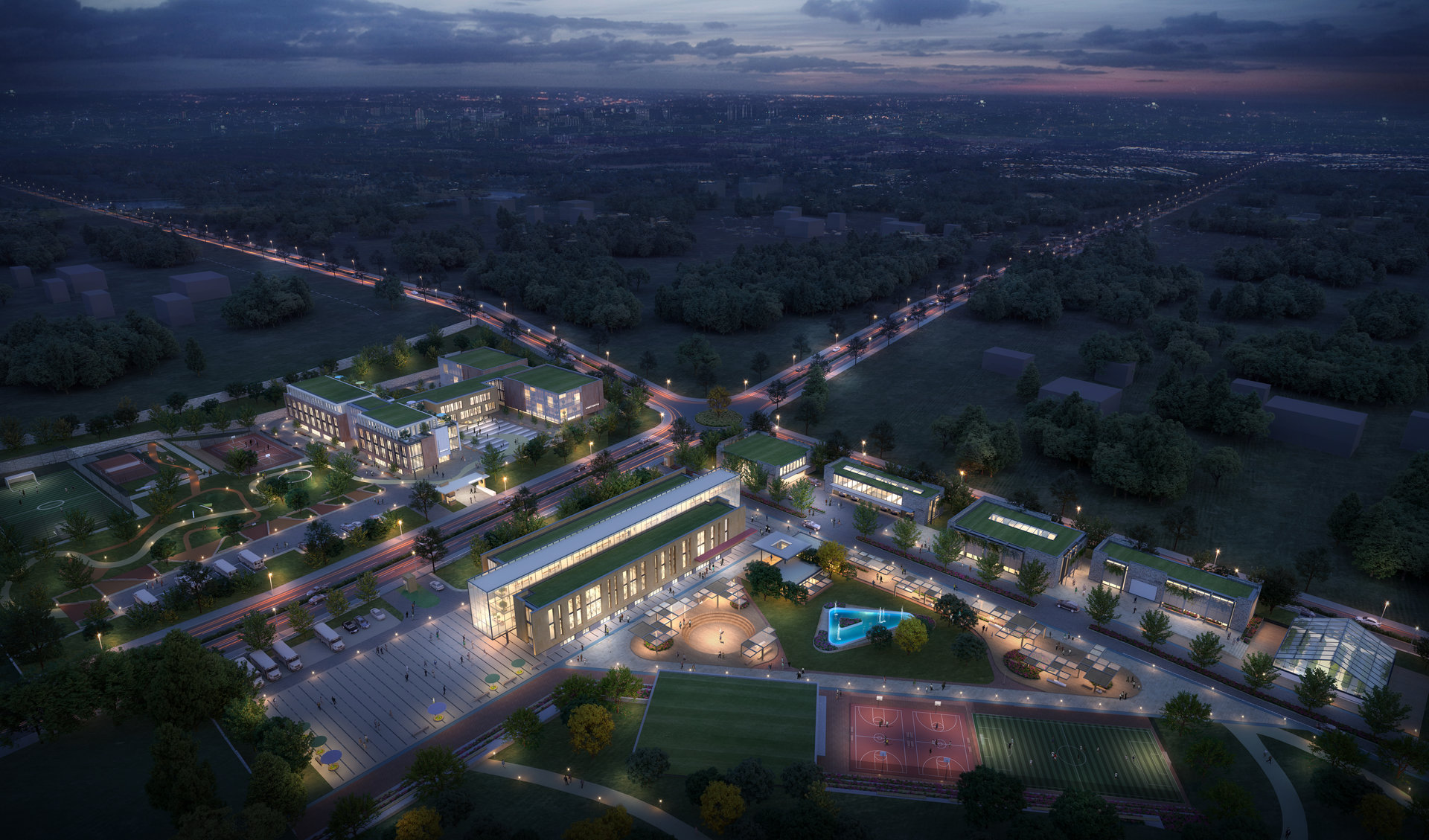
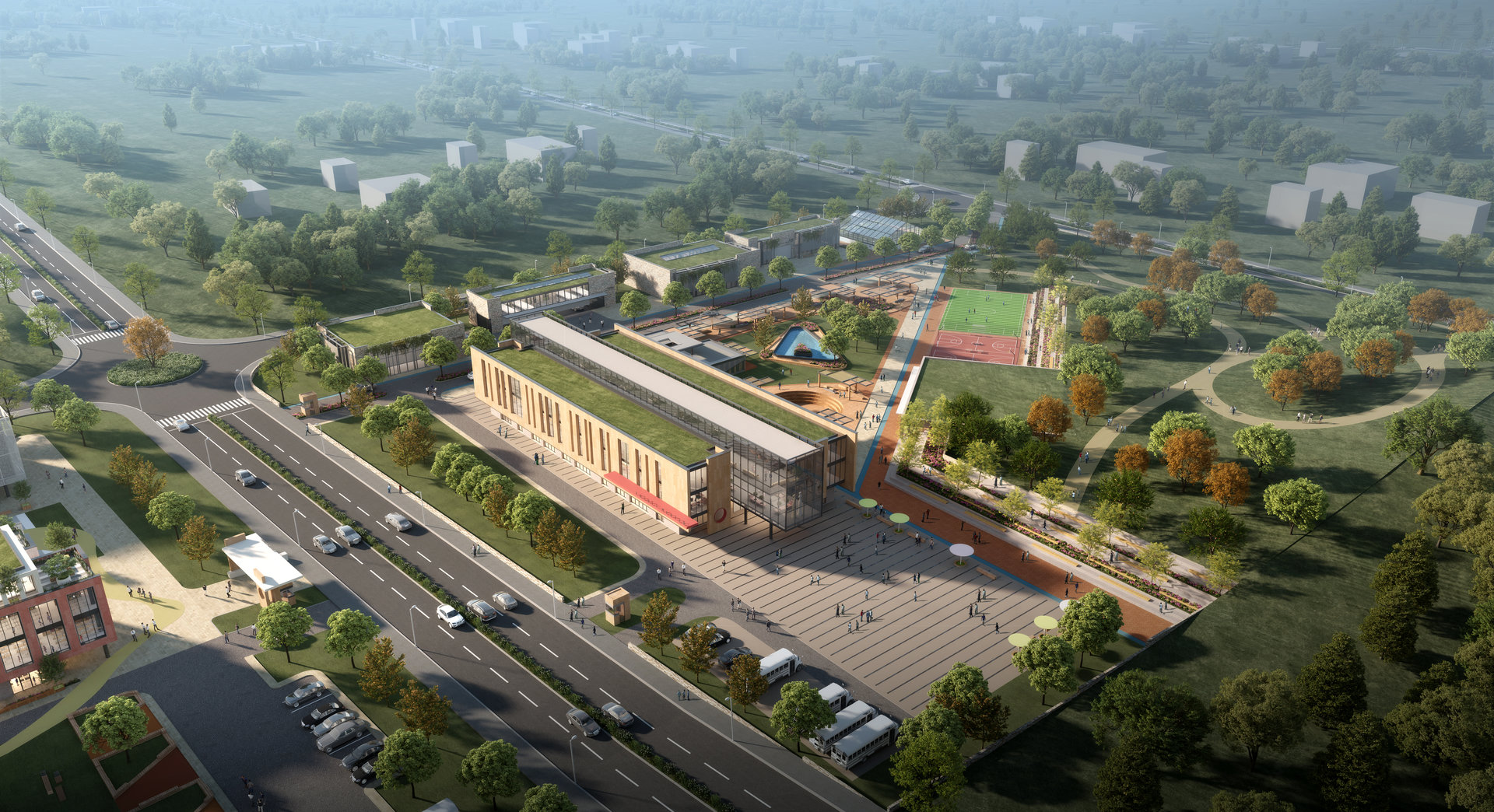
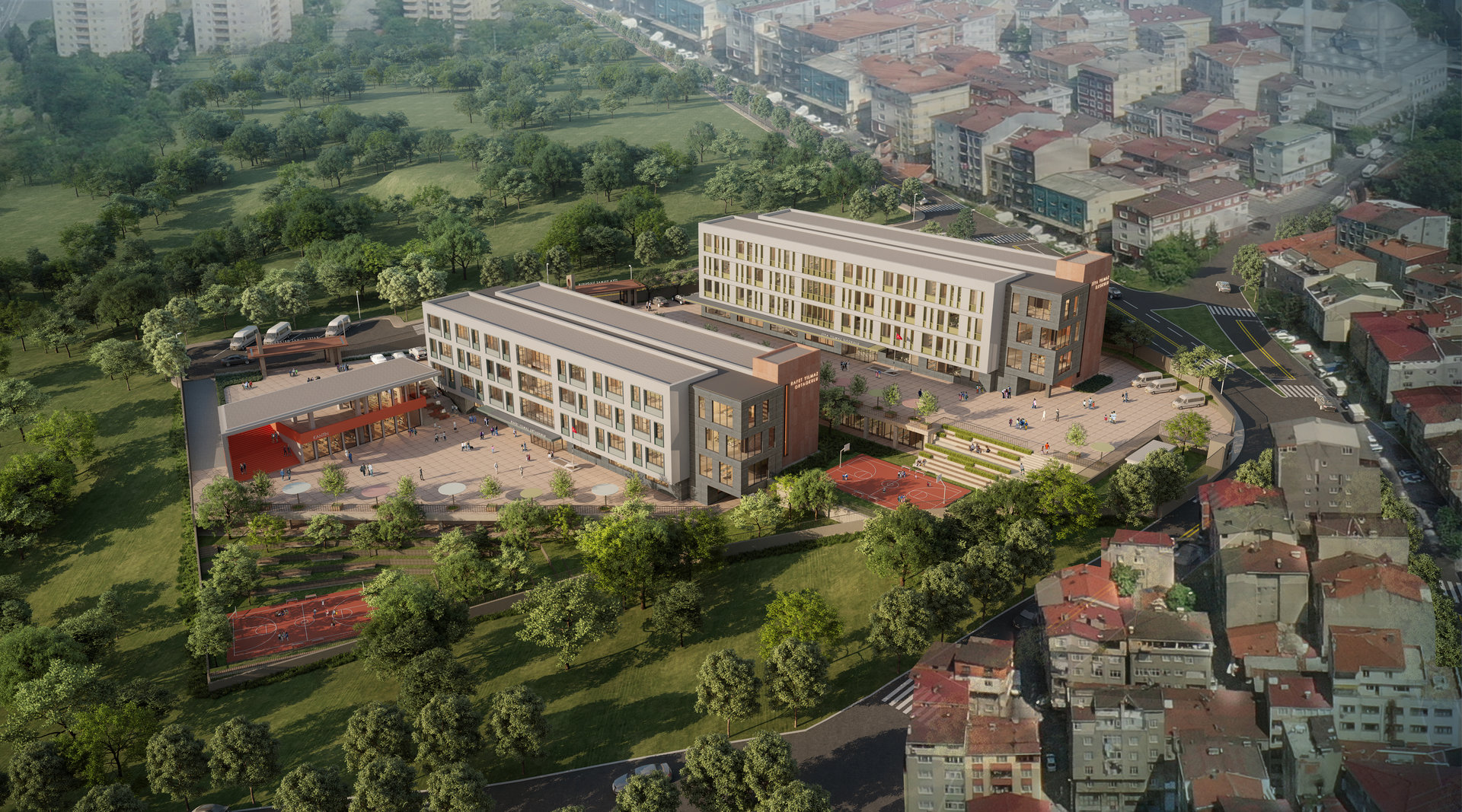
The vocational school is designed as a multipurpose educational campus that blends theory with hands on training. The program is organized into three primary clusters:
• Academic Core: Classrooms, laboratories, administrative offices
• Applied Learning Zone: Workshops including auto repair, garage, cattle farm, greenhouse, and warehouse units
• Social and Recreational Layer: Canteen, sports center, football and basketball courts, and expansive recreational areas
The spatial layout ensures direct pedestrian access between theoretical and applied learning spaces, reinforcing the school’s mission to offer immersive, skill based education tailored to regional socio-economic development.
Architectural Language and Material Strategy
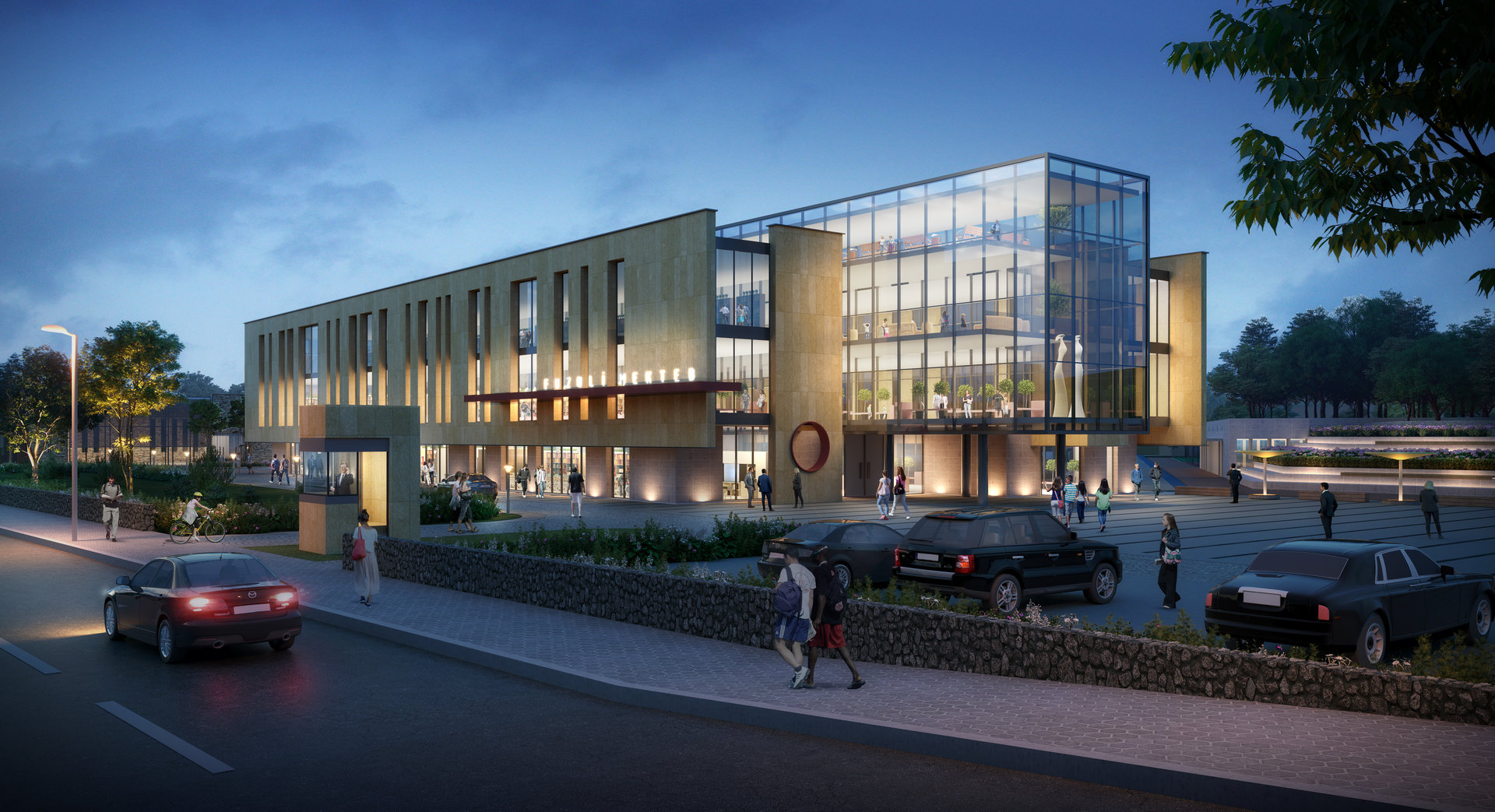
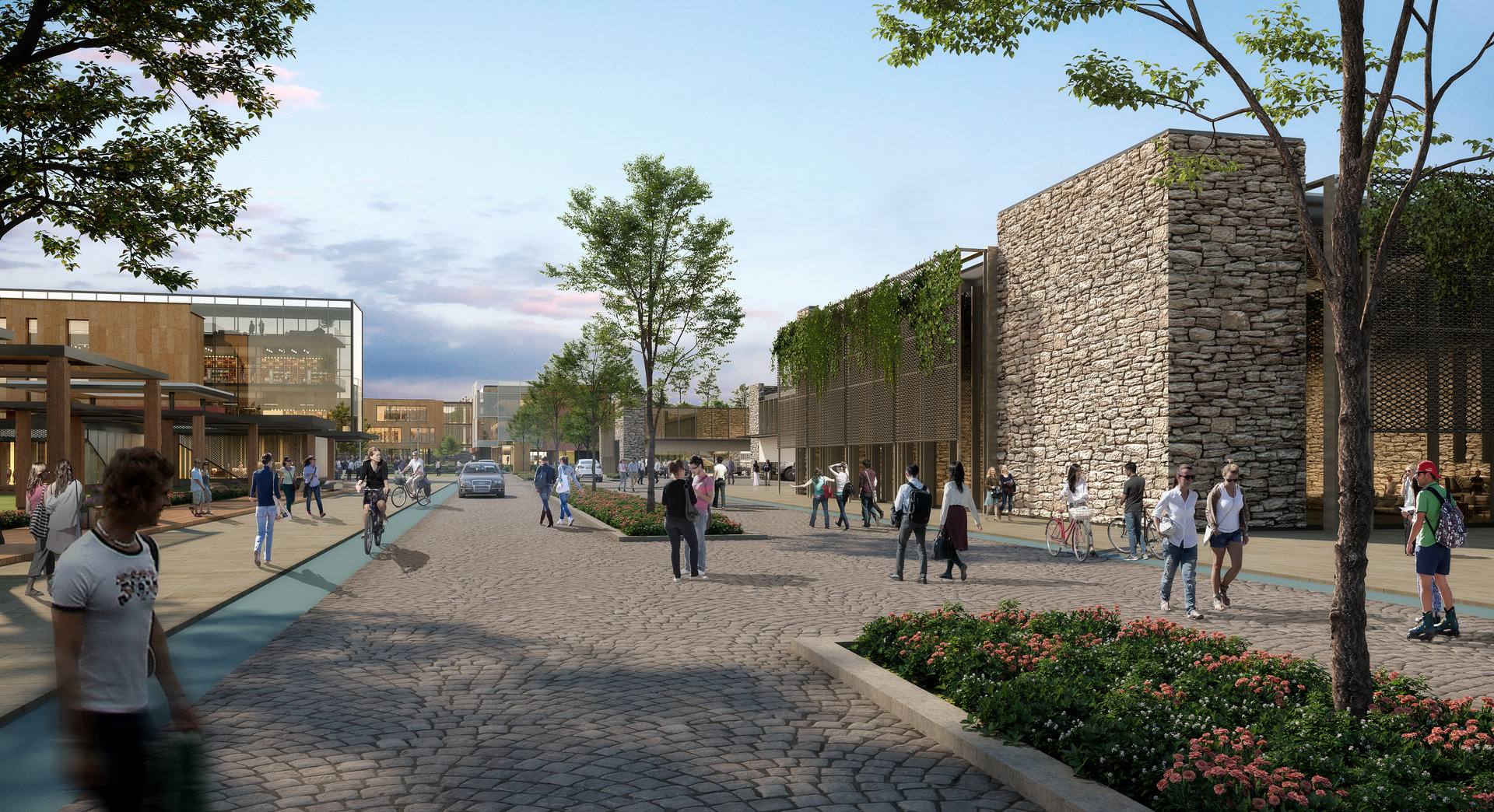
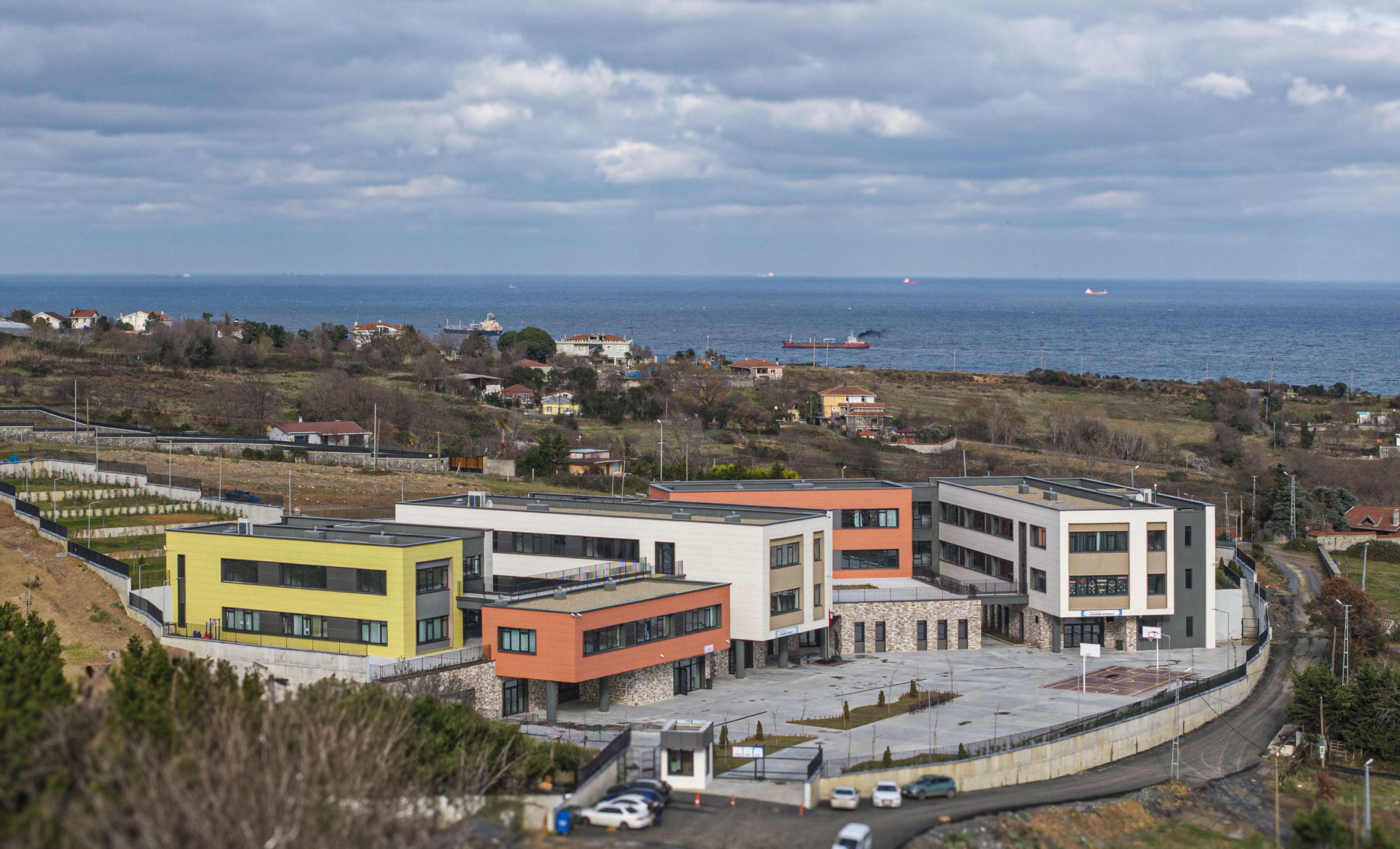
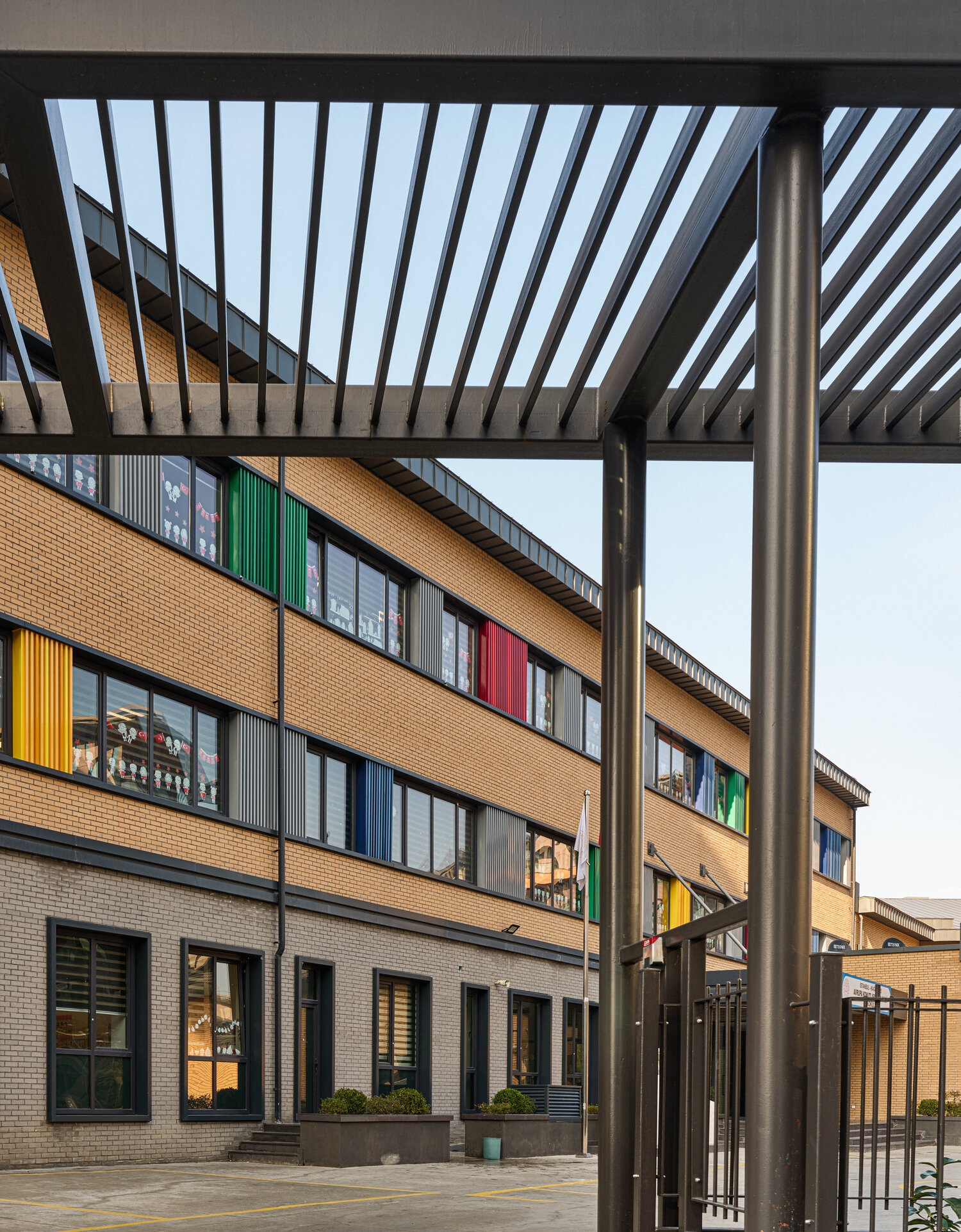
The building facade integrates glass cladding, aluminium panels, natural stone, ceramic surfaces, and metal mesh, creating a balance between transparency, durability, and regional identity. These materials were selected to ensure thermal comfort and robustness in the face of Fuzuli’s arid climate. The architectural language favors a modular and rational aesthetic, reflecting the pragmatic character of vocational training.
Landscape and Campus Experience
In addition to its academic infrastructure, the campus integrates thoughtfully designed green zones, including recreational gardens and a functional greenhouse, promoting an educational environment connected to ecology and productivity. The sports fields and landscaped resting areas aim to support student wellbeing and social interaction.
Conclusion
Fuzuli City Vocational School is envisioned not just as an educational facility, but as a strategic anchor for regional development. Its hybrid approach, combining technical education with agricultural and industrial know-how, empowers a new generation of skilled professionals while enhancing the socio-economic fabric of the Karabakh region.
Gallery