Riaydh, Saudi Arabia
Project Type
Mixed Use
Location
Riaydh, Saudi Arabia
Year
2025
Project Service
Concept Project
Project Status
Concept Project
Total Area (m²)
128090.00
Total Construction Area (m²)
37803.00
Employer
MASCO Group
A Future-Oriented Gateway Between Desert Resilience and Global Ambition
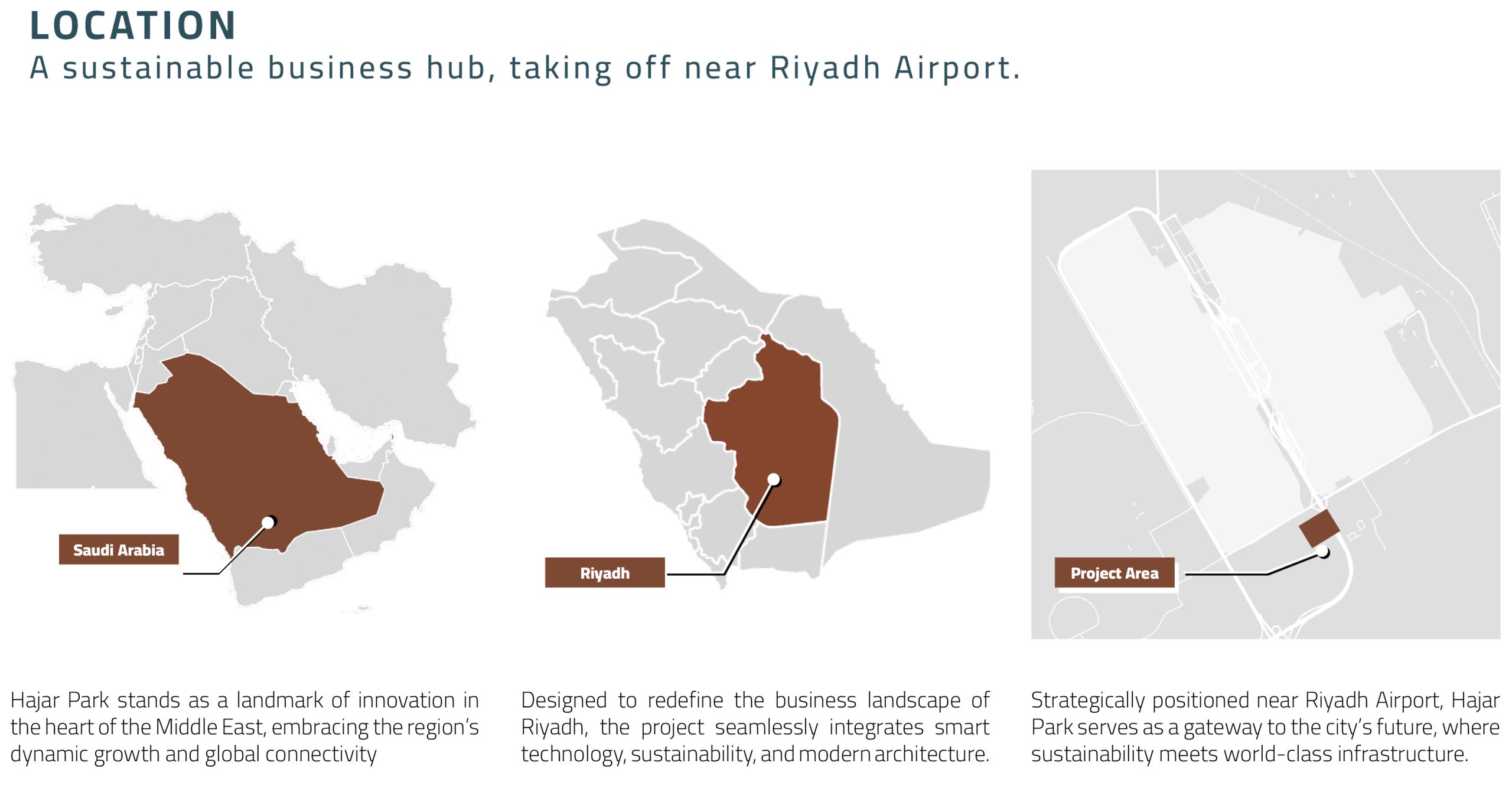
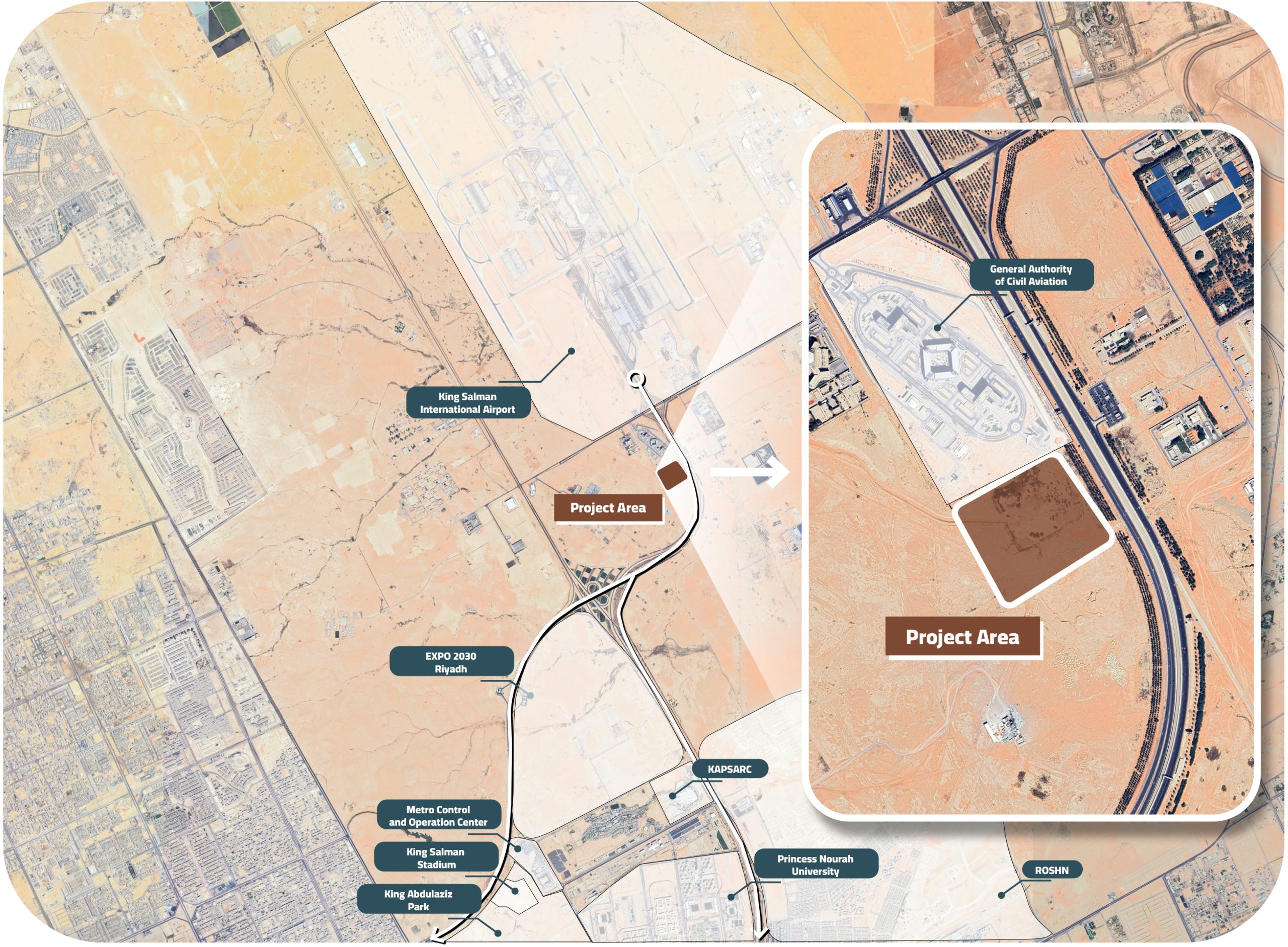
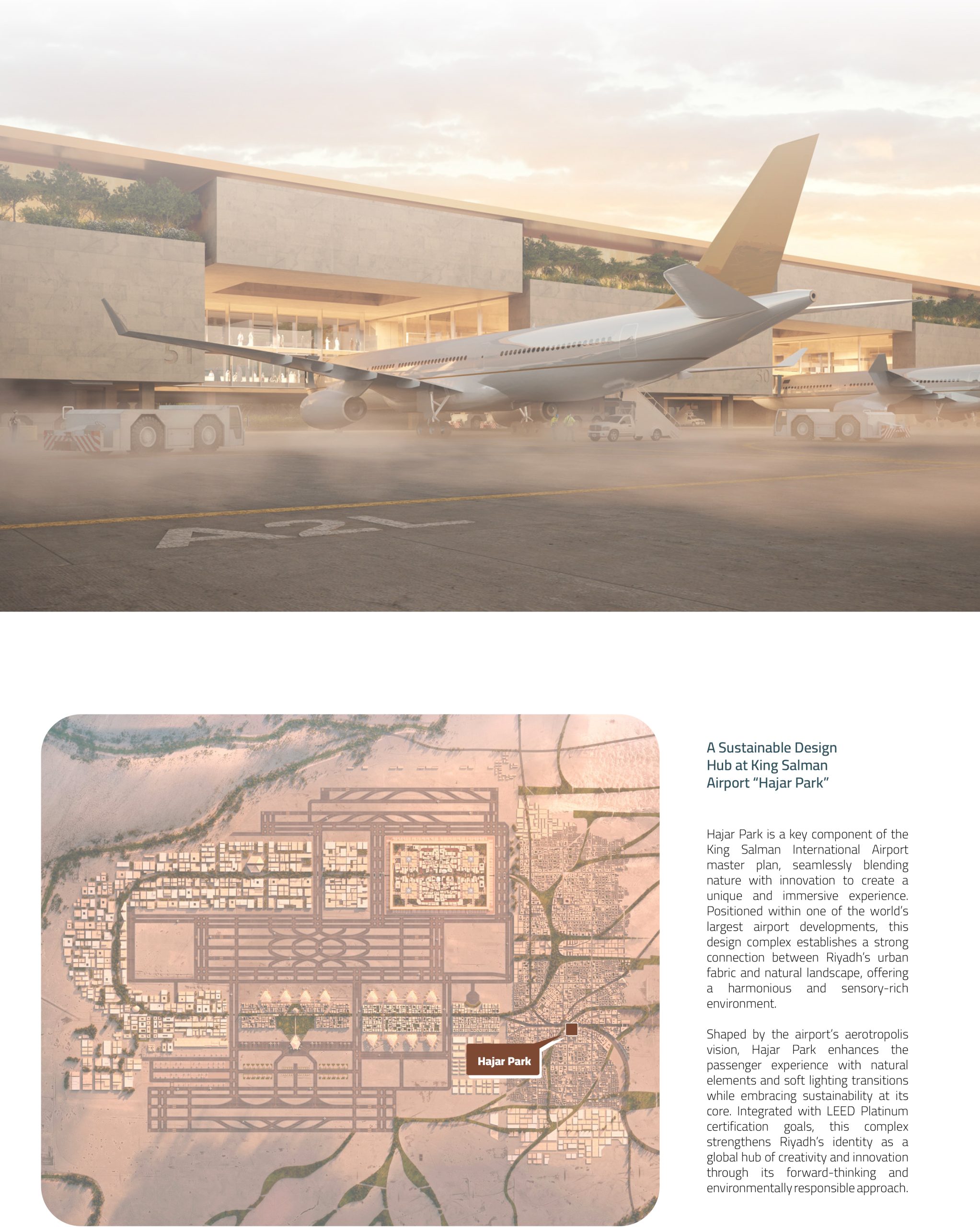
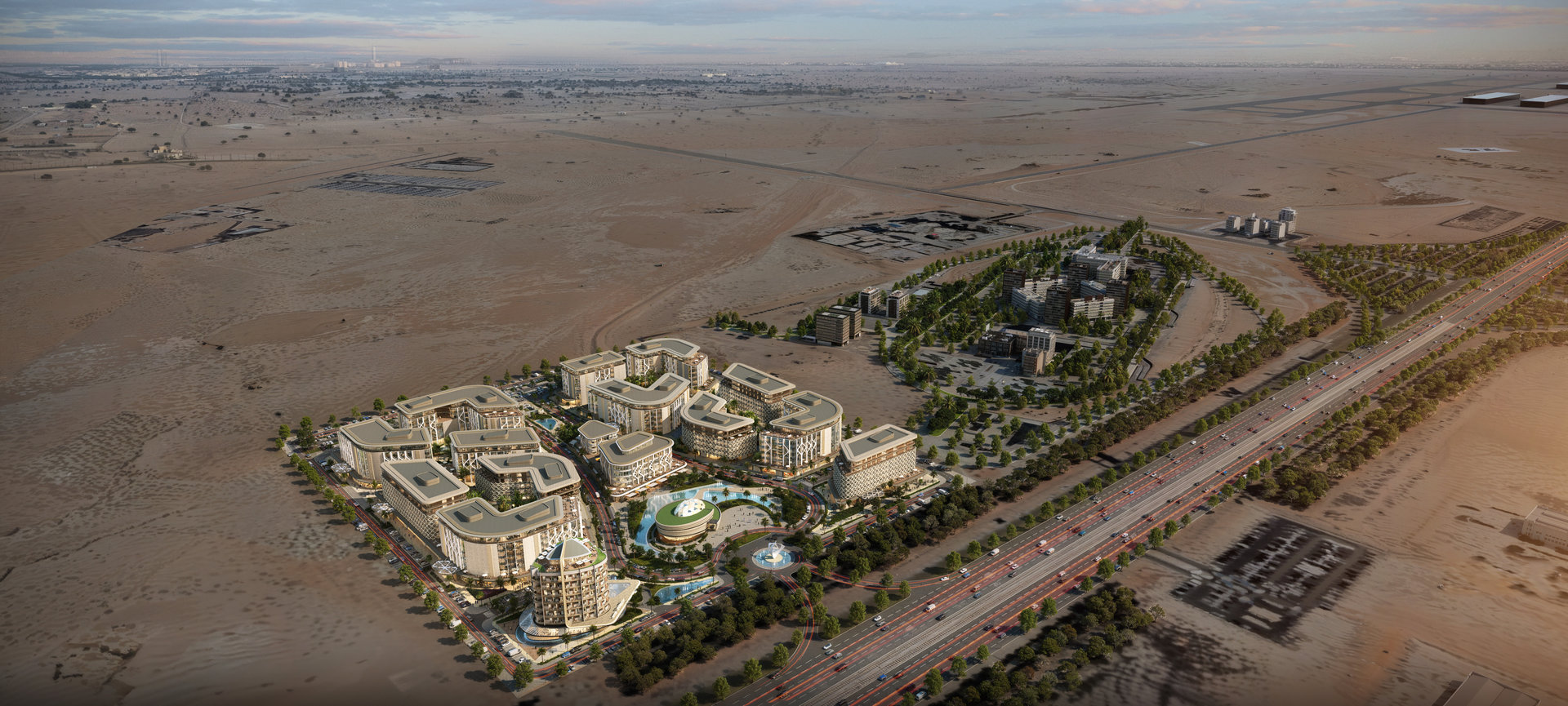
Located within the visionary King Salman International Airport master plan, Hajar Park is designed to serve as a critical connective tissue between Riyadh’s expanding global identity and its ecological and cultural roots. Positioned at a strategic node between major transport corridors, international access points, and civic institutions, the project reimagines what it means to build in the desert proposing a model where climate consciousness, programmatic vitality, and architectural elegance converge.
More than an urban development, Hajar Park is envisioned as Riyadh’s new civic heart: a hybrid environment where green infrastructure, business innovation, and cultural interaction are seamlessly integrated.
Site Strategy and Climatic Calibration
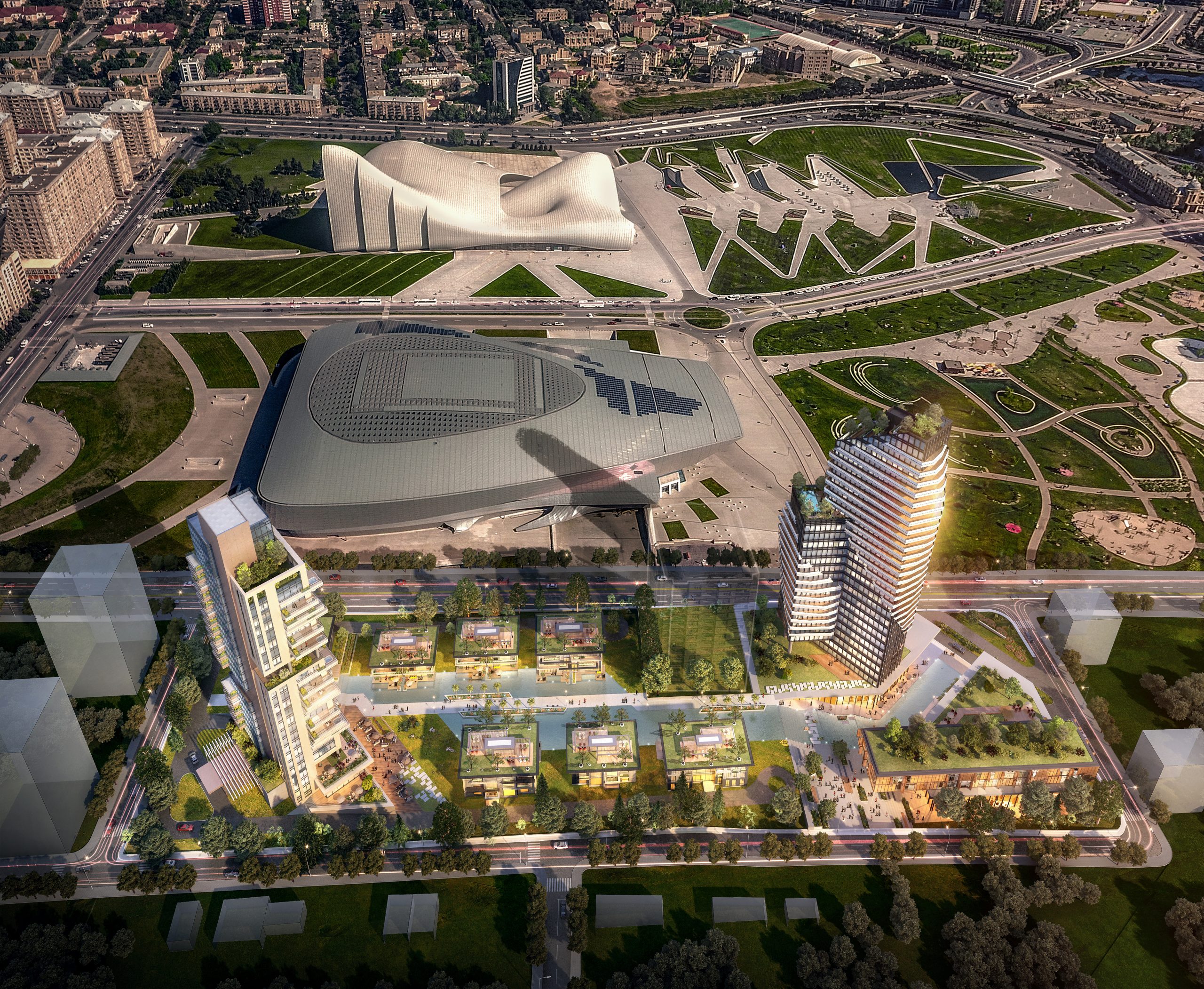
Situated along the primary approach road to King Salman International Airport, the site benefits from high visibility and uninterrupted access. This axial orientation is not only functional it is symbolic. The geometry of the masterplan is organized around a central public void inspired by the faceted form of a diamond, radiating “golden bands” that segment and unite the programmatic zones of the project.
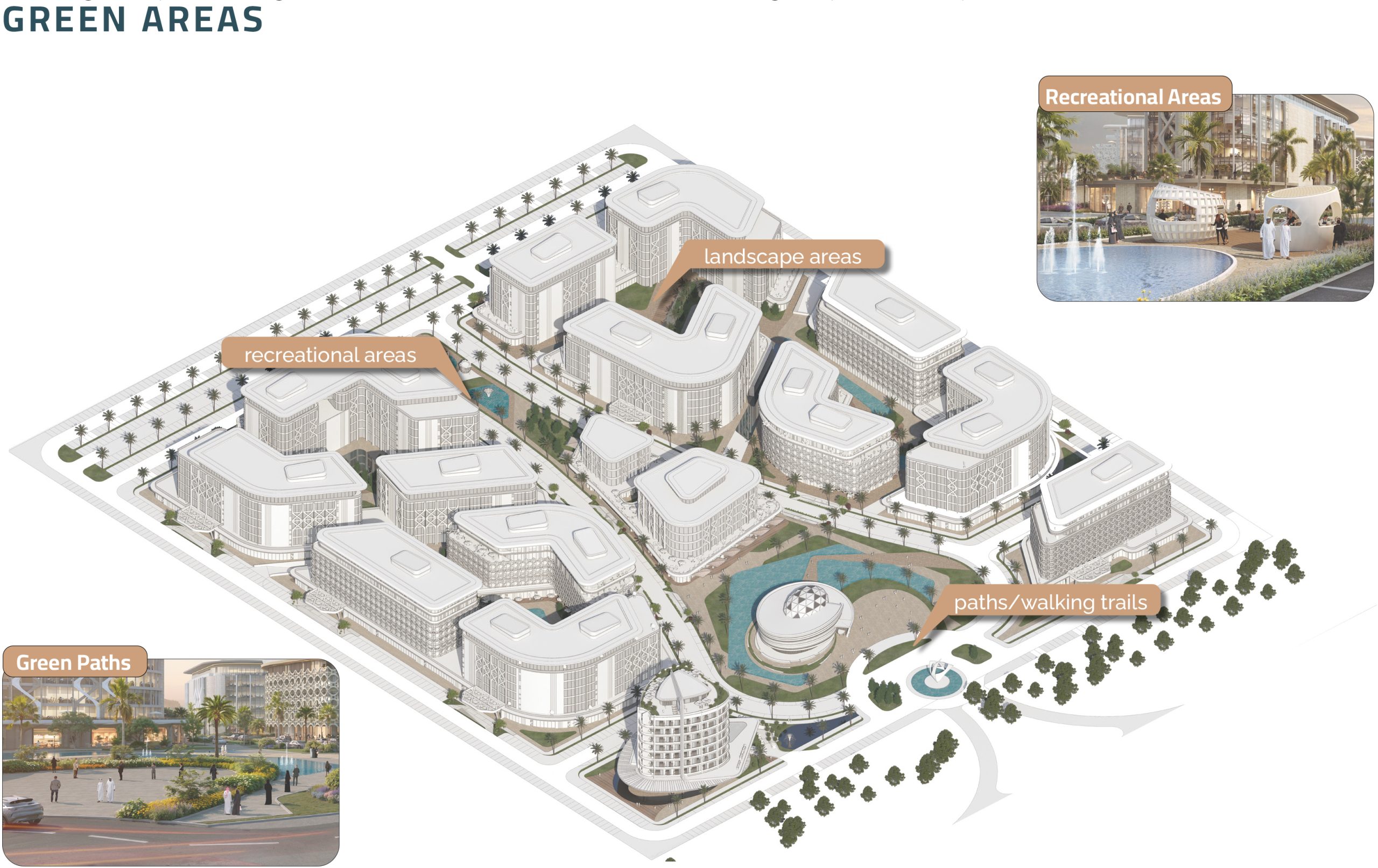
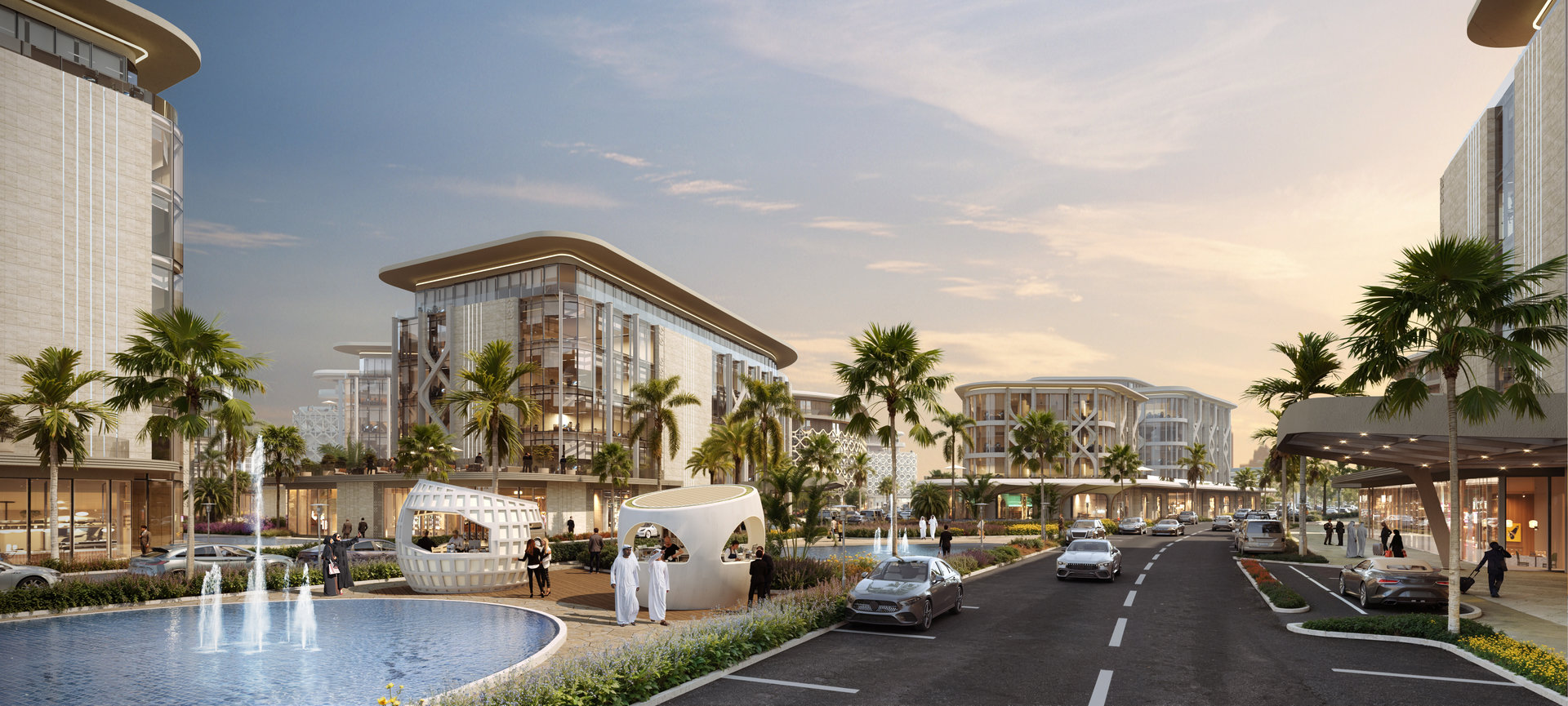
Responding to the harsh desert climate, the masterplan adopts an inward-facing configuration. This strategy creates a protected microclimate, shielding interior spaces from heat and sand while allowing for ventilation and light through shaded walkways, planted corridors, and water-based cooling techniques.
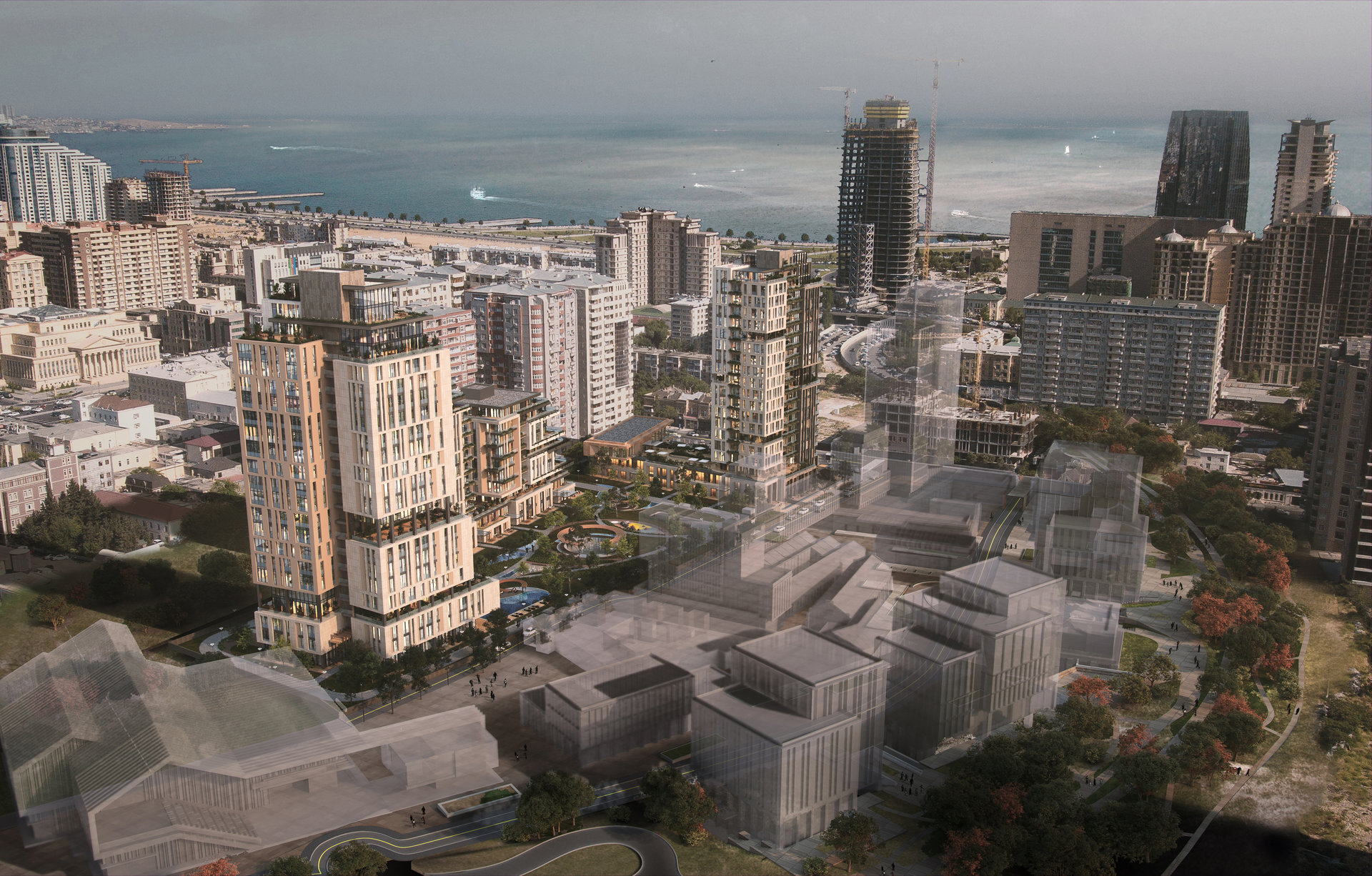
The adjacency of the site to key urban and infrastructural landmarks—Kingdom Centre, Al Faisaliah Tower, King Abdullah Park—positions Hajar Park not only as a business hub, but as a connective landmark within the greater Riyadh metropolitan framework.
Design Principles
Urban Constellation of Uses
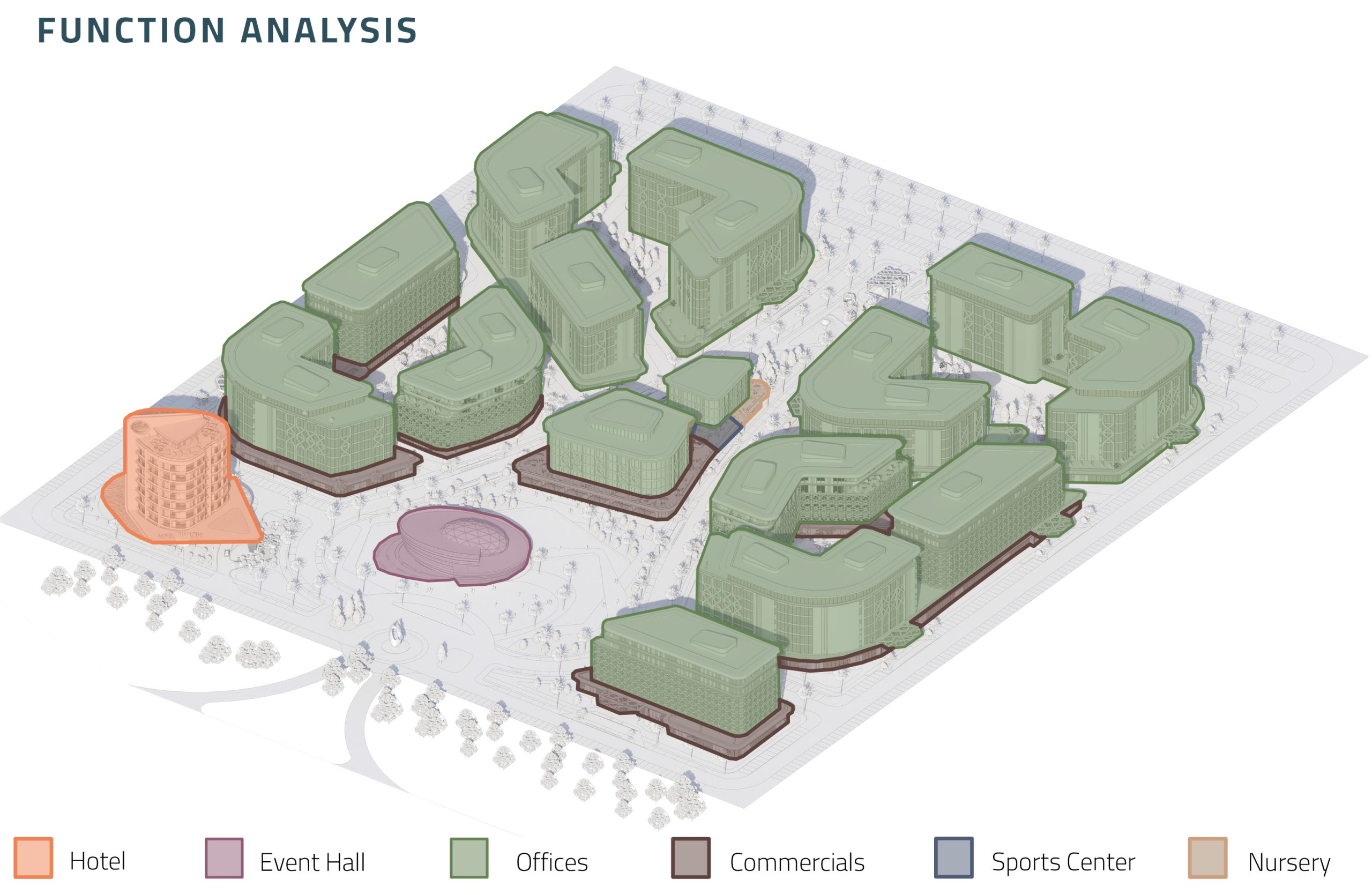
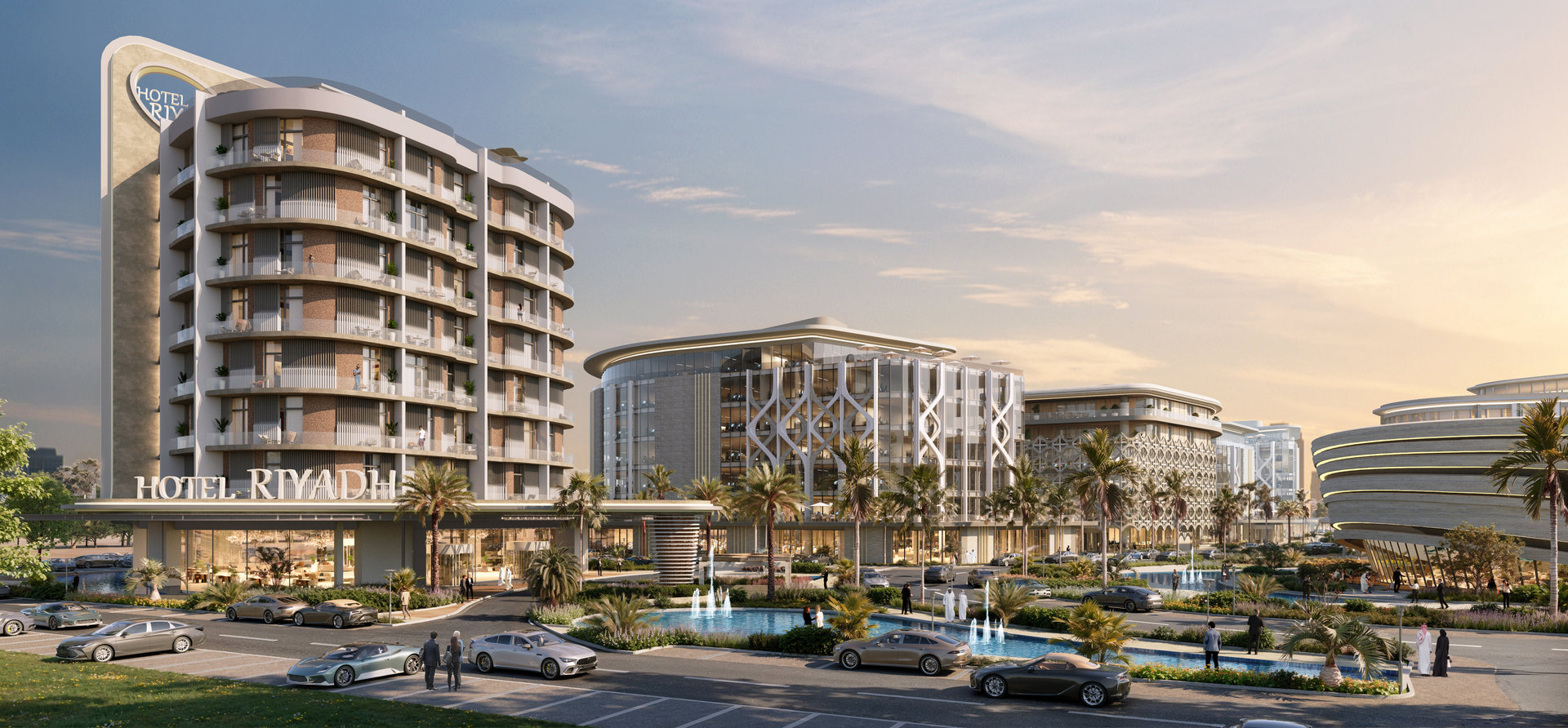
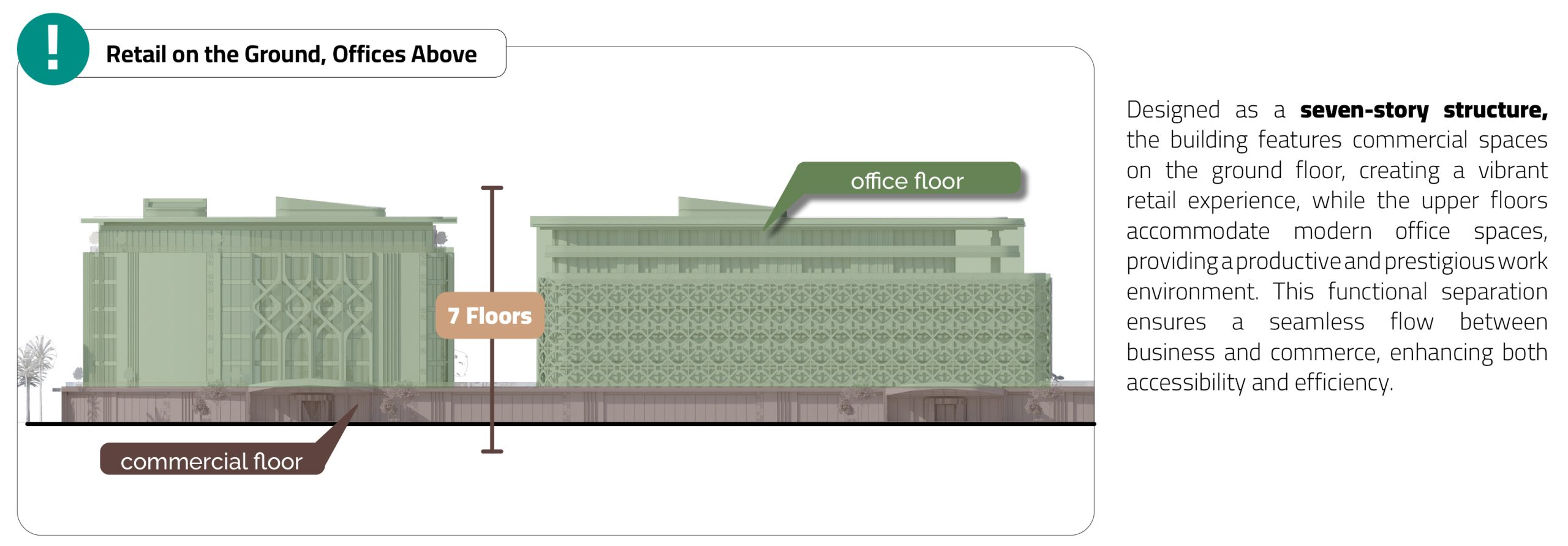
The project is anchored by four core functions: an iconic event hall, office towers, a landmark hotel, and a vibrant retail loop. Complementing these are a sports complex and a nursery, introducing wellness and family infrastructure into the heart of the business ecosystem. Ground-floor commercial functions are wrapped around a series of shaded plazas, activating the site at all hours.
Spatial Legibility through Golden Bands
The “golden bands” act as both literal pathways and organizational devices guiding movement and framing zones. Their radial logic reinforces intuitive navigation while maintaining visual unity across the site. Public and private uses are differentiated by subtle thresholds, landscape buffers, and elevation changes.
Cultural Identity through Architectural Language
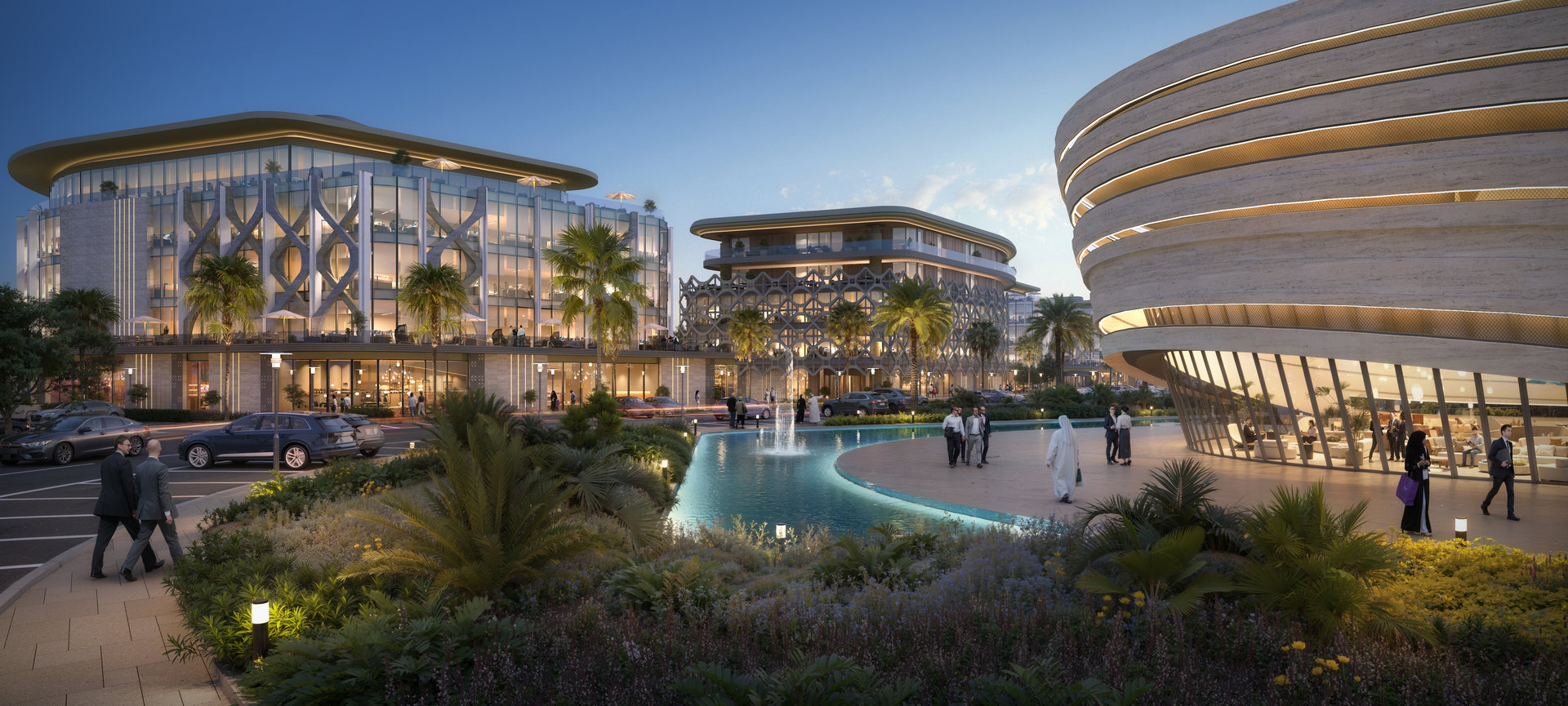
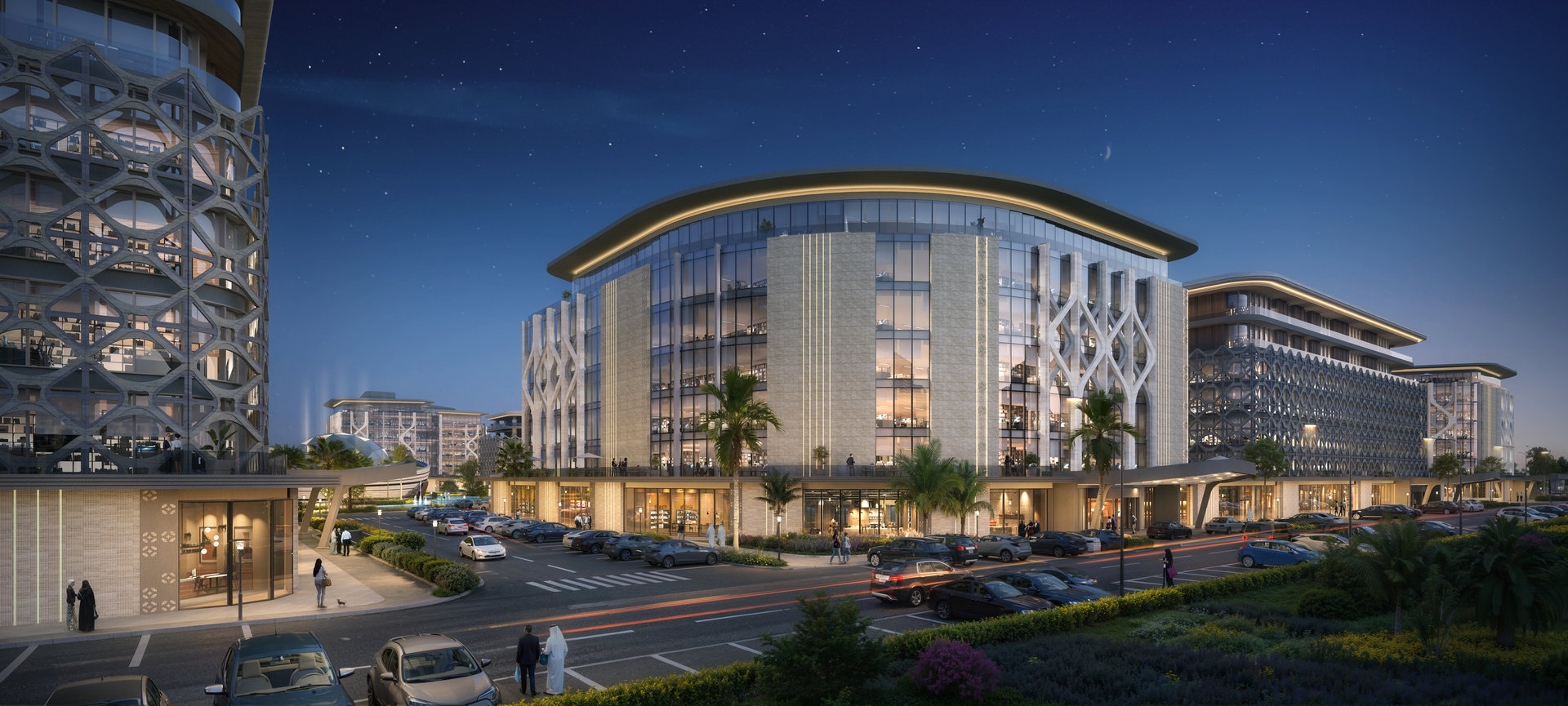
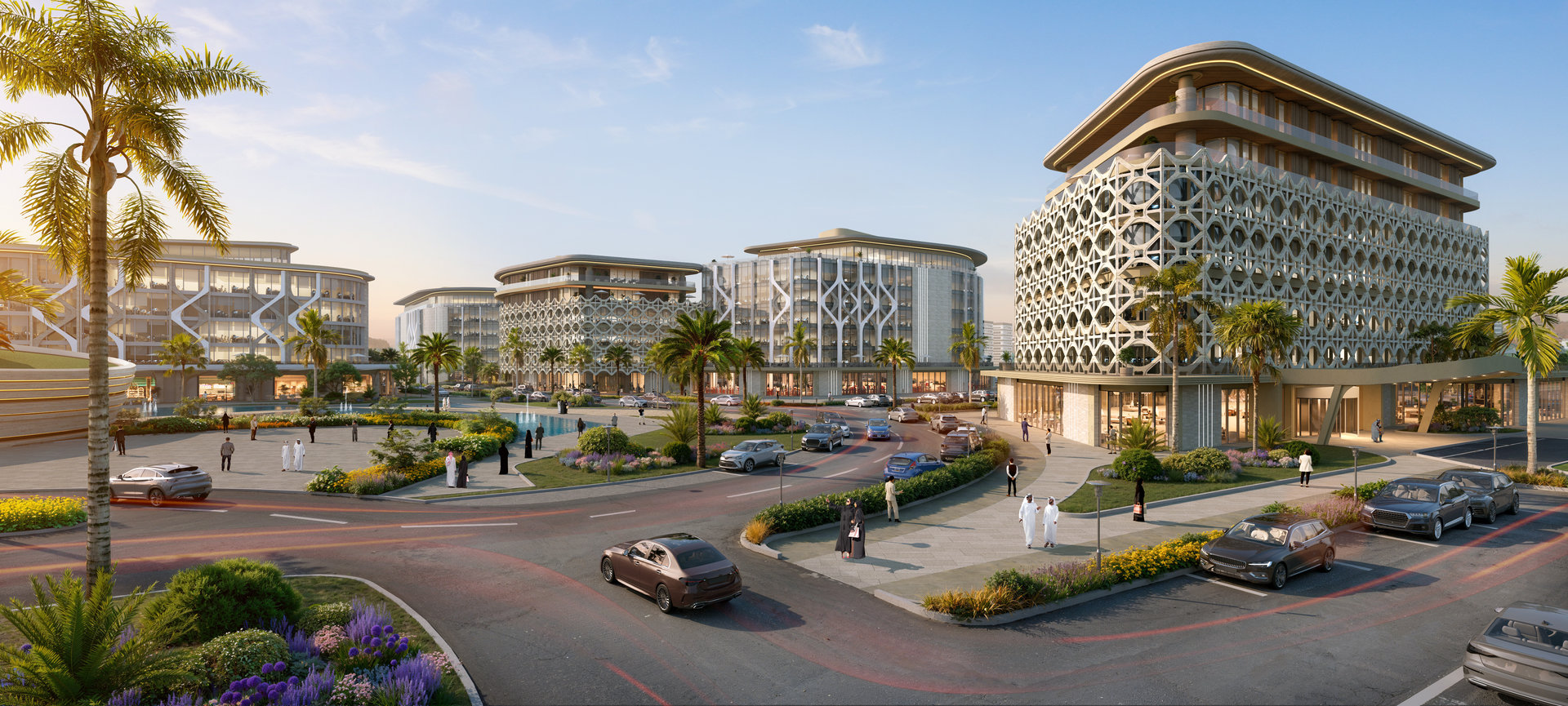
The façade strategy draws on traditional Najdi door patterns, reinterpreted through a parametric lens. Organic, fluid geometries emerge as modular mosaics paying homage to Saudi heritage while asserting a bold contemporary identity. The architecture is not just a backdrop but a visual narrative embedded in culture.
Sustainability Embedded in Form and System
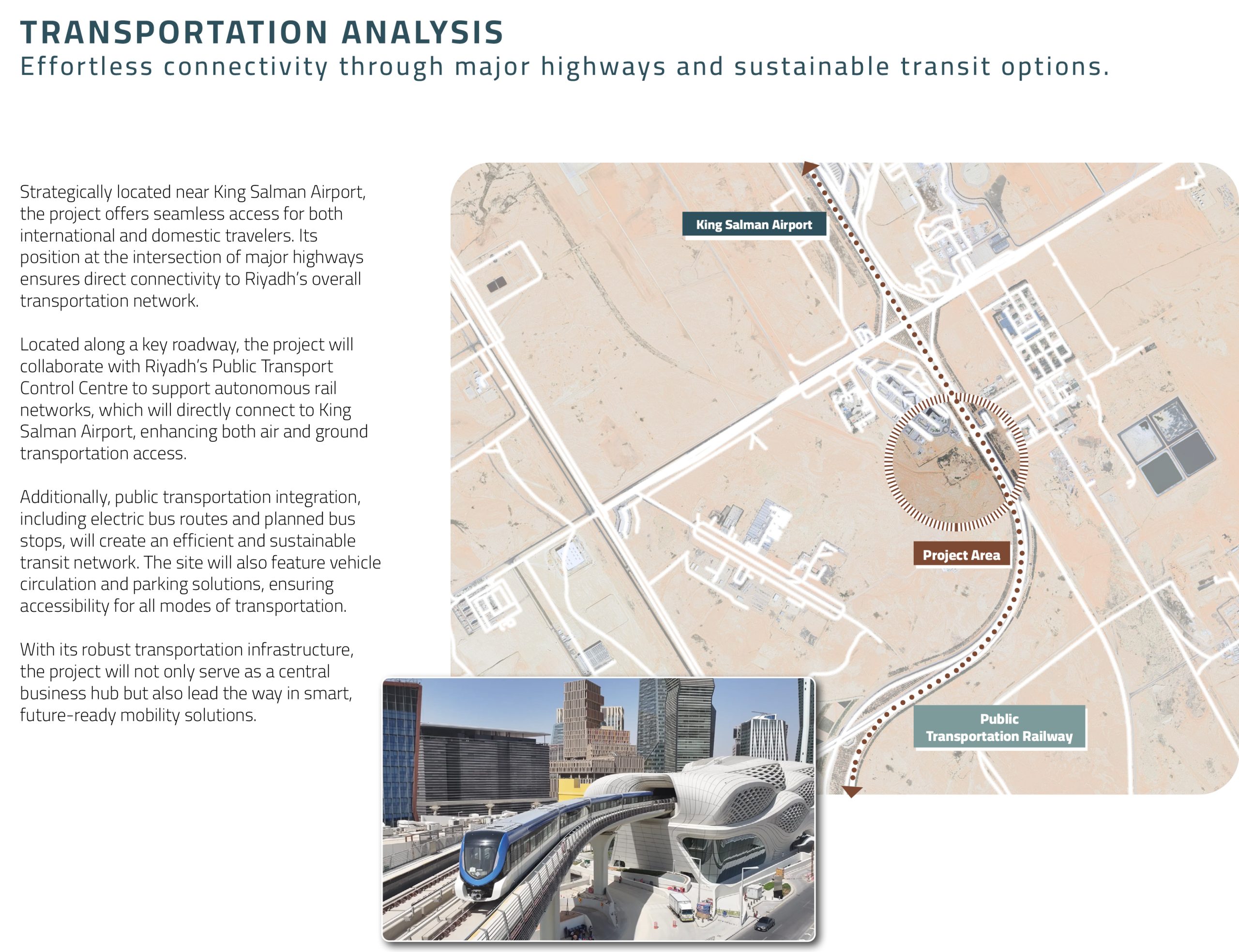
Targeting LEED Platinum certification, the project implements sustainable transport infrastructure, including electric buses, autonomous rail access, and dedicated micromobility paths. Shaded pedestrian corridors, bioswales, solar-integrated roofs, and green courts enhance environmental performance and occupant wellbeing.
A Landmark of Climate-Conscious Urbanism
Hajar Park offers a paradigm for development in extreme environments. It is a project of dualities urban and ecological, modern and traditional, efficient and expressive. By placing the event hall at its heart and weaving golden connective threads outward, the project builds not just a place, but a resilient and radiant civic experience. As a new gateway to Riyadh, Hajar Park defines the next chapter in desert urbanism adaptable, inclusive, and visionary.
Gallery