Kayseri, Türkiye
Project Type
Hospitality
Location
Kayseri, Türkiye
Year
2016
Project Status
Concept Project
Project Service
Concept Project
Total Construction Area (m²)
29756.00
Employer
Private
Context and Urban Interface
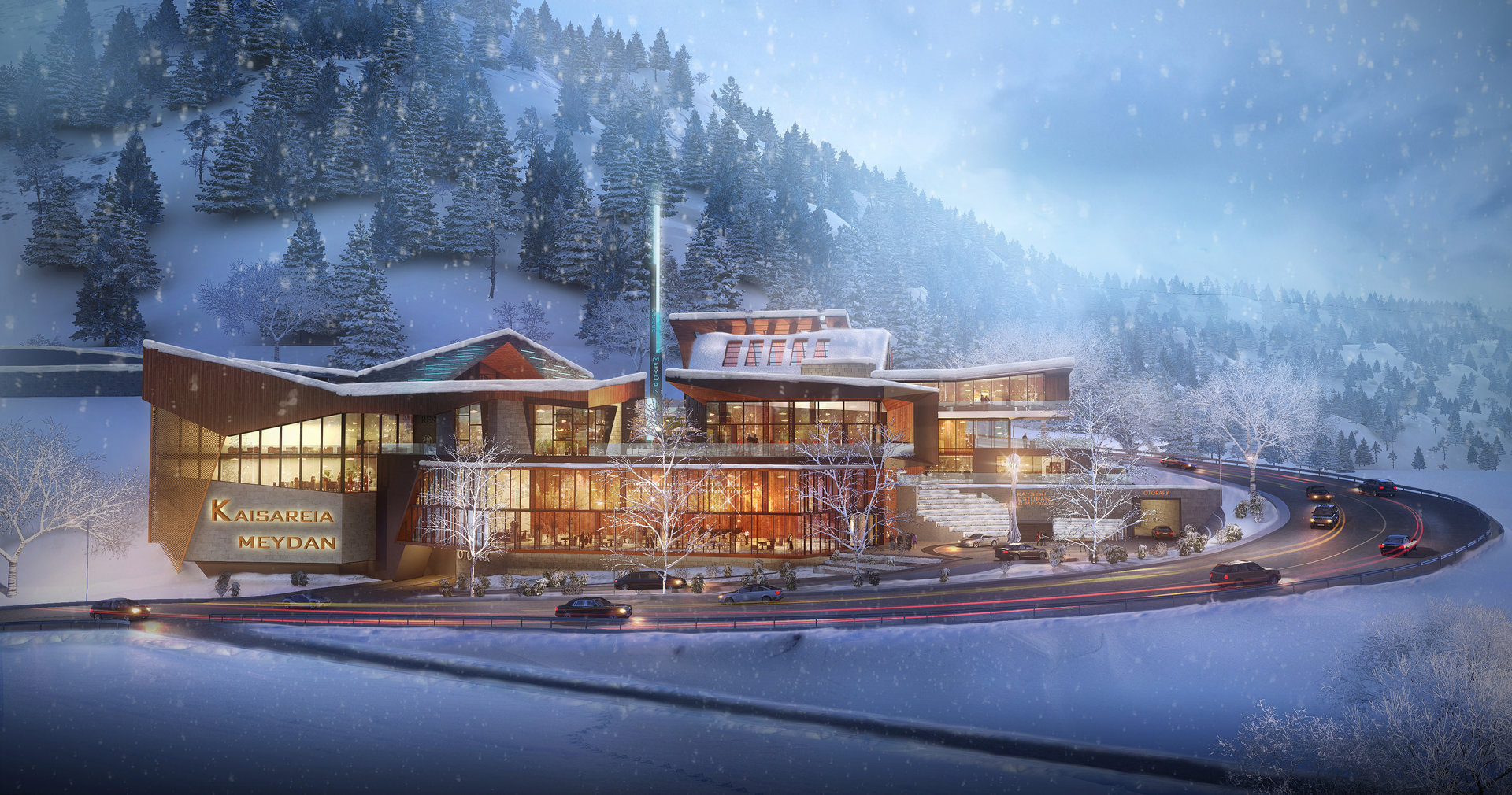
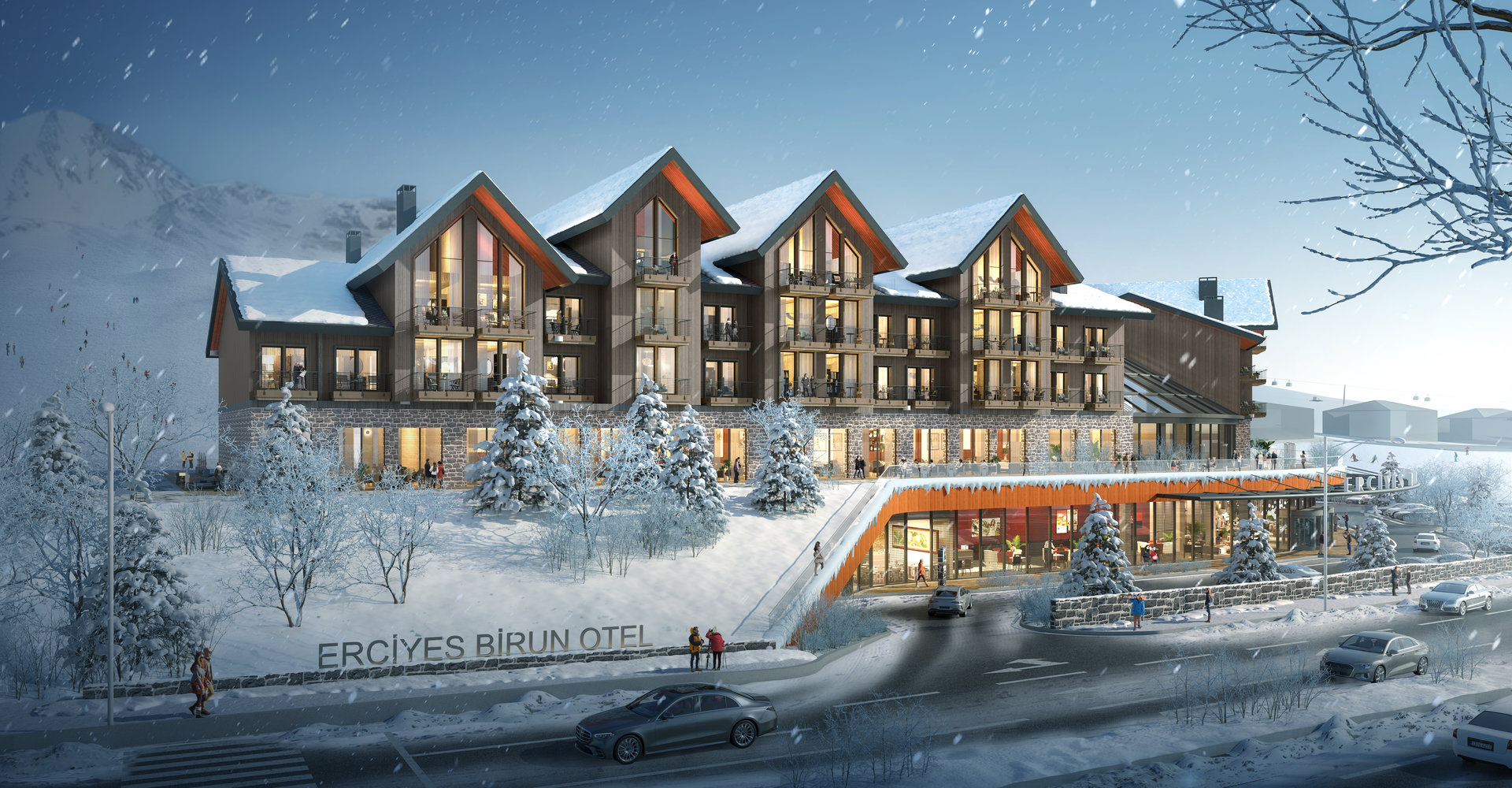
Located along the Erciyes Road axis and positioned near Kayseri Urban Forest, the project site occupies a transitional zone between urban activity and natural landscape. Its proximity to existing accommodations and its visibility from the road enhance its accessibility and relevance as a semi-public destination. Although public transportation (bus and Kayseray) reaches the vicinity, direct access is only possible via private vehicles making a well-calibrated parking strategy essential to the project’s viability.
Topographic Integration and Scenic Orientation
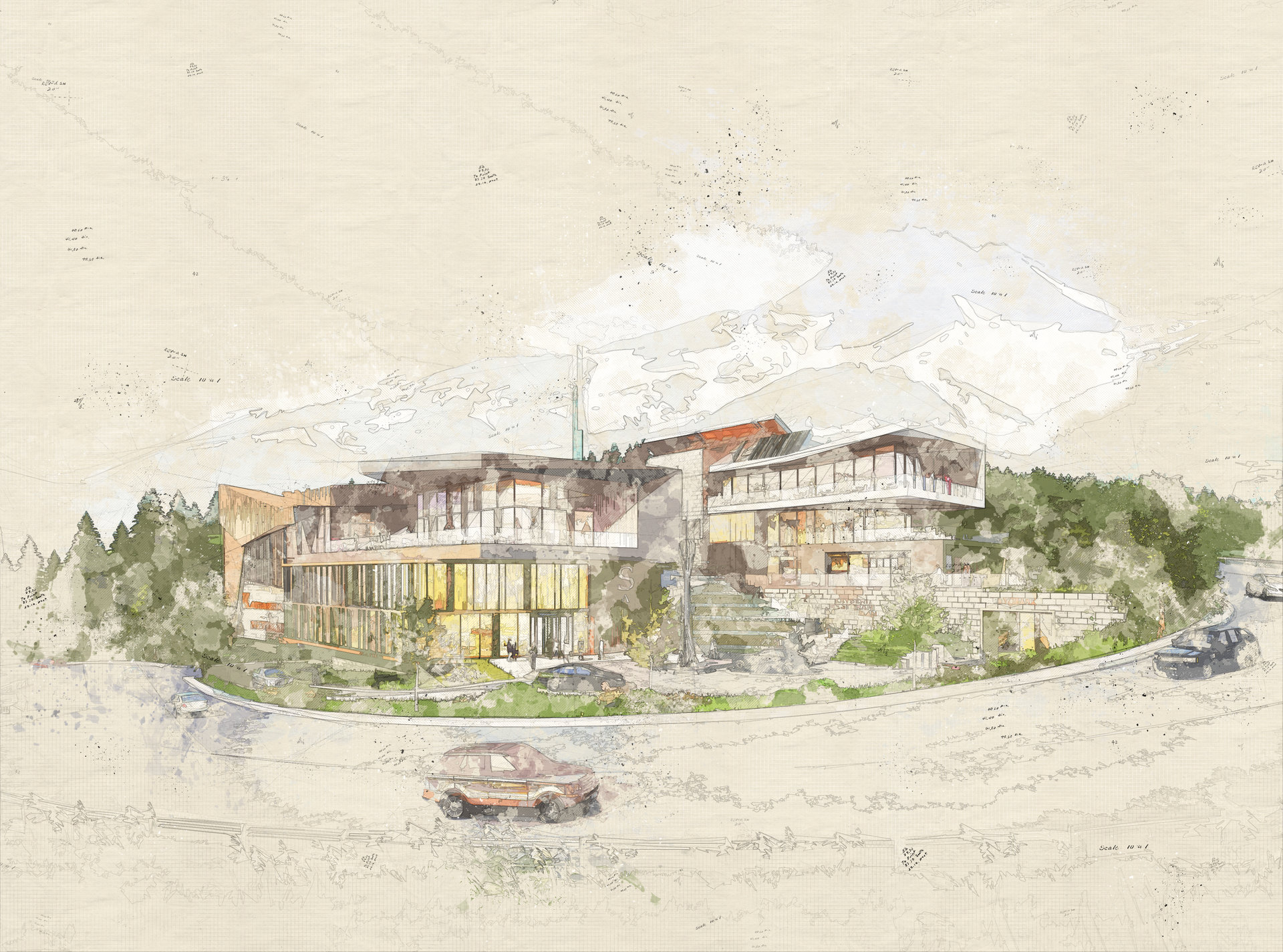
Situated within a naturally sunken and sloped terrain between higher surrounding elevations, the design embraces the site’s gradient. The slope is used as a design asset to create sectional variation, define view corridors, and emphasize the dual orientation toward the cityscape and Mount Erciyes. The architectural massing is carefully nested within the topography to minimize excavation and enhance natural integration.
Programmatic Composition and Central Square
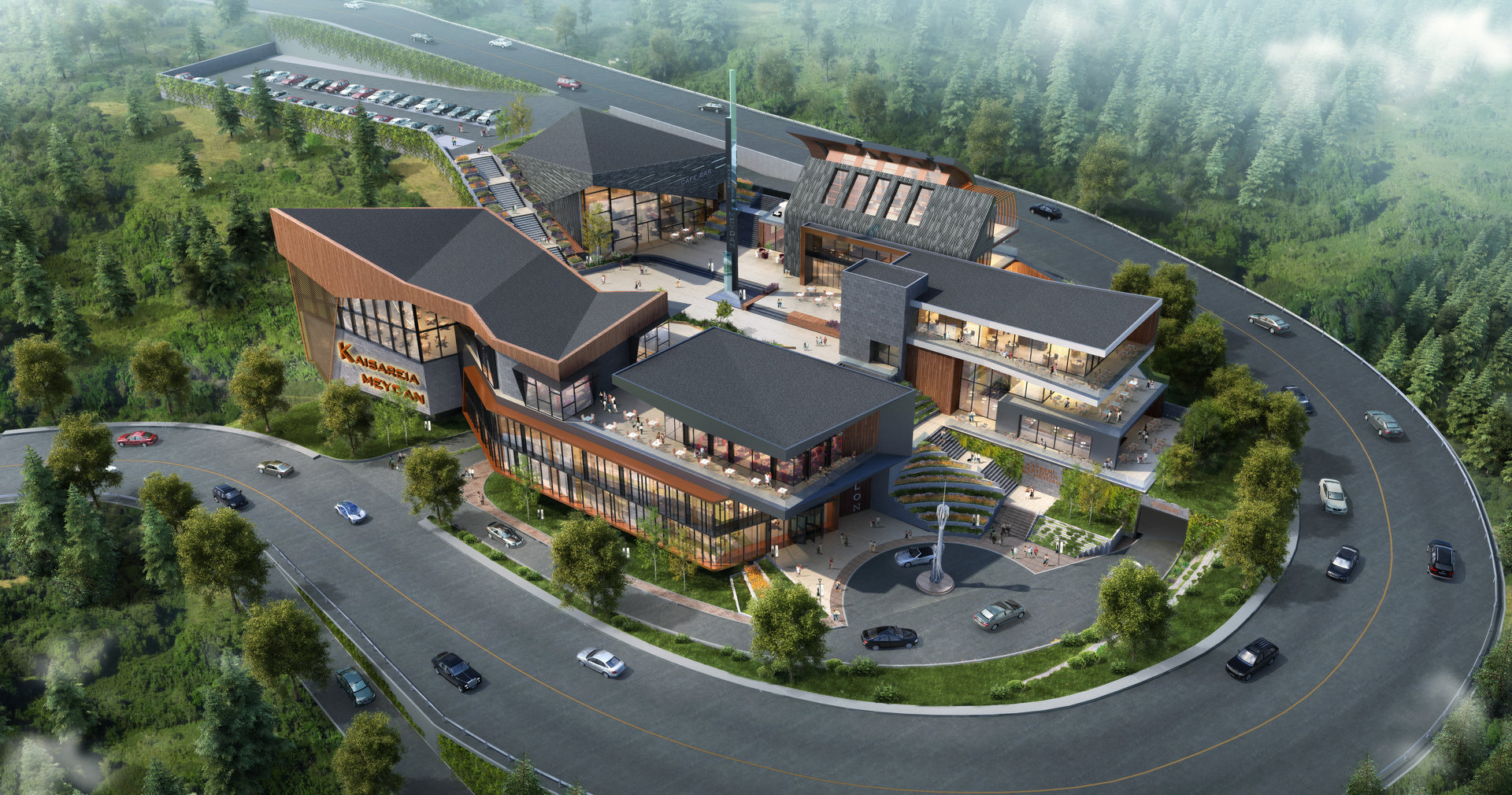
The project is envisioned as a compact social node combining 5 restaurants and a multipurpose hall. These functions are arranged along the periphery of a central open plaza a shared social space that enables panoramic views through defined entrance and circulation gaps between volumes. The concept is shaped around the idea of a “stopover point” between mountain and city, inviting both everyday users and visitors for informal gathering, leisure, and cultural programming.
Access and Circulation Strategy
Vehicle access is resolved through both open and underground parking facilities positioned at levels that work seamlessly with the site’s contours. Entry and exit points are designed to correspond with slope-sensitive access, reducing the need for excessive ramps or retaining structures. Pedestrian paths link restaurant entrances and the event space with the central plaza, promoting fluid movement and spatial cohesion.
Landscape and Spatial Continuity
The landscape design ties together the built elements, reinforcing the square’s character while softening the transitions between architecture and topography. Vegetation, hardscape elements, and open-air terraces are integrated into the voids between masses and along the site perimeter, ensuring that the space remains active, porous, and inviting.
Gallery