Edirne, Türkiye
Project Type
Public Realm & Landscape
Location
Edirne, Türkiye
Year
2024
Project Service
Concept Project
Project Status
Concept Project
Tags
Funerary Architecture
Historical Background
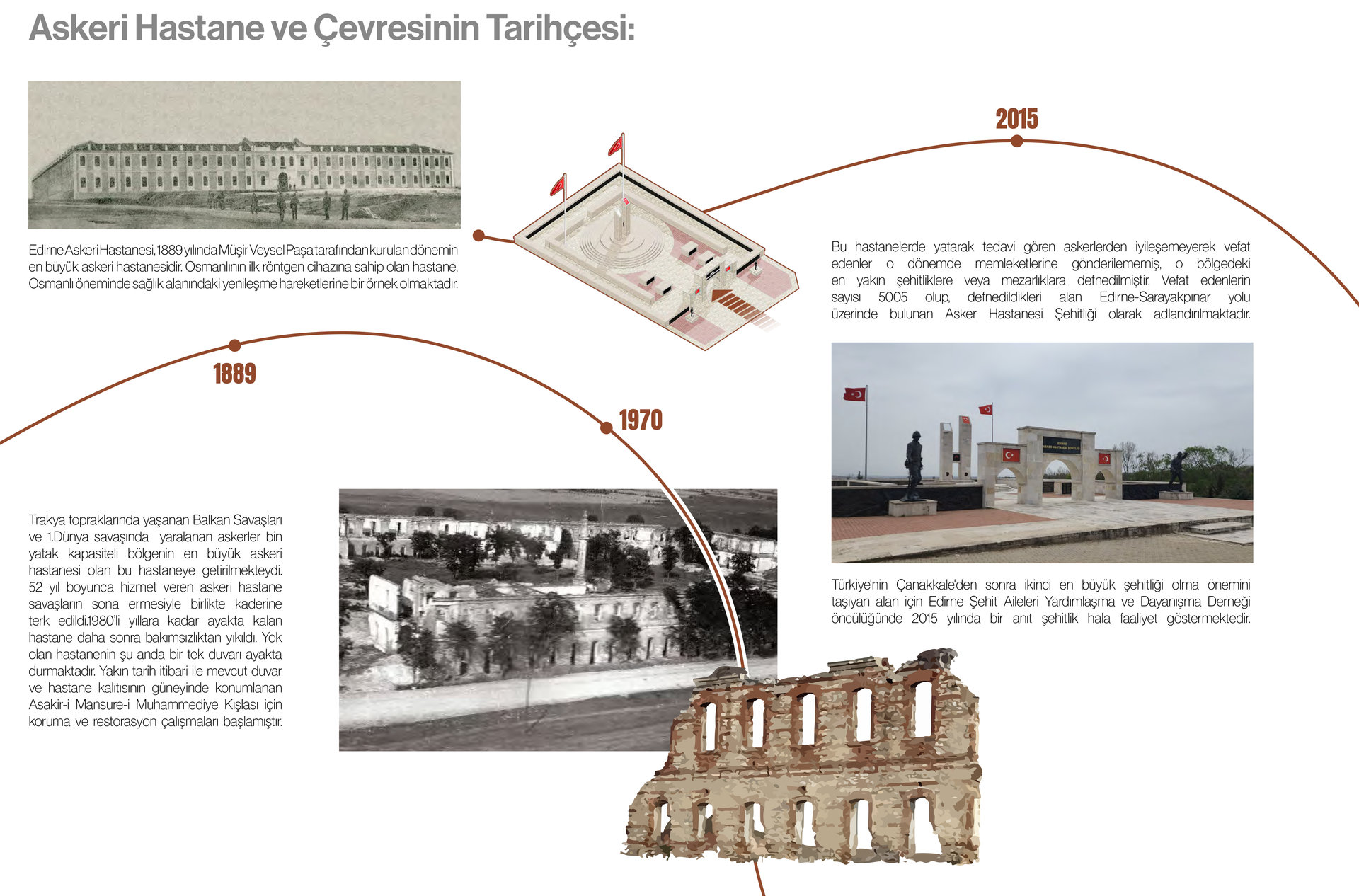
Founded in 1889 by Field Marshal Veysel Pasha, the Edirne Military Hospital was the largest of its time. It became a symbol of modernization in Ottoman healthcare as the first facility equipped with an X-ray device. During the Balkan Wars and World War I, wounded soldiers were brought to this 1,000-bed hospital. Serving for 52 years, the hospital was abandoned after the wars and eventually collapsed due to neglect in the 1980s, leaving only one wall standing today. Adjacent to it, the Asakir-i Mansure-i Muhammediye Barracks is currently undergoing preservation and restoration works.
Martyrs’ Cemetery
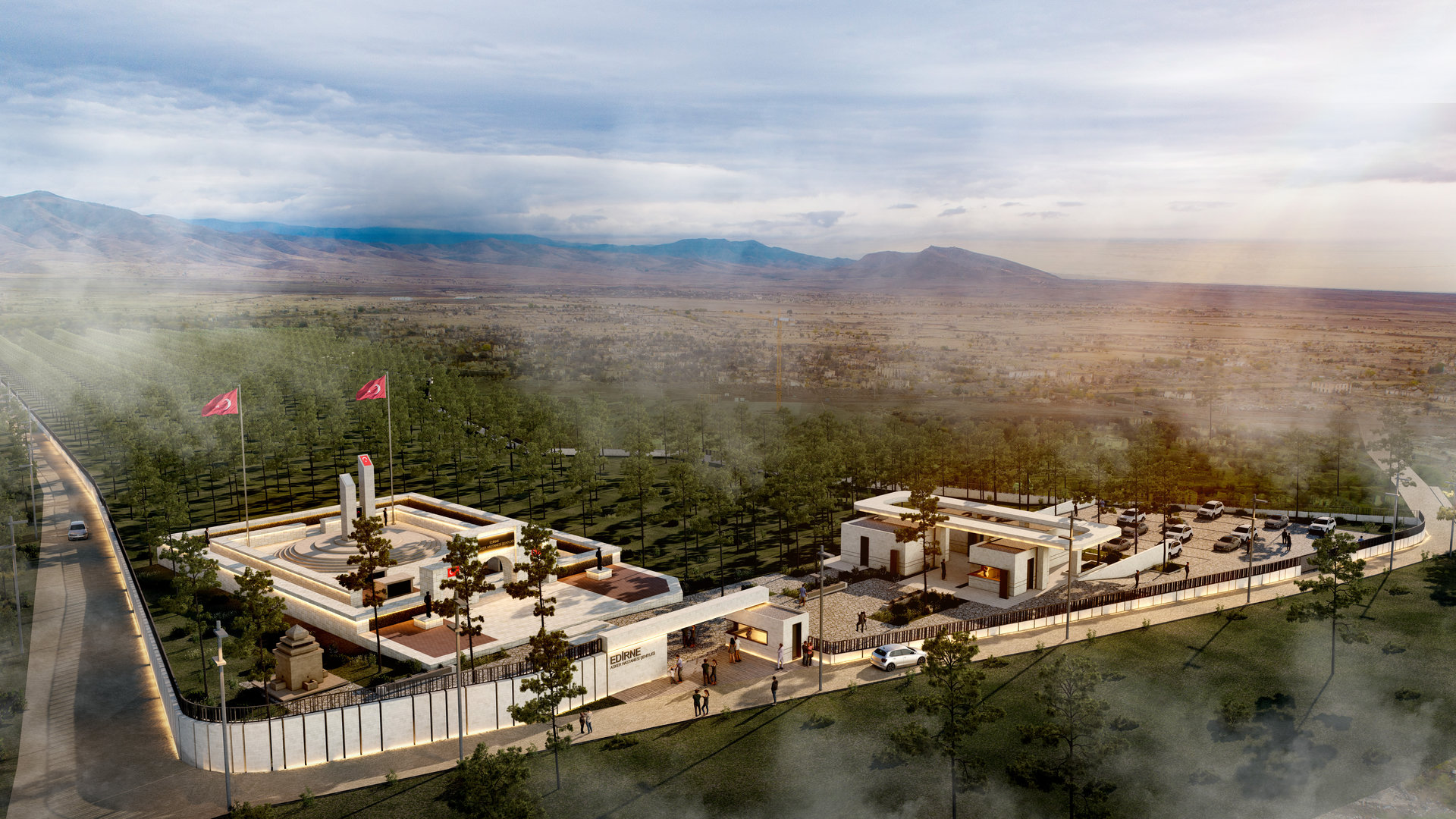
A total of 5,005 soldiers who lost their lives during treatment were buried in the nearby cemetery on the Edirne–Sarayakpınar road, as they could not be returned to their hometowns. Recognized as Türkiye’s second largest martyrdom site after Gallipoli, the cemetery was reestablished in 2015 under the initiative of the Edirne Families of Martyrs Association and continues to serve as a memorial.
Conceptual Approach and Landscape
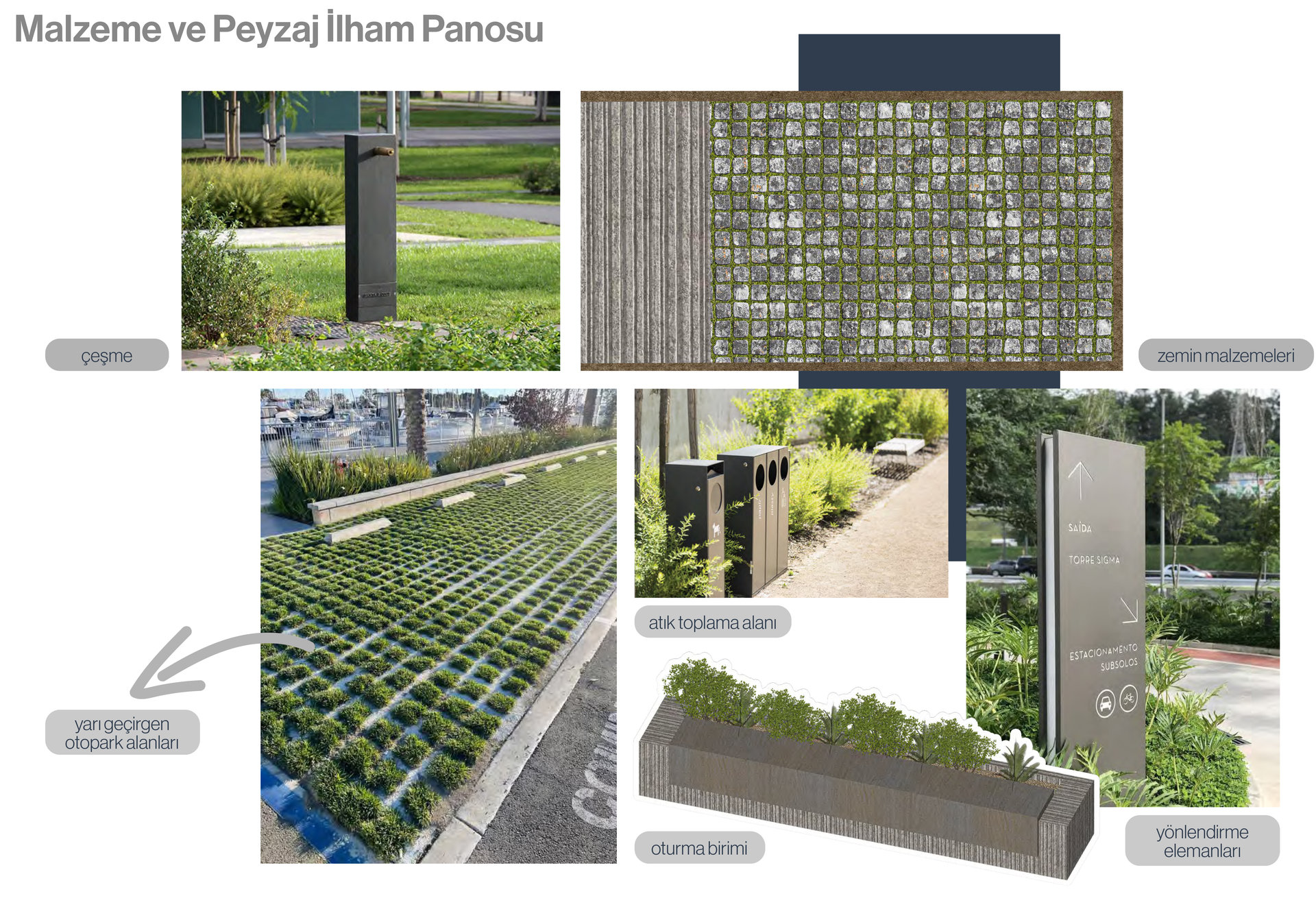
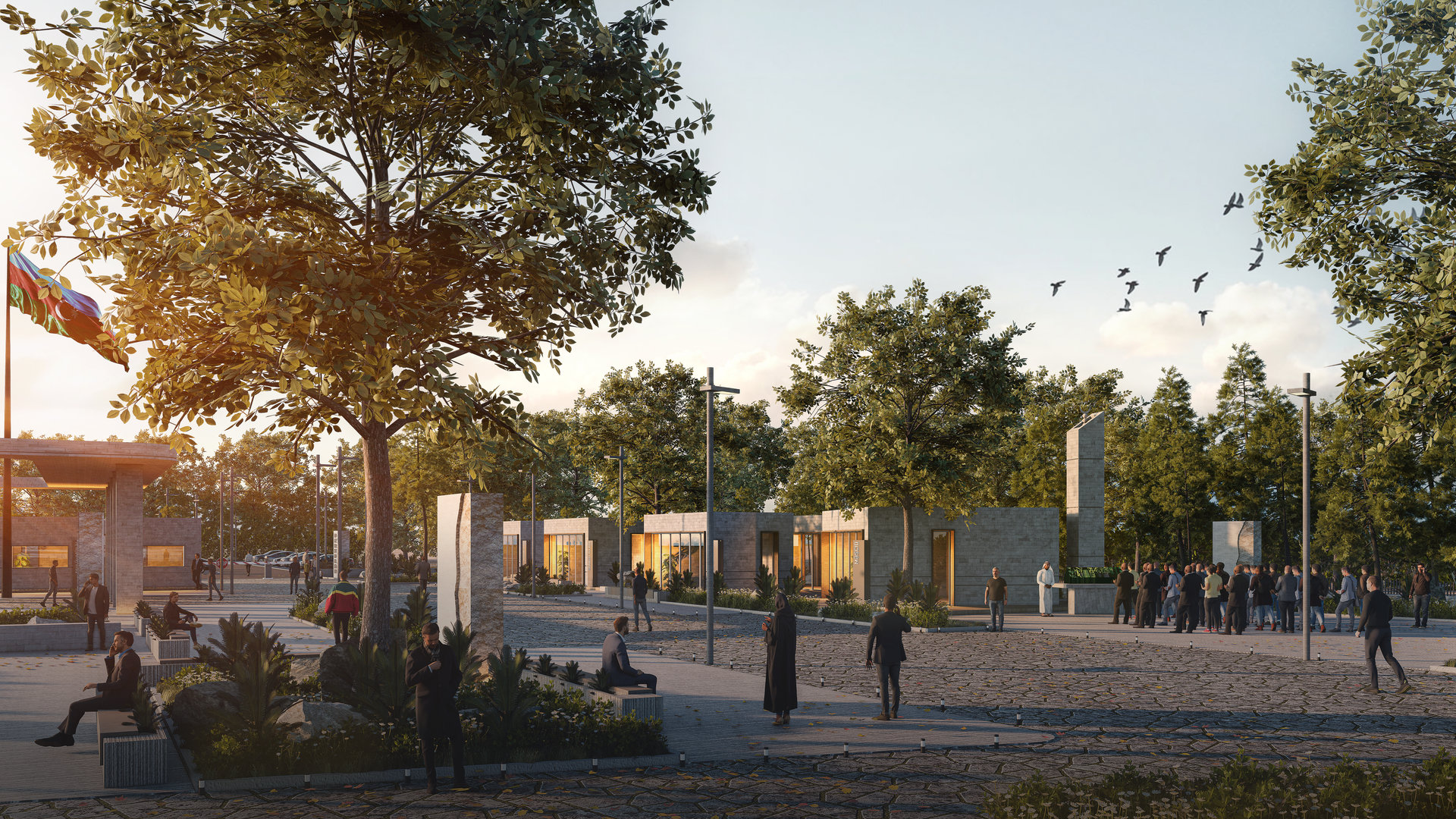
The existing Memorial Forest with 413 trees was expanded to 710 with the new design. Walking paths and rest areas were added to enrich the visitor experience and strengthen the bond between nature and memory.
Entrance Gateway
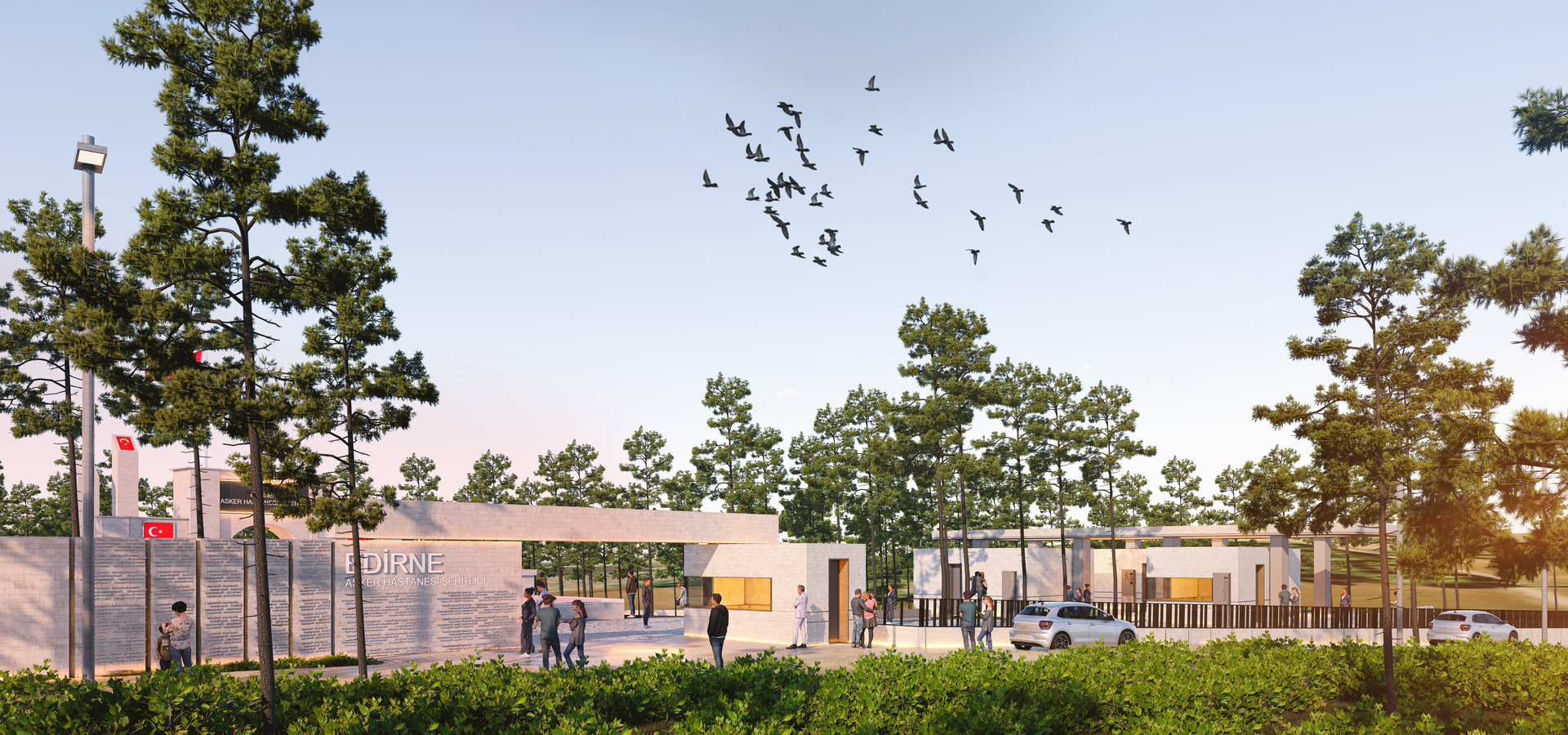
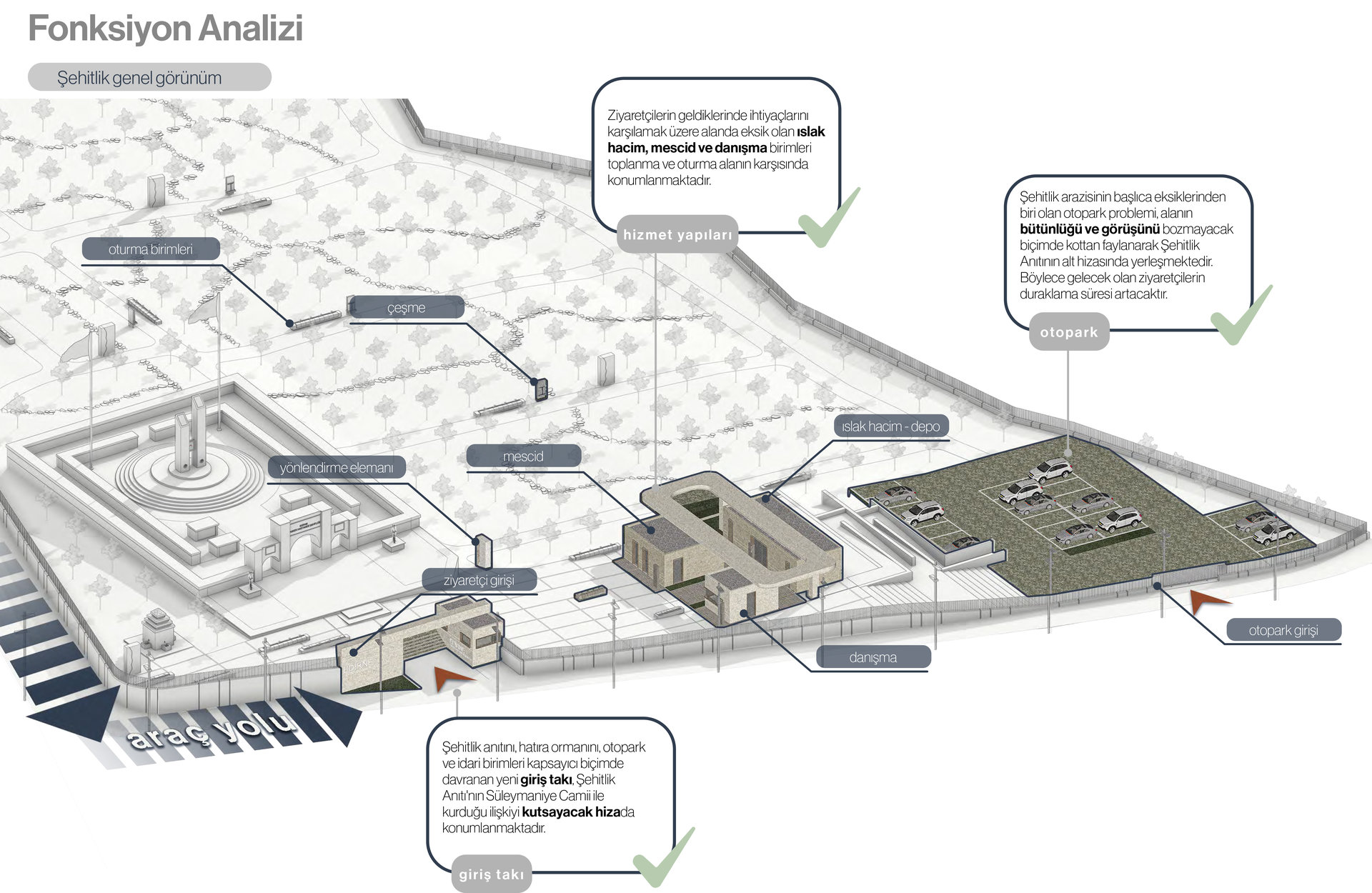
A new entrance gate has been designed to integrate the martyrdom monument, memorial forest, parking, and administrative facilities, positioned to symbolically align with the Süleymaniye Mosque.
Service Facilities and Parking
To meet visitor needs, prayer spaces, sanitary units, and an information center have been placed opposite the gathering areas. The parking, one of the site’s major deficiencies, has been solved by utilizing the slope and locating it beneath the Martyrs’ Monument, preserving the landscape integrity while extending visitor stays.
Gallery