Project Type
Public Realm & Landscape
Location
Baku, Azerbaijan
Year
2024
Project Service
Concept Project
Project Status
Concept Project
Total Area (m²)
47290.00
Total Construction Area (m²)
51353.00
Employer
Private
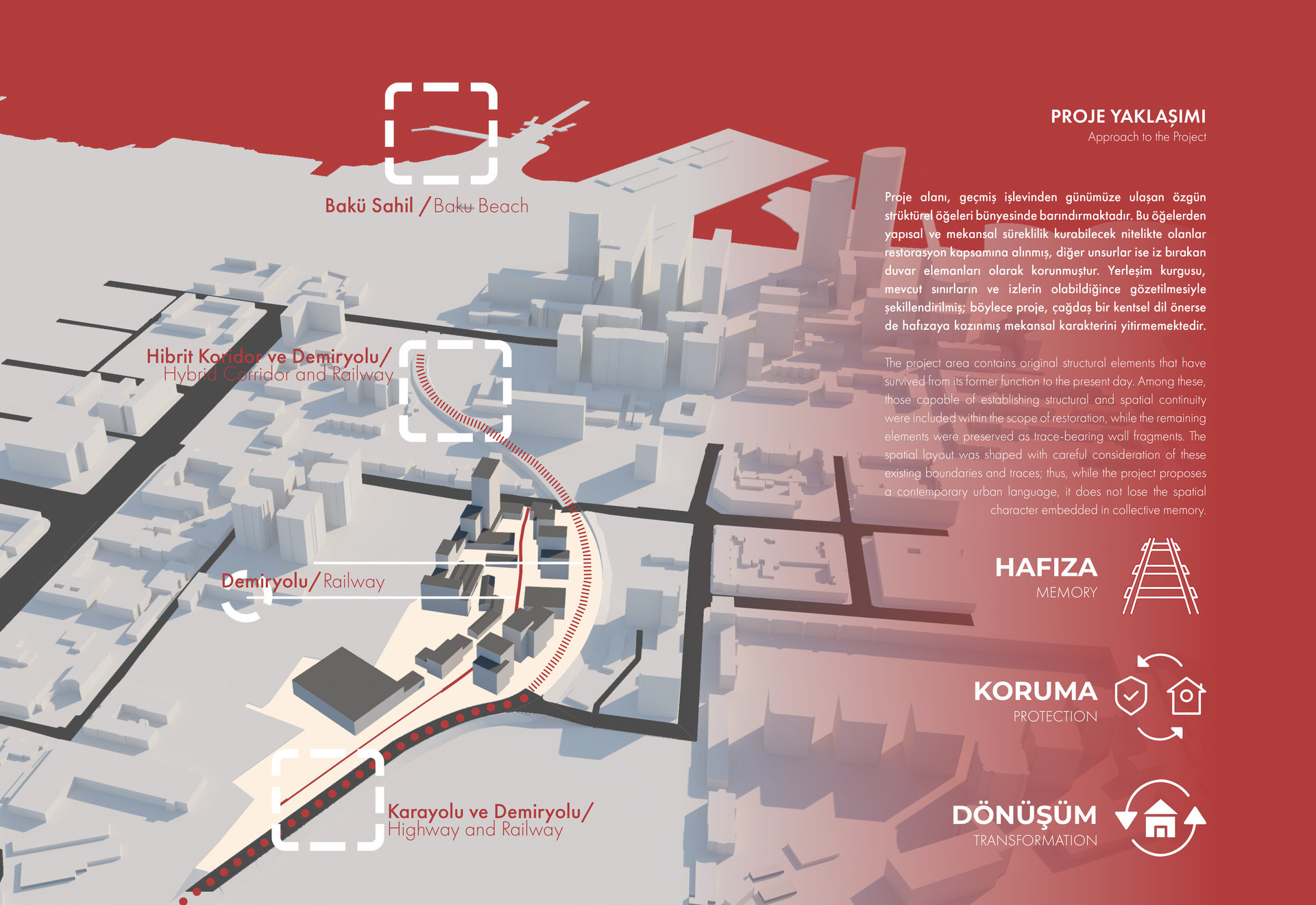
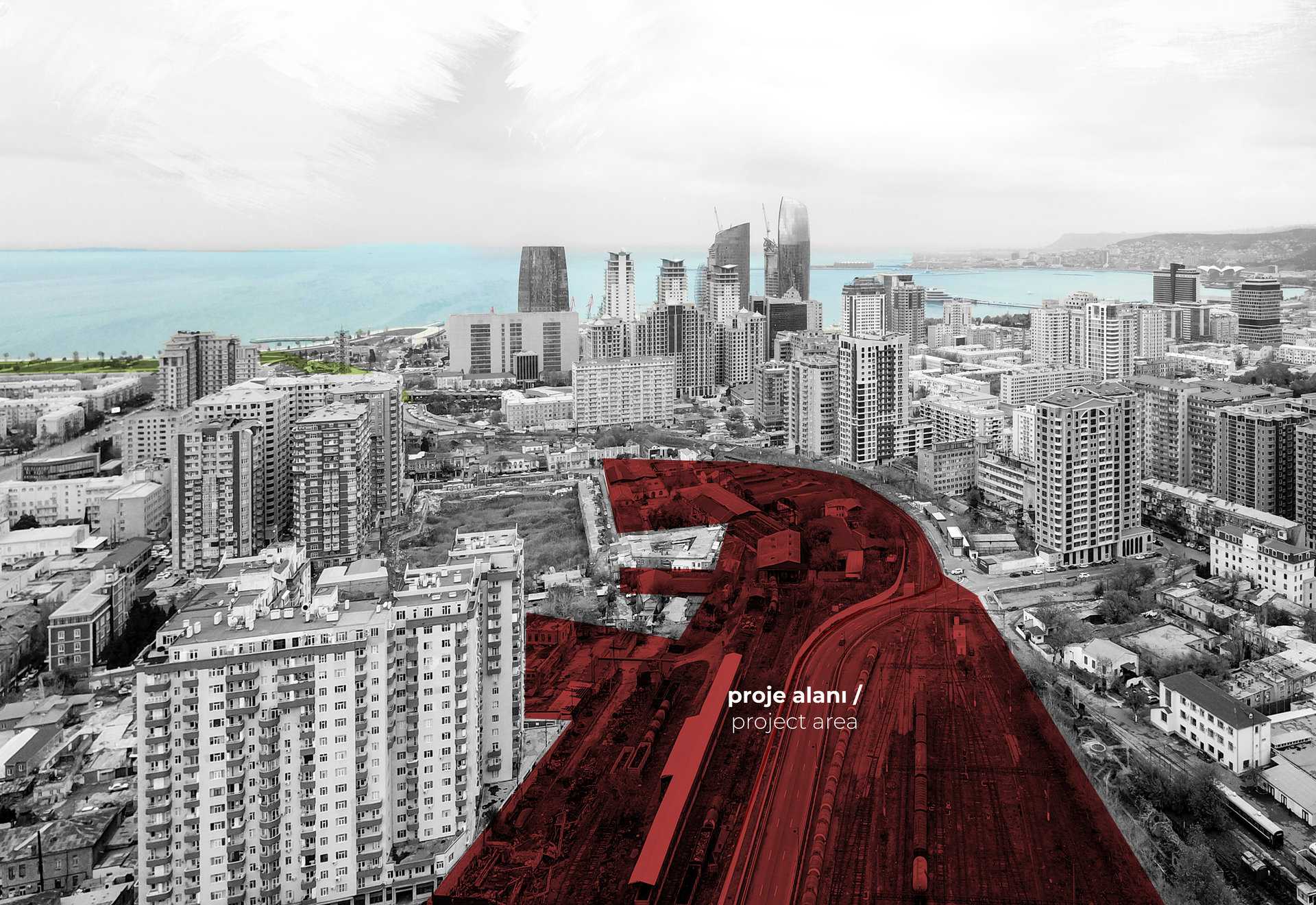
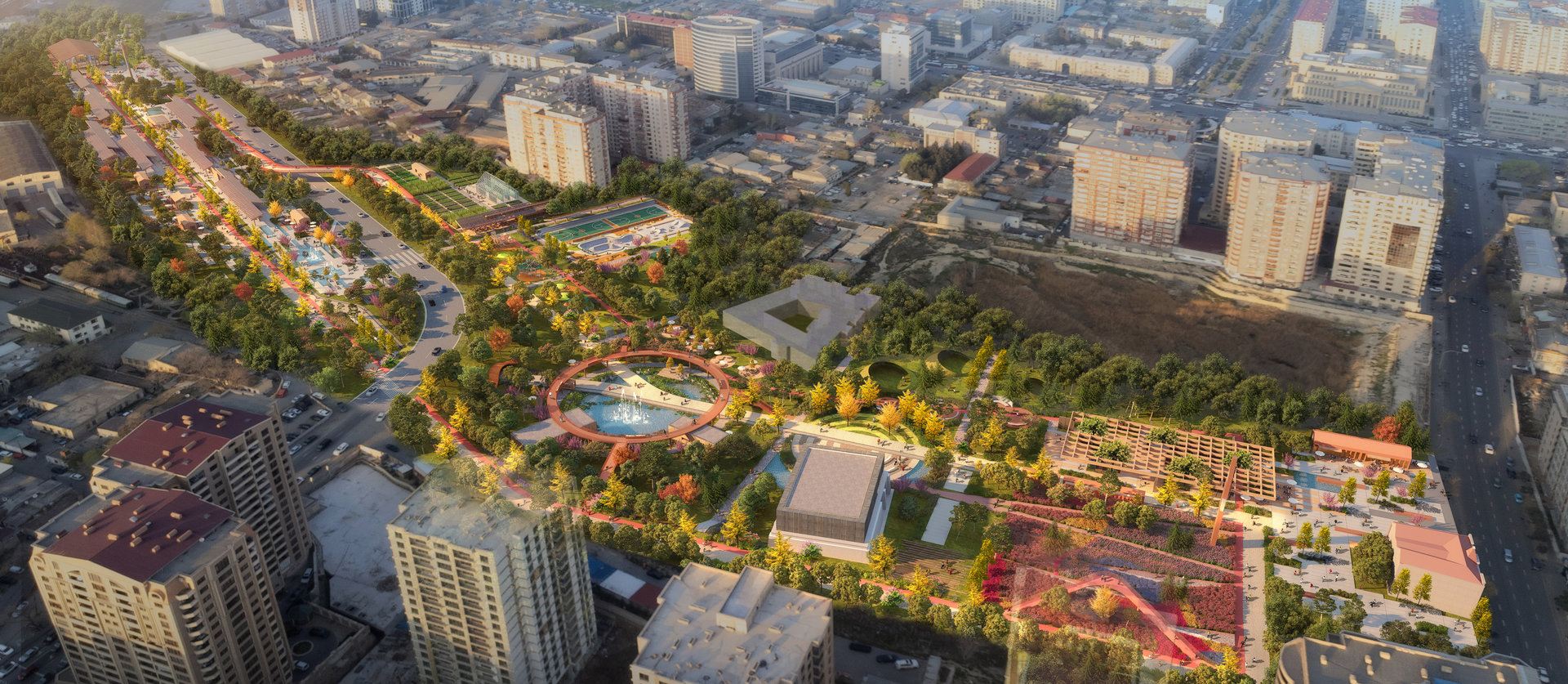
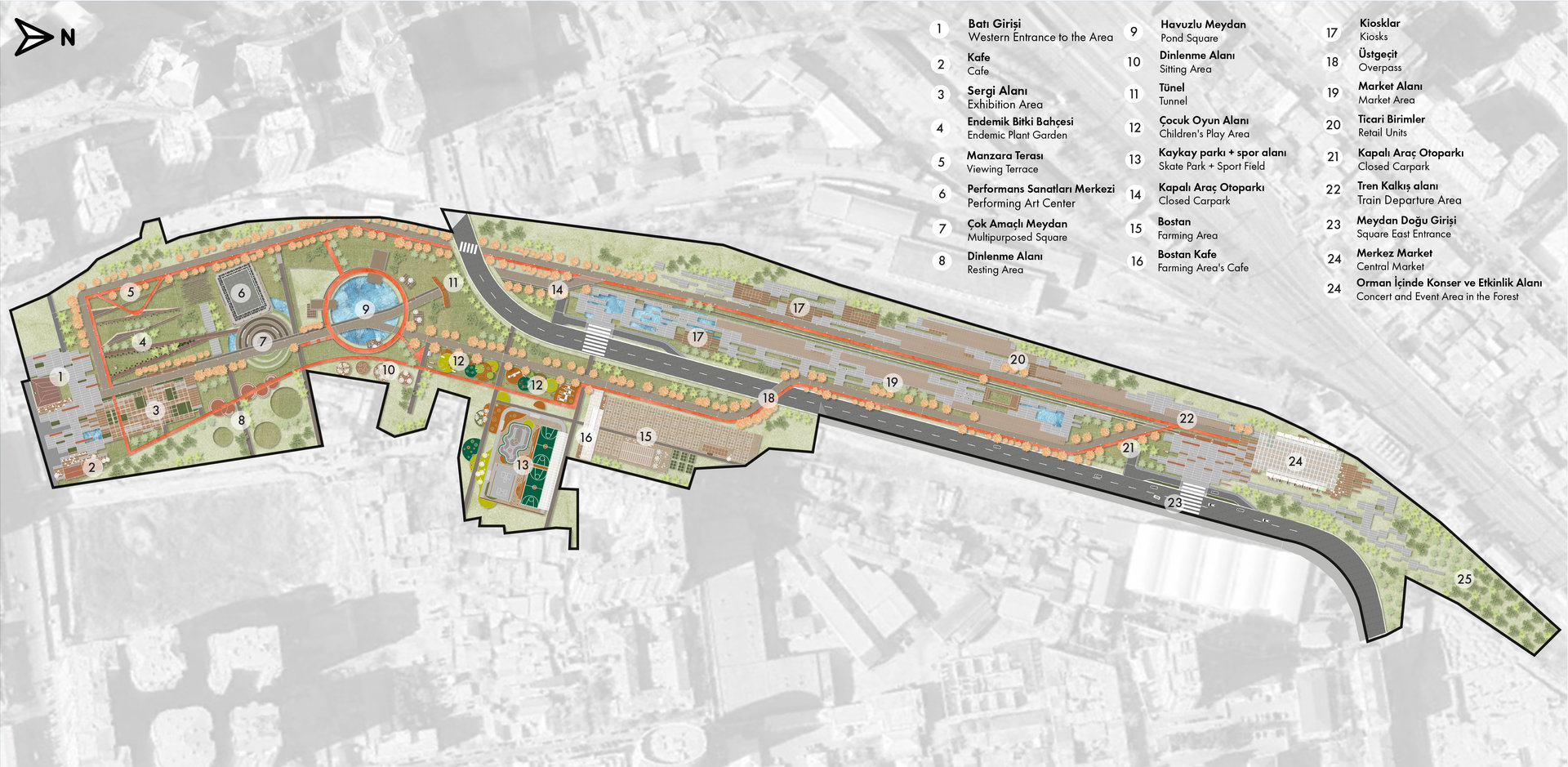
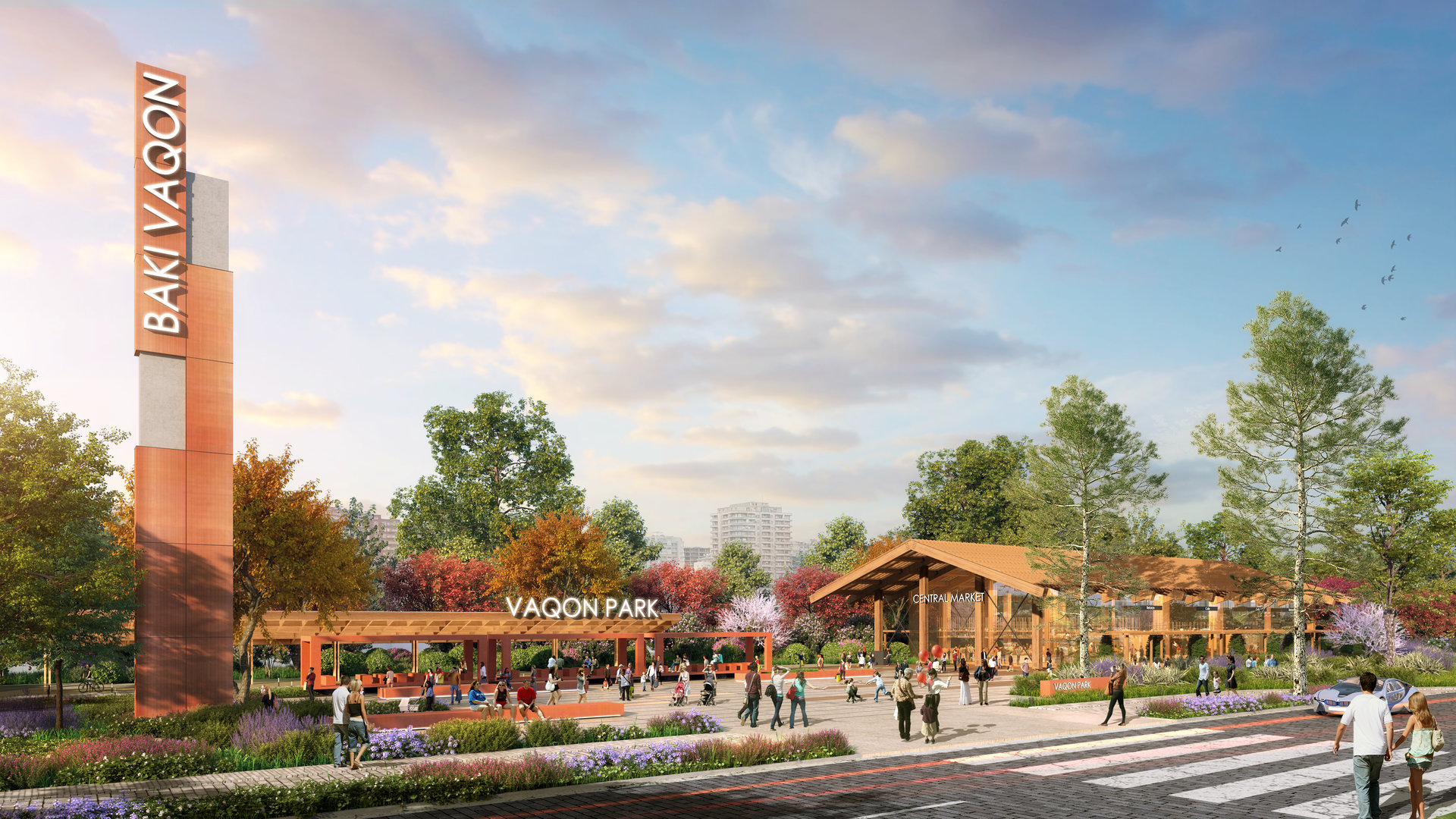
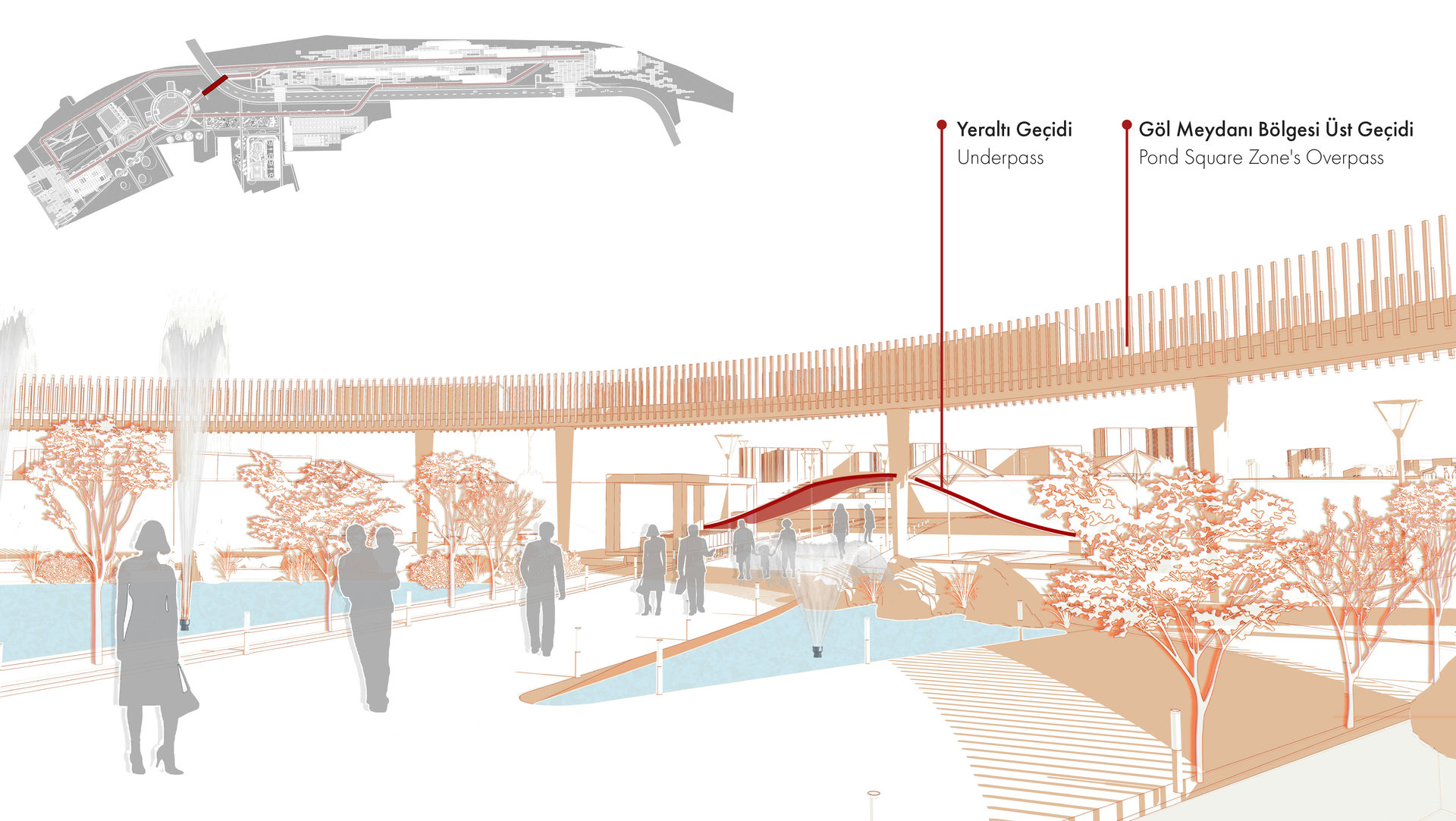
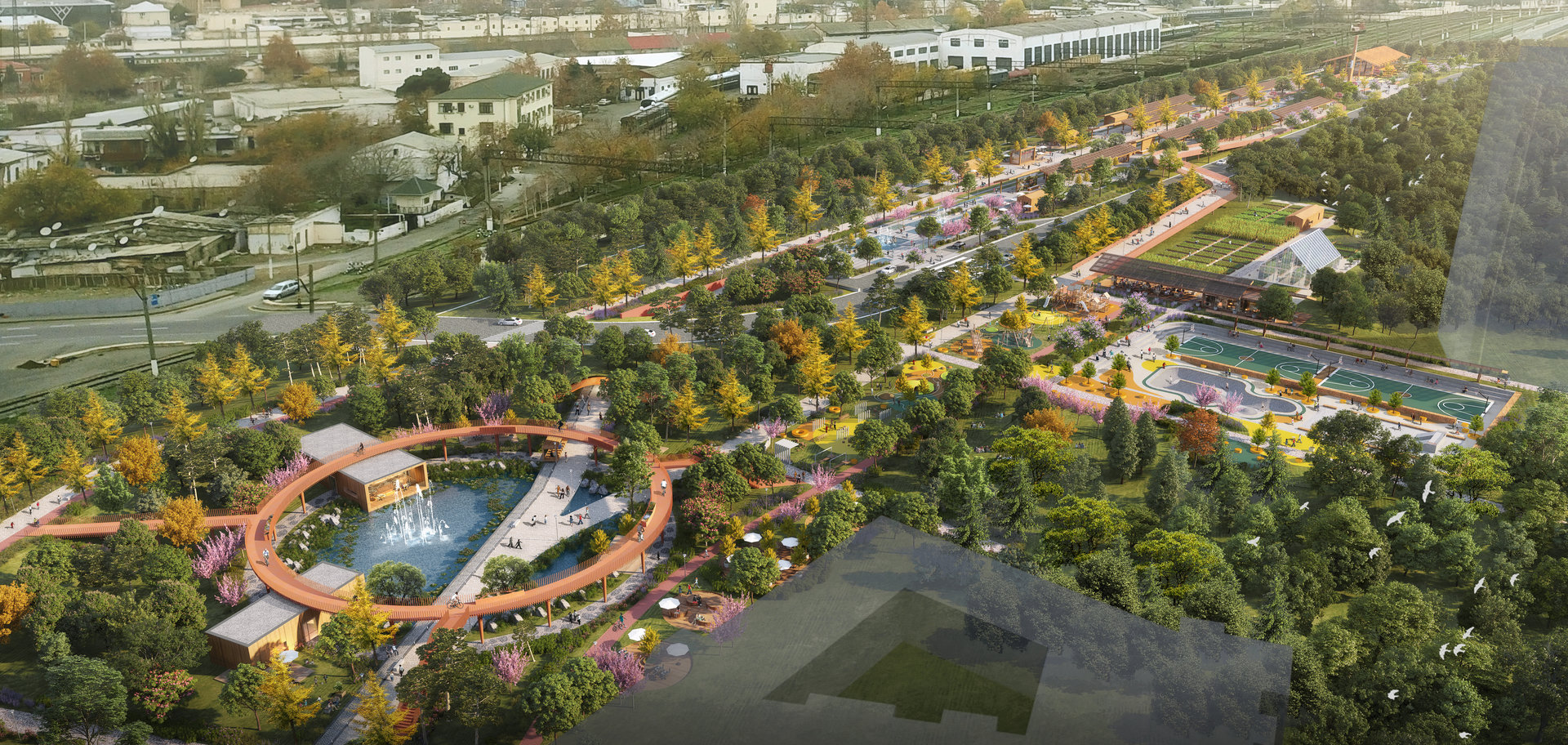
Located in Baku, Azerbaijan, the Baku Vagon Landscape Project reimagines a former locomotive and wagon maintenance yard as a vibrant linear park that reconnects the city’s industrial heritage with its evolving public life. With direct access to the revitalized port park in the south and situated in a zone where cultural and commercial activities are concentrated, the project area occupies a strategic position in Baku’s urban fabric.
From Infrastructure to Interaction: A Zonal Landscape Strategy
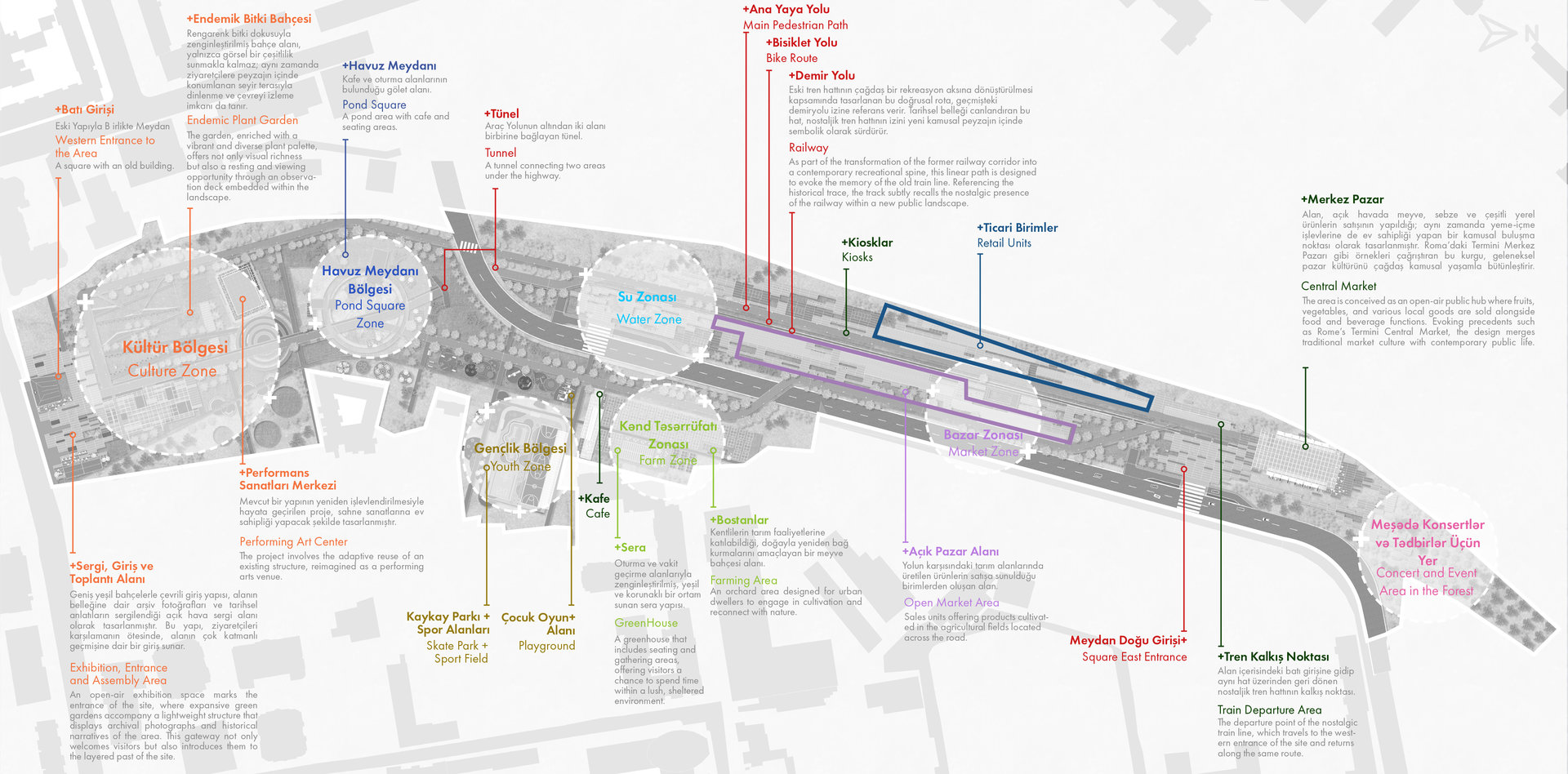
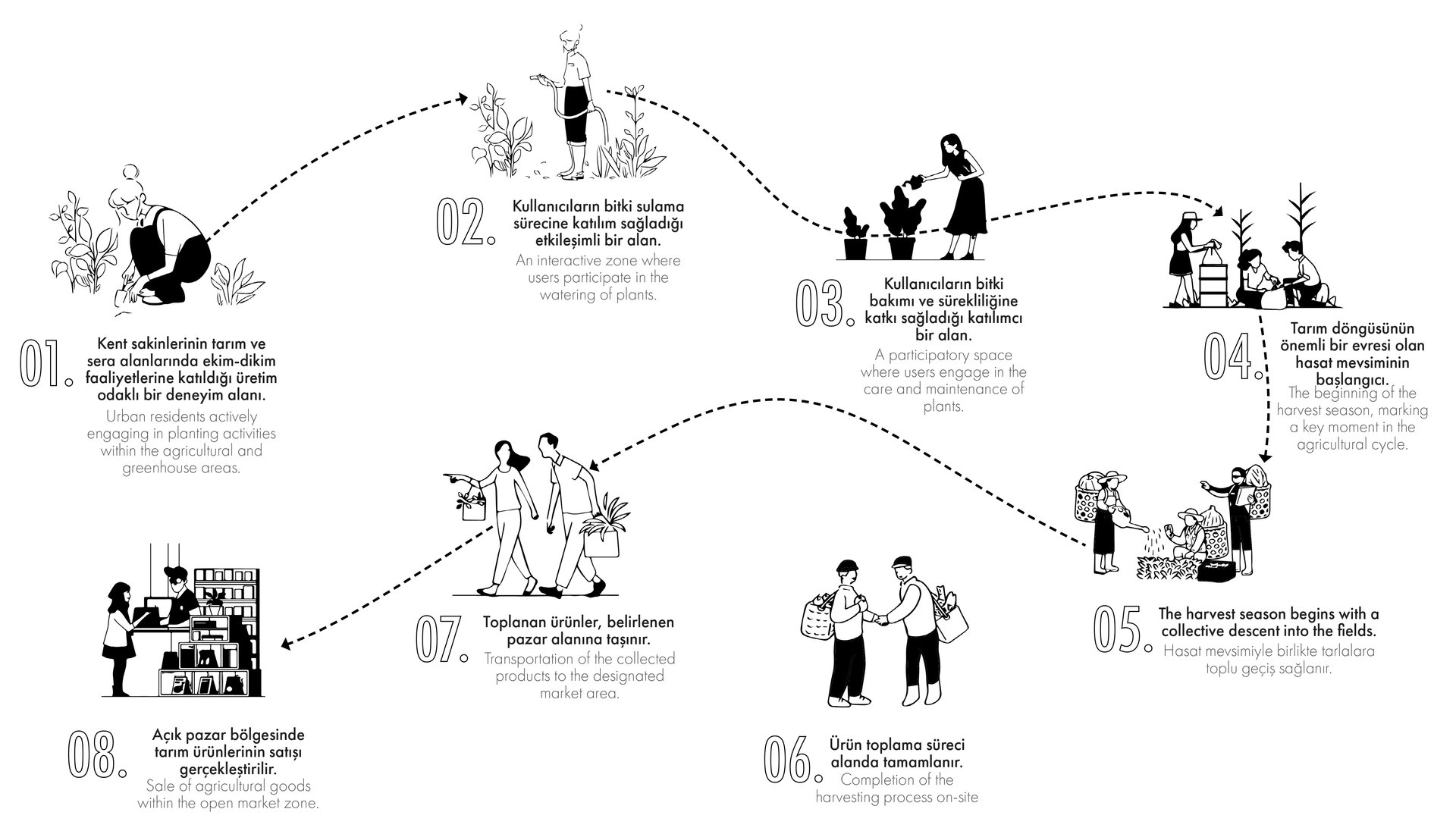
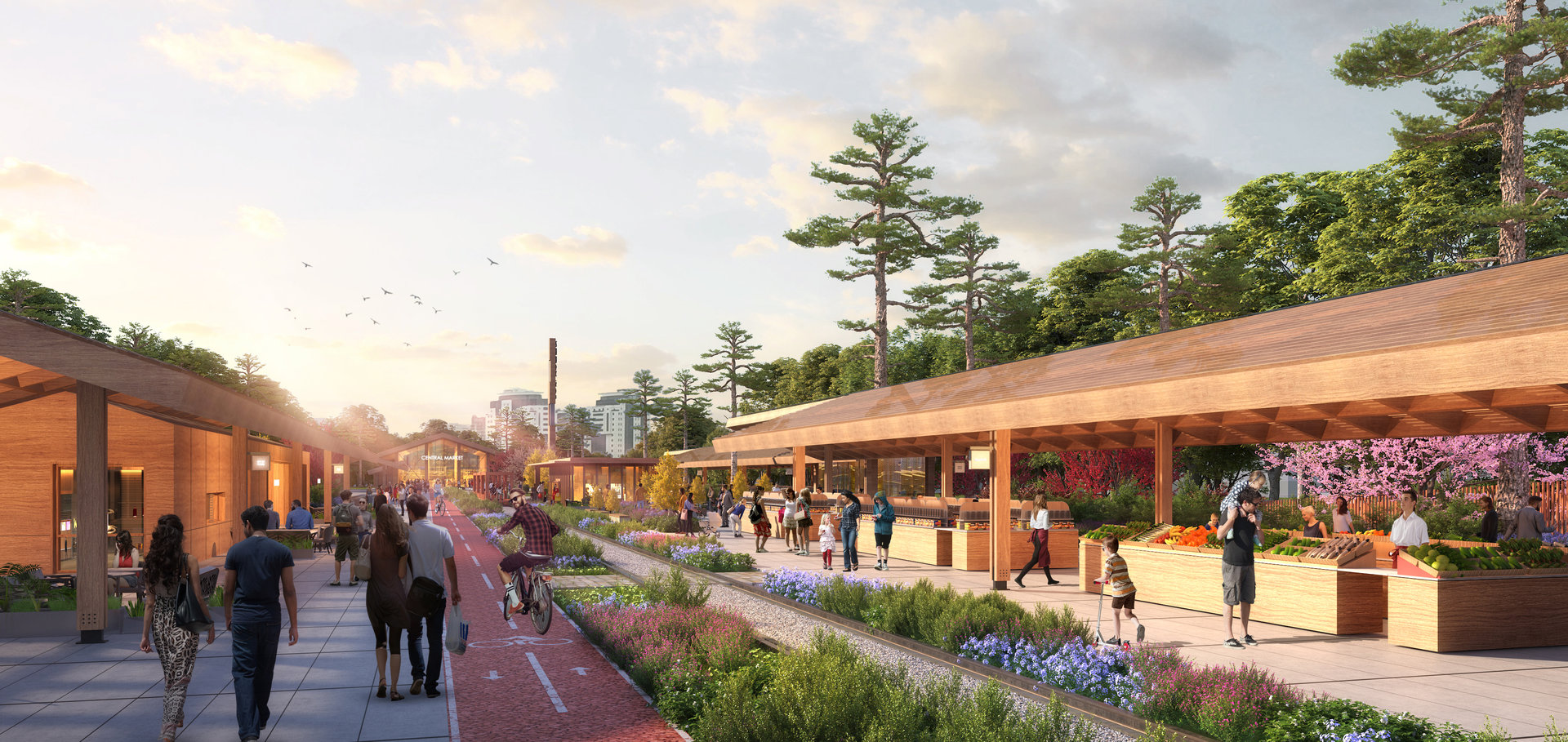
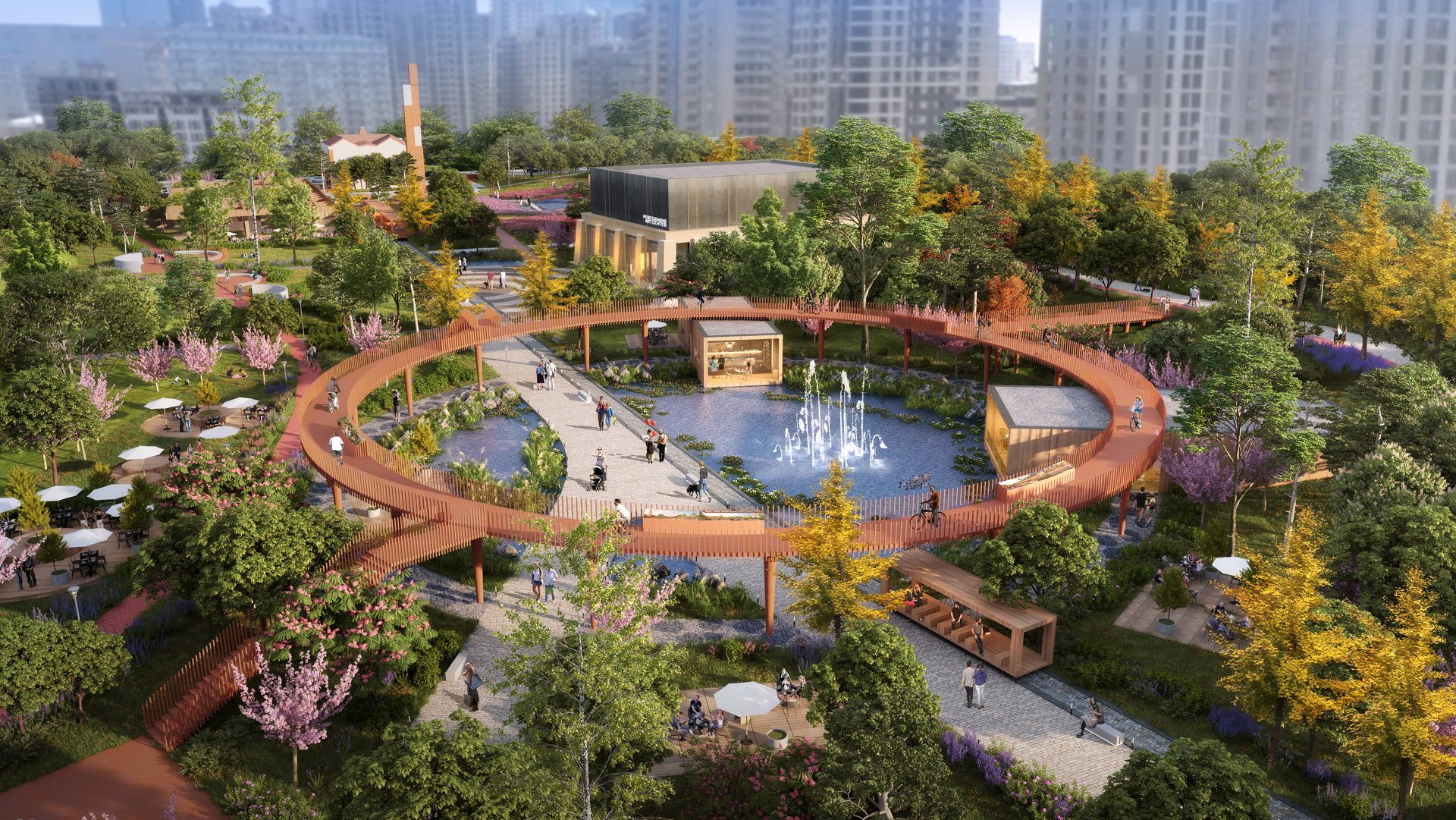
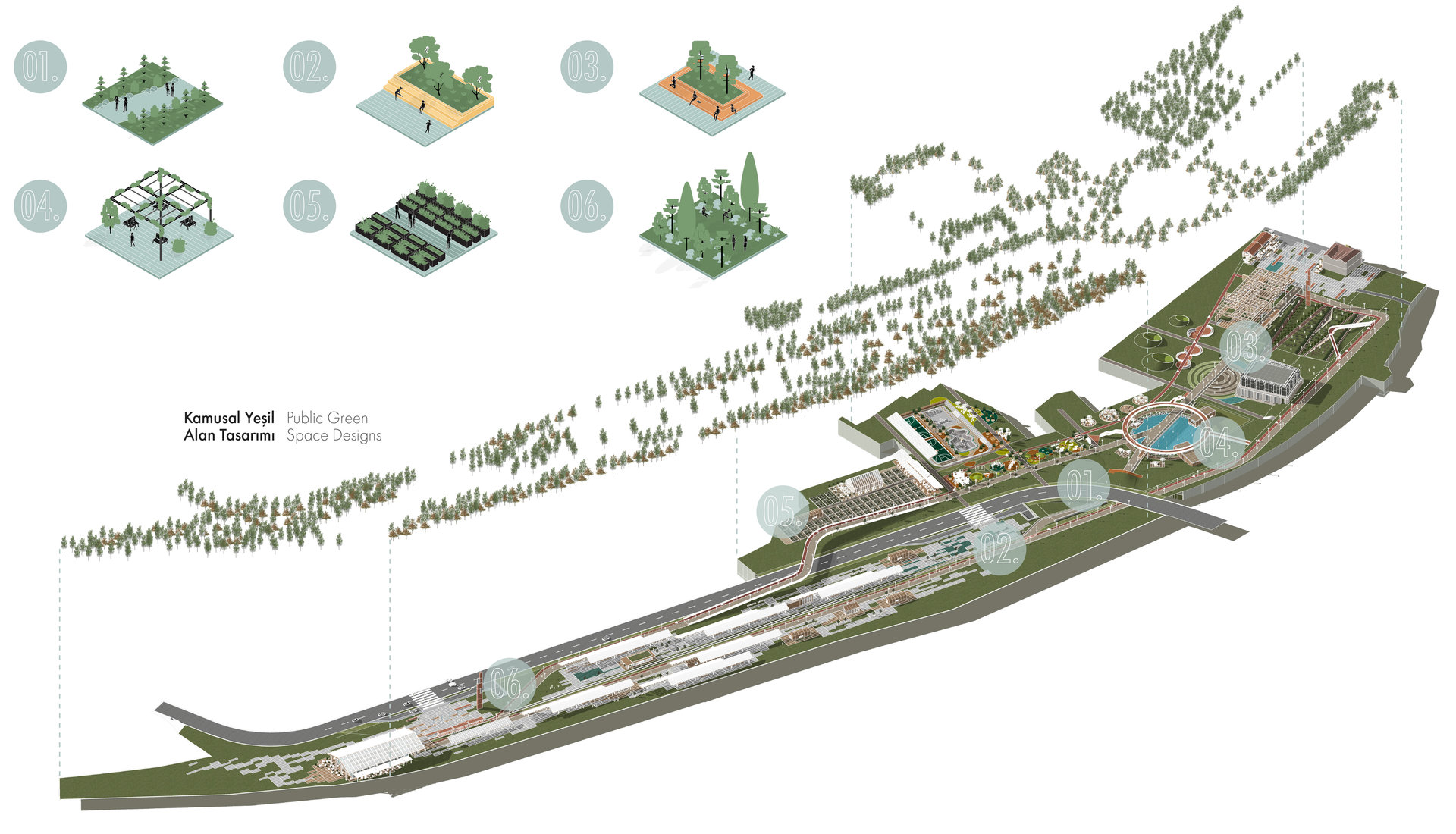
The design increases the presence of greenery and organizes the site into thematic zones—culture, agriculture, youth, market, pool, and event areas—each tailored to serve different community needs. At the heart of the concept lies a participatory approach: urban farming is envisioned as a collective activity, where residents grow crops in the Farm Zone, then harvest and sell them in the Market Zone creating a sustainable cycle of production and sharing.
The agricultural storyboard outlines the journey:
- Urban dwellers plant crops in the designated farm and greenhouse areas.
- Plants are watered and maintained as part of communal care.
- When harvest season arrives, residents collaboratively gather in the fields.
- Harvested goods are transported to the Market Zone and sold, supporting local engagement and awareness.
Integrating Memory and Modernity
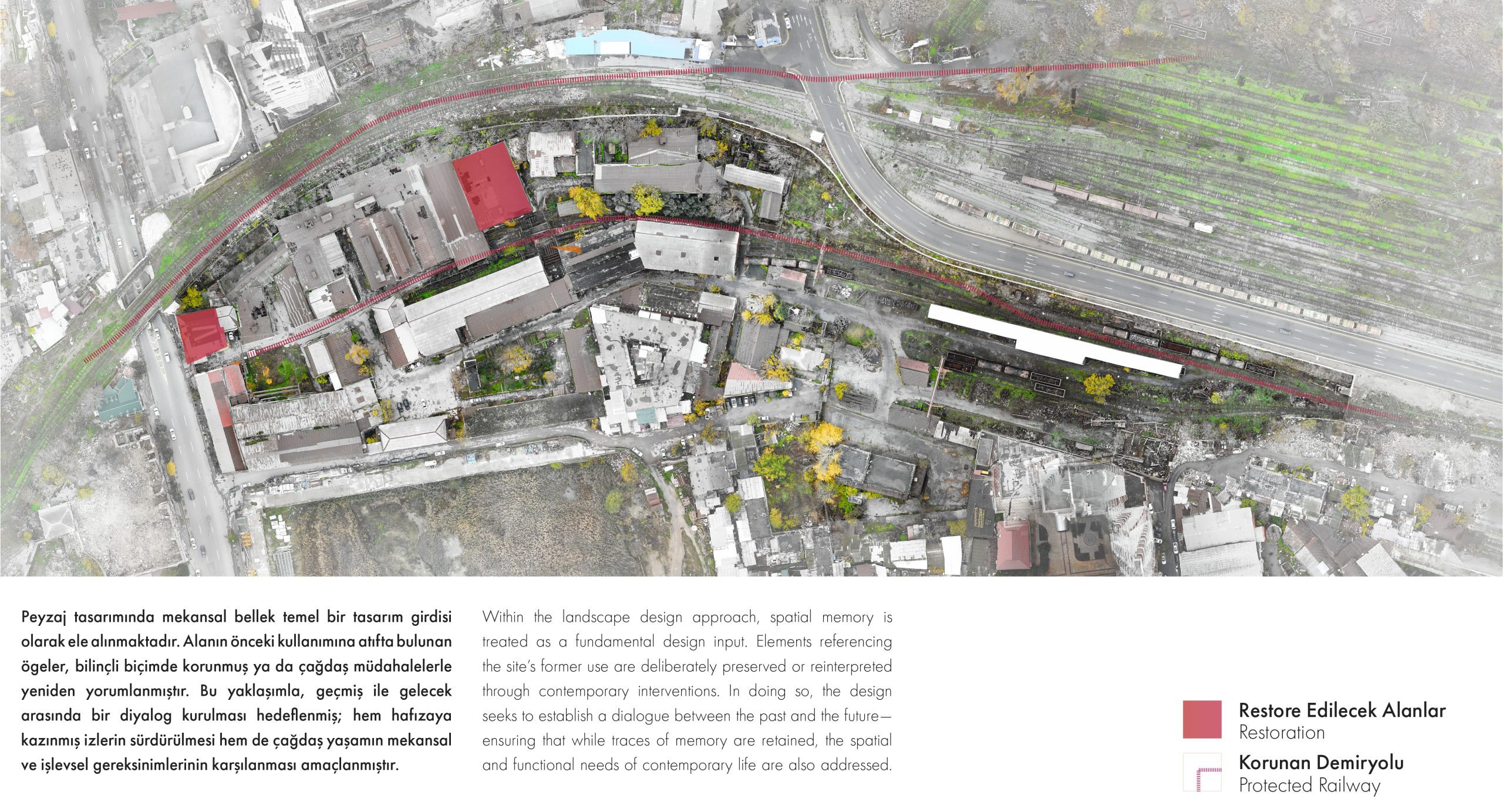
Traces of the site’s past remain visible: structural relics from its railway history have been selectively preserved and restored, contributing to the spatial identity of the project. In several areas, existing boundary walls and alignments have been integrated into the new layout, providing continuity between past and present. The design pays special attention to memory spaces, embedding architectural details that evoke the site’s historical use while accommodating the demands of contemporary urban life.
Environmental and Climatic Responsiveness
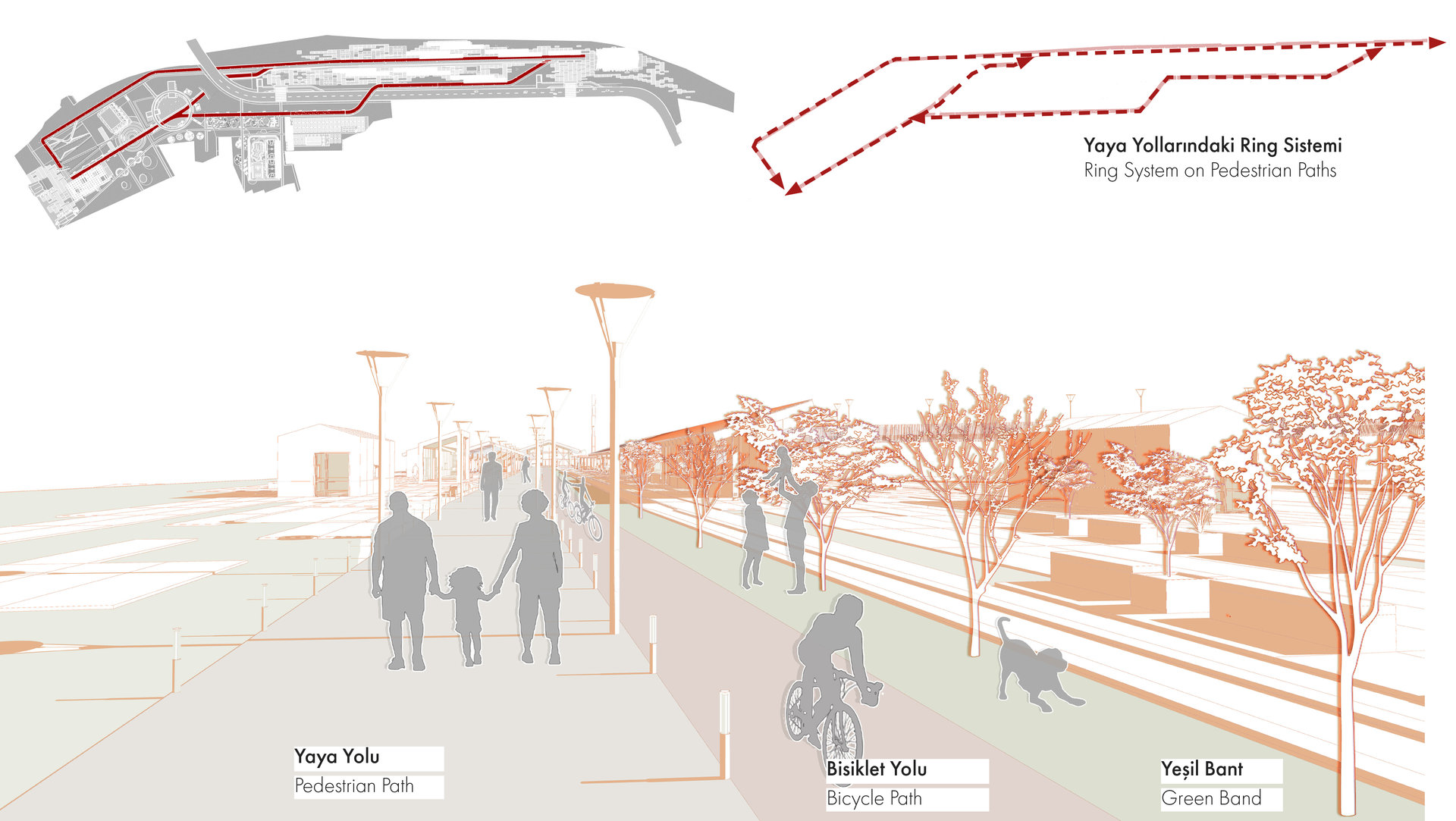
The north-south orientation of the linear site, combined with prevailing northwesterly winds, necessitated a careful strategy to break potential wind tunnel effects. To mitigate this, pedestrian pathways were shielded by canopies and plinths, while strategically planted trees soften wind flow and enhance comfort.
In terms of solar exposure, the low-rise surroundings allow for long daylight hours. As a result, buildings located on the eastern edge were designed with sun-shading elements to regulate heat and glare, improving user comfort across different times of day.
Gallery