Hatay, Türkiye
Project Type
City Planning & Master Plan
Location
Hatay, Türkiye
Year
2023
Project Service
Master Plan
Project Status
Concept Project
Employer
The Emlak Konut REIC
Tags
Post-Disaster Housing, Waterfront Development
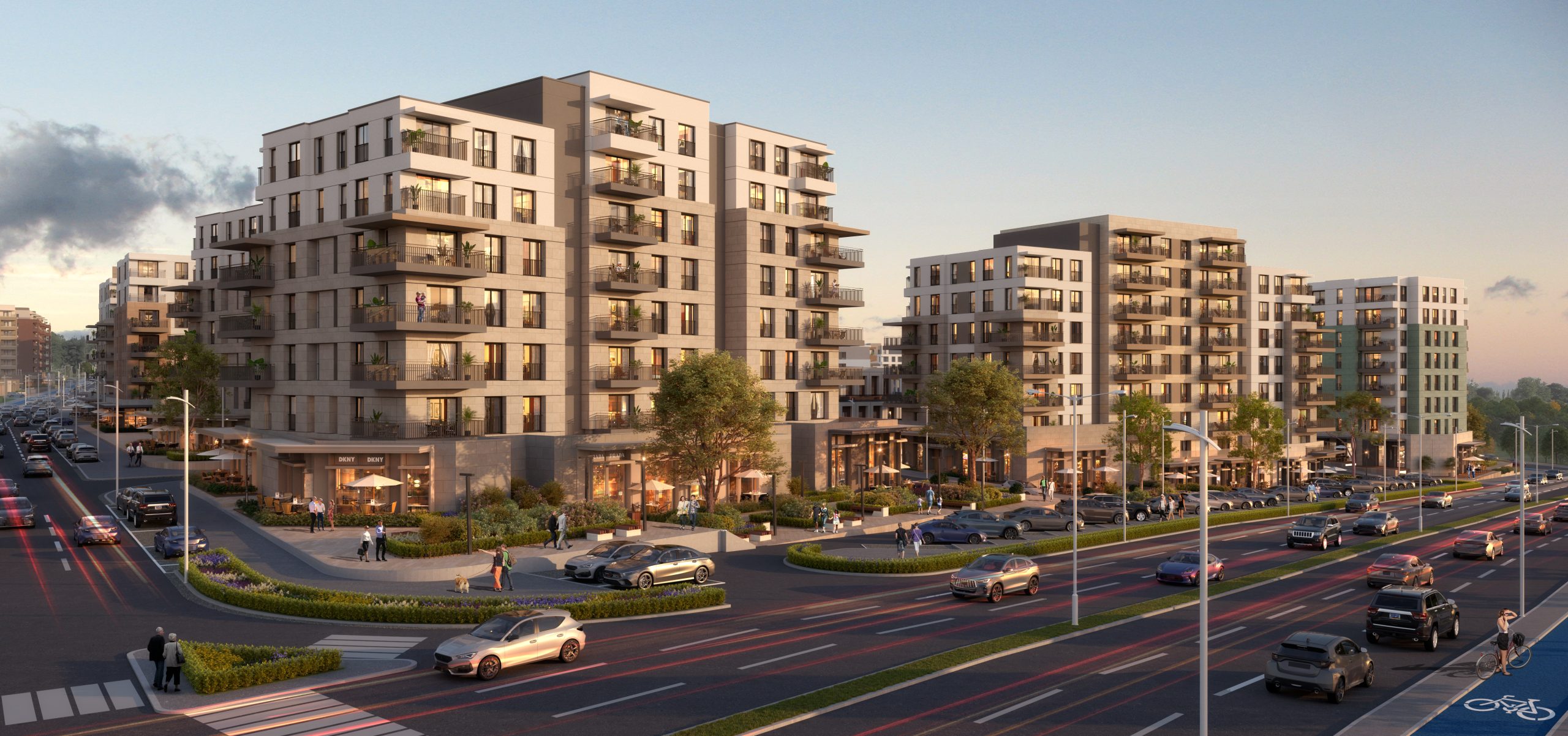
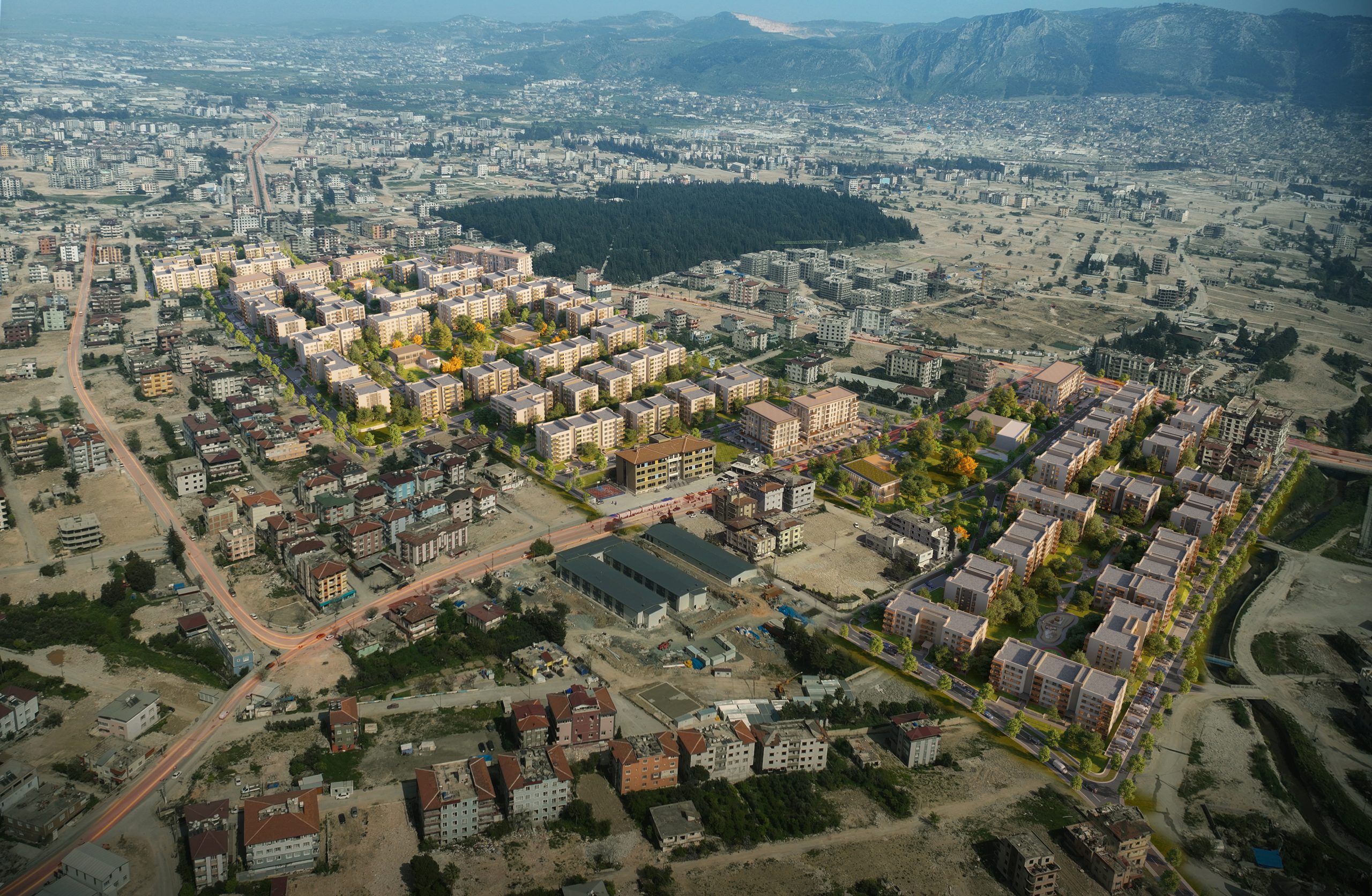
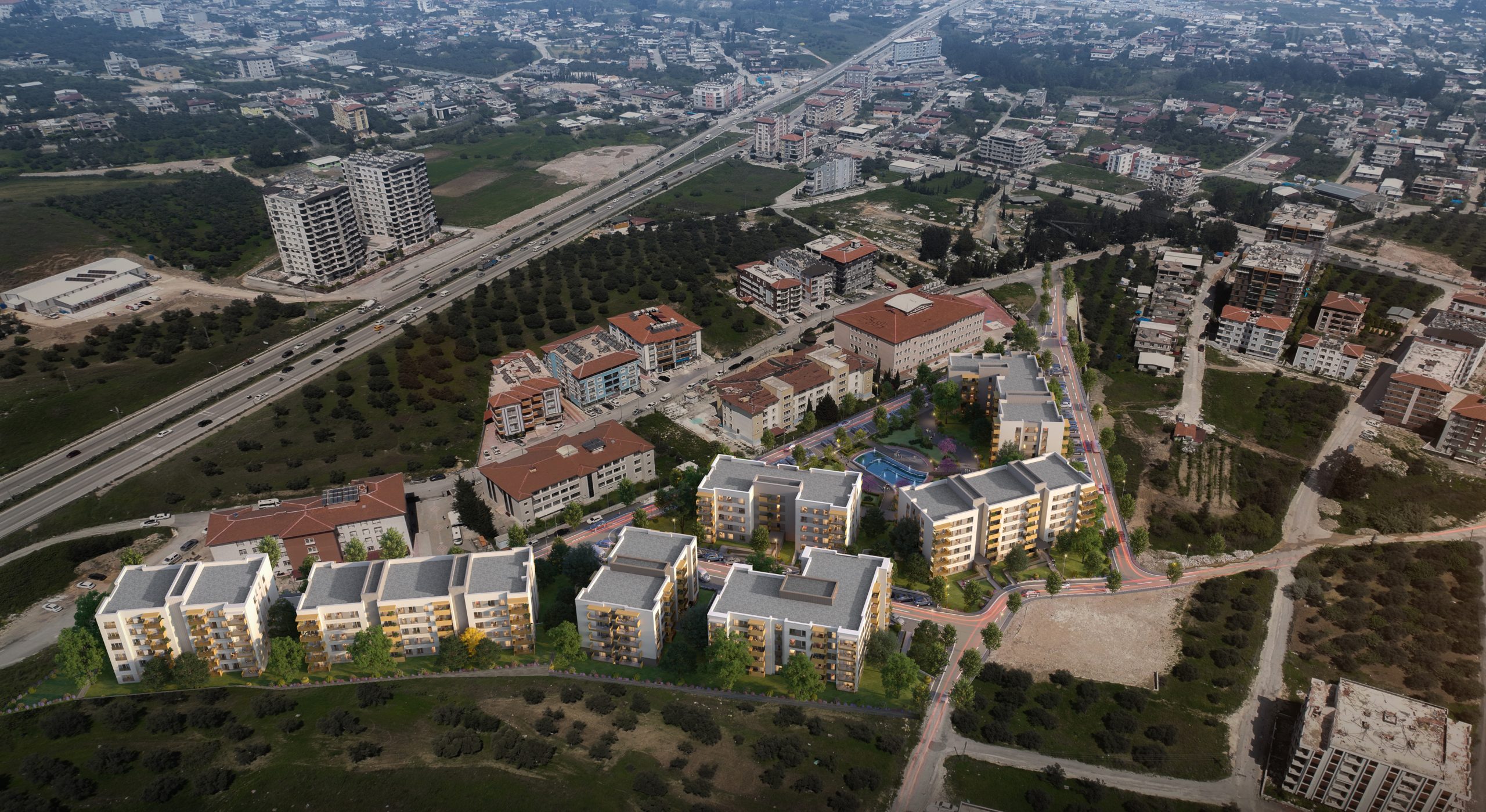
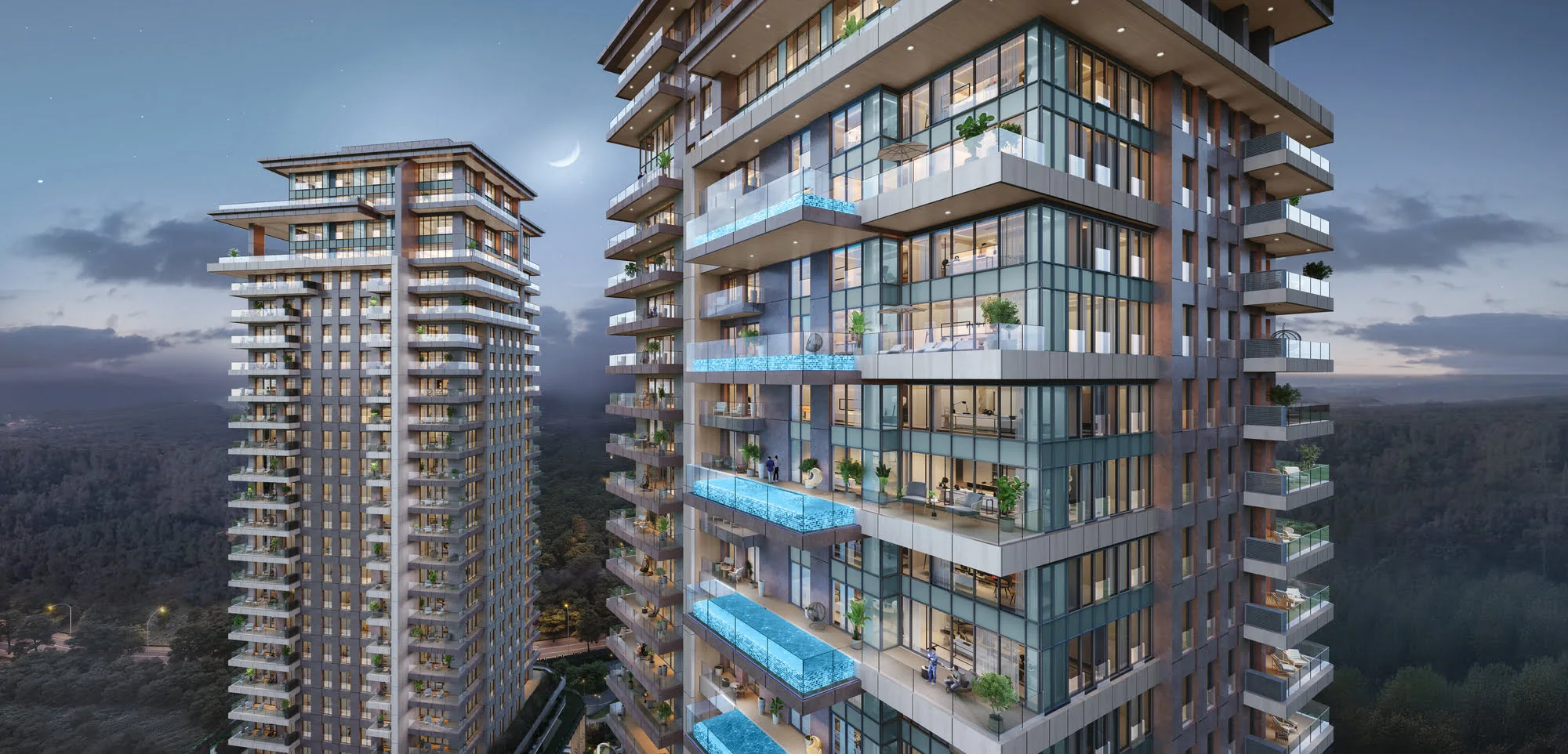
Built using conventional and tunnel formwork systems, the new building stock replaces demolished areas with structurally resilient, modern residential blocks. Beyond providing shelter, the project addresses broader needs such as accessibility, public infrastructure, and urban livability—while aiming to reestablish a sense of place within the evolving urban memory.
Urban Framework & Functional Integration
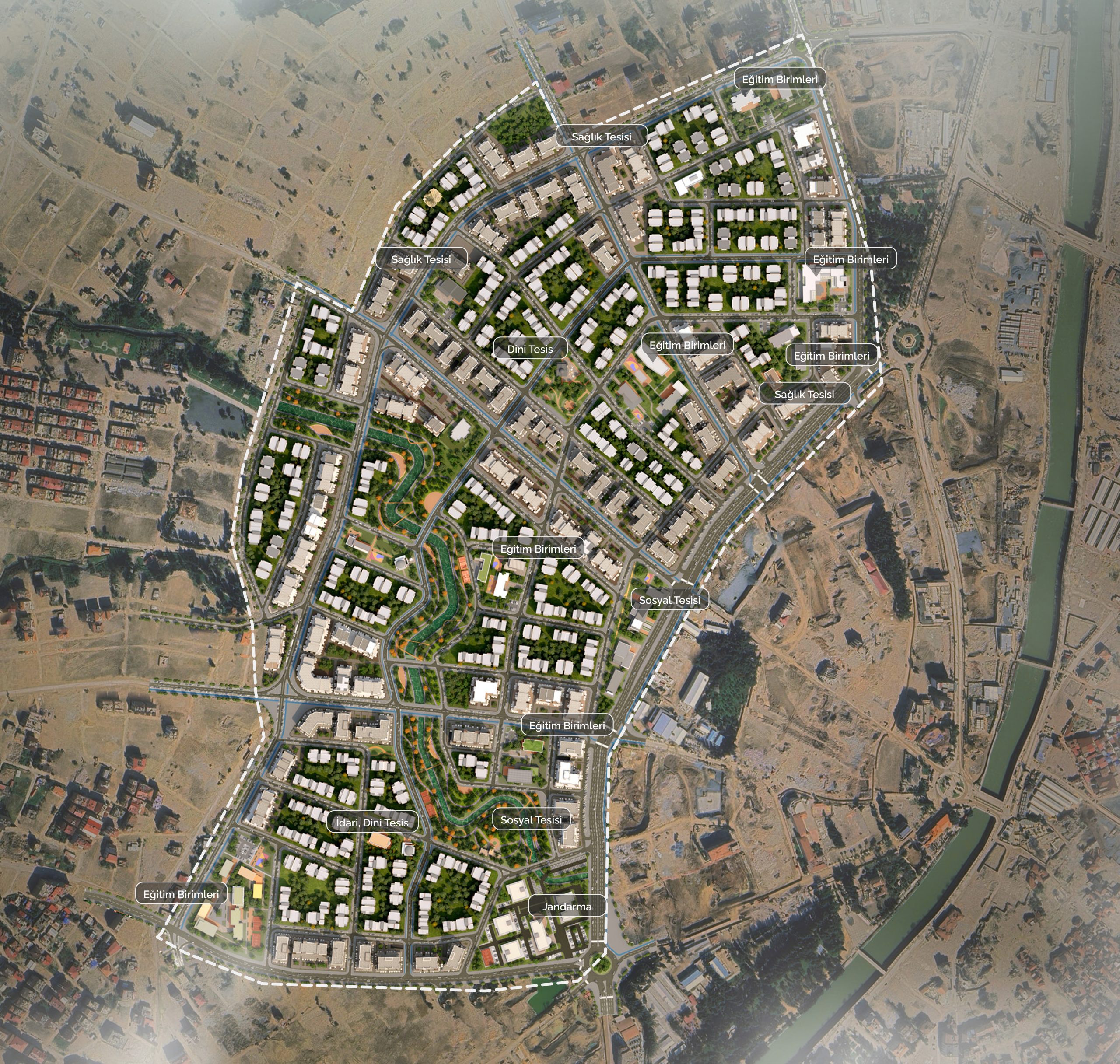
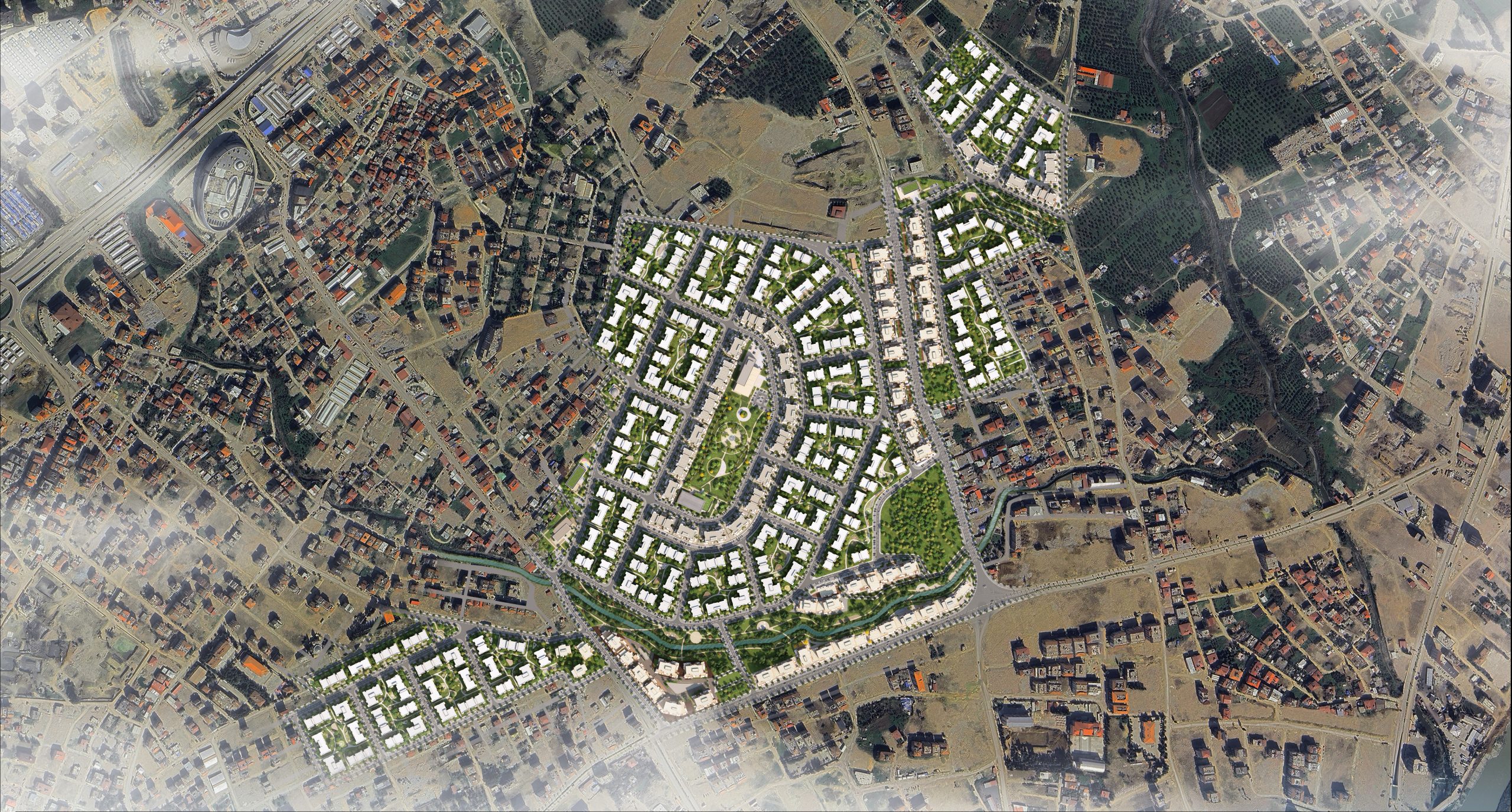
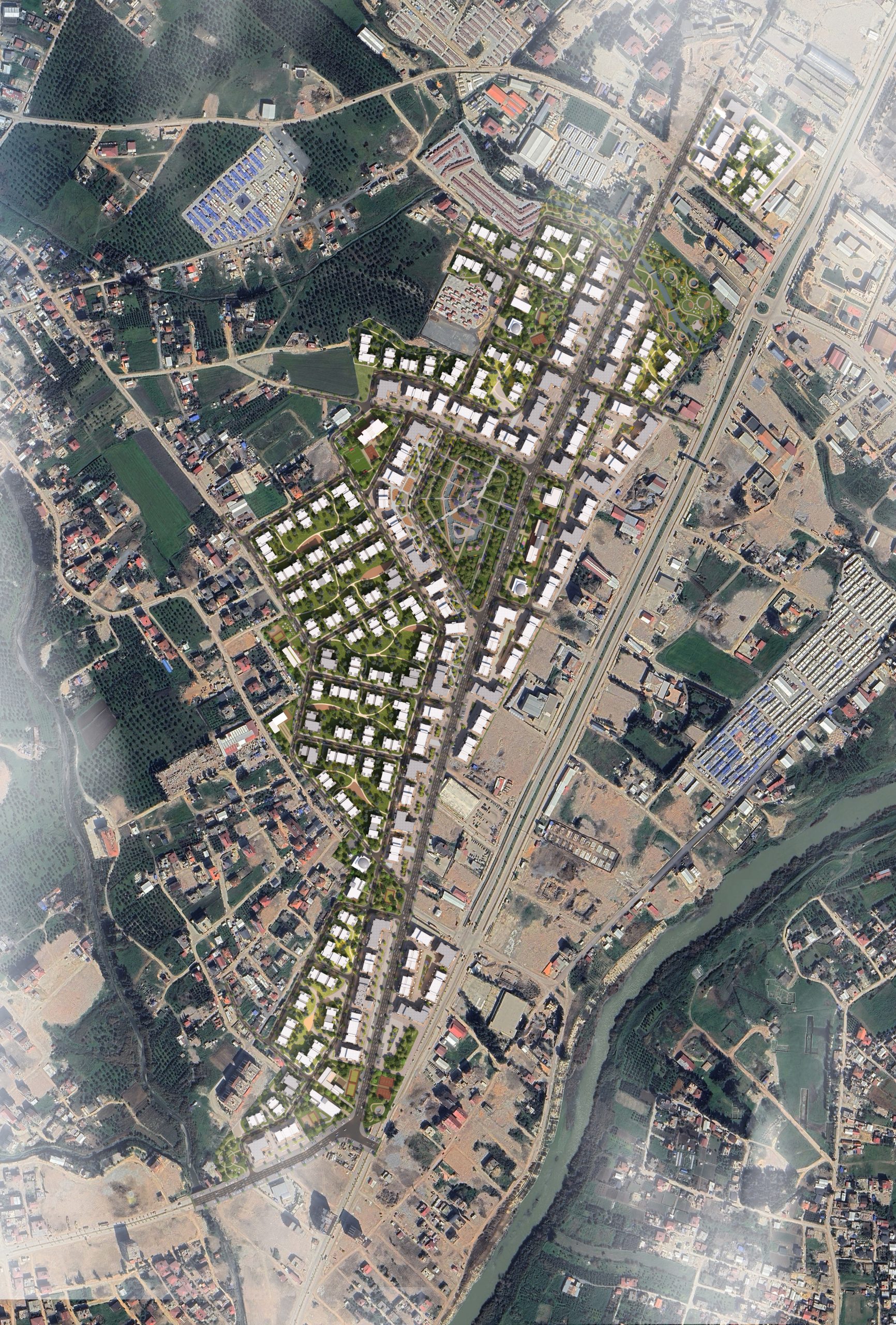
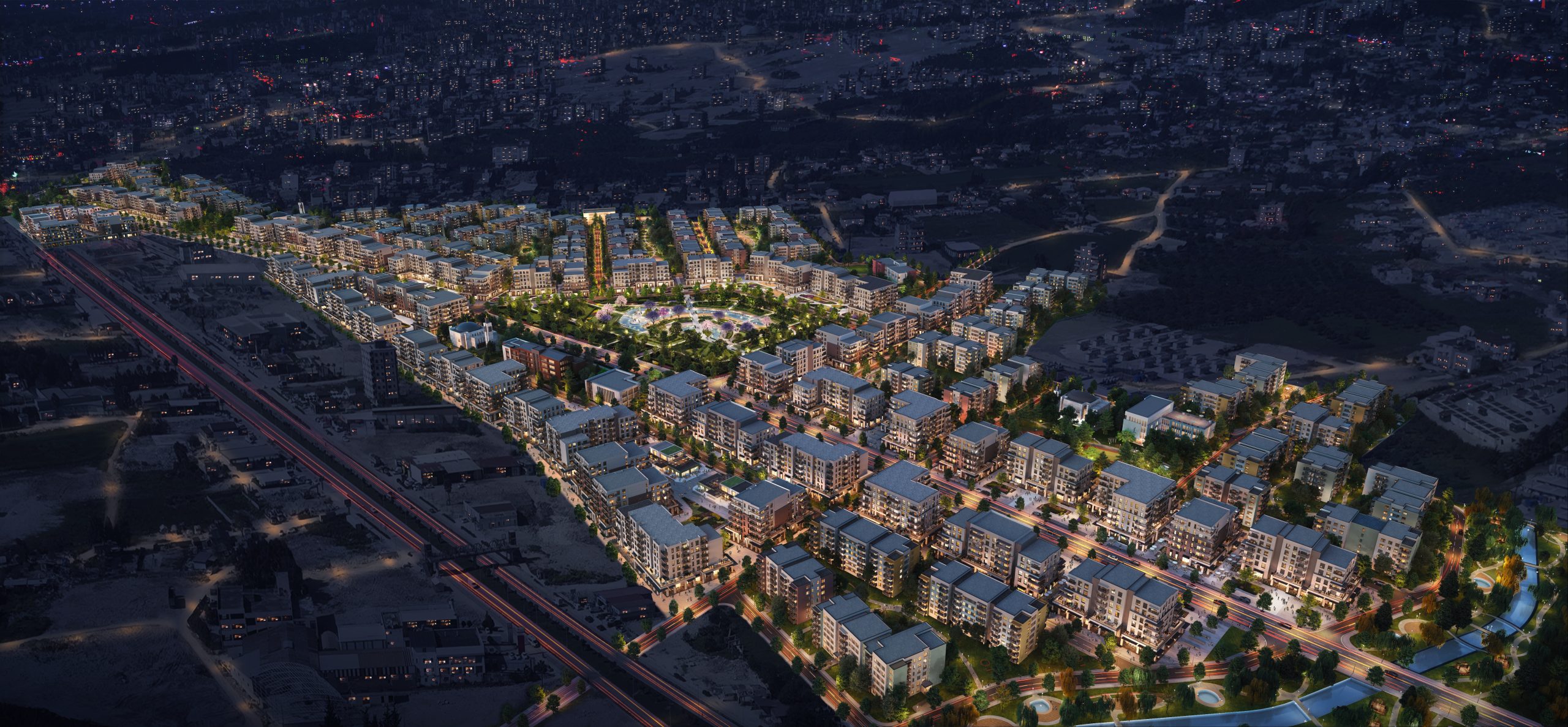
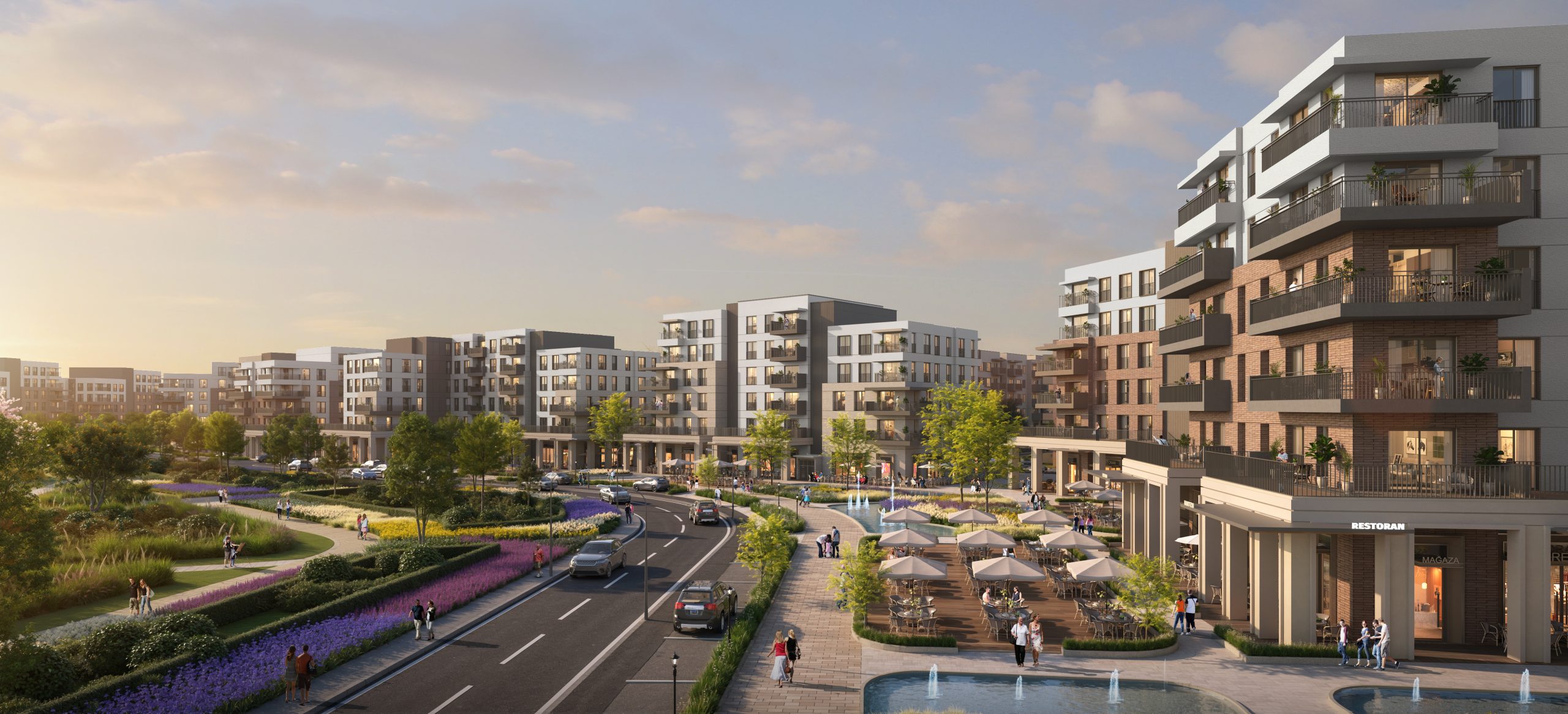
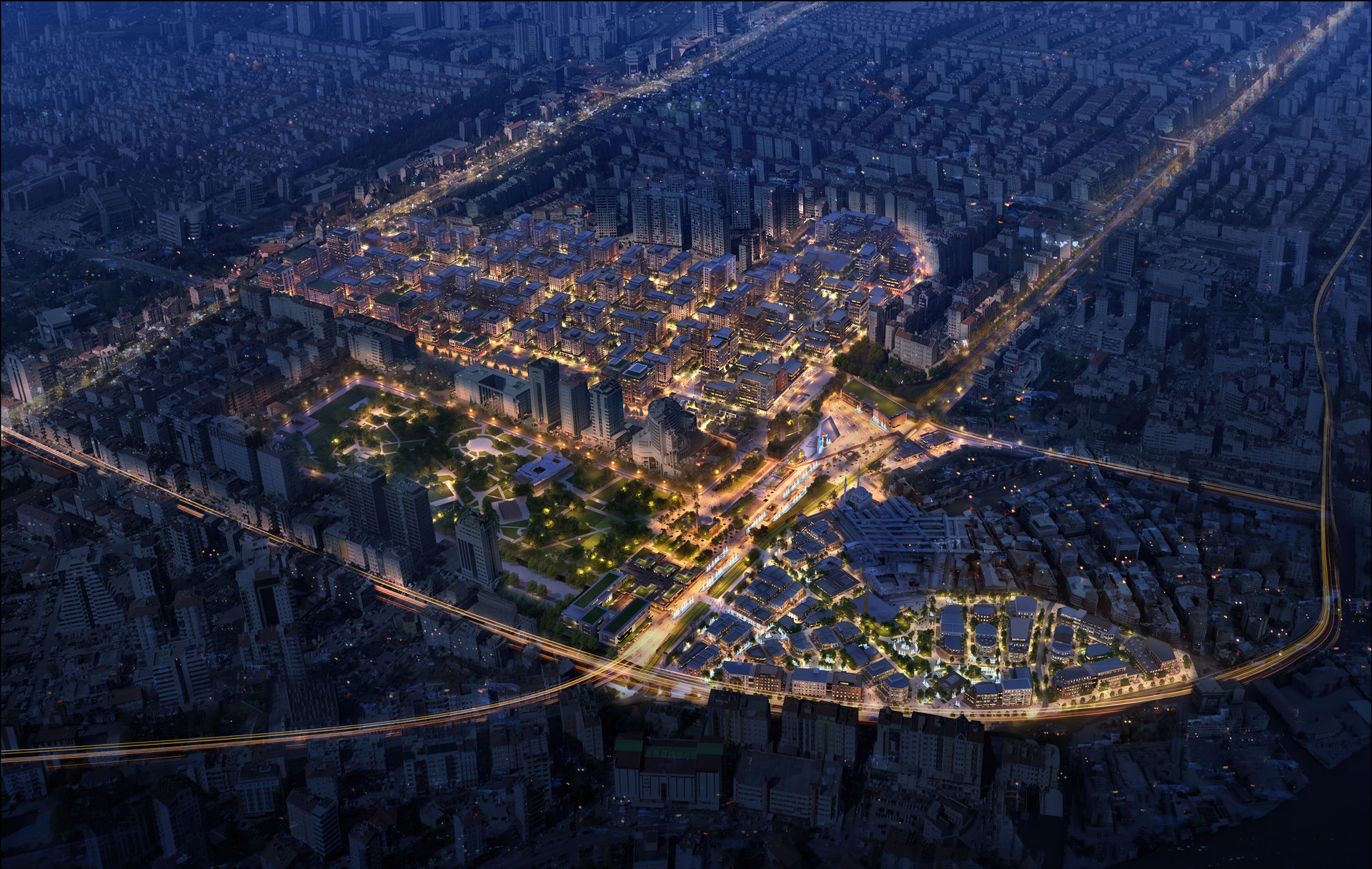
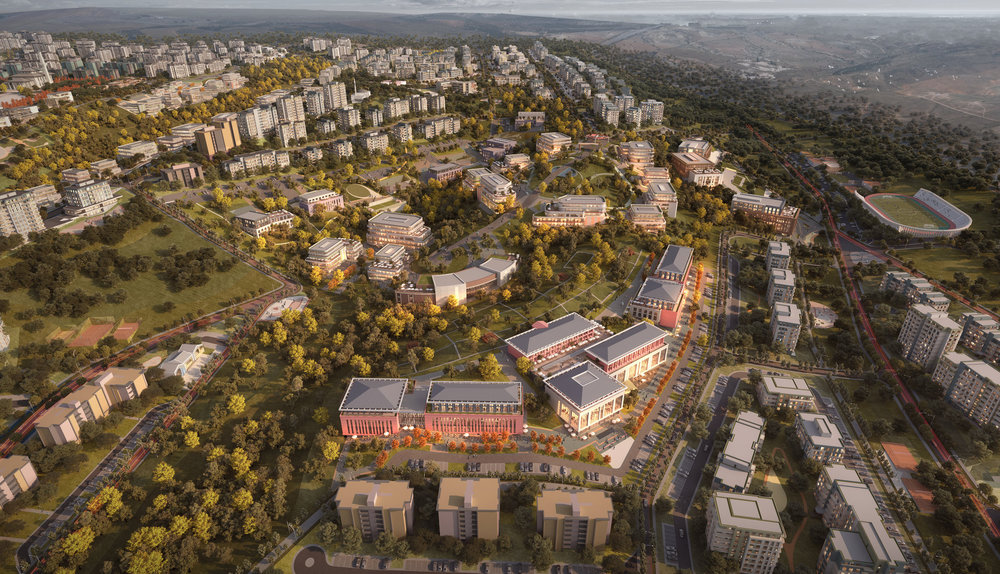
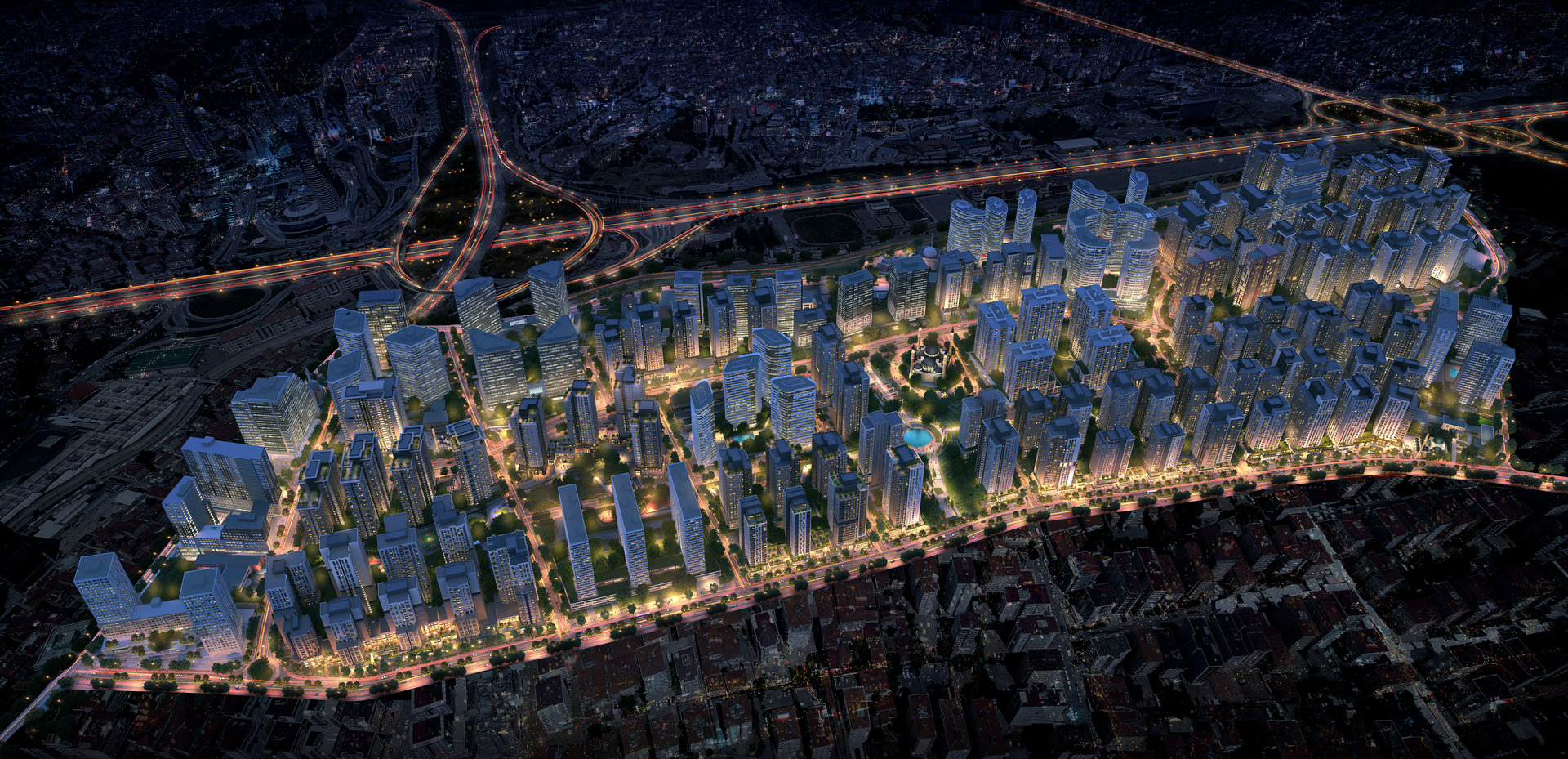
The planning of Antakya 3 and its surrounding phases follows a strategy of balanced programmatic distribution. The masterplan includes residential, mixed-use, educational, healthcare, administrative, religious, and cultural buildings, all located within walkable proximities.
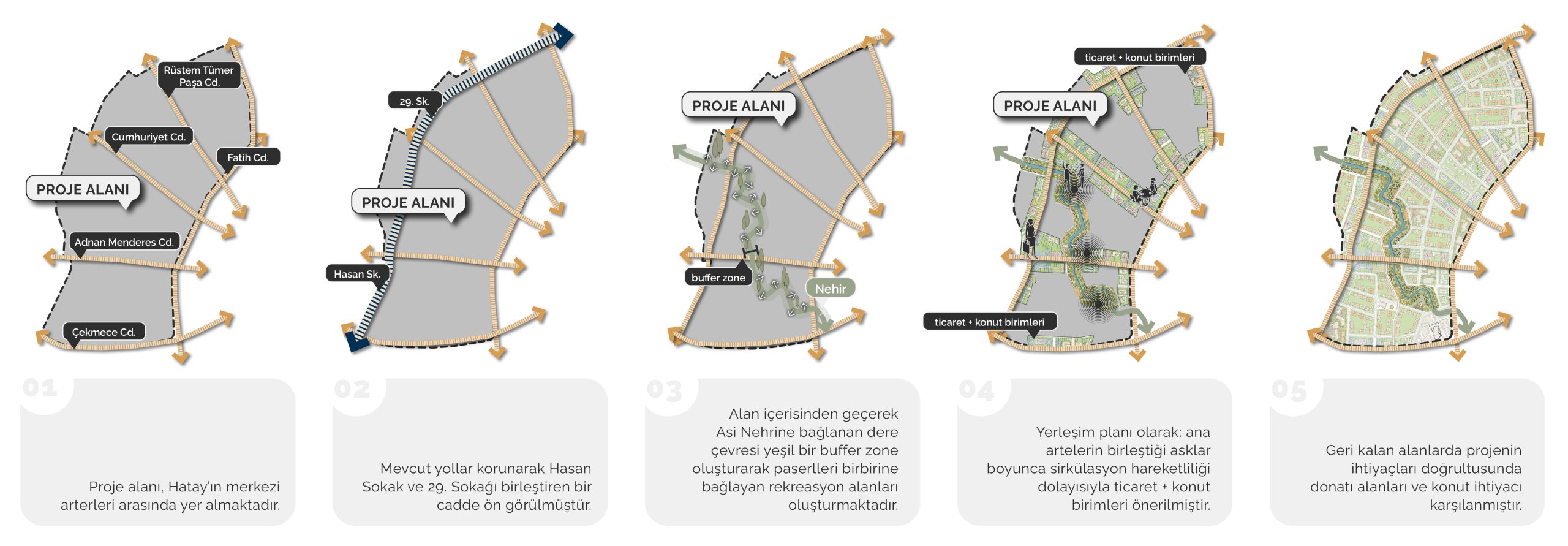
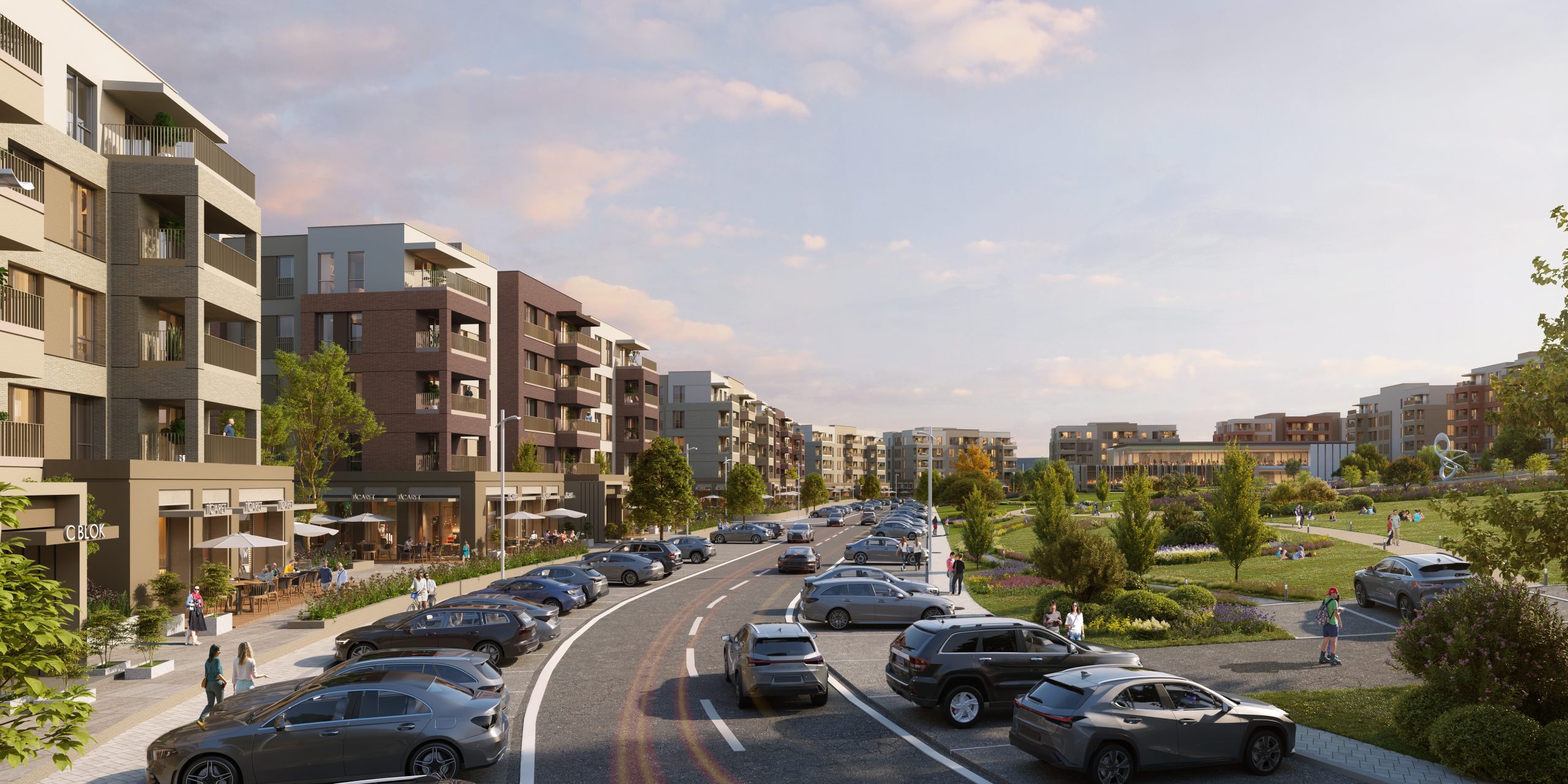
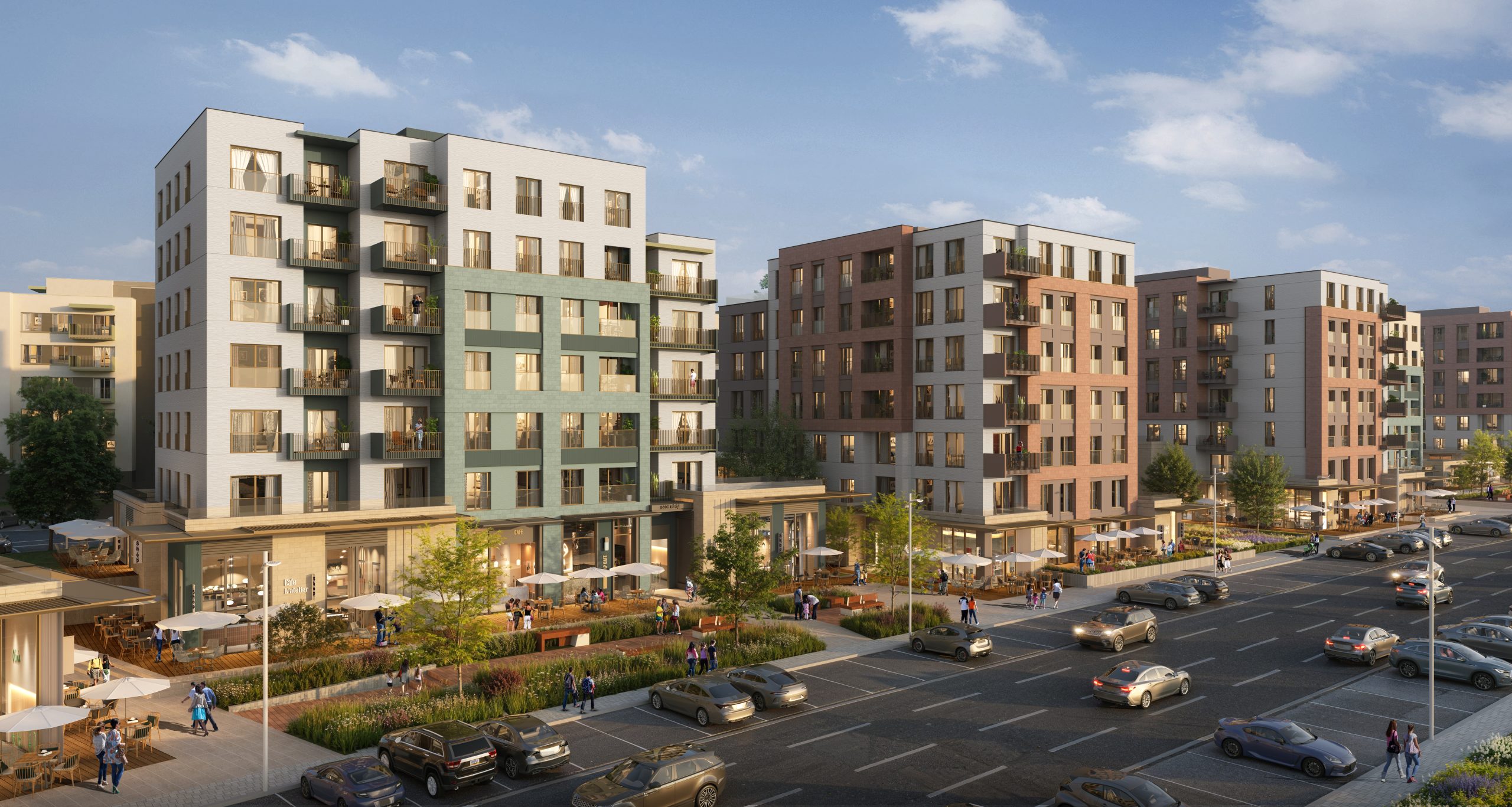
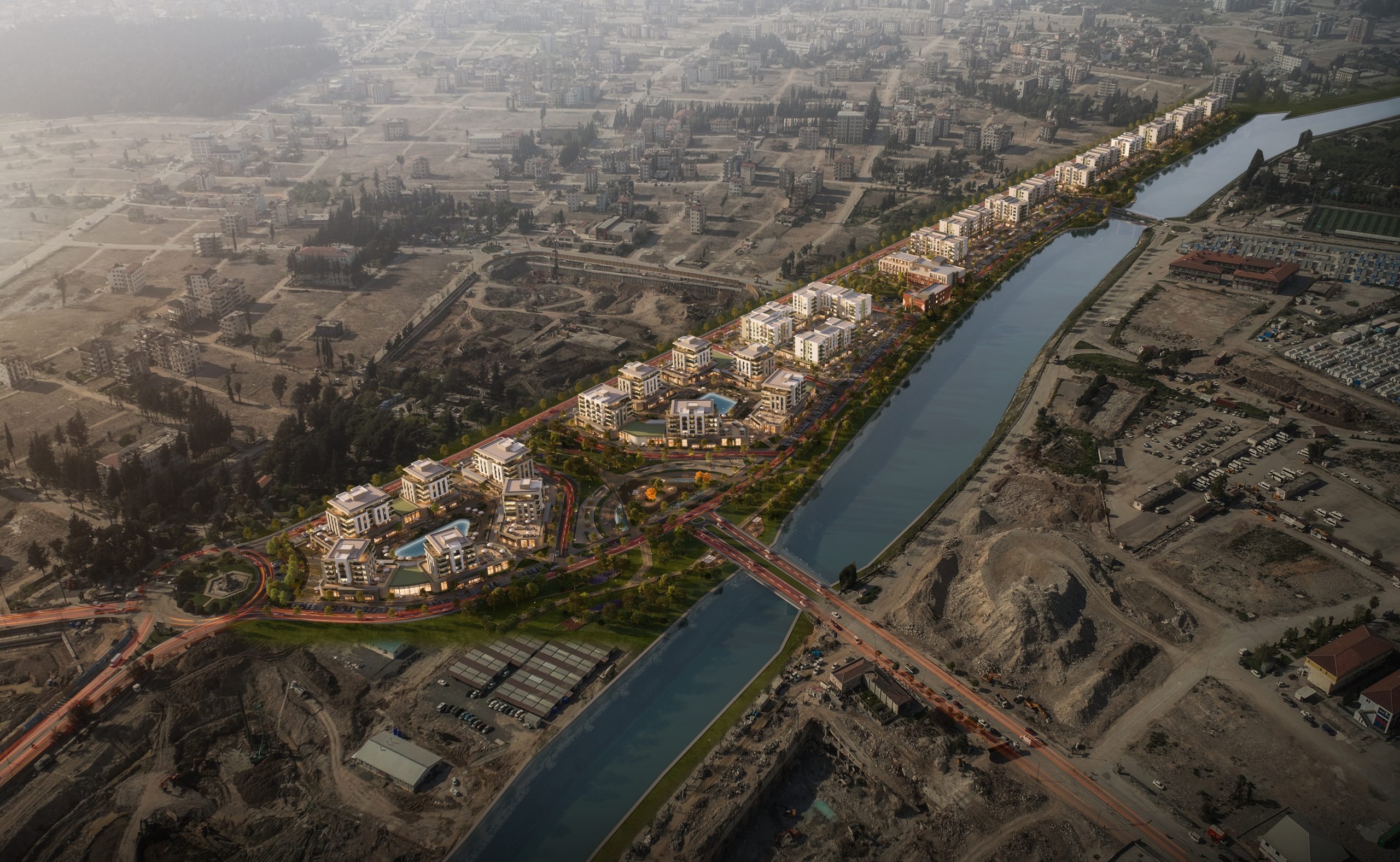
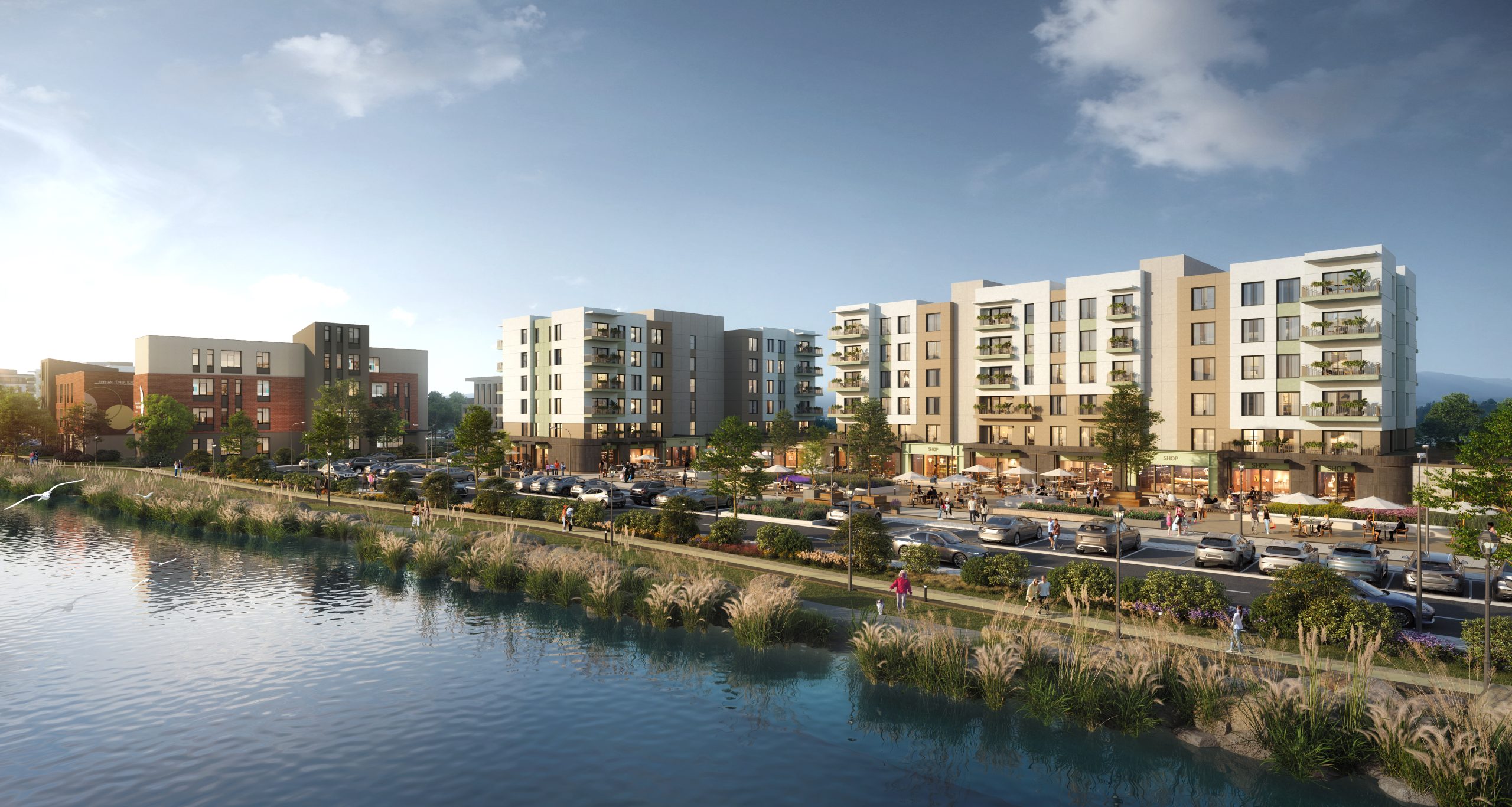
Major boulevards—Fatih, Cumhuriyet, and Adnan Menderes Streets—anchor active commercial corridors, while inward-facing courtyards and green pockets create quieter, residential micro-neighborhoods. In particular, Zones 4, 11, and 12—severely affected by the earthquake—have been reinvigorated with new mixed-use blocks to catalyze social and economic recovery.
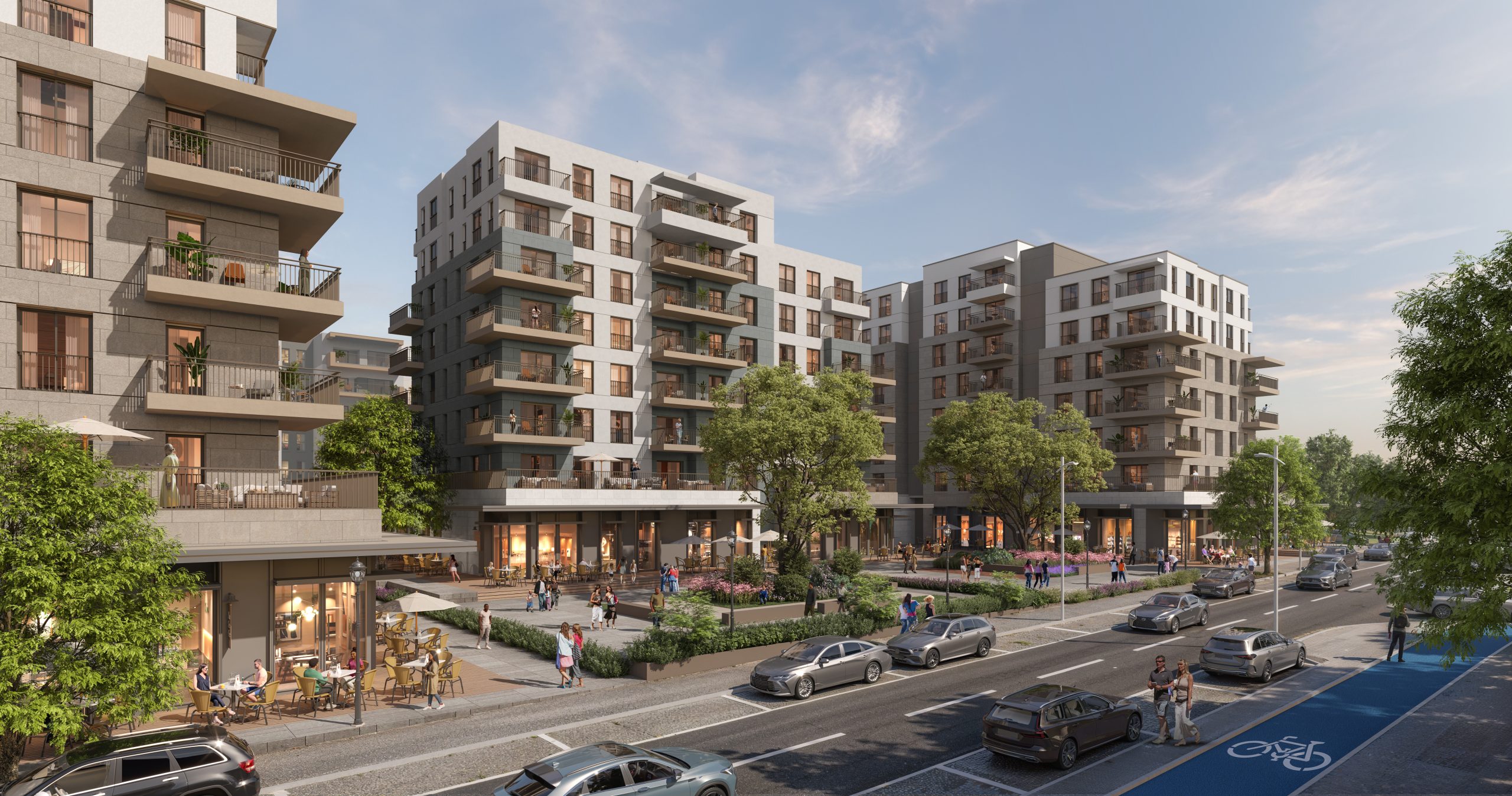
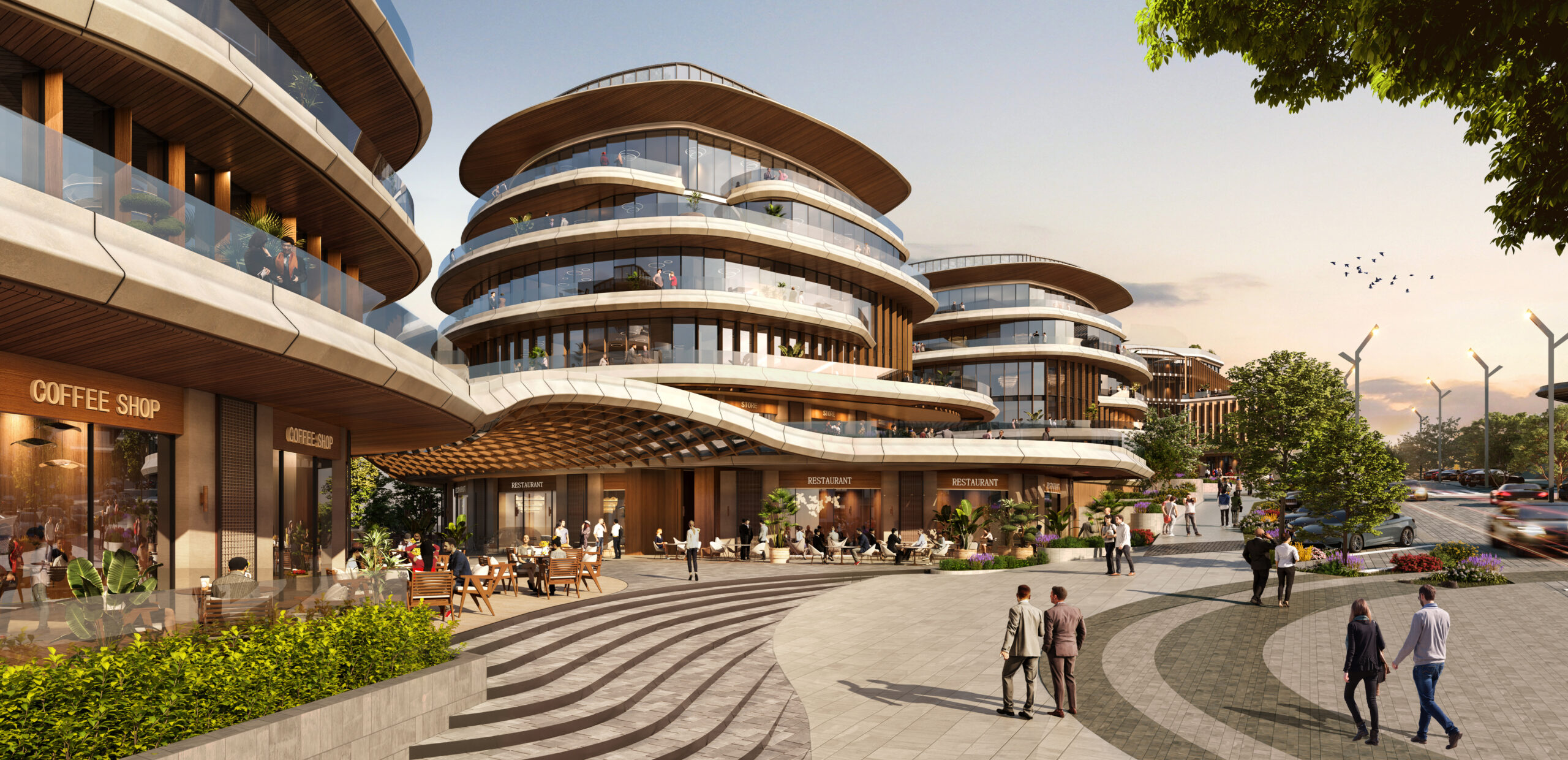
Architectural articulation in these areas emphasizes human-scaled massing, material resilience, and passive design strategies tailored to the Mediterranean climate, ensuring comfort and longevity.
Landscape & Public Realm Principles
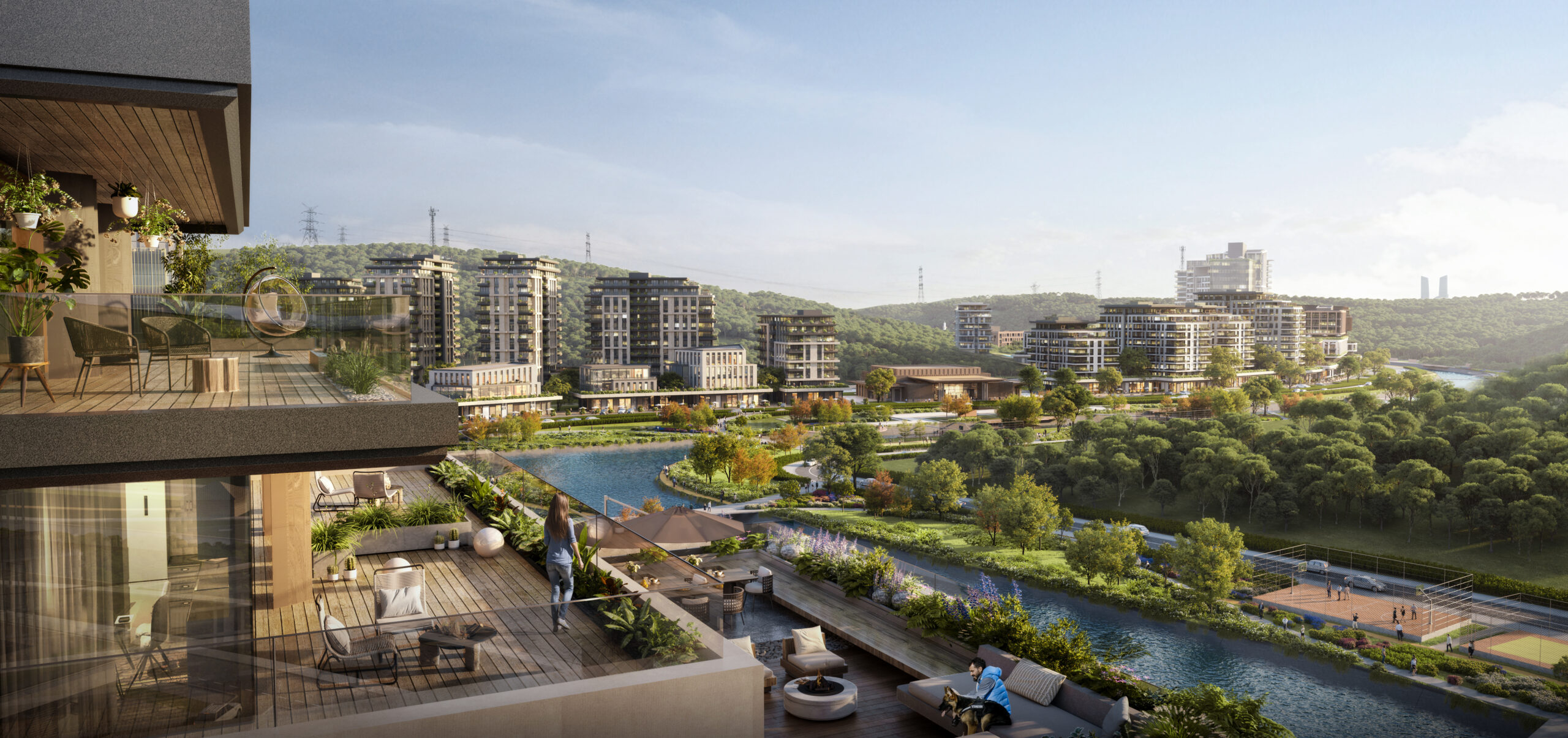
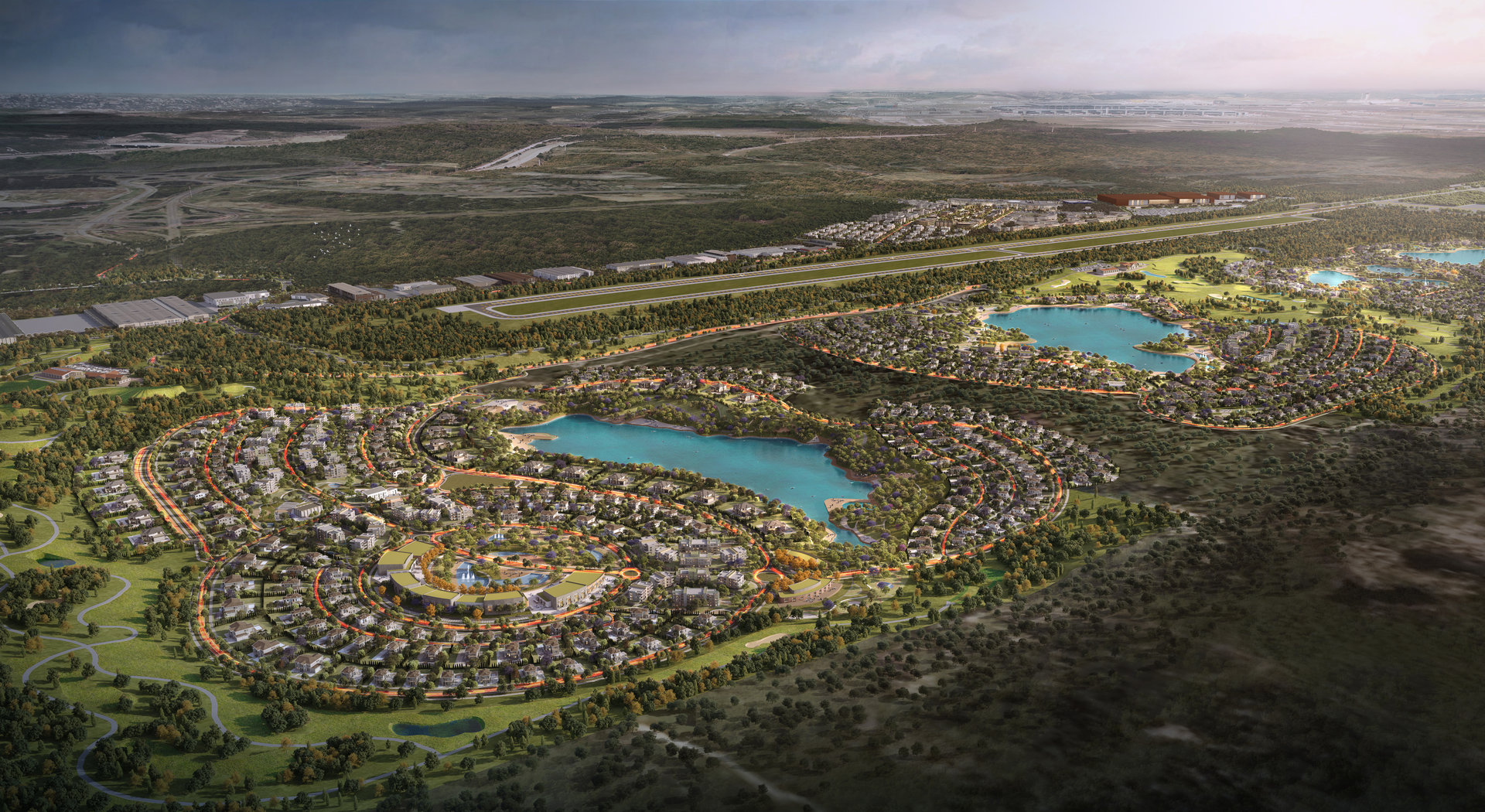
Green buffer zones along the Asi River and adjacent watercourses form the ecological spine of the plan, accompanied by pedestrian and bicycle routes that prioritize soft mobility and public health.
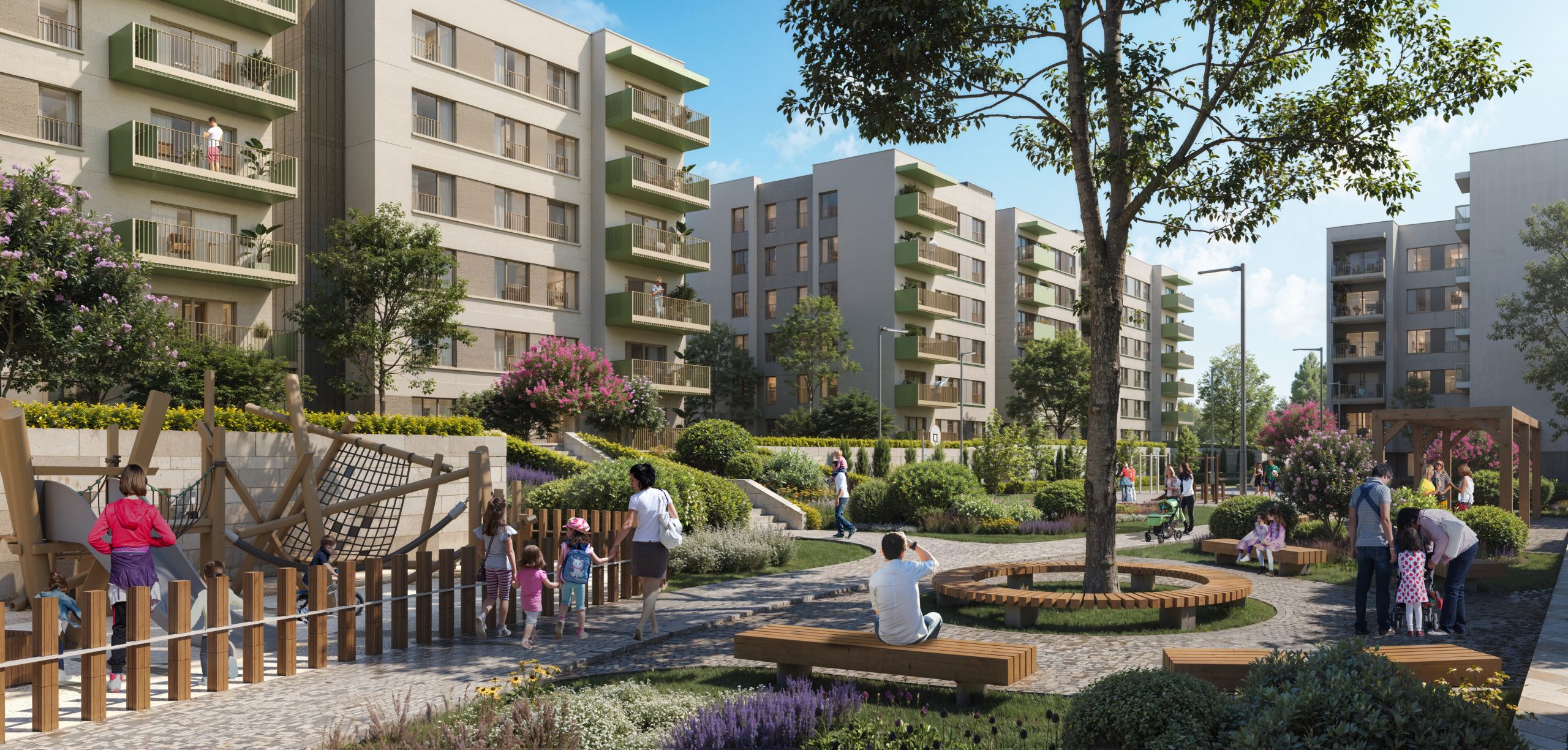
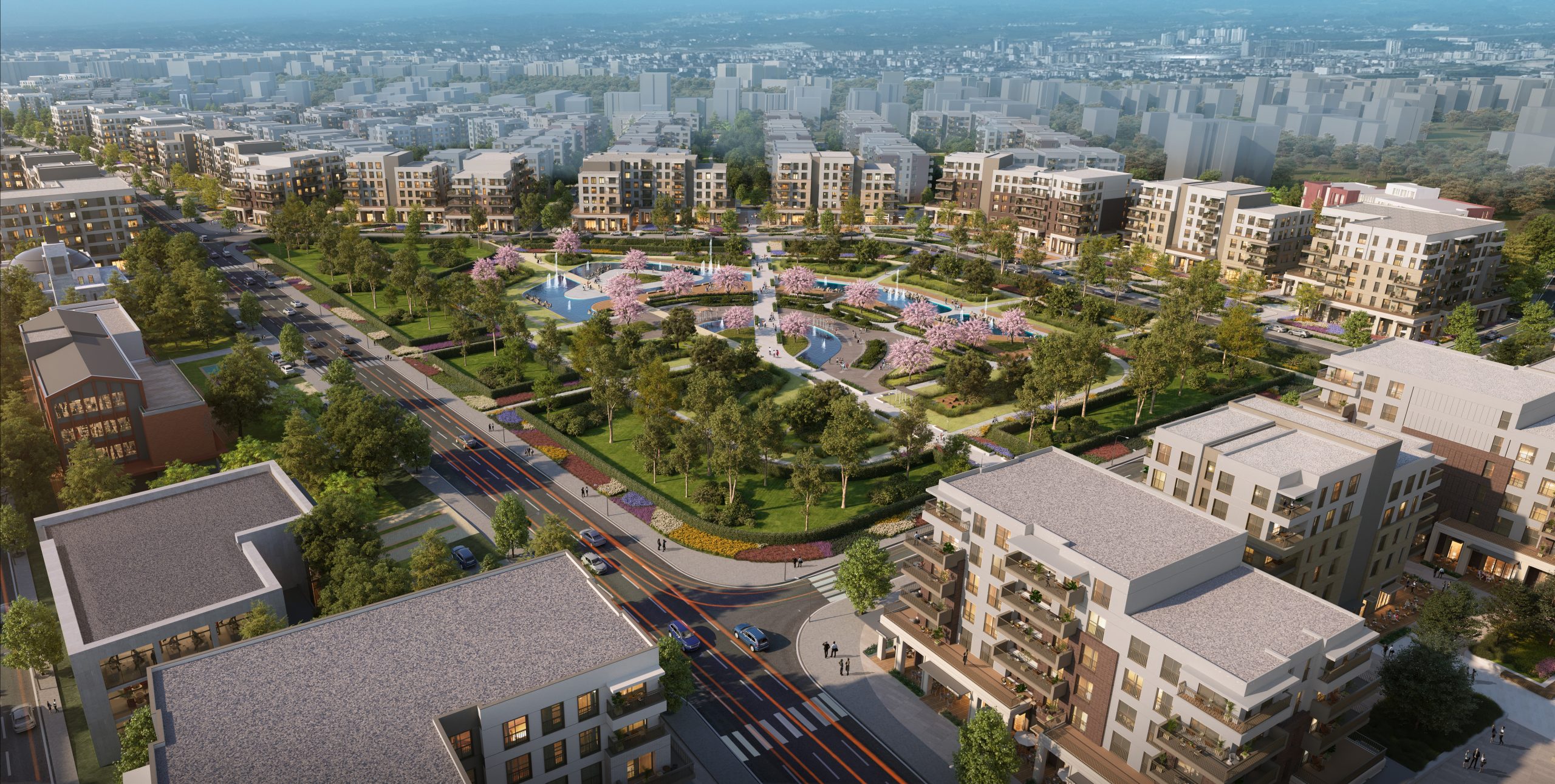
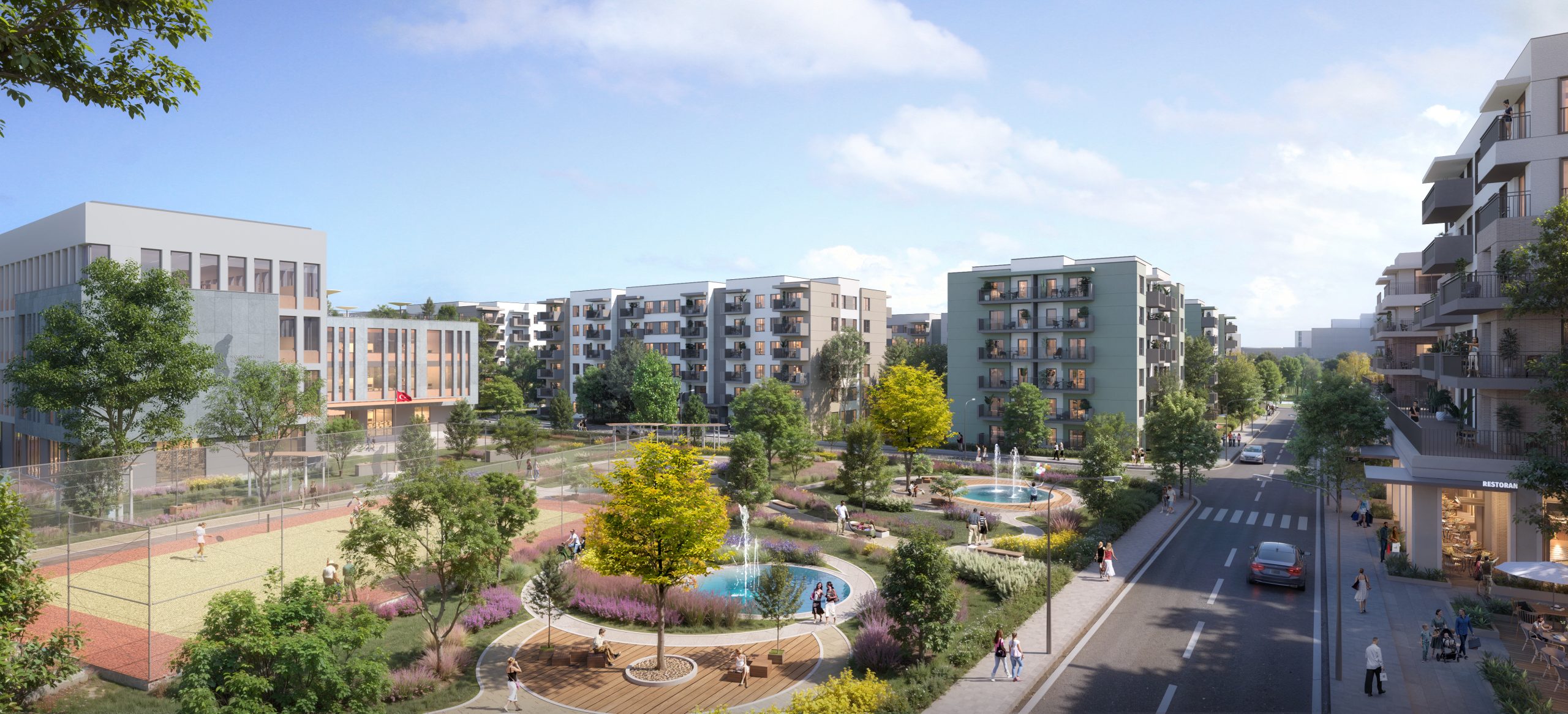
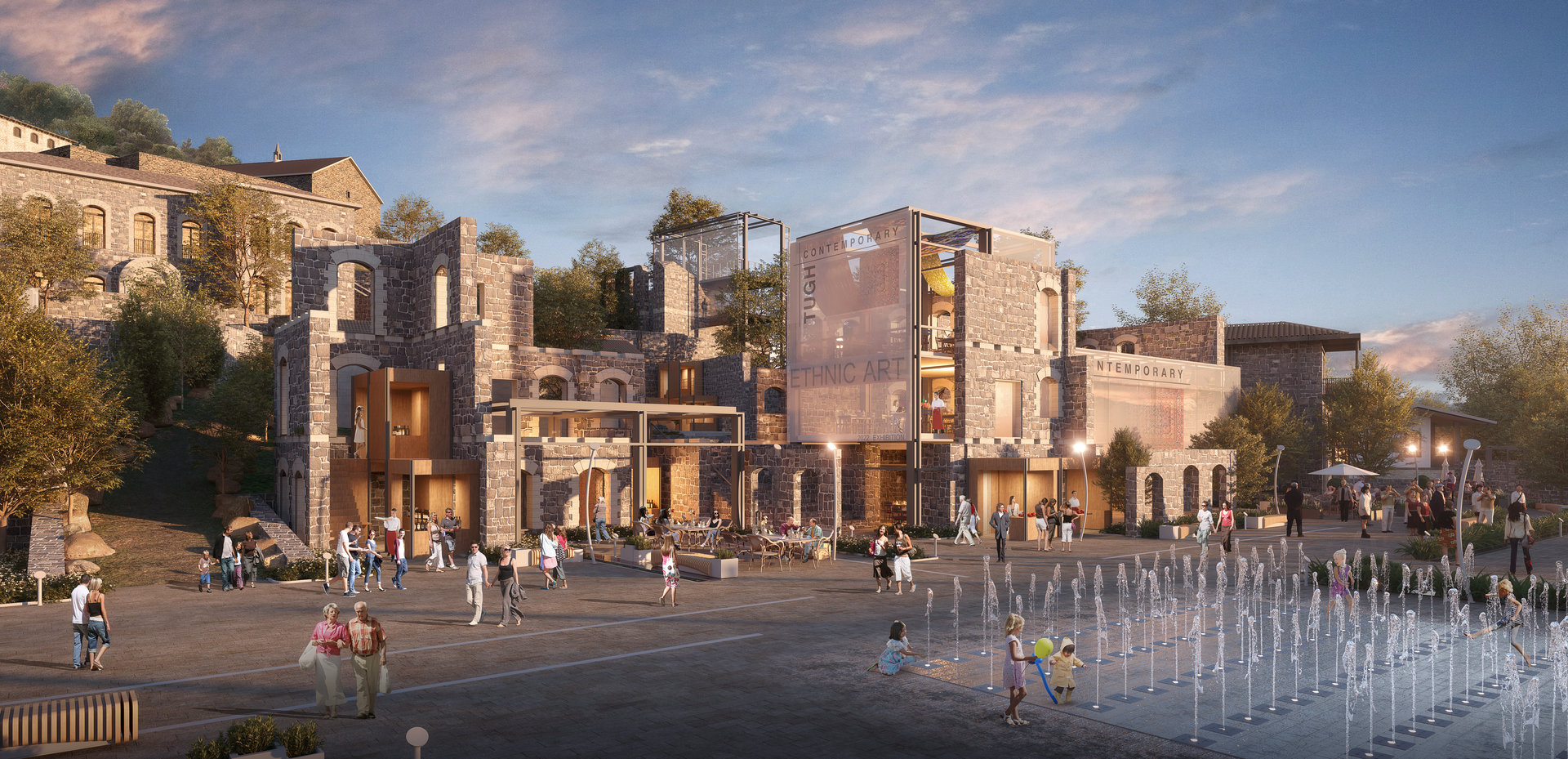
Parcel-based street design is enriched with urban furniture, shaded rest points, and native vegetation, functioning as connective tissue between building typologies and daily life activities.
Design Criteria and Spatial Resilience
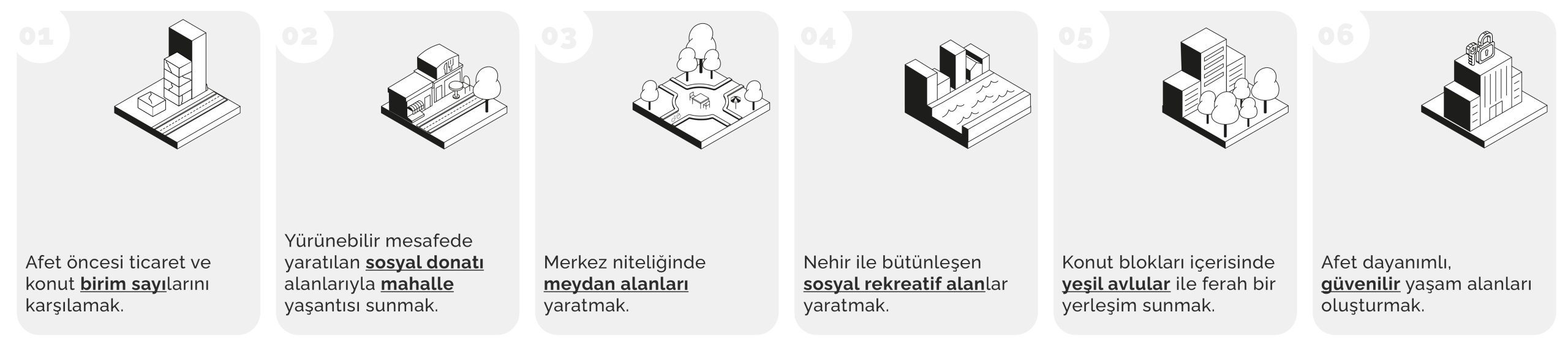
Key design criteria articulated in the diagram include:
- Reestablishing pre-disaster unit density.
- Creating neighborhood-scaled public amenities.
- Integrating green courtyards and shaded pathways within housing clusters.
- Designing secure, disaster-resilient living environments with passive cooling and solar orientation.
- Enhancing urban life through soft-edged transitions between built and natural environments.
Strategic Outcome
The Antakya 3, 4, 11, 12, 13, 15, 16, and 19 Phases are not simply a reconstruction effort—they constitute the foundation for a future-proof urban model.
Through the integration of modern construction techniques, resilient urban organization, and high-quality public spaces, the project lays the groundwork for a more livable, inclusive, and sustainable Antakya.
Gallery